
A Dusty, Broken Old House
A very subtle metaphor for The UK’s immigration policy
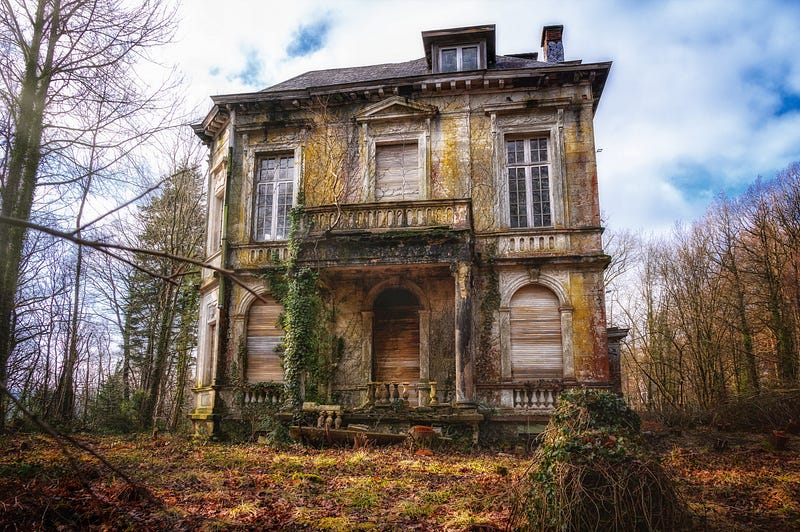
It wasn’t a large or impressive house, but it was very old. History clung to its walls, inside and out. Cobwebs hung from ostentatious paintings and ornaments. Dust coated the gilted furniture and faded upholstery. It wore its years with pride for all to see.
Over recent decades the other houses on the streets had been updated and renovated. Solar panels gleamed on every other roof and shiny, practical family cars sat on every newly tarmacked drive.
This house though, sat old, proud, isolated, and alone.
The owners of the house had mixed feelings about their neighbors and their dwellings. They were undoubtedly jealous of the modern plumbing and non-leaking roofs that surrounded them in every direction. They looked longingly at their fully insulated walls and could only imagine how low their gas bills must be. But they also had a sense of superiority.
We may, they argued, get stiff necks from the draughts under the door and asthma from the black mold. We get mildly electrocuted every time we turn on the toaster and the toilet threatens to back up whenever we do an above-average size poo, but at least we have a grip on our history.
They had pride and identity. Their house was by far the best on the street, they could feel it.
As well as this pride, they were also nervous about their neighbors. In fact, although they would never admit it, they were fearful. Fearful of faceless figures and foreign-sounding words half heard. Fearful of their strange clothes and rituals. Fearful of the rhododendron bushes that inched over the garden boundary.
The owners of the house rarely went outside now. They would see a group of figures gathered around the corner or at a bus stop and would lock the door and pull across the latch.
There used to be occasional knocks at the door. The postman or maybe an Amazon delivery driver would walk up the short drive, laden with parcels, and bring the door knocker down with a bang.
Now, the owners would not answer.
So fearful had they become of strangers at the door that it was never opened. They would not leave the house and they certainly would not let anybody in.
Then came the idea of the moat.
Phone calls were made and arrangements put in place and soon an army of workers descended on the gardens outside. At great expense, a channel was dug around the perimeter of the house and filled with water from the tap.
Fish were placed in the moat. Snapping fish with mouths bigger than their bodies, teeth like knitting needles, and faces like something from a horror film. They died shortly after as, quite unhelpfully, they were saltwater fish, not tap water fish. The owners of the house resourcefully poured table salt into the moat but this acted more as seasoning that any sort of miracle cure.
From the chimney, the owners of the house mounted several military-grade firearms, some of which worked, none of which were legal, and all of which had been aimed more with hope than accuracy or rigor.
The first time a knock came at the door, a Polish supermarket was destroyed half a mile away. This was considered a success
Eventually, the knocks on the door ceased.
The owners of the house celebrated their deep and unending silence. Never again would they be disturbed nor would they have the strange way of those down the street inflicted upon them.
Over time the owners became hungry. They had long ago stopped heading out to the supermarket for essential supplies and now they found they didn’t have the facilities or expertise to grow their own food.
They tried to get an order delivered from the local supermarket but this resulted in only a drowned and briny delivery driver and a hole blown in the side of a primary school on the other side of town.
Weaker and weaker, the owners of the house began to squabble as to how they could remedy their famine. One wanted more guns, the other wanted bigger dead fish. The one thing they could agree on was that it was all the neighbor's fault.
This thought was of great comfort to them as they starved to death in their dusty, broken old house.
Hello there, thanks for stopping by
If you’ve enjoyed what you’ve read here, and even if you haven’t, give me a follow and have a flick through my other stories to see if anything else there tickles your fancy


