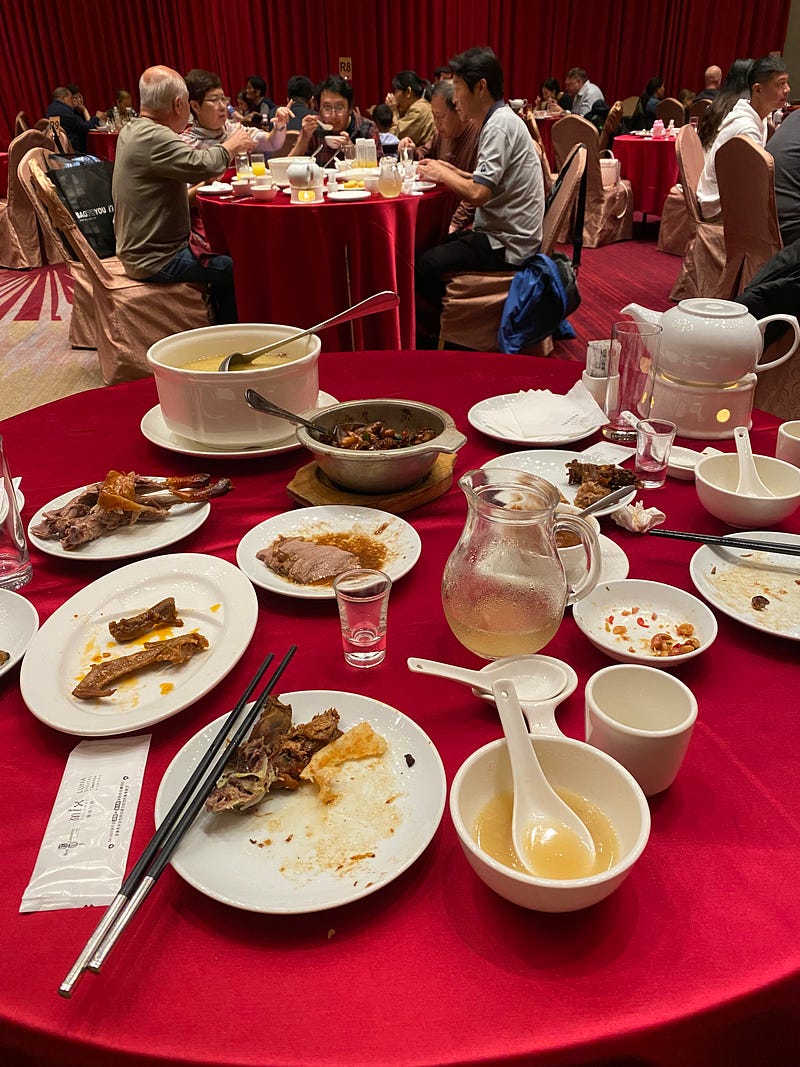
A Duck’s Tale — Navigating Yilan’s Royal Feast
Taiwan, the kingdom of night markets and street gastronomy, where I honed my skills in the art of devouring delicacies off bamboo sticks, paper wrappers, and plastic spoons.
Our initial plan was to partake in the local night market feast, but a soggy drive into Yilan City redirected us toward a more comfortable dining situation.
Putting my culinary fate in the hands of a local Taiwanese companion proved to be a brilliant move.
Peering at the list of restaurants on her phone, she threw me the million-dollar question, “You like duck?”
“Absolutely,” I nodded firmly.
“Perfect, we’re heading to this place that cooks duck five ways.”
At that moment, my salivary glands went rogue, and the world around me became a mere backdrop to the symphony of duck dish fantasies playing in my head.
En route to the promised duck paradise, my companion shared Yilan’s tale — a landscape blessed for growing rice, scallions, and fruits. And thanks to the rice paddies that create the perfect environment, Yilan is renowned for ducks. Exquisite ducks.
“We’re here,” she declared as we pulled up to Silks Palace Yilan, the region’s grandiose hotel, a refuge for city-weary Taiwanese families.
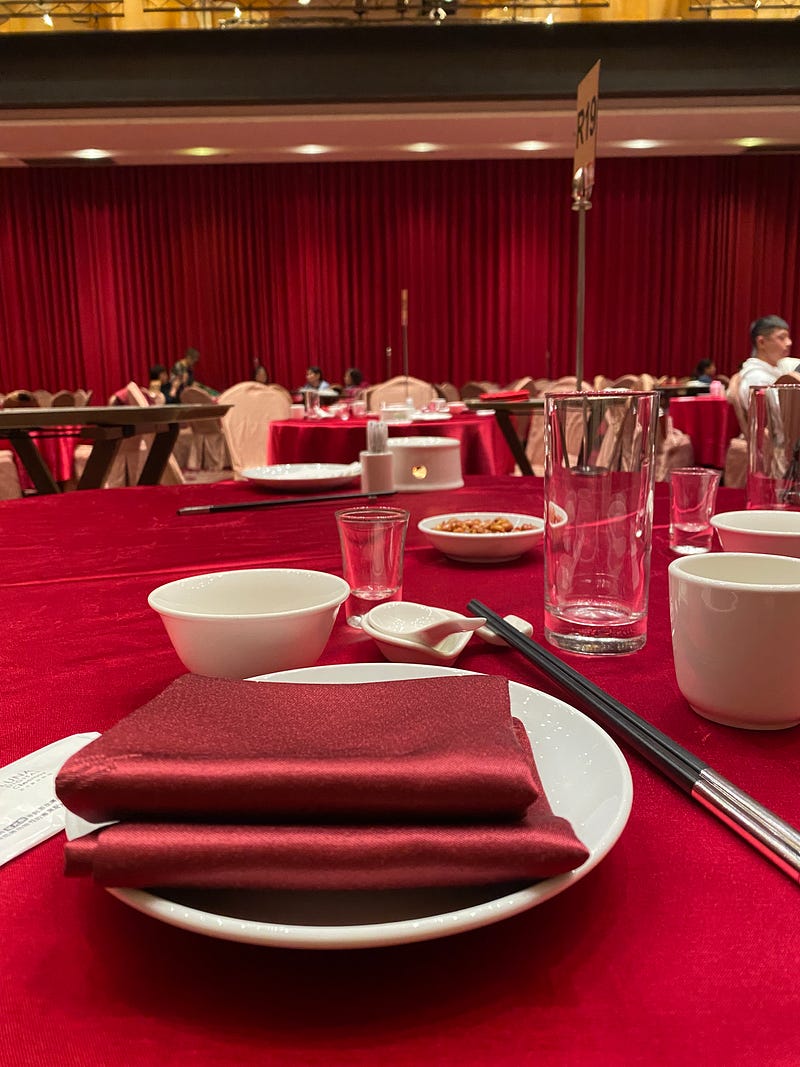
Navigating through opulent marbled corridors, we reached the sixth-floor sanctuary that mimicked a theatrical stage. Scarlet curtains cascading down from high ceilings, tables adorned with ruby tablecloths, cloth napkins and seat covers echoing the same passionate red, enveloping the entire scene in an aggressive amount of the lucky color.
The banquet hall ambience oozed more kitschy wedding reception than casual dinner.
My friend enlightened me, “This is standard fare in Taiwan. What we’re about to indulge in is typically a family meal.” Suddenly, the five-seat setup at all the other tables except for ours, made me ponder the magnitude of the impending feast.
Oolong tea steeped atop a candle, a pitcher of sweet, fruit vinegar gracing our table — precursors to the assembly ahead.
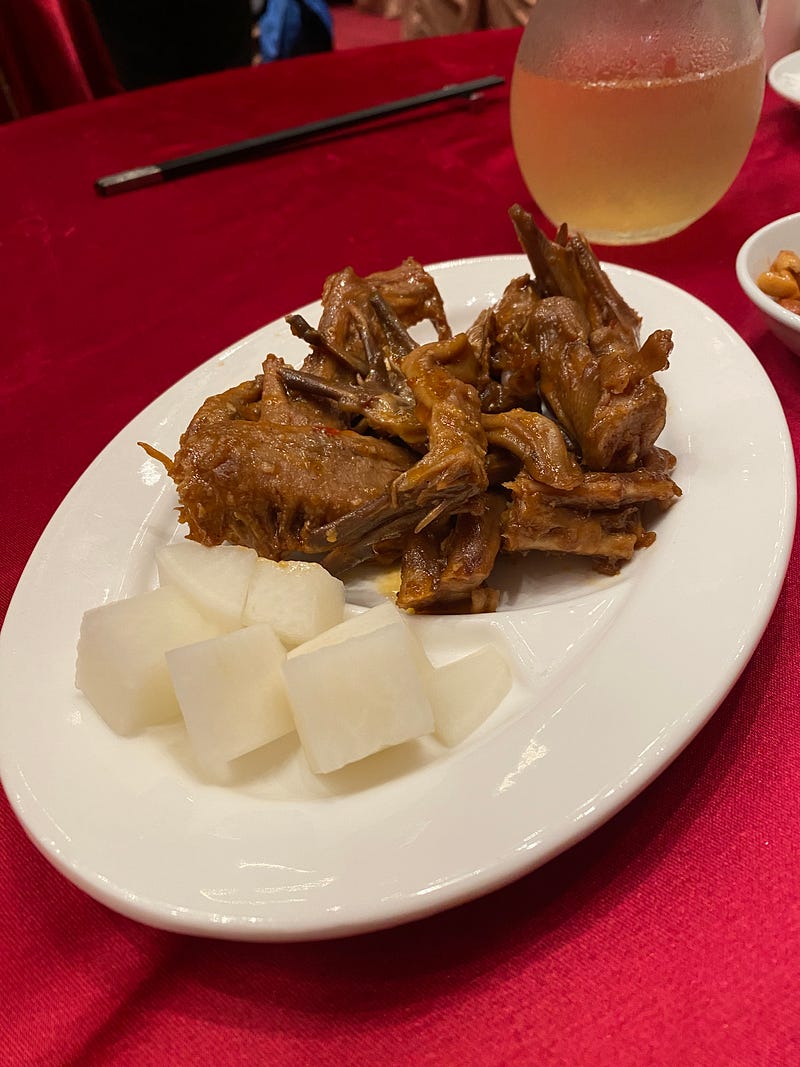
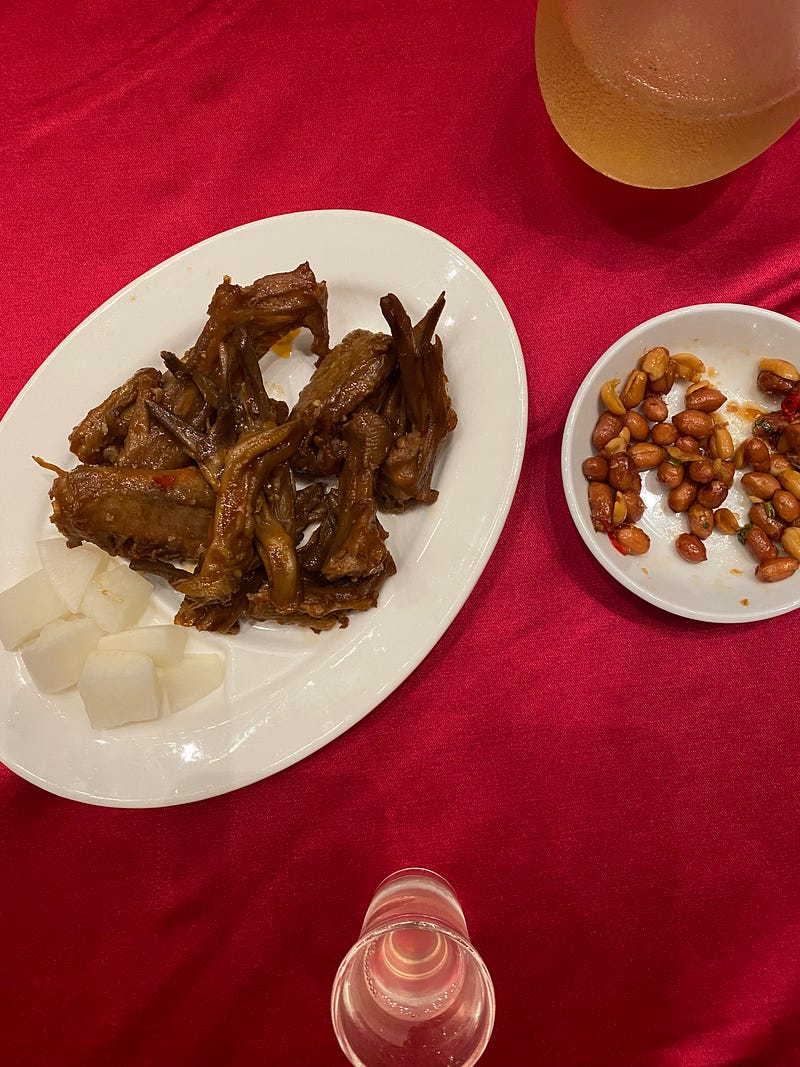
A plate of enigmatic duck parts — tongue, wings, and flippers — stewed in an anise-forward mix of spices arrived, accompanied by cubes of crunchy pickled radish. My mouth got a workout, extracting every delicious morsel.
Beware the seemingly innocent tray of peanuts drenched in a soy-based seasoning and cilantro; they nearly stole the show with their uncanny flavor combo.
Then came the spectacle: our chef, adorned in a towering white hat (I’ve yet to learn why he was dressed like a French chef), expertly carving the roast duck, separating the succulent breast from bone.
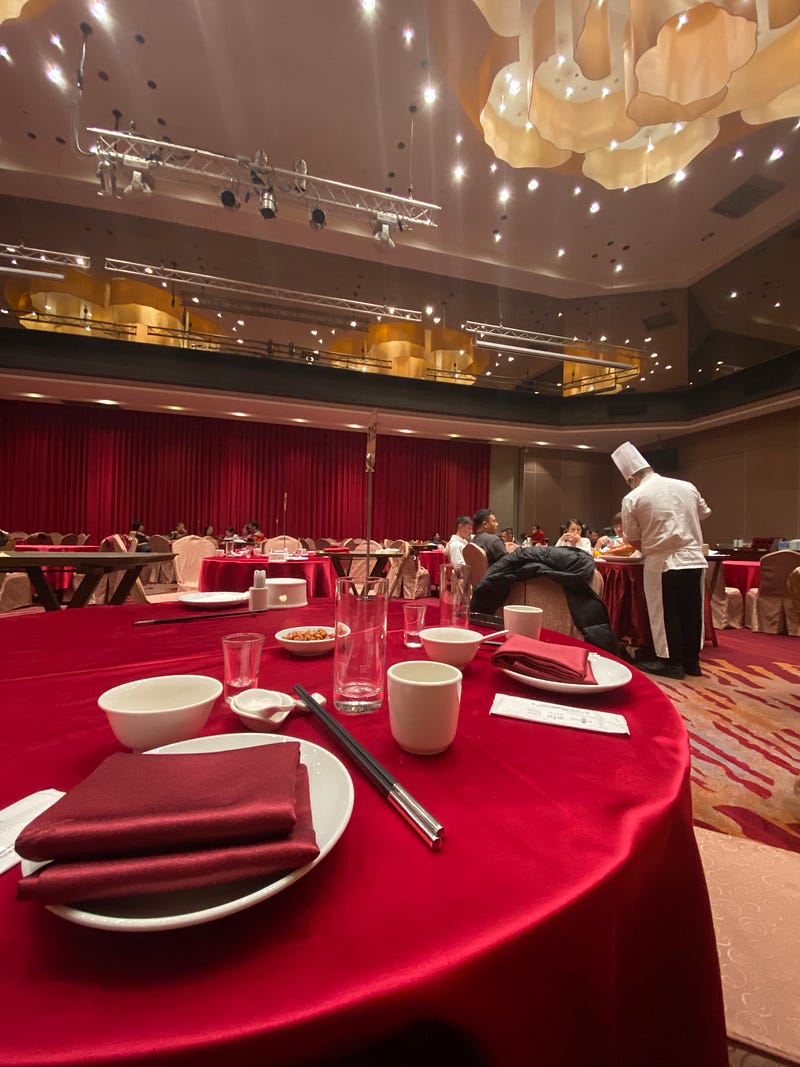
Beside him, an assistant deftly prepared thin flour wrappers with a dark, sweet-savory miso sauce, scallions, and pieces of duck — a culinary ballet in motion.
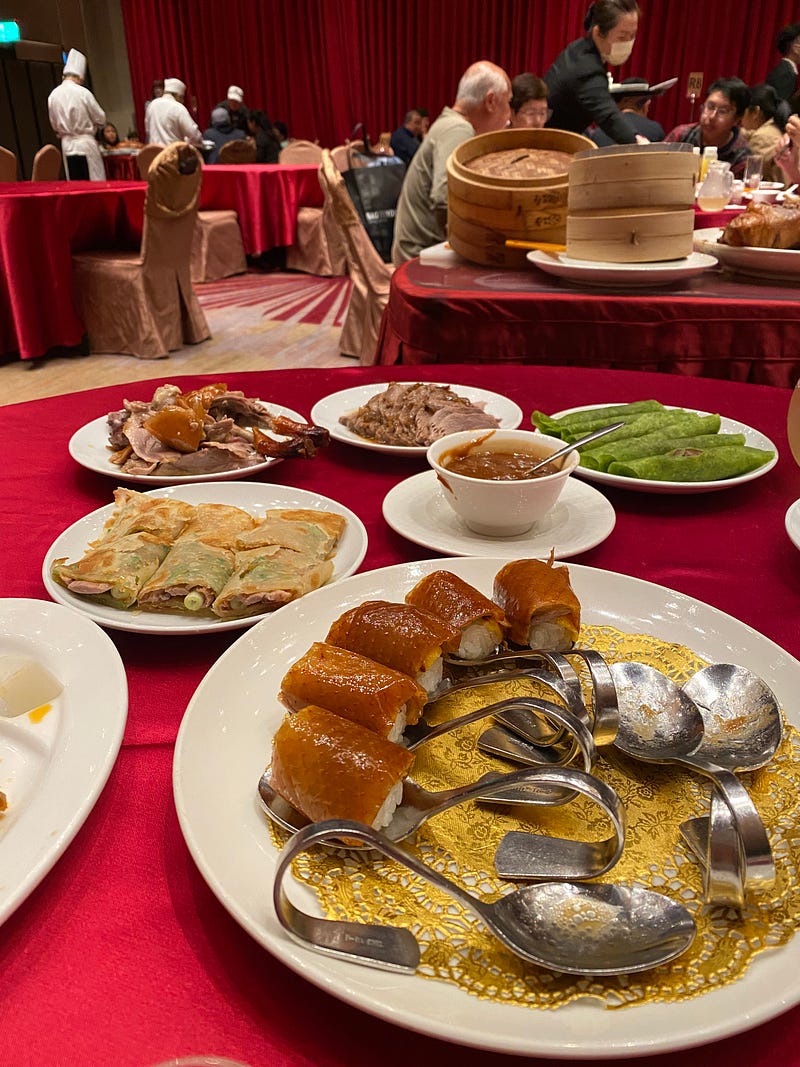
The carcass retreated to the kitchen, and soon, an avalanche of dishes cascaded upon our table— sliced duck and skin wrapped in scallion crepes, a classic Taiwanese 3-Cup seasoned duck, roast duck nigiri, and double-boiled duck bone soup with Chinese cabbage.
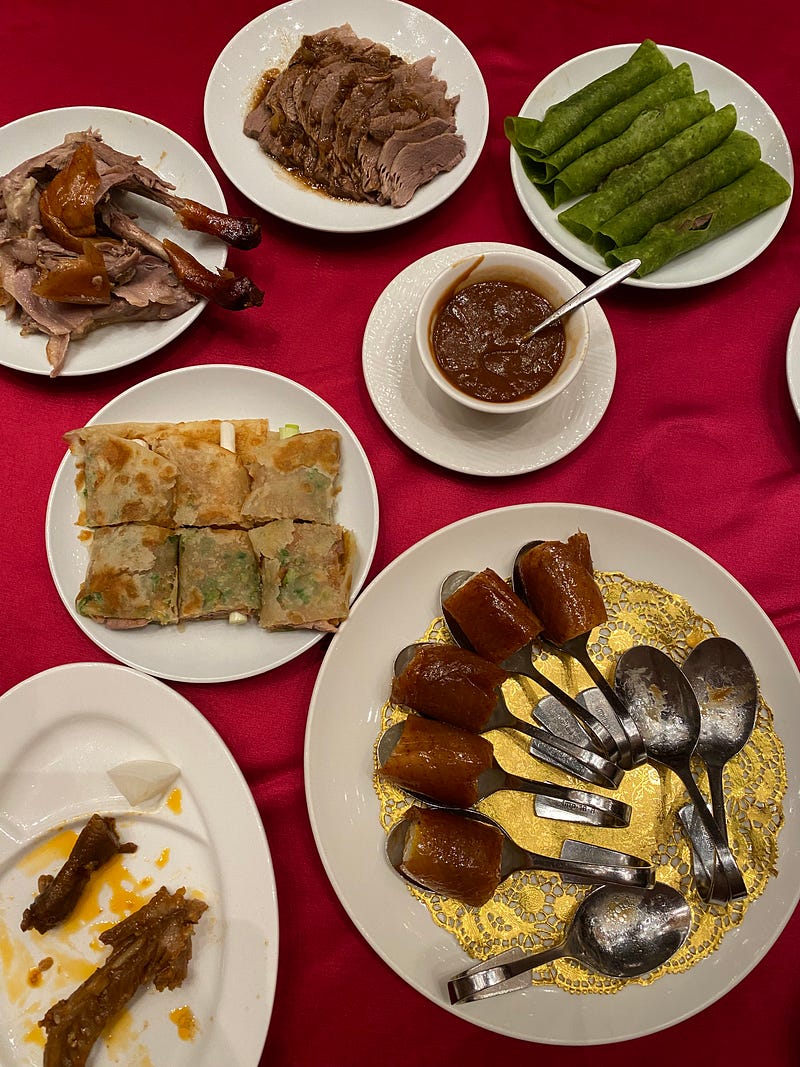
The famed sanxing scallions cooked into the crepes and as fresh fillings, were the unsung heroes — fragrant, sweet, and crunchy, leaving an indelible mark in my book.
In the Sanxing Township, the scallions stand tall, not as a garnish or an afterthought, but as veritable rock stars of the local gastronomy. These verdant stalks, with their roots deeply entrenched in the fertile soil of the region, boast a flavor profile that is nothing short of a revelation.
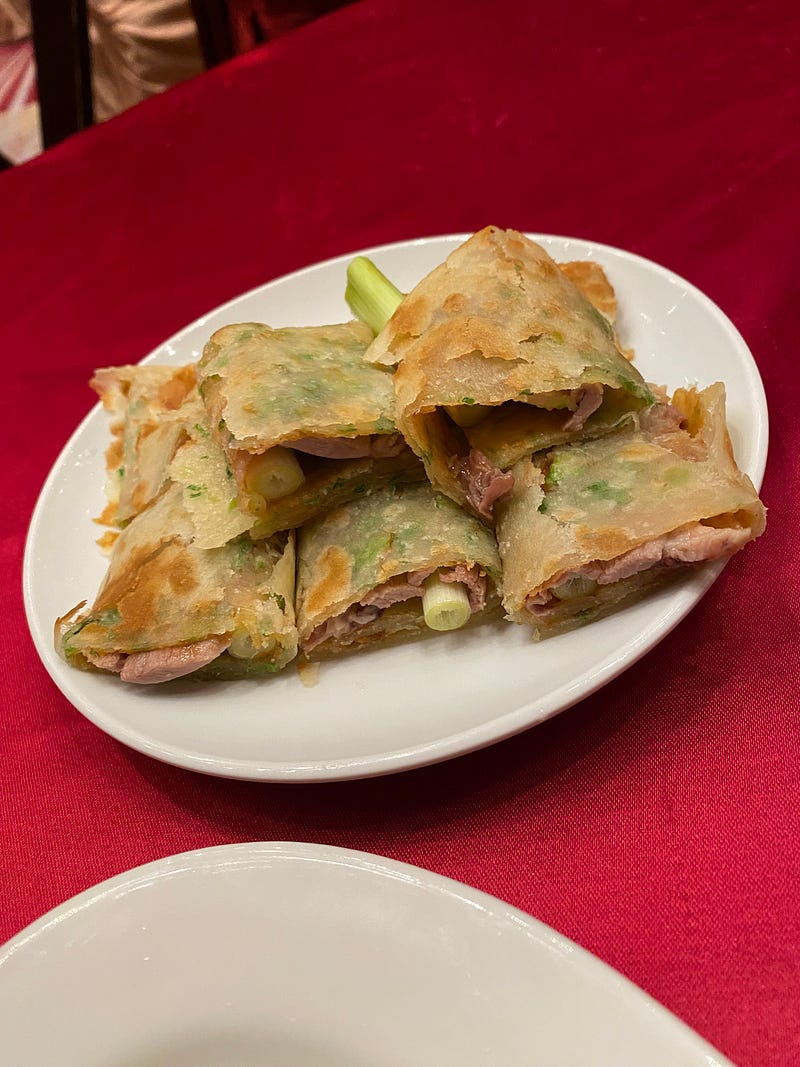
Picture this: humbly wrapped in thin flour crepes, the sanxing scallions perform a gastronomic ballet, pirouetting gracefully between fragrant, sweet, and crunchy notes.
A harmonious fusion of earthy freshness and aromatic sweetness catapults them into the pantheon of culinary legends. It’s not just about the scallions; it’s about the essence of Sanxing itself, an experience so profound that it lingers long after the last bite.
The 3-Cup duck, laden with umami, from bold soy sauces and robust shaoxing wine, held their own as I washed each bite down with the digestive vinegar.
Followed by the double-boiled duck bone soup that emerged as an interlude. The sweet Chinese cabbage, tender and translucent, suspended gracefully in the glassy, scalding cauldron of pure duck essence.
The broth, a distillation of time and patience, possessed an ethereal quality, leaving behind a subtle film of duck fat on my lips — a lingering reminder why I’m sitting here.
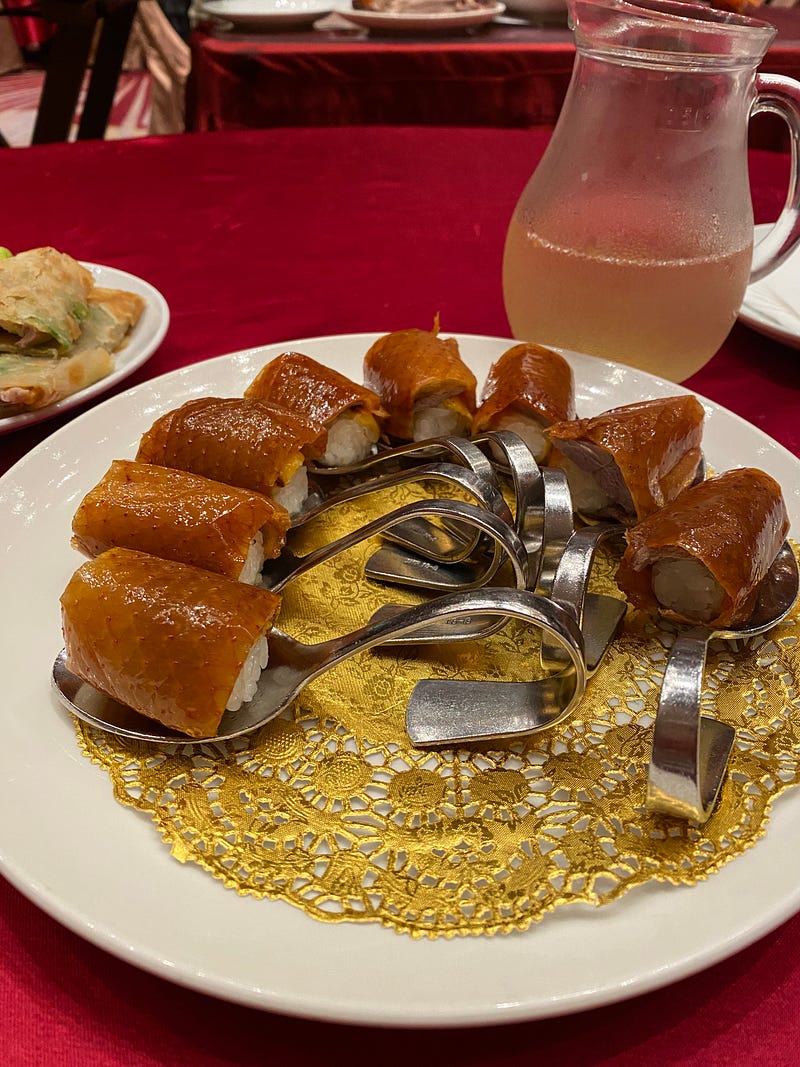
But then came the duck nigiri, a revelation I hadn’t seen coming.
A delicate layer of duck skin, crisped to perfection, cradled a decadent reservoir of duck fat atop a mound of sticky, yielding Yilan rice.
And just when you thought you had the whole ensemble figured out, a cheeky layer of cheese sneaks in, left me questioning its presence.
Yet, in the orchestrated chaos of flavors, somehow, it works.
My first bite pierces through the thin crispy duck skin, and the molten layer of fat cascaded over the meticulously steamed Yilan rice.
Unassuming, yet possessing an unmistakable allure, Yilan rice is set leagues apart in the vast grain kingdom.
Yilan rice, with its sticky, yielding demeanor, understands its role, contributing a subtle yet indispensable element to the entire affair. Yet, it’s not solely about texture; it’s about soul. Yilan rice possesses this innate talent for absorbing the essence of its surroundings, transforming into a canvas upon which flavors shine.
And let’s not overlook its resilience. This rice can take a hit, whether it’s an onslaught of duck fat or the audacity of unexpected companions like cheese. It doesn’t flinch; it stands firm, providing a foundation capable of weathering the storm of culinary experimentation.
Sampling a bit from this plate, a generous portion from that, interspersed with sips of digestive vinegar and the cleansing ritual of oolong tea — it was a banquet to be remembered through the royal realm of Yilan’s duck delicacies.