avatarSiri Perera

Free AI web copilot to create summaries, insights and extended knowledge, download it at here

739

Abstract

thought?</b></p><p id="3040"><i>Neuroscience tells us that most of the work done by our brains happens on an unconscious level, but when does that “a-ha!” moment occur? And what happens during it? New research investigates.</i></p><p id="a0f0"><i>Many of us have noticed that we seem to get our best ideas when we’re in the shower, or that we can find the answer to a difficult question when we least think about it.</i></p><p id="089f"><i>A large body of neuroscientific studies has pointed out that the brain does a lot of work in its spare time, the so-called idle state — wherein the brain does not appear to be thinking about anything at all — and that this is the time when it works at its hardest to find solutions to complex proble

Options

ms.</i></p><p id="6d49"><i>With time and advances in neuroscience, it has become more and more clear to researchers that Freud was right in the idea that the mind, as well as the brain, do work unconsciously. In fact, it would be safe to say that what is consciously known to us is just the tip of a much larger iceberg, deeply submerged in unconscious waters.</i></p><p id="cf92"><a href="https://www.medicalnewstoday.com/articles/318674">How the brain turns unconscious information into conscious thought</a></p><p id="15c9">These are the 2 main forms of thinking in us:</p><figure id="b196"><img src="https://cdn-images-1.readmedium.com/v2/resize:fit:800/1*geYF7qiYAy8taEl-iFx3Nw.jpeg"><figcaption></figcaption></figure></article></body>

A discovery is said to be an accident meeting a prepared mind?

It is because all thinking is processed by the unconscious brain-mind.
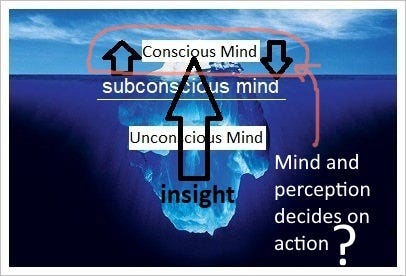
So you create the context and the brain knows what you want. Memory is not the only repository for information. Insight is usually of something “new” but it is via intention and context in the thinking brain. So discoveries are just waiting to happen and it is always what your mind is preoccupied with in the present moment.

How does the brain turn unconscious information into conscious thought?

Neuroscience tells us that most of the work done by our brains happens on an unconscious level, but when does that “a-ha!” moment occur? And what happens during it? New research investigates.

Many of us have noticed that we seem to get our best ideas when we’re in the shower, or that we can find the answer to a difficult question when we least think about it.

A large body of neuroscientific studies has pointed out that the brain does a lot of work in its spare time, the so-called idle state — wherein the brain does not appear to be thinking about anything at all — and that this is the time when it works at its hardest to find solutions to complex problems.

With time and advances in neuroscience, it has become more and more clear to researchers that Freud was right in the idea that the mind, as well as the brain, do work unconsciously. In fact, it would be safe to say that what is consciously known to us is just the tip of a much larger iceberg, deeply submerged in unconscious waters.

How the brain turns unconscious information into conscious thought

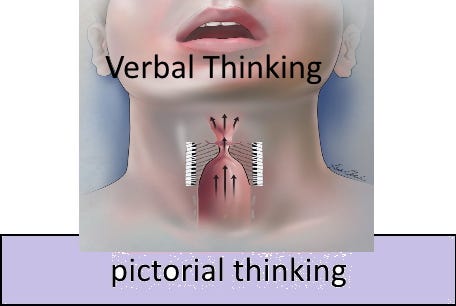
These are the 2 main forms of thinking in us:
Unconscious Brain
Thinking
Unconscious Thought
Recommended from ReadMedium