
I Finally Won My 20-year Battle With Bipolar Depression
When nothing else had worked, a faith-based, holistic mental wellness coach — and old friend — helped me subdue the beast.
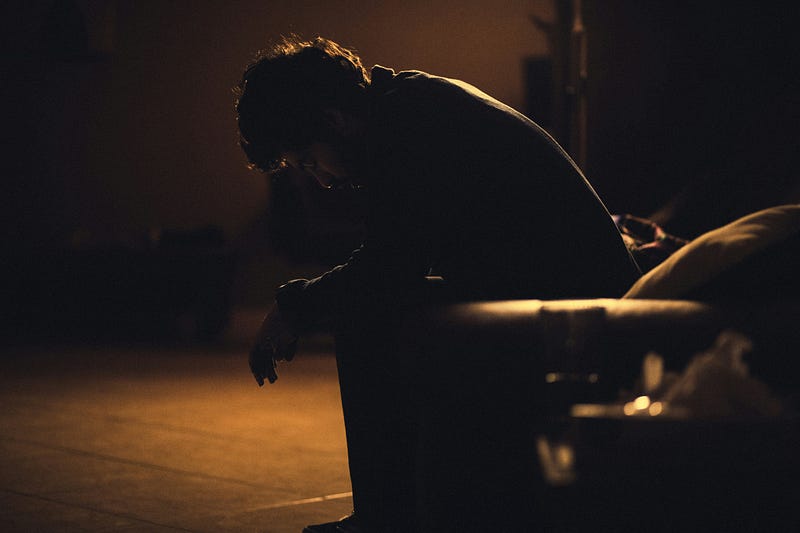
There was a simple foundational principle which set me free:
God loves me, and no matter what, I will be okay.
Regardless of who comes into or goes out of my life, no matter what my life circumstances are, God will love me, and that will never change.
I don’t need to be afraid of being alone anymore.
Once I internalized that, I was equipped to disarm the traps laid in my fragile mind which have given rise to this illness and stoked its flames all these years. Instead of continuing to control the bleeding with bandages, I could finally cauterize the wound.
I had been quietly waging a war against myself, sometimes in invisible agony, for 20 years. The seeds were planted long ago and had been incubating, but the tragedy of the 9/11 attacks and my involvement in the subsequent response caused them to germinate.
As the events of that day were unfolding, I was dispatched with my Coast Guard patrol boat to New York to secure the waterways in and around the city. My crew and I worked at a frenetic pace, often in dangerous conditions and under a perpetual cloud of uncertainty, for nearly two months. We left our loved ones in Massachusetts suddenly, in many cases not even able to say goodbye, not knowing when we would return home to them.
We did not have time to come to grips with what happened, and, constantly patrolling or at anchor, were cut off from news coverage. We simply did not have time to grieve. So when we finally had a lull in our operations, my problems started.
I was drinking often and irresponsibly, and became consumed by simmering anger, punctuated by outbursts of rage, which nearly cost me my career. I was unfaithful to — and ultimately left — my wife at the time for someone else.
I was lost, but didn’t know where I was trying to go. I was angry, but didn’t know why. I was searching, but didn’t know for what or whom. Above all, I was scared of being alone.
Finally in 2003, after my downward spiral had left so much damage in my wake, the weight became unbearable. At the risk of ending my military career (which it ultimately did years later), I sought the help of a military psychiatrist, who prescribed me my first anti-depressant.
Thus began a decade-long series of experimentation with medications and dosages by a litany of military doctors. None of the medications worked. Some relieved some of the symptoms, but dulled my senses. Others caused untenable side effects. Most were simply ineffective.
Once I left the service, I experienced more of the same with civilian psychiatrists. In 2007, after an eerily similar episode in which I was in crisis and briefly left my second (and still current, thankfully) wife for someone else, a psychiatrist changed my diagnosis from major depressive disorder to bipolar disorder type II. His rationale was simply that my ongoing treatment for depression wasn’t working, so it must be something else.
Sporadically since my first diagnosis in 2003, I saw both military and civilian psychologists, but quickly became disillusioned with each one. The military mental health care system is broken, and I found the civilian one to be only slightly better. I never saw the same therapist for long before being passed off to another, and I doubted the competence of all of them. Rarely did one stick around for more than a handful of sessions before moving to a different office or changing what insurance they accepted. I could never find stability or establish a relationship built on trust with any of them, which for someone who has abandonment issues was crucial.
In all cases, I never truly felt comfortable in a therapy environment. I routinely believed I could see the “tricks” my therapist planned to pull on me to lead me to some revelation or another, and felt insulted and patronized.
I felt compelled to fill awkward silences and was generally uncomfortable being the only one doing any of the talking, any of the sharing. The whole affair seemed too sterile, too impersonal to me.
And so I plodded along through life for 20 years, chronically depressed and angry, occasionally descending into crisis, even to the point of suicidal ideation. There were days when I couldn’t even get out of bed. Most of the time, I would withdraw from social interaction altogether, even wearing earbuds all day at work so I wouldn’t have to talk to anyone at all.
After my divorce, I went through a series of relationships in which I immediately and frantically sought assurances of permanency from my partner, only to be the one to end the relationship later. In most cases, I ended the relationships expressly to begin one with someone else.
My fear of abandonment wasn’t exclusive to romantic relationships. For a year after ending the relationship that ended my first marriage, I lived with my best friend, who is now the godfather of all three of my children. We were both Coast Guard officers at the time, and at one time he was away for training out of state for a month. I vividly recall my constant despair, feeling like I couldn’t breathe, crying alone for hours on end, desperate to end the pain of being alone.
I met my current wife in 2005, started our family the following year, and yet still fell into the same pattern of insecurity, which would continue for more than a decade. There were times when I was so plagued by paranoia and anguish that I would curl up in the fetal position and cry out for the pain to end. There was nothing my wife could do or say to make it stop, and a few times it was so bad she felt compelled to take the kids and leave the house for a while and even contemplated having me placed at an inpatient facility.
One episode I remember most clearly occurred as recently as 2016 or 2017, while we lived in the UK, where mental health care is even more abysmal than it is in the States. My pattern of infidelity also continued to rear its ugly head in a few instances over the years, again as recently as five or six years ago.
I am so lucky, so blessed, to be with a woman who loves me so much that she found it within herself to stay with me despite my transgressions, and has been compassionate and patient with me as I have battled my demons. Now that I have finally learned how to overcome my illness, I can look forward to spending the rest of my life growing old with her, watching our children grow into adulthood, and doting on grandchildren. I am so lucky.

A year ago, through chance — or fate, or divine intervention — I happened to see a social media post from a Coast Guard Academy classmate and friend who had started a holistic mental wellness coaching practice. I have long been, and continue to be, skeptical of wellness coaches, who can practice with absolutely no real qualifications or experience whatsoever. But I knew Sarah. As cadets, we literally trusted each other with our lives on multiple occasions. Some unseen force compelled me to reach out to her and ask about her coaching. So I did.
After reconnecting with Sarah, I decided that coaching — specifically her coaching — stood a chance of succeeding where scores of therapists had failed. I learned that she had previously been a therapist, but decided to move into coaching, because like me, she didn’t like the impersonal, one-way nature of the therapist-client relationship.
I also learned that, like me, she was a Roman Catholic, and that faith plays an important part in her coaching, when appropriate based on the client. I would not consider myself a strongly devout Catholic necessarily, but I do believe that, as Sarah put it, I am a child of God.
After a trial session over video phone, I was all in. I was optimistic and wanted to pursue a full coaching regimen with her. Having known each other for nearly 30 years, and having both come from the forge that is a military service academy, our rapport was instant.
So I embarked on a nine-month program, designed to mirror the gestation period of a human being, considering I was emerging at the end as a child of God. Week after week, we had our hour-long sessions over video phone as I sat in my car, parked at a gas station near my office. Unlike therapy, I looked forward to these sessions. They went by so quickly, and I never wanted them to end. Also unlike therapy, there was back-and-forth, a mutual sharing of ideas, experiences, and emotions. It was a breath of fresh air, a revelation.
By the end of the program, Sarah had helped me discover my own inherent value. No more self-deprecating jokes, no more reliance on others to feel happy. Through her, I had finally come to the epiphany that I am worthy, that God loves me and always will, come what may. I — on my own or not — will always be okay because of that.
Since concluding my program with her, I have become more confident and self-assured. My jealous and paranoid inclinations have gone away. I still have fleeting symptoms of depression from time to time, and will continue to be on a greatly reduced dose of medication — after all, I understand that this is a lifelong physiological illness of which one can’t be “cured.” But I know how to spot the symptoms when they surface and put them away in their appropriate place until they pass, rather than acting on impulse.
I am no longer scared. I am no longer filled with roiling anger. I am no longer searching. I am no longer lost. I am where I am meant to be, and I will always be ok.
Thank you for reading my story. It was not easy to lay bare my life with this illness in excruciating detail on a platform like this. But I did so partly for my own cathartic benefit, but also in the hopes that someone will read it and in some way feel hope and be inspired to keep fighting.
To see more, please visit my Medium profile. If you would like to receive an email whenever I publish a story, please click here.