
A Death in Paris
My visit to the world’s 5th-best cocktail bar
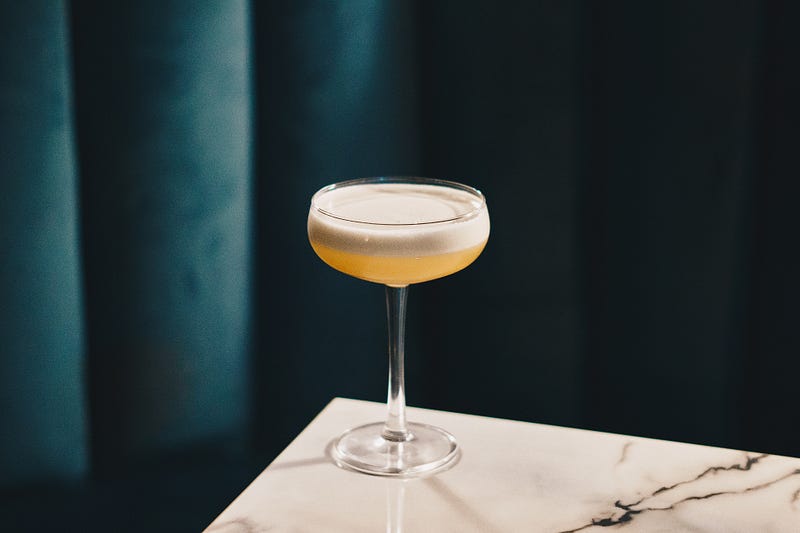
It’s 11 p.m. on a Wednesday. The setting is a narrow street in the Marais neighborhood of Paris. I’m waiting to be admitted to a small bar and I’m at the back of a small line.
I’m alone. About half the people in front of me are locals. I know this because about half of them are smoking. Some things in Paris never change, and the native’s love of tobacco is one of them. The non-smoking non-locals are all looking at their phones, and I’m considering whether this newer method of killing time actually represents progress when another guy, also by himself, walks up and takes my place at the back of the line.
The guy is younger than me, early 20s, and I know he’s from out of town because he doesn’t immediately light up. Another tell: He’s visibly eager to get inside this bar. No Parisian I’ve ever met would be caught dead showing so much enthusiasm.
‘It’s at this point that the evening’s tragedy begins.’
The young guy asks me in accented English how long I’ve been waiting. He asks where I’m from and whether I’m “industry,” meaning do I work in hospitality. He tells me his name is Alex and he’s Romanian and he works as a bartender in London. He explains that he’s come to Paris specifically to go to this bar, and he can’t quite believe it when I tell him I just stumbled onto this place while I was walking home from dinner.
“You don’t know what this is?” he asks me twice, as though I’m pulling his leg.
I assure him no, and he explains to me that this bar, Little Red Door, has been named the 5th Best Bar in the World by a website I’d never heard of called, handily enough, The World’s 50 Best Bars.
For Alex’s sake I try to look impressed. What I’m actually thinking is, shit, this is going to be a very expensive drink and how can I politely step away from this line and this conversation.
For years I wrote “listicle”-style articles for sites like Men’s Health, Playboy, and Food & Wine. I worked hard on them and solicited a lot of expert advice, but they were neither rigorous nor comprehensive, and so I’m dubious of anything the internet has ranked as “top” or “best.”
I mention this, gently, to my new friend, but he is not dismayed. He informs me that the list he’s referencing is very respected among industry people like himself. “This is really an amazing place,” he assures me.
I ask him what makes a bar worthy of such a ranking, and he explains that it’s mostly to do with creativity — with unconventional combinations of ingredients and flavors. He also tells me this bar has a “farm to glass” ethos, and that many of its ingredients are sourced from small French growers and producers.
His excitement is rubbing off. Ten minutes later, as we’re escorted to adjacent seats at the bar, I’m looking forward to paying a little more than usual — about $20, as it turns out — for a drink at such an admired establishment.
Alex is pleased to be seated here, at the altar, rather than away from the action at one of the dozen or so small tables. I watch the proceedings through his eyes. He points out that the working area for the three bartenders is right up at eye level, not sunken down and out of sight. Nothing is hidden, he explains. Guests can see exactly how the magic happens. He also directs my attention to the sleek network of metal grates and compartments where the bartenders keep their assorted shakers and strainers and jiggers and muddlers. “It’s all custom-made and adjustable,” he tells me with obvious appreciation. “Very expensive.”
The place is full but not crowded. There’s plenty of light and the music is loud enough to enliven things without discouraging conversation. Bon. The bartenders are all wearing denim aprons, and one of them sets down menus before us on the blond wood bar. Alex takes his up carefully with both hands, like a sacred object.
The drinks have flavors for names. Citrus. Tomato. Plum. I choose the one called “Pepper,” which is made with whisky, vermouth, calvados, and a bell-pepper spirit. Parts of the drink, the menu informs me, are sourced from a regenerative farm in Normandy. Like the menu, the walls of the bar feature large photographs of Little Red Door’s various farmers and purveyors. Alex orders the “Citrus” cocktail, and we sit for a minute or two in silence as he watches his French counterparts at work.
It’s at this point that the evening’s tragedy commences.
One of the bartenders mishandles a long stirring spoon and it clatters out of the shaker. Alex winces. Not long afterward, the same bartender, now rinsing something in one of the sinks, causes a spurt of water to sail out and splash onto the bar top. It’s unclear whether some of the water landed in a customer’s glass. Alex winces again.
“I think maybe the bartenders are drinking a little too,” he says, looking embarrassed and apologetic, as though these lapses reflect badly on his whole profession.
Another minute passes, and I notice him noticing something at the far end of the bar. I look too, but whatever he’s seeing is invisible to my untrained eye.
“Every place has an off night,” he remarks, turning back to me with a pained expression on his face. I ask him what he saw down there, but he won’t tell me. “I try my best only to say positive things,” he tells me. “Who am I to judge?”
Even when I press him, he refuses, and I like him for it. Alex is a good guy.
Our drinks come. Mine is clear with a subtle, silvery green glow and a piece of what looks like basil floating in its exact center. I can smell the bell pepper before I take a sip. It tastes like the freshest, most lushly vegetal martini imaginable. It’s wonderful. I could drink these happily every night for a year. Bravo.
But poor Alex has set down his Citrus and is looking anguished in his polite way.
Tentatively, I ask him, “How is it?”
“It’s . . . good,” he says. He breaks his own rule about criticisms, but only just. “For me, it is not the most interesting flavor profile.”
I encourage him to please try mine, because it’s excellent, but he declines. “I will order one for myself,” he says.
I learn that he’s planning to order every drink on the menu. He takes one or two more sips of his Citrus and then sets it aside half-finished. He doesn’t want to be too drunk to appreciate all that’s to come.
Next up for him: a Plum. By the time it arrives, I’ve finished my cocktail and am debating whether to have one more. But then I see Alex set down his new drink and shake his head. He’s wearing his polite, apologetic smile of disappointment, and I decide I just can’t watch anymore of this. His hopes were too high. He’d come too far and built the thing up too much in his head. No cocktail bar in the world could have lived up to his expectations.
The tragedy is that, next time, he won’t expect so much. Maybe he won’t make a trip like this at all. It’s a small sort of death, but the road to cynicism and apathy is paved with them.
I tell Alex I’m taking off. I pay my tab and shake his hand. During the walk back to my Airbnb, I tell myself that maybe, hopefully, his next drink will be better.
I recall that on my first visit to Paris, as a 21-year-old with visions of Hemingway’s Moveable Feast in my head, I found the reality a disappointment. There was nothing romantic about the youth hostel I stayed in. Tourists seemed to outnumber locals. The waiters were rude and the women indifferent. The whole place seemed designed to make me feel poor and provincial (which I was).
But then I went back, and back again. Now, on my sixth or seventh visit, with a bit more money and life experience in my pocket, I can admire the city’s charms. They were always there. The problem wasn’t Paris, it was me.
Outsize expectations can sour some of the best things in life, including the best cocktails. Maybe those expectations have to die so something better and truer can grow back in their place.


