
A Day in East Berlin After the Fall of the Berlin Wall
Crossing the border into East Germany in 1989 when all of Europe wanted to be in West Berlin.
Two days earlier, I had spent an emotional night in Bacharach, West Germany with a handful of East German refugees when it was announced the Wall was down. That was followed by an all-day party in Berlin at Brandenburg Gate.
(You can find links to those days at the bottom of this article)
After that, I decided to cross the border and see East Berlin for myself.
Despite the fact that hordes of people were walking back and forth between East and West Berlin, the American consulate in East Germany was recommending that Americans still get a visa so they knew who had gone to East Germany just in case the border suddenly closed again.
So, I waited in line for 45 minutes, filled out the paperwork, and exchanged my mandatory 25 West German marks for 25 East German marks.
I was frustrated with that. 25 Deutschmarks were more than my budget allowed me to spend in a day. I only planned to spend the afternoon in East Berlin. But still, it would be worth the experience.
When I finally crossed the border legally, I was amazed at the contrast.
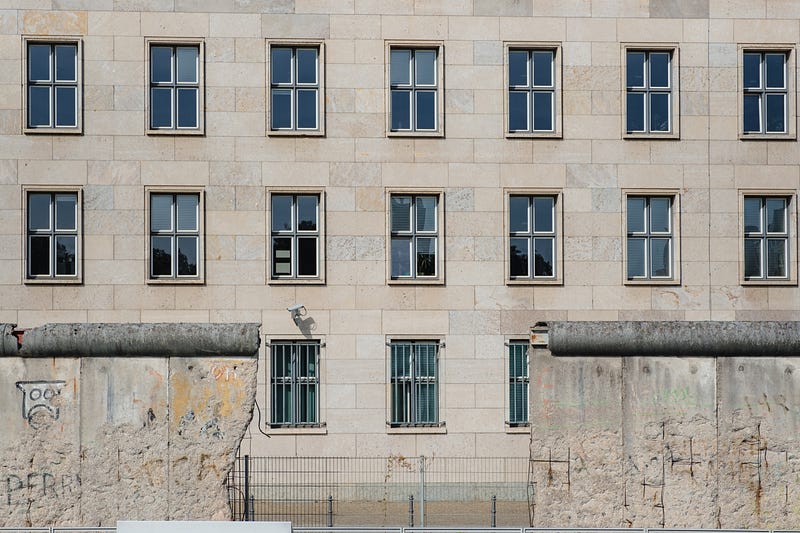
On the west side, the Berlin Wall was covered with colorful graffiti and you could walk right up to it. On the east side, it was bright white, flooded with light, and still patrolled by East German guards with guns.
There was a huge area between a fence and the Wall where you were not supposed to be. People were standing on the wall by the Brandenburg Gate and crossing in a section that had been removed, but the rest of the wall still looked like it did a month earlier.
I don’t think the guards would have done anything to someone breaching their area but I didn’t want to find out. It was all too new to everyone to know what was going on. People were afraid to test things and I didn’t blame them.
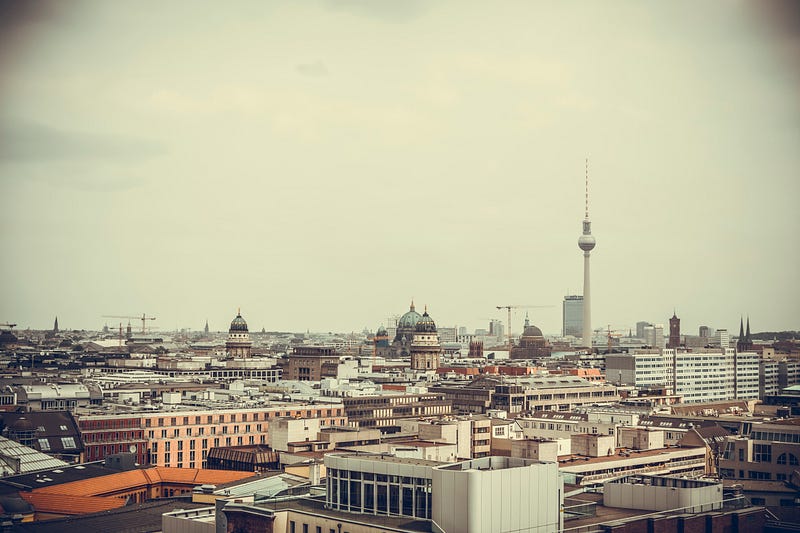
The city of East Berlin was in stark contrast to West Berlin.
People were everywhere in West Berlin. Lights, signs, traffic, and noise dominated the bustling city.
Everything in East Berlin was gray. The cars that lined the streets were all the same, small models in very few colors. Hardly anybody was out driving.
No blinking signs marked businesses. You had to walk straight up to the business storefront and look in the window to guess what they were selling.
West Berlin had been completely rebuilt after World War II. With the exception of a couple of structures left damaged to memorialize the time, it was hard to tell the impact the war had had on the city.
Not in East Berlin. Many of the buildings were simply repaired. Bullet holes were often just filled in with concrete. Nothing seemed to have gotten much of an update.
I soon found that 25 East German Deutschmarks was hard to spend. First, that much money went a long way in the depressed East German economy. Second, I could hardly find any businesses open to spend money at.
It was a chilly afternoon and I put on my gloves and zipped up my jacket as I looked for something to do in the city.
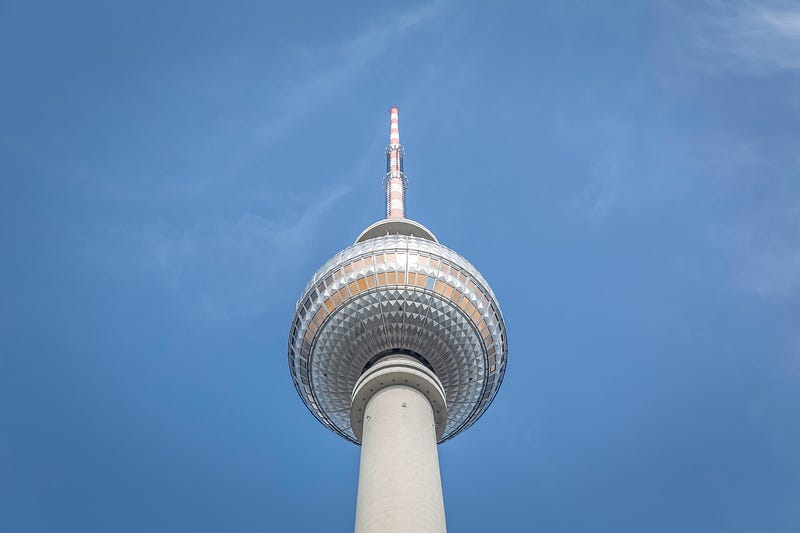
I did make my way to the famous Fernsehturm (or television tower) in the city’s center. There was a line of people at its base. Perhaps you could actually go up it, I thought.
The sign at the entrance of the line said 1 DM. That was about 50 cents at the time in US dollars so I decided to try it out. I entered under a sign that said Blumenschau. At least I was out of the chilly wind.
The line went painfully slow as it whipped around in a maze-like path. However, it was one of the most attractive lines I have ever stood in. Flowers were on both sides of the path.
People shuffled their feet painfully slowly as they gazed at the plants and progressed through the line.
Finally, I got to the front of the line. The sign said Ausfahrt which I knew to mean exit.
I looked back puzzled and wondered if I had missed something. I walked back around to the front of the building and again looked at the sign, Blumenschau.
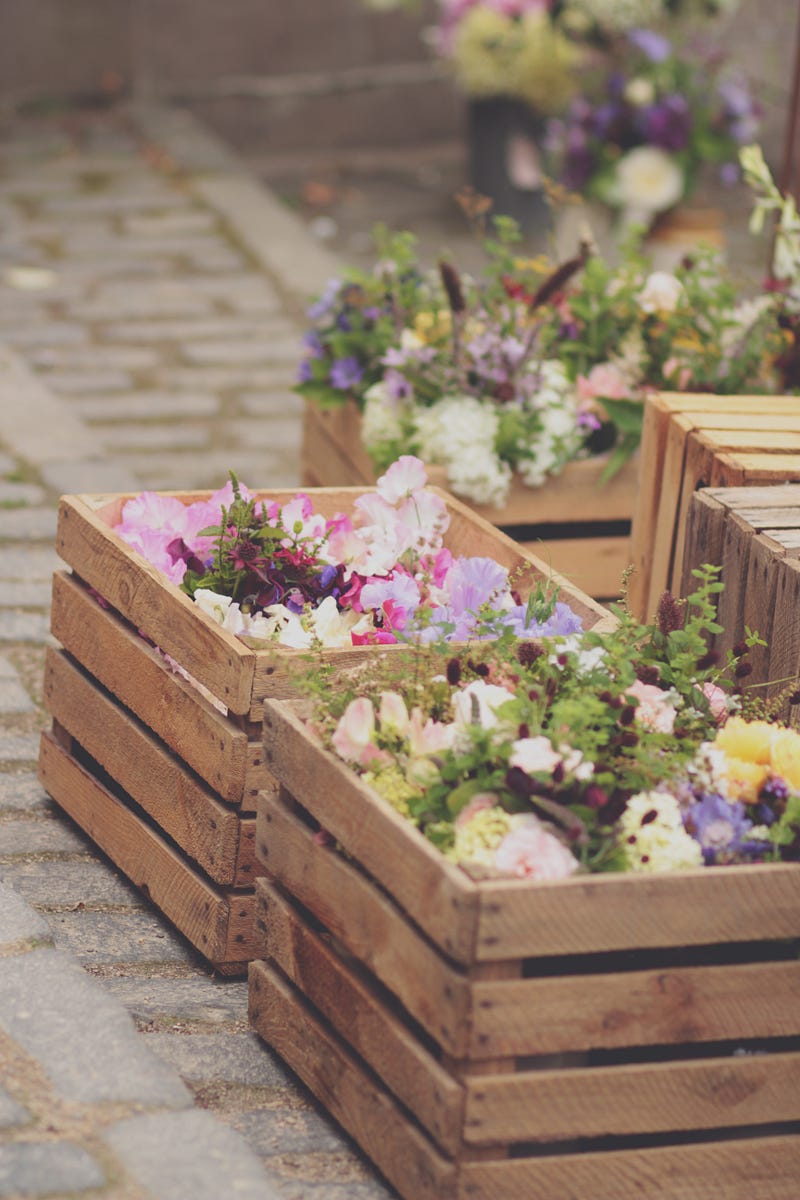
Suddenly, I remember my high school German. Blumen meant flower. I had paid 1 DM to walk through a flower show.
Still, it was not the worst money I had ever spent. At least it was warm. I walked away laughing at myself. I would never again forget the German word for flower.
Hungry, I walked along the street looking into windows until I finally found a restaurant.
It looked to be cafeteria style so I grabbed a tray and started through the line. There was not much of a selection. I got a big plate of rice. Nothing else really appealed to me.
I did see a huge bowl of what looked to be brown gravy.
Well, that might give some substance to my plain rice, I thought, so I ladled a huge helping onto my rice.
I went to the cashier to pay and it only ended up being 4 DM. The cashier looked at my plate strangely and said something I didn’t understand. When I simply handed her the money, she smirked and took my bills.
There were five long tables in the restaurant. Apparently, you were supposed to sit with strangers as you ate. As I looked around the restaurant, I practice my German for “Is this seat free?” in my head.
I found an empty seat and asked the Germans sitting there, “Ist dieser sitz frei?”
They simply nodded and I sat down.
No one talked as we ate. I took a big bite of my rice and gravy and nearly spat it out in surprise. The brown gravy was actually a brown mustard and I had covered my rice with it. No wonder the cashier looked at me so strangely.
But, I was hungry and hate wasting food. I ate every awful bite of that food. It never got better.
The man sitting next to me finally talked to me.
“Are you American?” he said in English.
“Yes,” I replied, “Do you speak English?”
“Yes, I am a driver so I drive English people often,” he said.
It turned out he was a limo driver and the lady he was sitting next to was some kind of diplomat from Russia. She didn’t talk to me but the driver did.
We talked about the open border.
“It does nothing for me. I have no money saved up. I can’t afford to leave,” he explained.
He said most people felt the way he did. Yes, it was nice to be able to go over and see West Berlin but life for him would not change much. He was stuck here economically. Like the West Germans I had spoken to the day before, he had little expectations of reunification.
We had a good conversation and after I finished my meal, I said goodbye and got up to leave. As I walked down the street, I looked for something to spend my remaining 20 DM on. I could not find another open store.
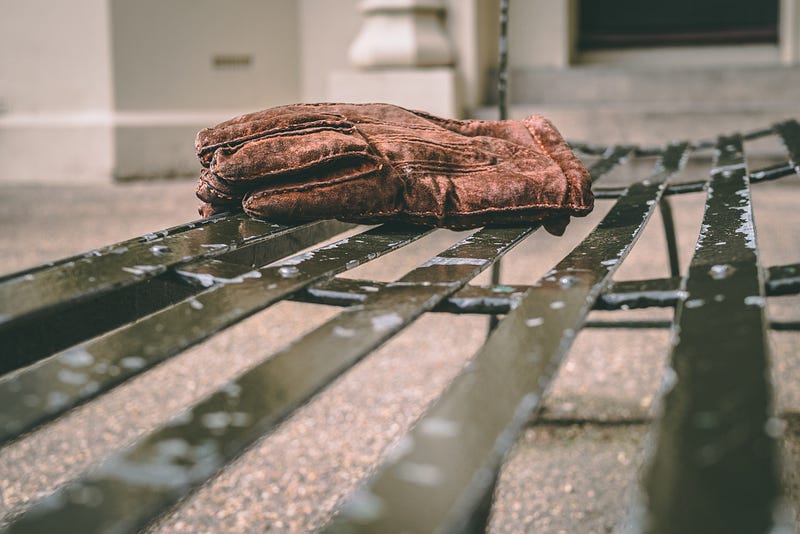
It was getting cold so I zipped up and went to put my gloves on. I realized I was missing a glove. I retraced my steps and ended back at the restaurant.
I went inside and went to the cashier who already thought I was crazy because of the mustard incident.
I thought about what I wanted to say. I couldn’t think of the German verb for “to lose”.
So, I said, “Ich have ein handshuh, nicht zwei, nur eins,” which translates to, “I have one glove, not two, just one.”
She looked at me again like I was crazy.
So, I went to the table where I had been sitting and uttered the same phrase. Everyone at the table looked at me blankly. Frustrated, I decided to simply look under the table myself. Five people looked under the table with me and then looked back at me puzzled.
I realized I had the wrong table so I went to the next table and the exact same series of events followed. I gave up and left the restaurant.
I decided to cut my losses and made my way back to the border with a belly full of rice and mustard, a souvenir of 20 East German marks, and one cold hand, not two, just one.
To read about me being in Bacharach, West Germany with 100 East German refugees when they announced the Wall was down:
To read about being in West Berlin the day after the Wall came down:


