
Reviewed
A Day at the Museum With the Obama Portraits, Basquiat, and Bisa Butler
Nonperformative diversity is a game-changer for Chicago’s Art Institute
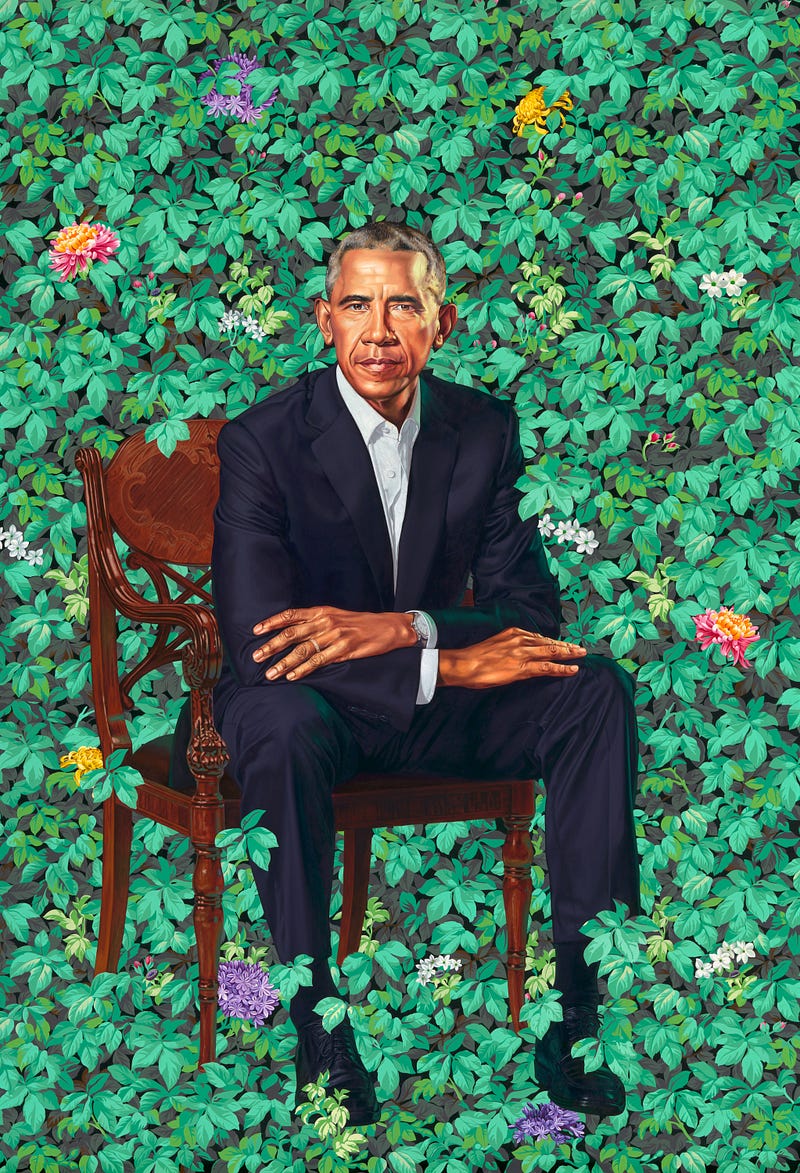
The Obama portraits are home in Chicago, as they should be. Don’t get me wrong. I fully understand that the Smithsonian National Gallery of Art serves as caretaker for the life-size presidential portraits by Kehinde Wiley and Amy Sherald, but there is something truly special about going to the Art Institute of Chicago to see a well-designed, spacious, brightly lit exhibition of the Black-artist-created imagery of former President Barack Obama and first lady Michelle Obama in the city that made them.
I remember when these portraits were revealed and placed on display in February 2018 in Washington, D.C. Everyone I knew wanted to go or had gone. We were thrilled to see Black artists selected and celebrated with these odes to the first Black president and first lady—the first Black couple to occupy the White House that enslaved people were forced to build. That I visited the portraits on June 18, the first full day after the government opted to make Juneteenth a federal holiday, was a happy synchronicity. It seemed to make sense: the Obama portraits in Chicago, just a half-block away from where we had sat in Grant Park on an unseasonably, remarkably warm November night in 2008, watching the vote totals come in. Except now we watched Juneteenth T-shirts and flags flood the pristine Art Institute as Black and Brown and White visitors queued up to finally see the portraits IRL instead of on IG.
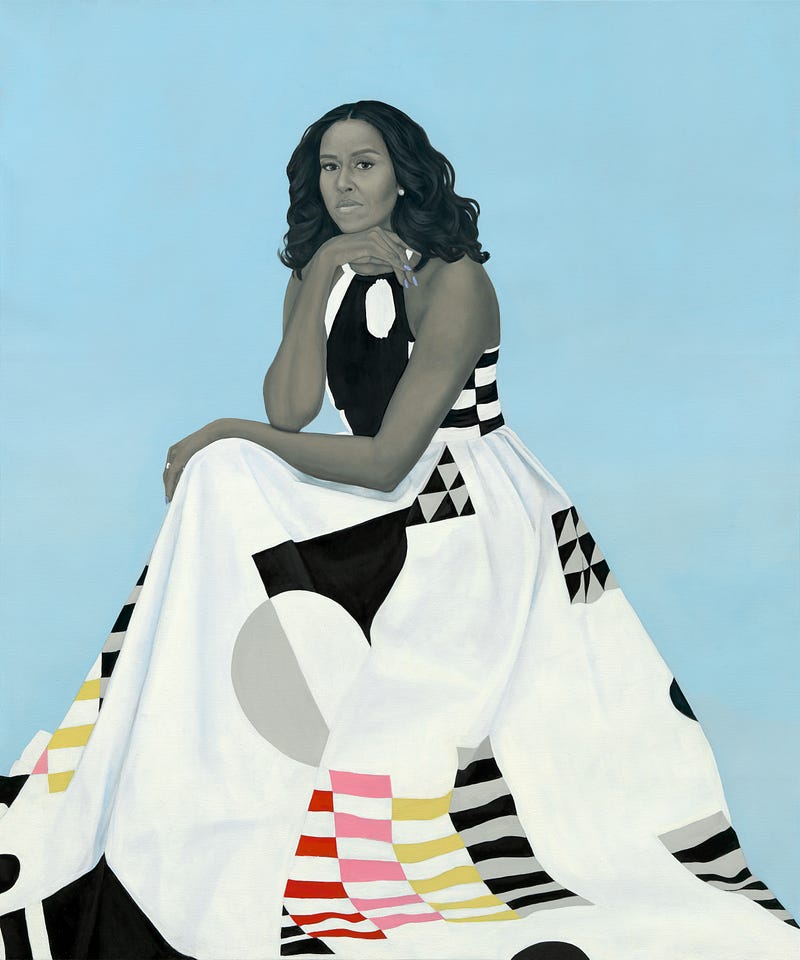
Who knew then, amid the swirls of Oprah in the crowd, that the same folks I saw on the risers — with Lake Michigan calm behind them — would not only reside in the White House and make incremental changes to U.S. policy, but by doing subtle things like working with designers of color and changing the art on the walls of the main residence, they would change everything. A cultural shift that brought the work of Wiley and Sherald to the homes of folks who could never hope to own such a work of art, let alone the powerful energy that comes from a portrait of a sitting U.S. president painted in a decidedly non-old-White-man pose and background.
Another synchronicity: The Obamas had their first date in 1968 at the museum, and now their portraits hang in the Renzo Piano-designed Modern Wing. Fitting.
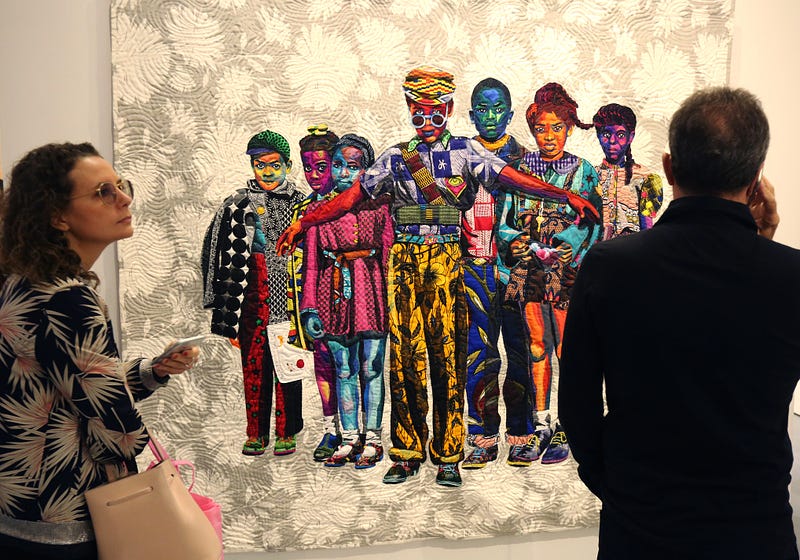
But that wasn’t all. On this artist’s date that I took with my friend, we had the opportunity to view a piece by Jean-Michel Basquiat and several pieces by textiles maven Bisa Butler. As we floated away from a packed-for-end-of-Covid Obama exhibition hall, we took in works that spanned the world of diversity: images by Gordon Parks, statues of Hindu gods, elaborate structures by Jeff Koons, and a larger-than-life, electric piece by Takashi Murakami.
Now, this is a day at the museum that I can actually enjoy with both friends and family. Living people. Art that sizzles and invites conversation. Acknowledgment of my culture. Acknowledgment of other folks’ cultures as well.
Also, this is the main point: Wiley, Sherald, Basquiat, and Butler all in the same art museum, at the same time, in prominent front-and-center spaces, and it wasn’t even Black History Month. I’ve been to the Art Institute many times, and the museum has hosted several wonderfully diverse public talks and installations that celebrate Black art, but to my knowledge, this is the first time so much of us was all over that museum at one time. Sure you can view the blue skies of Georgia O’Keeffe, but you can also cross the vestibule and see the layered quilts of Butler, whose portraits and reimagining of historic photos teems with color and life and meaning stitched into every face and trouser leg — plus there’s a playlist, and both Tupac and Stevie Wonder are on it.
You can see the Obama portraits and then see everything else. I’m not sure this would have happened 10 years ago. It certainly never happened when I was a kid, brought to the Art Institute by my Chicago public elementary school and told to gaze upon the muted colors and harsh gazes of painting after painting after painting by or of old, dead, White people.
While walking through the institute, I ran into maybe 10 friends and colleagues. It was within one of those conversations I learned that Butler’s exhibition opened during Covid and was extended — had to be extended — because it simply would not have been fair to her or to any of us to not have the opportunity to see these wonderful works in a more vaccinated, less potentially contagious space in time. She is also the first living artist to ever occupy the prominent gallery in which her work is placed. I didn’t read these details in any pamphlet, but again, on the eve of Juneteenth, it made sense that oral Black histories shared between friends preserve the backstory of the art history and American history we see hanging on the walls.
The Obama portraits are in Chicago until August 15 before heading to four other locations: the Brooklyn Museum, Los Angeles County Museum of Art, High Museum of Art, and the Museum of Fine Arts, Houston.


