
How to Learn Any Language by Watching TV and Movies
I used my knowledge in programming and natural languages to analyze 3,000 movies and find the best ones for learning to speak like a native
When no one in town speaks the language you’re learning and traveling abroad isn’t an option, movies and TV shows become the greatest source to learn and even become fluent in any language.
I experienced this firsthand by watching dubbed and original content in Portuguese and Russian to improve my language skills. In this article, I’ll show you how I learned multiple languages by watching TV, so you can learn any language like Spanish with soap operas or English with Hollywood movies.
Why Learn a Language With Movies and TV Shows?
Besides my own experience, I’d like to show you why you should consider learning languages by watching TV.
A survey by the education publisher Pearson English found in 2015 that 58% of English learners used TV shows such as ‘Breaking Bad’ and ‘House of Cards’ to improve their language skills. Even some famous people like the Liverpool manager, Jürgen Klopp, and the member of the Korean boyband BTS, Rap Monster (RM), have learned English by watching the American sitcom ‘Friends.’ If they could learn English by watching TV, you can definitely do it too.
In this guide, I’ll show you how I learned multiple languages with the help of movies and TV shows by:
- Using a 3-step method to learn the most common words in a language
- Practicing active and passive listening to understand native speakers
- Choosing the right TV show to develop an advanced vocabulary and great pronunciation
1. Learn the Most Common Words by Watching TV
The vocabulary of most languages follows the Pareto principle; that is, the most common 1,000 words cover over 80% of the speech. This means that you can understand most real-life conversations by learning the most common 1,000 words. You can find here the most common words in more than 100 languages.
In addition to that, the most common 3,000 word-families would be necessary to understand dialogue in film or TV shows. This is great news because if you watch content in a foreign language regularly, you’ll acquire useful words used in everyday conversation.
I used my knowledge in programming and natural languages to analyze 3,000 movies with Python and I came up with a ranking of movies that have the highest amount of basic vocabulary within dialogues. The transcripts analyzed were in English, but still, you can use this table as a reference to find movies you like that have an easy vocabulary in your target language. Some movies on the list may not be suitable for you, so please check their description on IMDb first.
Vocabulary in the CA (basic) and CB (intermediate) levels represent important words to learn according to Oxford word lists. A movie with high coverage has more vocabulary in the A or B level.
If you start watching movies with the simplest vocabulary, your chances to understand dialogues will increase and you’ll learn words used in everyday conversation. The vocabulary may slightly change between the dubbed and the original version, but this shouldn’t increase the vocabulary level because dubbed content often includes synonyms that help the local audience understand dialogues easily.
This is how I learned multiple languages by watching TV. I’ll use movies as an example, but it can be used for TV shows too.
Step 1: Pick a movie from the list above
Pick a movie you like that covers topics you’re interested in. Choose wisely because you’ll be watching this movie many times to learn your target language.
I strongly recommend you to start with easy movies or TV shows that you watched before in your native language, so you don’t have to worry about understanding the plot and getting to know the characters but mainly focus on understanding the vocabulary within dialogues.
Once you choose, find the subtitles in your native language and your target language. I use this website to find subtitles of any movie in multiple languages. The files are in .srt format, but you can easily convert it to .txt here.
Step 2: Watch the movie with subtitles in your target language and make a list
Watch a movie dubbed in your target language and add subtitles in the target language as well. As I mention before, you have nothing to worry about since you already know the plot, but, when necessary, you can check the subtitles in your native language.
Write down any new words or phrases, especially the ones that are repeated the most or you consider vital to understand what’s going on in a scene. Make a list of new vocabulary that you learned by watching the movie. If you don’t understand a lot of what you’re hearing, then don’t write down all the new words. Instead, try to guess which words you would use daily — those words would be worth learning later. As a rule of thumb, pick 1 word per minute at most. If you watch a 22-minute sitcom, then you should have around 22 words on your list.

Something I always do is to write the whole sentence instead of single words. That gives more context to understand how the new word is being used — remember that 1 word can have multiple meanings.
Once you feel confident enough you can follow step 2 without subtitles and only turn them on when you don’t understand dialogues in specific scenes.
Step 3: Learn only the most relevant words for you
Time is a priceless resource, so based on your time available, learn the 5 or 10 most relevant words in your list. Since everyone has different interests, your concept of relevant words may be different from mine. For example, for me learning vocabulary about sports like football in Portuguese may be relevant, but if you’re not into football probably you’ll never use this kind of vocabulary, so it shouldn’t be your top priority learning them. Prioritize which words you should learn first — based on topics you’re interested in — and you’ll become an effective learner.
Also, to find the most useful new vocabulary within my list, I match the new words listed with the most common words in the target language. Based on your level, match them with the most common 2,000, 3,000, 4,000, and so on. The words in your list that are considered common words in the target language could be considered relevant words for you too.
To learn the words, you can use flashcard apps like Quizlet. On top of that, I practice the new words by writing texts describing the movie watched and if possible, I describe the movie to a friend, so I have the opportunity to speak those words too.
2. Understand Native Speakers
Understanding the accent and pronunciation of native speakers becomes easier when you have your favorite actor speaking in your target language anytime you turn on your TV. I improved my language skills through active and passive listening.
Active listening
The most common way to improve your listening skills in a foreign language is through active listening, that is, to fully concentrate on understanding what is being said. So instead of watching a movie or TV show, you need to study them.
To do so, you have to follow steps 1, 2, and 3 mentioned in the previous section. However, instead of listing new words to increase your vocabulary, you should list any word that you consider native speakers pronounce considerably different than you.
In addition to that, you should watch the movie or TV show segment by segment. That is, you should split an episode or movie into small chunks to recognize how words sound in your target language. What I do is repeat some scenes a couple of times and analyze anything I find interesting. It could be new vocabulary, pronunciation, word order, or even grammar.
Then I repeat those words out loud trying to mimic the right way to say it. If you can pronounce words correctly then you’ll be able to understand them when they’re mentioned in movies by natives.
If you’re familiar with the International Phonetic Alphabet (IPA), you can use online dictionaries such as Oxford Dictionary or SpanishDict to easily learn to pronounce words with the right pronunciation in English and Spanish, respectively.
Here’s a rank I made after analyzing 500 first-rate TV shows available on the Netflix catalog. The method I used for this list is similar to the list of movies shown previously, but here I used BNC/COCA word lists. You can work with it the same way I recommended doing with movies before.
I also recommend you use a VPN to get access to the Netflix catalog in your target language. This would help you unlock many movies and TV shows dubbed in different languages that aren’t available in your country’s catalog.
Passive listening
Sometimes you’re just too busy to sit in front of the TV, but that’s not an excuse to stop learning a language. Most people would say that multitasking won’t help you develop a skill. I agree with this, but when this is the only option for you to engage with your target language, this becomes a good alternative.
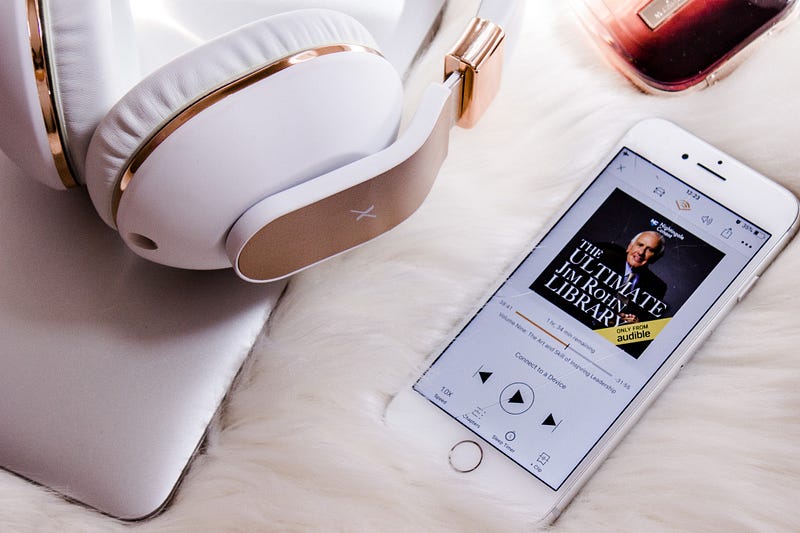
When I worked and studied at the same time, I had little time to learn languages, so my only option was to listen to audiobooks on the go. Audiobooks helped me get used to native speakers’ pronunciation and accent at the intermediate and advanced levels.
Many movies and some TV shows are based on books that have the audiobook version available in different languages. For example, you can listen to ‘The Hunger Games’ or ‘Harry Potter’ audiobook in Spanish while cooking or cleaning your house. I used Audible to listen to many audiobooks in different languages, but the Apple book store has a good catalog too.
3. The TV Shows That Will Take Your Language Skills to the Next Level
There are 2 areas in which TV can help you further develop your skills in your target language: advanced vocabulary and pronunciation.
The best TV shows that will help you develop an advanced vocabulary
If you’re at an intermediate or pre-advanced level, you probably feel that there are fewer things to learn; as a result, you might be thinking that you’re not making much progress anymore. Well, think twice because Oxford suggests that learners at an advanced level should know around 3,000 to 5,000 words — this means that there are many new ‘advanced words’ you can learn to increase your proficiency in the language.
As I mentioned before, most TV shows and movies cover only the most common 3,000 word-families, so it might be a bit hard to learn those advanced words through watching TV.
Fortunately, I did a data analysis comparing 83 popular TV shows to find the ones that often repeat those ‘advanced words’ so you can increase your chances of learning them by watching their episodes.
The TV shows with the highest number of ‘advanced words’ repeated throughout all their aired episodes would help you develop your vocabulary since studies revealed that you need to hear a word between 6 times to 17 times before you learned it. In case you become bored or saturated by watching TV shows with a long-running time, then go for the ones on the left that have a short running time.
If you’re more into movies and want to develop an advanced vocabulary, then watch movies from the same genre. A study revealed that low-frequency words (words less frequent than the 3,000-word families mentioned before) reoccur more often in programs within the same subgenre.
Speak like a native with original and dubbed content
In some languages like Spanish and Portuguese, the accent and pronunciation between native speakers from different countries change dramatically. For example, the Brazilian and European Portuguese have some differences that lead some people to believe that they’re different languages. However, other languages like Russian have almost the same pronunciation and accent regardless of the country where it is spoken.
That being said, I focus on developing great pronunciation and accent only when I feel comfortable speaking the target language.
I used a technique known as shadowing to get rid of my accent. This is an accent reduction technique that consists of listening to audio tracks and repeating everything that is being said by the native speaker. This is how I use this technique with movies, TV shows, and especially audiobooks:
Step 1: Choose an audio track and listen to it
I don’t choose any random audio track for this technique; instead, I look for content made by natives who speak with the accent that I’d like to copy. For example, Mexican or Colombian telenovelas would be a good option if you want to learn slang and everyday expressions used in some places in South America, TV series like ‘La casa de Papel’ would help you develop an accent from Spain, while Argentine movies would help you speak Spanish like a true Argentine.
Step 2: Listen to the audio
Listen to the audio one time to get used to the speaker’s accent and intonation. If you’re listening to audiobooks you can create bookmarks to save clips of the parts you find difficult to understand.
Step 3: Practise shadowing
Try to repeat what the speaker says with the same speech pace and intonation. You can start with 5-minute sessions in a day and then extend it as you get used to the exercise. If it’s too complicated or fast, you can slow down the speed of the audio. On Audible or YouTube, you can use the settings icon to slow down or speed up videos. You can also record any speech on your iPhone and find the same option in any voice recorder app.

Step 4: Record yourself, listen and compare
After each session, you should record yourself to compare your accent and pronunciation with the native speaker. Pay attention to what makes your recording different from the native speaker. I also ask for feedback from friends that speak with the target accent. When they listen to the 2 recordings, they detect the weak points of my accent easily.
Save your voice recording because they will help you keep track of your progress later.
Conclusion
TV shows and movies will help you increase your vocabulary, improve your listening, and speak as natives do. On top of that, you should choose what you’re going to watch based on your language goals. As explained in the article, some TV shows would be better to develop an advanced vocabulary, some movies would be easy to understand at the beginner and intermediate levels, while some specific content would help you get a native accent.


