
Stoicism – A Fundamentally Flawed Philosophy
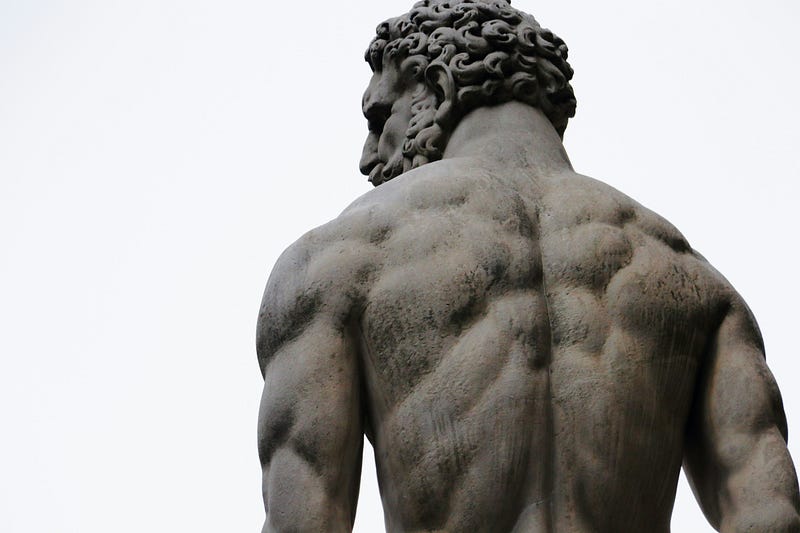
Arguably the most popular mainstream philosophical movement of the past 10 years has been the resurgence of stoicism as a set of virtue ethics. This has been in part a result of people like Ryan Holiday (Daily Stoic), as well as by self improvement social media content creators who wish to have a philosophical edge to their content. It seems that nearly every man between 15 and 30 considers themselves a stoic because of these influencers.
Despite this, I think that the stoic message has both been mangled by social media opportunists and wasn’t actually that good in the first place. It is an anti-human doctrine which, whilst appealing to the traditional masculine ideals so popular with its current support base, falls short when considering the realities of the human condition.
Appeal to Nature
The grounding of stoic ethics, that is, how the stoics suggest we ought to act, is nature. There is an underlying assumption that what is natural is good and unchangeable, and that this nature is something we can only be resigned to. A big part of this is the often repeated phrases “amor fati” and “memento mori”, to love your fate and remember that you will die. Whilst this sounds pretty good in theory, in practice, these ideas when considered in the context of the stoic conception of nature can only mean a complete resignation from any sense of personal responsibility. It means we must accept the world without any desire for it to be better, because, to revolt is to in some way defy nature. I think this is a massive mistake.
It is important to recognise our own potential for ignorance here. What seems to be natural is not necessarily so, particularly when considering what appears to be natural for groups of people, rather than for the individual. For example, it was assumed for a long time that black people were inherently inferior to white people. Women were seen as being naturally made to be housewives, etc. We now of course know that these things are not a natural fact and were incredibly harmful to those marginalised people, with the effects still felt in the modern day.
So then, taking this as our example, how can we possibly assert what is and is not natural? The entire history of oppression is a history of people who made this false distinction to excuse their abuse of others. It seems possible that by trying to live in accordance with some potentially misguided conception of nature, we may also oppress ourselves.
To think that we are the sole arbiters of what is and is not natural is foolhardy and gives ourselves too much credit. We all have biases which may reduce our ability to determine what is or is not natural.
For example, if we were brought up in a culture that taught us from birth that slavery is a natural fact, we would likely believe this, just like the people of the past. It is entirely possible that there are some other cultural constructs we believe to be facts of nature which are not actually so. It is my opinion that we ought to try to identify these areas and at the least recognise them as cultural constructs rather than inherent, natural facts which must be a certain way. We cannot do this under the doctrine of stoicism as it actively discourages questioning what nature is and asks us to resign ourselves to our current conception of nature.
The only things which we can assert to be natural are the things which do occur, as they naturally happen in response to whatever has happened. We cannot know if this is what would happen in a state of nature before civilisation, but we can collect data on what is the case now. In this way, appealing to a state of nature as an ideal is not a sensible position, as it is equivalent to longing for any ideal state of things. We cannot know if it is truly ideal, and we also cannot know if it is even possible. In the case of the stoic ideal, I would argue that it is neither practically achievable nor desirable.
Dichotomy of Control
Epictetus famously highlighted the dichotomy of control. That is, the dichotomy between the things within an individual’s control and the things outside of their control. Epictetus argues is that the only thing within our control is our own emotional and physical reaction to the external world, whilst everything else is not within our control, and therefore, is not worth concerning ourselves with.
The key takeaway here is that one ought to then learn to control their emotions such that they are unaffected by external events. An ideal stoic acts as best they can, and then has no strong emotion beyond that. There is allowance for a general sense of contentment, of eudaimonia, but nothing more. The stoic must aim to never be overly excited or saddened. Emotion must not have any say in their lives.
This idea is downright anti-human.
As humans, we are constantly immersed in our projects. We live to complete tasks which we decide are important through a variety of internal and external factors. A key way in which we can reach this point of knowing what we want to do is through our emotional desires. That is, perhaps we want to be seen a certain way by others, or we have a deep intrinsic desire to feel a certain way, and, as a result of the values we have cultivated, we know a set of actions will cultivate this feeling within us.
This whole process is entirely reliant on emotions, both positive and negative. We must have some emotional preference towards a potential task to then decide to undertake it. Even something which seems logical must also be founded in emotion to some degree. This feeling of emotion is an innate human trait. To remove it is to remove a fundamental characteristic of our humanity.
Beyond this, we also must recognise that our emotional response to the consequences of our actions will go on to inform our further actions. For example, if we decide to put our hand over a flame, it will hurt. We have learned that putting our hand over a flame will likely hurt us and is therefore not a desirable action to take. It is natural that then, next time our hand gets close to a flame, we may feel uneasy, as we do not want to receive a painful burn. This then prevents us taking the painful action. The same is true in reverse. If we learn something makes us feel good, we then naturally will do it more, and be excited to do it.
Our emotions are an incredible tool which ought to be consulted in decision making. Whilst logical consideration is also beneficial, it is worth recognising that to a large degree, these logical considerations must take into account our emotions and the emotions of others if they are to be at all practical.
The reality is too, the external world is far more within our control than our emotions. For example, if I throw a ball, is it not true that to some degree, I am in control of how far it goes? Depending on how hard I throw it, the ball will either go a longer or shorter distance. I have therefore exerted my will onto something external to me, disproving Epictetus’ claim that the only thing I control is my own actions. Through my actions, I have control of the things (and people) I interact with to some degree, even if this is not total control. I think negating this and essentially throwing our hands up in the air defies the human spirit. It is directly counter to our history of finding things which at first appear beyond us which we then manage to overcome.
Consider the invention of agriculture. For centuries, humans were hunter gatherers, who died if they just happened to not find food for a couple of weeks. Then, during the Neolithic period, this became far less of a problem. We could relatively sustainably grow crops and feed ourselves consistently. Now, to the earlier hunter gatherer, to say that finding food is within our direct control would seem ludicrous. Yet, it has become something we can do with ease and is far more within our control. Of course, there are still environmental factors outside of our control, yet we have over time lessened these factors. If we were totally resigned to them as just the way things are, we would not have the abundance of food we now enjoy in the Western world.
In saying this, it is also worth considering that more modern stoic proponents tend to conceptualise this idea as calling us to not dwell on negative emotions. This does have grounding particularly in the work of Seneca; however it is also worth pointing out that this is not what the majority of ancient stoics would have actually said to do. They were far more concerned with total annihilation of emotion rather than regulation. Although Seneca particularly highlights not dwelling on the past or the future, he does also seem to think we should regulate all emotion. The modern stoic movement seems to recognise this flaw and aims to remedy it to allow for a more positive version of stoicism.
I think that this is certainly worthwhile advice, but to label it as strictly a stoic doctrine is not completely in line with what the philosophers who founded it believed. They were an offshoot of the cynics, and I think that is very apparent in their desire to forgo any sort of desire or regret. For someone like Zeno, hope must seem as silly as regret. I don’t think that this is true for the rest of us though if we are to take our emotions seriously as a facticity of Being. It is my opinion that we hold a moral imperative to seek to be better than we were in the past. To seek to be better necessarily must involve both a hope for the future and a regret of the past.

A Concluding Thought
I don’t want to be resigned. I want to feel intensely. I want to be in the world, not outside of it. I want to live in the taste of my coffee in the morning, I want to feel love, I want to feel loved. I want the soaring highs and the crashing lows life deals me. I want to have passion for that which I care about. I want to put myself on the line. I want to make the world a better place. I want to push for more. To be more. I don’t want to live in a world devoid of anxiety or sadness because then I would be in a world without relief. I want to have the bad times so I can know the good. I don’t want to be stoic. I want to be human.
Thank you for reading, make sure to leave your thoughts in the comments!
For any enquiries, you can contact me at [email protected]