
A Critique of Libertarian Self-Ownership
Freedom, the market, and our existential predicament
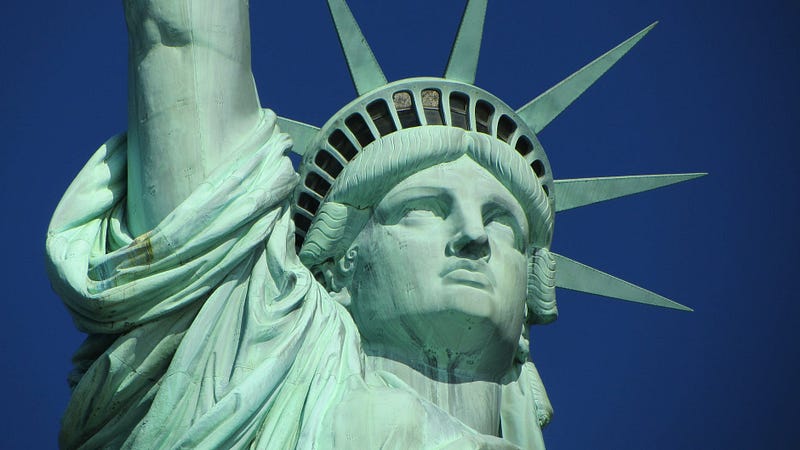
The Western shift from theocratic feudalism into what we think of as modernity was due to a series of revolutions that promoted different forms of individualism.
These began with Martin Luther’s protests and they continued with the influence of the Medici bankers on the Italian Renaissance, and with the philosophical Enlightenment, the American and French revolutions, and the scientific and industrial revolutions.
What united those upheavals was a rethinking of human nature. The ancient hierarchical view of social classes as being part of the “Great Chain of Being” derived from the evolutionary perpetuation of the dominance hierarchy as the default power distribution in social animal species.
Modernists broke free from all of that by promoting or perhaps discovering the human potential for personhood. Owing to our rational capacities, we each have godlike freedom of choice and creativity, compared to the animals that seem to be slaves to their traits and circumstantial stimuli.
Libertarianism and Modernity
Libertarianism or classic liberalism is a political development of individualism, the main idea being that our self-directedness is a source of our inalienable rights. These are natural rights, meaning that they’re independent of divine revelation and are discoverable by philosophical reflection.
In Two Treatises on Government, John Locke explained these natural rights as resulting from an inherent and foundational act of self-ownership. We occupy or possess ourselves and therefore have the exclusive right to the use of our person, our body, and our handiwork. Locke develops a theory of private property on that basis, since by mixing our labour with natural materials, the product becomes in part an extension of ourselves.
The ancient and medieval alternative was that God gives such rights only to the upper class, to the royal family and to the lords that own the land and swear fealty to the king or queen. The bulk of the population consists of women, slaves, and the peasants that work the land, all of whom are subject to arbitrary exploitation by the dominant rights-holders.
Thus, religious sanction was given to the sociobiological, amoral, and godless human dominance hierarchy in which alpha and beta elites dominated the weaker members of the group. Instead of the subterfuges of religious rhetoric and fearmongering, most animal species rely on their genetic automation, on their fight-or-flight response, and on the clarity of the signals sent by their physiological differences.
Again, what we think of as modernity is practically synonymous with the advent of individualism, which has at least one egalitarian implication: human nature is defined not by religion or by our body types or physical prowess, but by our mental independence; thus, everyone who’s rationally capable of exercising some freedom of choice has the honour of being a person, and all persons have the same fundamental rights as a monarch.
That foundational egalitarianism, however, is quickly overrun by natural social differences that capitalist enterprise re-establishes. We all begin as people: we own ourselves and have the exclusive right to decide what we should do and to dispose of ourselves and of the fruits of our labour as we see fit.
But once we proceed to interact based on those individualistic principles — after the death of God, of course, and after dismissing substitutes for ancient traditions such as collectivistic notions of our obligation to Society, the State, or Mother Earth — we hardly find that everyone finishes the race for private accumulation of wealth with equal records of accomplishment.
Some people are more creative, rational, aggressive, or attractive than others, for example, so they come out ahead. We even face the imposition of a neofeudal social order in which banks, colossal asset management corporations, and transnational monopolies dominate the world’s economies, and most people are reduced to working for pennies or for rent.
At this point, the libertarian steps in to reassure us that, despite that ironic economic outcome of modern individualism, all is fundamentally as it should be in these free societies: everyone still has the absolute and exclusive right to own property, just as they have the natural right to own themselves.
The wealthy, for example, have no obligation to pay taxes to support the poor, although they have the right to choose to donate to charities. On the contrary, the libertarian will say, an empowered government is liable to become tyrannical, whereas large corporations in a capitalistic context are subject to progressive constraints such as competition and boycotts.
Self-Ownership, Dualism, and Theism
Let’s assess the libertarian’s reassurance that little has gone awry in liberated, individualistic societies, beginning with the question of whether the concept of self-ownership is viable. If that concept strikes you as fishy, that might be because you’ve picked up on the fact that ownership is a relation between two things, the owner and the owned. Owning yourself would be like pardoning yourself, more like a miscarriage of justice than the basis of all human rights.
Philologically, “ownership” refers to a type of possession in which you occupy or seize something to have the proper use of it. The word is related to “owe,” which adds the idea of having an obligation to care for what’s possessed, and is from the Old English word, agan, meaning to possess.
This indicates that Locke’s bourgeois metaphor may be committed to the theist’s dualistic model of the self, according to which a self is an immaterial spirit inhabiting a material body. The soul would possess and own the body rather like an invading spirit might, as in the case of demonic possession. That’s how we might make sense of self-ownership, since we’d have the requisite two things that are related.
Laying aside that model’s obsolescence, there’s the greater worry that self-ownership as the basis of human rights implicitly appeals not just to substance dualism but to theism. Suppose there’s an immaterial spirit, and it inhabits its body. Why call that occupation a case of ownership, which would entail that the spirit is entitled to make use of that body?
The normative force of possession in that case would seem to derive from the further assumption that God created both and designed them to be used in that way. Both the spirit and the body would be artifacts of a perfect designer, so that by occupying the body (as opposed to committing suicide, for example), the soul would be obeying God’s plan and following a greater purpose.
The rights in question would no longer be “natural” or philosophical rather than religious. Moreover, the rights would no longer be tenable since theism is preposterous.
Self-Empowerment and Debt to the Landlord
The libertarian must search elsewhere for a way to make sense of Locke’s formulation. I can see two possible solutions. First, we might understand possession not in dualistic terms but in terms of potency. After all, “possession” comes from a Latin word, “posse,” that means being able or having the power to do something. (A “posse comitatus” thus refers to a body or force armed with legal authority.)
So we might leave both God and the immaterial spirit out of it and say that a person is evidently a mind or a brain, at least, that has power over its body. Self-ownership, then, would be matter of that capacity for self-control.
Here again, though, we’d be met with the threat of the naturalistic fallacy. Does might make right? Does the fact that the brain has executive control over its motor functions, for example, entail that the brain is justified in moving its body? Is power alone a basis for moral rights?
If so, the libertarian is led to an unwanted conclusion, because a person’s self-control is only a temporary phenomenon and is outweighed by nature’s power over the human body. That latter power usually takes the form of wave upon wave of wears and tears, slings and arrows of outrageous fortune that add up to the body’s growing old and weak over eight or so decades, whereupon nature triumphs over the individual’s corpse.
Besides that eventual overpowering of every individual, there’s a collective disempowerment as the natural environment resists what we consider our technological and social progress. Eventually, at least, our species will be extinguished whereupon our self-empowerment will have seemed illusory and a foolish conceit.
If might makes right, then, why shouldn’t the libertarian say with the Daoist or the ancient Cynic that we should surrender to nature and stop pretending we have ultimate control over ourselves?
The second solution is to return to the linguistic relation between “own” and “owe” and to appeal to the principle that with power comes responsibility. To own something would be to have at least some power over its use, but that power would carry an obligation to discharge a debt. Presumably, the debt would be to God or to nature which granted that temporary self-empowerment.
Again, we can dismiss the talk of a theistic debt as anachronistic. Mind you, Locke makes at least rhetorical appeals to theism in his discussion, as does the US Constitution. Specifically, Locke says God gave the planet to humanity, so Locke’s task is just to show how different people could have different private properties, given that the initial divine gift to us was on a collective basis. Once you start with that theistic premise, you’re off and running in establishing a moral system — except that you’re like Wile E. Coyote, running on thin air.
Alternatively, would it make sense to speak of a debt to something nonliving like nature or the planet? Would this debt be like the warm feelings you might have for an old pair of slippers with which you’ve grown attached? We’re skilled at personifying things, in erring on the side of mentality, because we evolved to deal socially with other minds in a clan. If the talk of our moral debt to nature for the mind’s power over its body is like the talk of subjective pictures in the clouds, the libertarian system of human rights would likely be founded on a fiction, on a noble lie at best.
Even if this kind of debt did make sense, it would have the opposite implications than the capitalistic ones favoured by libertarians. We’d have ethical constraints built into our fundamental right to liberty, because our ownership of ourselves would be power granted on the condition that we’d be obliged to use that power well. The libertarian would have to specify what that proper use would be.
The Incoherence of Libertarianism
That initial fishy smell seems, then, to have been a fair warning: libertarian self-ownership is a dubious notion. But for the sake of argument, let’s concede that that notion makes sense.
There’s another problem for the libertarian, which is the conflict between the two main principles in question, namely self-ownership and the extension of that right to the right of private property. The conflict is manifested in the self-destructiveness of postindustrial consumer societies, in the unbridled pursuit of individual, selfish or short-sighted happiness.
In Locke’s time, in the seventeenth century, there was little threat from the implicit conflict, because there were fewer than seven hundred million people on the planet. Human populations have skyrocketed since the transition to modern individualism led to technological advances and to improved living standards.
But that “progress” appears to have been unsustainable and self-destructive in the longer term. We grow economically at the expense of other species and of the ecosystems that support life. Human individualism, the invention of the person, is indirectly responsible for the sixth great extinction in life’s evolution, which is a hallmark of the Anthropocene.
All of that’s at the level of the real-world applications of personal liberties. The conflict shows up, too, in the principles themselves. The libertarian wants to say we have the axiomatic right of self-ownership and thus the freedom to come and go as we please. Of course, if everyone felt that they had that absolute freedom, libertarianism would be a recipe for chaos.
To make personal freedom compatible with a sustainable, civilized society, then, the classic liberal had to add something like John Stuart Mill’s Harm Principle, that our freedom is limited in that we shouldn’t deprive anyone else of the same freedom. Likewise, Locke added his moral provisos that we can appropriate the world’s resources as long we don’t let them spoil and there’s “enough and as good” left for others.
But by multiplying ourselves through our private properties, we evidently run up against the limits of our unrenewable resources. That in turn has the potential to deprive us of our right to self-ownership, because the planet, through global warming and the interconnectedness of the biosphere works to terminate our advances.
This internal conflict is hidden by the liberal provisos since the latter might be taken to imply greater caution than consumers would otherwise be inclined to show. If we take Mill’s principle seriously, we might think twice about purchasing cheap merchandise produced by impoverished labourers or we might refuse to consume with abandon, knowing that the environmental damage caused by unrestricted consumption would interfere with the freedom of future generations. Obviously, global warming and the sixth mass extinction run counter to Locke’s proviso that we should leave the planet as secure as we found it.
But what this means is that Mill and Locke saw the inherent conflict between the ethics of absolute individual freedom (freedom as power over ourselves) and the morality of the free market, of endless, unregulated capitalist production and consumption (freedom as power over everything else).
Suppose we drew no moral distinction between people and things, and we were absolutists about the free market. In that case, anyone would have the right to buy or to sell anything, including other people. That is, your right of self-ownership could be extended to the use not just of material and mindless resources but of human ones too.
In that case, the conflict would be most obvious since there would be not even a trace of morality left in this system which would reduce to naked social Darwinism. Your unlimited freedom would land you in the state of nature, of a barbaric war of all against all, and you’d have to fear that you too might be sold or treated as an object in someone else’s amoral scheme.
But what I’m saying is that the internal conflict in libertarianism is apparent even if we take the abuse of other people off the table and look at just the unlimited consumption of nature. Rather like other people do, the world fights back against some people’s progress, as it were. Just by being finite, the planet’s existence subverts the goals of infinite consumption and economic growth.
The conflict isn’t exactly one of logic since it’s possible we can take our progress off-world and begin colonizing outer space. The laws of physics put practical limits on that kind of adventure, and eventually, in the limit case, the universe would have to be infinite to support a perfectly free and expansionist market.
In any case, at present and in the real world, the incoherence shows up as the foolish self-destructiveness of the libertarian’s myopic sense of entitlement. If you believe you’re entitled to own as much property as you can technically afford, with the same impunity you have in using your body, you will in fact participate in a society that’s gradually but inevitably recoiling against you. You’ll be engaged in self-destruction, whereas you’d take yourself to be indulging in your powers. By flaunting your liberty, you’d be curtailing it.
Adam Smith and the Wisdom of the Virtuous Free Market
The libertarian will reply that there need be no such internal conflict or self-destruction, because of the magic of free markets. She’d point to Adam Smith’s reasoning in The Wealth of Nations, according to which governments should have minimal powers, because social interactions are too complicated to regulate.
One of those complications is the unintended consequence of many individuals’ self-interested decisions, which acts as an invisible hand that preserves the collective welfare, improving the whole society’s living standard. By contrast, a central planner that intends to achieve the same end would ironically fail to do so with the same efficiency as an unregulated market whose participants have no such altruistic intention. Far from necessarily destroying itself, a free market renews itself with technological innovations.
The problem with this libertarian response is that it neglects the fact that not even Adam Smith advocated for unbridled personal freedom. Indeed, rather than adding just a moral restriction or two, like Mill and Locke, Smith wrote a whole book, The Theory of Moral Sentiments (TMS), which argues for a virtue-based account of individual morality.
Smith’s economic theory assumes as foundational that the buyers and sellers would be self-regulated, that they’d attempt to act virtuously. That’s the only reason to trust in the “invisible hand,” because the many individuals that make up the market are supposed to take themselves to have something less than absolute personal freedom. We’re supposed to strive to have virtuous characters and to avoid extreme emotions and attitudes.
For example, Smith was opposed to the “fashions” which lead the gullible and the unwise masses to mistake wealth for virtue or for moral merit:
We often see the world’s respectful attentions directed more strongly towards the rich and great than towards the wise and virtuous. We often see the vices and follies of the powerful much less despised than the poverty and weakness of the innocent.
Smith eviscerates the kind of vulgar pop culture that’s so familiar today (TMS, 1.3.3):
The trivial accomplishments of a man of fashion are commonly more admired than the solid and masculine virtues of a warrior, a statesman, a philosopher, or a legislator. All the great and awe-inspiring virtues — the ones that can equip a man for the council, the senate, or the battlefield — are regarded with the utmost contempt and derision by the insolent and insignificant flatterers who commonly loom largest in such corrupted societies.
This isn’t to say that Smith thinks the government should correct for the corruption of the masses. As the author of the Stanford Encyclopedia article on TMS points out, one reason is that
Smith’s writings are permeated by a lack of respect for the sorts of people who go into politics: for the vanity that leads them to seek fame and power, for the presumption by which they regard themselves as morally superior to others, and for the arrogance by which they think they know the people’s interests and needs better than the people do themselves. He also believes that politicians tend to be manipulated by the preaching of merchants who do not have the good of the nation as a whole at heart.
In response to that I doff my cap and applaud at length. Indeed, politicians are the last type of people that should be entrusted with teaching citizens how to be virtuous. However, what Smith couldn’t have anticipated is the rise of mass communication and of transnational corporations that would be at least as powerful and as corrupted as the politicians at the helm of government.
It’s not a question of leaving the development of a culture’s character up to the independent decisions of the masses, as if the latter weren’t vulnerable to demagoguery. Rather, a postindustrial ethos is largely dictated by the very “fashions” Smith excoriated, by the cynical and self-serving elitist myths perpetuated by the media conglomerates and oligopolies.
As we see currently in the United States, for example, there are two rival informational ecosystems, two political tribes engaged in a culture war. In such an economically unequal society, the contents of the liberal and conservative convictions and character traits don’t bubble up democratically, with no framing of the issues by cultural influencers and by the tastes of the vastly more powerful upper class.
In any case, once the libertarian concedes that some systematic moral restrictions on freedom are needed to have any reason for trusting that an individualistic society won’t degenerate and destroy itself, the question is whether the libertarian can specify the provisos without
- entailing unwanted socialist policies, such as the wisdom of pooling tax dollars to help the lower classes that are victimized by unbridled capitalism, or
- being overly contrived and implausible, precisely to avoid such policies.
On the contrary, the reason some libertarians stubbornly restrict themselves to a boorish, absolute conception of their personal liberty is that they realize that any moral restriction for individuals could set them on a slippery slope to advocating for moral policies at the national level.
Liberty and Our Common Existential Predicament
Where does libertarianism go wrong? Not with the assumption that individuals are autonomous or even with assuming that our species advances at the expense of pristine nature, since we evidently seek to create properties we can own, by humanizing the wilderness, building artificial worlds that we design to serve us.
The problem is that the libertarian lacks a broad enough perspective. Indeed, libertarians are narrowly focussed on the urgency of defending the minimal state and the free market, and they tailor their moral theory to that end. What the libertarian misses in doing so are the implications of the fact that everyone is potentially self-directed and therefore free to some extent from the rest of the world.
What the libertarian misses, in short, is that this point about individual freedom defines our common existential predicament. What’s missed are the alienating effects of personal freedom, the absurdity of a world that could be freely transformed into an extended human phenotype, and thus the tragedy of human progress.
With its patriotic bluster about the blessings of liberty, the ideology of libertarianism comes across as a blinkered and fraudulent sales pitch. The net results of a so-called free market, of one dominated by large corporations rather than by an independent government are roughly Darwinian, animalistic, and neo-feudal.
We divide ourselves into narrow-minded tribes and social classes in a glorified dominance hierarchy. We act out of self-interest, but with little virtue to guide us or to prevent our postindustrial societies from degenerating and from undermining themselves by selfishly and foolishly depleting the planet’s unrenewable resources.
But the libertarian says we’re supposed to cheer on these processes because freedom is the ultimate value. Perhaps, but freedom is also the ultimate curse. We’re condemned to be free to decide how to live. We have no foundation in God or in nature, but are relatively independent, and we all share that burden. That existential commonality alone is a source of value.
We’re on the same team against nature’s absurdity and inhumanity. Instead of being such childlike egotists in pretending that human freedom has mainly some (catastrophic) economic implications, we should reflect on the existential context, if only to gain the virtues needed to make capitalism half-way sustainable.


