
A Crisis of Midlife Crises is Coming
It might even be here already

Last night, I was changing my clothes, and my husband stopped me.
“What happened there?” he said, pointing at my thigh. I looked down to discover an unruly, mottled bruise the size of my palm. My husband joked, “If somebody saw that, I’d get arrested for abuse.”
“Oh,” I said. “I had an itch. I scratched too hard, I think.”
He looked at me like I was crazy. Who scratches themselves that hard?
Explaining it out loud just made me sound more unhinged: it wasn’t a normal itch. It was an unsettling discomfort, buried deep down in the muscle. An awful, maddening, unscratchable wrongness. I couldn’t ignore it; I had to try to dig it out, however weird that sounds.
But all I did was give myself this gnarly bruise.
This is the sort of thing that happens to me now that I’m approaching middle age. My body is increasingly riddled with itches, quirks, and injuries — most of them self-inflicted in one way or another.
But what’s happening to my body is really just a surface issue, a symptom of what’s happening in my mind.
Is it possible for a soul to itch?
For the last year or so, I’ve been possessed by increasingly frenetic, impractical desires: to quit my job, start a new business (or six), write a book, star in a play, record an album, learn karate, open a writer’s commune. You name it.
But I’m the breadwinner in a house of four. My children still need my help to get a plate of crackers or tie their shoes. I have no time, and I have no mental or emotional reserves. So I drop each new project after a few days or weeks, where it clutters the floor of my mind. Which makes me even more itchy and uncomfortable, so I scratch even harder next time.
And I just keep bruising myself.
I thought I was alone, at first. I’m an unusual person, absurdly confident and independent. I figured this was my overachieving nature coming back to bite me.
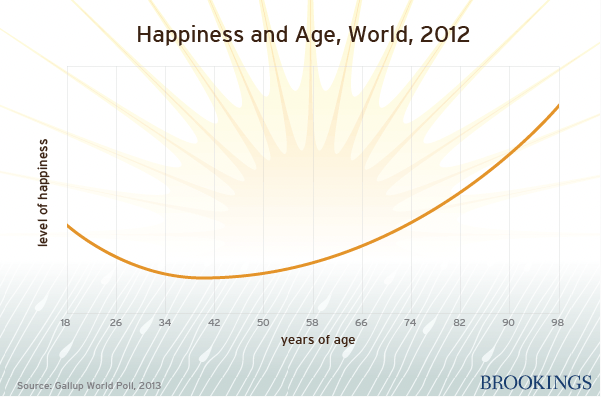
But it turns out, I am not unique at all. There is a well-documented drop in happiness in humans all around the world in the 35–50 age range. And — despite the trope of the man buying his convertible and filling it with nubile twenty-somethings—midlife crises are actually more common, and worse, for women.
Women between the ages of 40 and 59 in the United States have the highest rates of depression (12.3%) of any group based on age and gender, according to the Centers for Disease Control and Prevention. Women’s midlife low comes earlier, too — around the age of 40 in the United States, versus 50 in men.
From what I have read, I am the textbook definition of a woman going through her midlife crisis. Symptoms of depression? Check. Restlessness? Check. Irritability? You bet. Trouble sleeping? The worst. Sudden changes in behavior? Increased impulsivity? Thank God my husband is a champion at nodding supportively while I describe my plans to build a billion dollar internet content empire in my two hours a week of free time.
The only way in which I don’t perfectly match the profile is that I’m a bit early, just 37 years old. However, I don’t think that’s going to be unusual for long.
I remember, as a kid, watching sitcoms poke fun at the wave of baby boomer midlife crises. The TV dads were always starting a band, flirting with younger women, or getting a toupee. My own parents were about that age, and I watched my mother buy a sports car and release roughly a can of hairspray into our bathroom air every morning.
But then the boomers got older, stashed their convertibles in a garage, and settled down. The media obsession with the midlife crisis faded with my mother’s fire engine lipstick.
We haven’t heard about the midlife crisis since then. Gen X, as a smaller generation, didn’t get all the hoopla and fanfare as they passed into middle age. (Though, on closer inspection, the midlife low hit them just as hard, and they’re not out of the woods yet.)
But millennials like myself are the largest demographic group in the United States. We’re even bigger than the boomers. And when we hit this midlife low, it might not just be sitcom fodder. It might be really, truly awful — and not just for us, but for the whole country’s economy, as we’re the biggest contributors to it.
We’re struggling enough as it is. Wait until all 72 million of us sink even lower — the Great Resignation will turn out to be just a shot across the bow.
Part of the reason the midlife crisis will hit my generation differently is that millennials were raised on Captain Planet and self-esteem classes. We’ve been taught that we can be anything and do anything, and that it’s our duty to “make a difference.” And up until now, we’ve mostly tried to live up to this responsibility.
But as we are passing into middle age, we are realizing that our efforts haven’t paid off. Democracy is on the decline, temperatures and prices are on the rise, and incomes remain flat. Everything is a dumpster fire, basically, and instead of being mad about it, we’ve been trained to think it’s our own fault.
While it’s normal to question life choices around middle age, our questions are less “Should I have dated Jimmy back then?” and more “Did my failure to volunteer for Hillary contribute directly to the impending collapse of American democracy?”
It’s a different thing.
As the idealism of youth faces the harsh realities of middle age, a whole generation of millennials is either going to explode from guilt and anxiety or face an uncomfortable truth: we are each only one of nearly eight billion people on Earth. We cannot “make a difference” in the way we were told. The power is not ours, after all.
Even if I throw every ounce of myself into addressing climate change, I can’t actually solve that problem, or anything close to it, because it is not my personal heating bill that’s driving the crisis. It’s the collective behavior of giant corporations and governments that is causing us problems. And these are things that I have very little control over, as one of eight billion.
Pair all of this with the the fact that most millennials are already stretched to the max (even with our collagen still in tact). Many are raising young kids while also caring for aging parents in a time where schools can just close for two years with no warning — and your boss will still expect you keep working, leaving you to pour Cheerios into a dog food bowl and let your toddler go feral.
This isolation and stress has destroyed our faith in our community. Our faith in American systems is gone. Our faith in the arc of history is gone. And our faith in ourselves is next to go. So, as rough as the boomer midlife crises were, what’s about to hit us is going to be much, much uglier. Much darker. Much deeper.
It’s going to leave a nasty bruise.
But — and I say this now as much to comfort myself as other millennials — we have to remember that we will heal one day. The U-curve of happiness always comes back up.
We will take stock of our relationships and the meaning they give to our lives. We will start thinking more of what we have accomplished, and less of what we haven’t. We will remember (some of us) to exercise. We will learn how to sleep again. Our hormones will settle. We will find ways to push for collective action and stop taking everything on our own shoulders.
It will get better, eventually. (At least, that’s what Emma Thompson promises, and I trust that lady.)
Until then, let’s look out for each other. Because for the next little while, we’re going to need all the help we can get.
Want to read more from an unusual millennial finding meaning in midlife? Subscribe here to get emails whenever I publish. And to get access to all of Medium’s content for just $5 a month, join with my referral link here, and you’ll directly support my work.


