
A Crime With a Fine is a Crime Only for the Poor
When a speeding ticket means economic ruin.
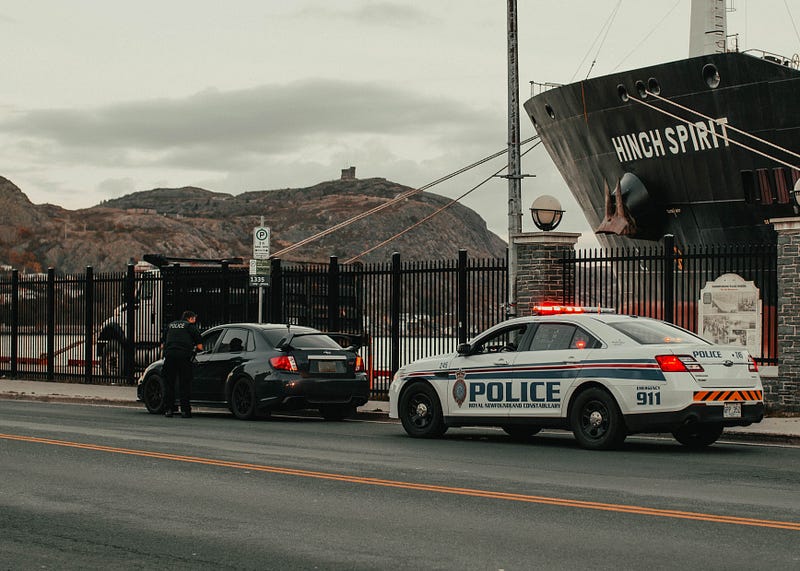
One of the most interesting things that I’ve learned in the past few years is how criminality and low socioeconomic status are often related. This is not because poor people are inherently bad or more criminal — middle-class and rich people commit crimes at similar rates. It’s just that we have built a system that criminalizes being poor.
Here’s the thing: if I got a speeding ticket tomorrow, I would be a bit miffed, but it wouldn’t ruin my life. I would likely find a traffic lawyer to reduce the ticket to a non-moving violation and pay a few hundred dollars in lawyer fees and ticket fines, but that’s something I can afford.
Now, for someone who can barely afford groceries, a speeding ticket is devastating. They must deal with the ticket, which may mean taking time off work that they can’t afford to go to court. The alternative is paying a fine that they can’t afford and then dealing with increased insurance costs that they also can’t afford.
The upshot may be that they can’t afford enough groceries for the month anymore, or that they have to choose between medication, rent, and utility bills. They may need to pick up extra work to cover the cost, which adds stress to their life and makes any health problems they may have worse. Their entire life has changed because of a single fine.
For anyone who says “well, they shouldn’t have broken the law if they can’t afford the consequences,” then (a) you’re missing the point, and (b) replace a speeding ticket with an expired plates ticket. A lot of people don’t necessarily have the time or money to get down to the DMV and pay the cost of renewing their license plates. The same goes for a burnt-out tail light. Someone may not even know that it’s burnt out and get a ticket for it anyway, which ruins their whole life.
Sure, some people get away with these things for months on end without getting pulled over, but some just get unlucky (or get pulled over for the “crime” of driving while black). Add to that the premise that some municipalities thrive because of traffic fine revenue and you have a recipe for someone who is otherwise law-abiding getting hit with a fine for any tiny little thing and having that ruin their life.
Let me put this into even more perspective. A fine for someone who is struggling and a fine for me are very different experiences when that fine is a couple of hundred dollars. Fines for the wealthy are nothing. Here are a few examples:
Mount Everest is covered in trash because the people who go up and down the mountain don’t pick up after themselves. The government of Nepal has introduced a fine of $4,000 for anyone who doesn’t bring down 8kg of litter from their climb. However, considering that summiting Everest can cost upwards of $100,000, many climbers simply ignore it because if you have 100 grand to drop on climbing a mountain, what’s another $4,000?
Or what about the guy who got arrested for sitting in the backseat of his Tesla while it drove him around? He went to jail and they impounded his car, and as soon as he got out of jail, he bought a new one and did it again. He was quoted as saying he has “unlimited money” to spend on new Teslas and will keep doing it indefinitely. This is not his first time courting notoriety with his wealth, and he appears to relish the fact that his money will buy him an escape from whatever consequences he might face.
The thing is, the wealthy have a lot of privileges afforded to them by their money, and one of them is, essentially, an entirely separate justice system. They can afford lawyers to quash any lawsuits that may be brought against them by a rando with less wealth and fewer resources than they do, no matter how justified that lawsuit may be. This is, essentially, how Donald Trump does business.
Then there is the criminal justice system as a whole. The wealthy can afford cash bail and will often face their criminal trials from the comfort of their homes unless a crime is so heinous that the judge revokes bail. Someone who has few resources will likely spend a lot of time in jail, even if their bail is only a few hundred dollars.
For violent crimes, this can help keep people who may be a danger to the public from committing more violence. However, being arrested for nonviolent offenses like unpaid tickets or basic drug offenses often means that people who are not a danger to anyone are instead locked up for days, weeks, or months on end before their trial.
This often means lost jobs, lost wages, and the general destruction of their lives over what may have been an unpaid ticket that they couldn’t afford in the first place. Add to that the fact that inmates are often responsible for the cost of their confinement and many people who spend time in jail once wind up back because of unpaid fines and costs, perpetuating the cycle of incarceration.
These people are not criminals, they simply cannot afford to face the American justice system, a system where an unpaid ticket can mean years of incarceration. Meanwhile, those with resources can pay their fines with minimal issues or, in some cases, simply send their lawyers in to do it for them. This has created a “justice” system that unfairly targets those without resources, perpetuating systemic poverty and racial inequity.
So what do we do about this? Well, I think the best thing we can do is work to eliminate poverty. One of the biggest causes of criminal activity is poverty; reducing or eliminating poverty means that crime goes down. Programs that distribute money to individuals, such as universal basic income, can help lift many out of poverty, and improving the social safety net will also help. Raising the minimum wage is another good step and pegging it to inflation is also helpful.
Unfortunately, the American justice system relies on inequitable treatment of the poor and lower classes to function. The prison system relies on a steady flow of inmates to provide it with free labor — literally institutionalized slavery. Yes, slavery is still alive and well in America, and it’s written into the 13th Amendment (emphasis mine):
Neither slavery nor involuntary servitude, except as a punishment for crime whereof the party shall have been duly convicted, shall exist within the United States, or any place subject to their jurisdiction.
The reality is that prisons and jails have every reason to support and enforce unfair fines and perpetuate the cycle of prisoners who end up in jail for those fines. Having a perpetual supply of free or incredibly cheap labor is pretty enticing to just about any prison system; it’s why we have the highest incarceration rate in the world.
And, of course, this is largely motivated by race. Clicking through that article I just linked, you’ll find that 1 in 9 men will be incarcerated, but only 1 in 17 white men will face incarceration compared to 1 in 3 black men. Does that mean black men are more criminal? Of course it doesn’t. However, non-white people are much more likely to experience poverty compared to whites — almost 20% of black families experienced poverty in 2020 compared to 8.2% of white families.
What’s worse is that the system is designed to keep them there. The War on Drugs was unfairly targeted at minorities, and black people are arrested and convicted at higher rates for minor drug crimes despite having similar usage rates as white people. This perpetuates the stereotype that minorities are more criminal than whites; combined with the issues I’ve described around fines and we can begin to see a clearer picture.
This is a lot of evidence that points to a system that intentionally keeps nonwhites, particularly black and Latino/Latina folks, from reaching the middle class and beyond. The American system is packed with racism, both implicitly and explicitly, that has been baked in since the founding of the country and has only been reinforced since then.
Many of the stereotypes that a lot of people have of black people — increased criminality and drug use, for example — are caused by the system and are not inherent to the people they target. The idea that poor people and minorities are more criminal than the middle class and the wealthy is completely untrue. Rather, the system is designed to criminalize being poor and tends to ignore or give lighter sentences to those with wealth.
Unfortunately, excising the racism from the American justice system would probably require a nearly complete rewrite of much of our legal code. And, for whatever reason, the Republican party has decided that white supremacists are now in charge, so they’re putting forth a strong effort to prevent any such thing. Well, stronger than usual, anyway.
Right now, the system is what it is, and criminal fines will continue to unfairly target people on the lower end of the socioeconomic scale. Some places are doing away with things like cash bail and making other efforts to reform the criminal justice system to be less unfair towards the poor. I am hopeful that this will start a trend going forward, but based on the number of Republican-led states with regressive lawmakers, I’m not optimistic.
None of this even begins to touch on other measures that criminalize homelessness in particular, as though being poor wasn’t enough of a problem. That is a whole other article.
Right now, all I can suggest is that you lobby your lawmakers in a push for more equity in fines and cash bail. Reform efforts are going on in various places across the country, but again, there is an entire political party that is opposed to progress in general and focused on returning America to its racist roots (even more racist than we already are, anyway).
I desperately hope that we can reach a point where we as a country no longer criminalize being poor, homeless, or BIPOC. I think the only way we can move forward as a country and restore the American Dream is to get to a point where there is equity for all. That requires a lot of stuff — more than just this, we would need to create a much better health system than we have and increase the minimum wage to an actual living wage. That’s a tall order, though.
And, for anyone who thinks “oh, this will never apply to me,” remember: almost everyone in America is a couple of missed paychecks or a cancer diagnosis away from total ruin. You can be comfortably upper-middle-class but wind up with rare cancer that your insurance won’t cover, and a year later you’ve survived your cancer and gone bankrupt in the process.
Unless you have millions of dollars in wealth, you are at risk of losing everything to a couple of months of bad luck. The social safety net in America has been systematically unraveled for the past three decades, and while those on the lower end of the wealth spectrum have taken the brunt of it, there is little protecting most of us from winding up there too.
So, go fight for a better system that doesn’t criminalize being poor. Even if you can afford a $200 ticket today, one streak of bad luck could mean you might not be able to next month. Fight like your life depends on it, because someday, it just might.
If you appreciate my work, why not join Medium as a paying member, which allows you access to unlimited stories (not just three free stories per month). Click this link or the image below. I will receive a little portion of your membership fee, but it won’t cost you any extra.
If you liked this, please subscribe to my publication, Thing a Day. I publish something every day on a variety of topics, so you never know what you’re going to see!
Here are some other things I’ve written:


