
A Crash Course in Cryptocurrency Investing for Careful Newbies Plus 4 Recommendations
You need some skin in the game to have any hope of reward
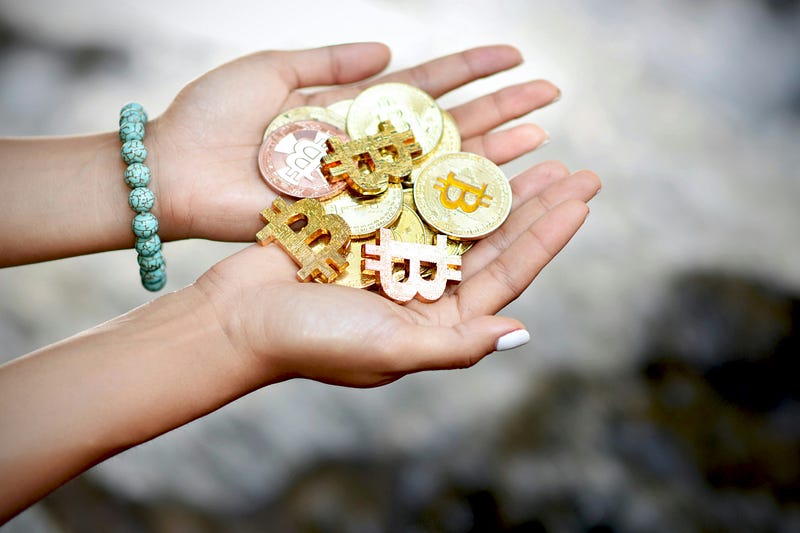
Disclaimer: I’m a cryptocurrency enthusiast, not a financial professional. Invest at your own risk using money you can afford to lose.
Now is a fun time to be invested in cryptocurrency. When I check my Coinbase account once a week, it’s usually up by a few hundred dollars. My account has more than doubled since October 2023 without putting much new money into it.
The Bitcoin halving — an event that takes place every 4 years and further tightens the finite supply of Bitcoin — is set to take place in about a month. The halving is a catalyst that drives up the price of Bitcoin over the long haul. And with Bitcoin now being bought by exchange traded funds (ETFs), Bitcoin — and the entire universe of thousands of cryptocurrencies — is on a roll.
I’ve been investing in cryptocurrency since right before the last halving in 2020, and I’ve pocketed thousands of dollars of gains. Although I could have done better if I’d been more disciplined and dealt better with crypto’s notorious volatility, I’m learning. Here are a few things I learned, along with my 5 current crypto favorites.
A crash course on cryptocurrency
Here’s Wikipedia’s definition of cryptocurrency:
A cryptocurrency, crypto-currency, or crypto is a digital currency designed to work as a medium of exchange through a computer network that is not reliant on any central authority, such as a government or bank, to uphold or maintain it.
Since cryptocurrencies are secured by cryptography, they’re almost impossible to counterfeit or double-spend. Most cryptocurrencies exist on decentralized networks using blockchain technology, which is a distributed ledger enforced by a worldwide, diversified network of computers.
That decentralization feature is one of crypto’s major attractions. Decentralization means that cryptos are not (in most cases) issued by a central authority like a government. So crypto is insulated from government interference or regulation.
This lack of oversight, though, can be a problem. With crypto, you are your own bank, so you need to take steps against being scammed out of your crypto. I hold most of my crypto on the Coinbase exchange, which has a very small chance of being hacked.
Cryptos are alternatives to fiat currencies, which are government-issued forms of money like dollars and euros. Most people consider crypto its own asset class.
The granddaddy of crypto is Bitcoin. Each unit of Bitcoin, also known as a coin or token, is now worth more than $70,000.
Bitcoin is so important to the market that all of the other thousands of cryptos are called altcoins. That is, they’re cryptos that are alternatives to Bitcoin. As of June 2023, there were more than 25,000 altcoins, and 40 of them had a market capitalization exceeding $1 billion.
After Bitcoin, the next most important crypto by market capitalization (market cap) is Ethereum. The symbol for Ethereum’s native token is ETH (cryptos have ticker symbols that can consist of up to 6 letters), and one unit is called an Ether.
Some of the coins with the highest market caps are stablecoins. These centralized cryptos attempt to tie their price to the US dollar. Examples include Tether (USDT) and USD Coin (USDC).
Another crypto term you may come across is a whale. That’s a person or entity which owns a large amount, generally $100,000 or more, of a given asset. One of the risks of crypto is that the price of smaller coins with low market caps can sink when whales sell off their holdings.
Why and how should you invest in crypto?
Cryptocurrency is an alternative investment that allows you to get started with a small amount of cash. For instance, I usually invest $100–200 in individual cryptos. (Some altcoins cost less than a dollar each. But you can buy fractional amounts of any kind of crypto.) These relatively small outlays of cash can have outsize returns.
It used to be tough to invest in crypto. These days, you can buy most tokens on crypto exchanges. I use Coinbase because it’s simple to buy and hold just about all the cryptos I’m interested in buying.
I’ve written an article about buying Bitcoin on the Coinbase exchange. Those instructions also apply to the hundreds of other cryptos you can buy on Coinbase. You’ll find that information here if you need it.
All told, I’ve invested in several dozen cryptos. Some went down a little or a lot, some seesawed about the same price, and a few went up quite a bit.
If I’d been more disciplined in my crypto journey, I would have had better returns. I’m still annoyed with myself that I didn’t load up on Ethereum when it was $200 a pop. But I’m learning.
Note on recommended cryptos
I pieced these recommendations together from newsletters and news outlets that I follow. I must confess that I also hold Cardano because my friend loves it and we talk about its ups and downs. Cardano is doing OK, so I keep it around, but it’s not on this list.
To keep things simple, I avoid cryptos that I can’t buy on Coinbase. Diehard crypto fans will point out (and rightly so) that I’m leaving a lot of money on the table following this approach. But for me, crypto investing is a profitable hobby, not a stressful business.
Investment considerations
Since I don’t have a huge amount of ready cash, I start off investing about $200 per crypto. If you have more, invest up to $1K. When a coin skyrockets, I discipline myself to cash out half of my stake and enjoy a free ride on the remainder.
One important school of thought in the investment world is that you should concentrate your portfolio on a few carefully chosen assets. That belief — which translated to practice — produced outstanding results for legendary octogenarian investor Warren Buffet.
Although I’m a fan of bright, shiny objects, I’m leaning more toward Buffet’s idea of putting a few eggs in one basket and then watching that basket.
I started off investing in a bunch of cryptocurrencies. But I wanted to simplify my life, so I decided to resist FOMO (fear of missing out) and cut out some cryptos. The first coin I cut was Dogecoin. A meme coin with no real underlying utility, it nevertheless made the billion-dollar-market-cap list.
When I checked my crypto recently, I saw that Dogecoin had taken an almost 7% dive. I’m not up for that kind of loss for a “fun” coin, so I immediately swapped it for Ethereum, one of my core cryptos. I’m narrowing down my portfolio to concentrate on a few cryptocurrencies that I like and somewhat understand, and that have done well for me. Here are 4 of my favorites.
Recommendation #1: Bitcoin (BTC)
The cryptocurrency that started it all in 2009, Bitcoin (BTC), is on a roll. A good portion of its gains are behind it, but most analysts consider that it still has plenty of upside. The narrative is that there’s a finite supply of bitcoin, and the price will only go up.
No crypto portfolio is complete without this gateway coin. I recommend that you invest at least $200 in BTC. Your money can’t grow if you don’t plant a seed. I consider Bitcoin to be a store of value, much like digital gold, and I’ve parked several hundred dollars there.
Recommendation #2: Ethereum (ETH)
If Bitcoin is the king of cryptocurrencies, Ethereum is the queen. Started in 2015, ETH is second to Bitcoin in popularity and market cap.
ETH is in line for exchange-traded funds (ETFs), which will open up the floodgates for institutional investors. Earliest regulatory approval would be in May 2024. However, the chances of approval in May are now down to about 30%, according to Bloomberg analysts.
Still, not getting ETFs approved just yet likely won’t stop Ethereum’s upward trajectory. As of this writing, ETH is flirting with its all-time high of $4,891. Forbes predicts it could rise to $40,000 by 2030.
I put more money into ETH than BTC because I think it has more room to run. Also, from what I’ve read, ETH seems more versatile and technically advanced than Bitcoin. Another benefit of ETH is that you can stake it, which means that you can earn interest on it.
Recommendation #3: Uniswap (UNI)
You don’t hear much about Uniswap, but it’s consistently the best player on my team. It also has the psychologically satisfying advantage of being a low-dollar token. Right now, one UNI sells for about $15. Some analysts expect the price to climb steadily to the $100 range by 2030.
Uniswap is the largest decentralized exchange in the world. It allows peer-to-peer crypto trading and offers the tiny altcoins that centralized exchanges like Coinbase don’t carry. The translation of “peer-to-peer crypto trading” is that you pay in crypto, not fiat currency like dollars.
I bought my UNI tokens on Coinbase and store them there. I’m probably giving up gains by doing that, but I want to keep things simple.
Recommendation #4: Solana (SOL)
I’ve been holding Solana (SOL) for about a year, and it’s performed well. Fun fact: holding crypto is called HODLing (hod-uh-ling), which means Holding on for Dear Life.
Solana runs on its own blockchain, but it’s similar to Ethereum’s. Known as the “Ethereum killer,” SOL has a loyal following and is known for its high-speed transactions and scalability.
Solana now sits at about $165. Some predictions say it can top $600 by 2030. I think that could happen. There’s strong investor interest, and crypto rises and falls based, in large part, on the narrative.
So far, SOL has performed well for me. I’m about to take profits and let the remainder run.
But I don’t think SOL is going to kill Ethereum. There’s enough room in the cryptoverse for both Ether and Solana.
In conclusion
Yes, crypto has gone up a lot lately, but I think there’s still plenty of upside. The Bitcoin halving slated for mid-April has historically been favorable for Bitcoin, and its rising tide lifts up altcoins, too.
As I said in the introduction, I’m not a a financial advisor. But if you’re thinking about putting some cash into crypto, now seems to be a good time to do it.

Visit us at DataDrivenInvestor.com
Subscribe to DDIntel here.
Have a unique story to share? Submit to DDIntel here.
Join our creator ecosystem here.
DDIntel captures the more notable pieces from our main site and our popular DDI Medium publication. Check us out for more insightful work from our community.
DDI Official Telegram Channel: https://t.me/+tafUp6ecEys4YjQ1