
A Court Says Frozen Embryos Are Children. What does the Trolley Problem say?
The Alabama Supreme Court and Personhood
The Supreme Court of Alabama, USA, ruled in an 8–1 decision that frozen embryos possess the same rights and protections as children. Fertility clinics can be held liable for “wrongful death” for whatever happens to the embryos in their freezers.
America’s debates about reproductive justice share a common driving force: lacking consensus on definitions of “person” and “abortion.”
The famous thought experiment, “The Trolley Problem,” can help us think through our definitions of personhood.
What is a person?
Modern medical technology has complicated our understanding of personhood.
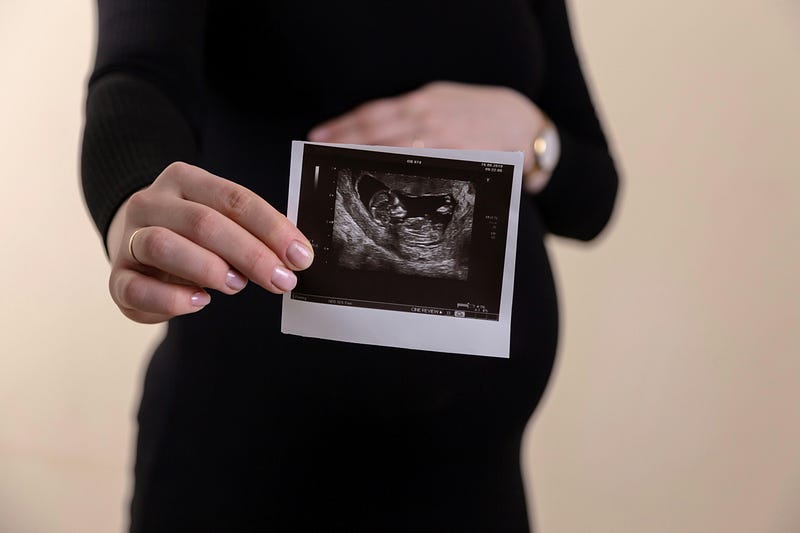
We have photos and sonograms of creatures who appear to be babies. But they may be two-and-a-half inches long and missing most internal organs. We can listen to a womb and hear something very much like a heartbeat at only a few weeks of gestation. Actually, that sound is nerve activity where the heart is. And we can keep alive premature infants who would have died only a generation ago. For crying out loud, researchers are working on artificial wombs.
As a result, we’re not sure what a person is. The black-and-white silhouette of a baby’s head on a sonogram — even the cartoon illustrations of a 12-week-old fetus — strikes our brains as a baby. The sound of a pulsing beat hits our emotions like a heartbeat. The medical descriptions of a 2.5-inch fetus and a machine producing a sound to represent nerve signals just don’t burrow into our minds and hearts the same way.
Faced with fetal photos and sonograms, some people decided that life begins at conception. Once a woman’s egg is fertilized by a man’s sperm, the process of life formation begins. If that process isn’t stopped, the embryo (usually) grows into a baby that can survive outside the womb. An embryo is alive. People are alive. An embryo is a person.
But it takes 5+ months for a fetus to develop enough to survive outside the womb. Then, survival depends on aggressive and astonishing medical intervention in a NICU. The pro-choice position argues that life begins sometime around the age of viability with medical care. A fetus isn’t viable until it can survive. To live is to survive. A non-viable fetus is not alive.
Pro-choice logic allows for women to intervene in the life formation process of an embryo sometime during the first 4–5 months of pregnancy. To destroy a person, in the pro-life view. The pro-life alternative, restricting abortion to the first few weeks or outlawing it altogether, necessarily controls women’s bodies and life choices.
So far, Americans and this essay have discussed embryos inside uteruses. Medical technology complicates things further, this time with in-vitro fertilization or IVF.
Personhood and IVF
Most IVF clinics harvest more eggs than needed and fertilize all of them. Typically, doctors implant multiple embryos since not all of them will attach to the uterus and survive. The rest stay frozen in case IVF patients want to implant them later.
According to the Mayo Clinic:
Extra embryos can be frozen and stored for future use for many years. Not all embryos will survive the freezing and thawing process, but most will. Having frozen embryos can make future cycles of IVF less expensive and less invasive. [emphasis added]
The Alabama Supreme Court says that Alabamans can legally sue an IVF clinic if their frozen embryos are accidentally or intentionally destroyed because embryos are children.
If life begins at conception, then an embryo is alive. But what if the embryo is not in a uterus? It can’t develop.
Chief Justice Tom Parker, a Christian Nationalist with ties to “7 Mountains” Dominionism, wrote in his concurring opinion:
“We believe that each human being, from the moment of conception, is made in the image of God, created by Him to reflect His likeness.”
It doesn’t matter whether the embryo is inside or outside a womb. It’s a sacred imago dei, or image of God. In the words of the Alabama Supreme Court, an embryo in the freezer is an “extrauterine child.”
Now every IVF provider in Alabama is pausing creating embryos, terrified of civil and criminal liability. Ironically, the pro-life position on frozen embryos makes it much harder for infertile couples to conceive.
You don’t have to be a lawyer to see the potential consequences of extending the rights and protections of children to frozen embryos.
- If some embryos don’t attach to the uterus and survive, is the IVF clinic or doctor liable for those dead embryos? How much would medical malpractice insurance premiums increase?
- If some embryos don’t survive the freezing and thawing process, will the IVF clinic, its doctors, or its staff be guilty of manslaughter? How many local police chiefs and sheriffs will arrest IVF providers?
- Will “children” remain in freezers even after their parents, grandparents, great-grandparents, and so on have passed away? Who pays for that, if not current and future fertility patients?
Pro-life politicians in Alabama are scrambling to pass legislation to protect IVF providers and patients, while other states are moving forward with their own versions of “personhood” bills.
Personhood and the Trolley Problem
Imagine that you’re standing on a platform overlooking a subway station. You notice a train racing out of control. When it crashes, many passengers will die. If you pull a lever, you can redirect the train and save their lives, but then the train will run over a worker on the other tracks. Will you kill one person to save many? That’s the “Trolley Problem.”
The Trolley Problem is famous, in part, because it taps into our visceral feelings about ethics, morality, and life. Our responses to the problem reveal what we really think. An entire subfield called “trolleyology” emerged because researchers have never tired of changing the details to see how people’s feelings and choices change.
- Are people more or less likely to pull the lever if doing so would save two elderly people but kill one young worker? What if it’s five elderly?
- What if people must push someone in front of the trolley to stop it? Will they still sacrifice one to save many?
The Trolley Problem immediately came to mind when I heard about the Alabama Supreme Court’s decision.
If I saw an out-of-control train carrying school children, I wouldn’t hesitate to redirect it to a set of tracks with frozen embryos piled high. That’s how I know they’re not people. I would sacrifice even my own fertilized egg to save a walking, talking human being. Put a newborn infant on those tracks, and I don’t know what I’d do. That’s how I know it’s a person.
I’d wager that Chief Justice Tom Parker would personally throw a mountain of frozen embryos in front of a train to stop it from running over his grandchildren, even though his reasoning in the IVF case equates those containers of frozen eggs with his breathing grandchildren. Confronted with the reality and consequences of ascribing the imago dei to frozen embryos, I’m confident Parker would quickly realize what he really thinks.
What is abortion?
Many pro-life Americans didn’t realize what they really think about abortion until they encountered a post-Roe country. As it turns out, they want to keep abortion.
Voters in deeply conservative, pro-life states have approved ballot initiatives to protect access to abortion in their states. Why? Apparently, none of the leaders of the pro-life movement told their followers what abortion bans would mean.
Many pro-life people were shocked to learn that a dilation-and-curettage, or D&C, is identical to an abortion procedure. That’s right; the common standard of care for miscarriages is an abortion.
But in the many states that ban abortion except “in cases of medical emergency,” women who miscarry (or experience other medical crises) now struggle to access the care they need. Their non-stop bleeding and risk of sepsis may not rise to the level of a “medical emergency.” Doctors fear the legal risk of providing an abortion.
What constitutes a “medical emergency”? When does impairment become “substantial” enough? What is a “major bodily function” versus a “minor” one? And who decides? (Doctors? Huh, that sounds like Roe.)
Severely restricting abortion makes perfect sense if you define abortion as “killing a baby” and by “baby,” you mean an 8-month-old infant who can survive outside the womb without major medical care. Indeed, pro-lifers sometimes describe abortion in such terms.
But as Republicans are learning, banning abortion doesn’t make sense to most people when they understand that “abortion” also includes caring for miscarriages; when they realize how many women in their lives underwent a D&C at some point; when they learn about the murky medical emergencies pregnant women can face; when they hear women’s experiences of delaying an abortion until the “emergency” emerges and their potential bodily impairment becomes substantial.
Most people really dislike the idea of investigating miscarriages and arresting women on suspicion of aborting rather than miscarrying. That’s exactly where the logic of embryonic personhood and “extrauterine children” leads.
The power of language
Americans are living through the consequences of decades of failing to clearly define “life,” “person,” and “abortion.” The pro-choice movement let pro-lifers declare, “Life begins at conception,” and focused instead on asserting women’s bodily autonomy.
I’m certainly not against bodily autonomy, but events have shown that allowing vague, intuitive definitions of “person” and “abortion” played into the strategy of pro-choice politicians and activists. Instead, the pro-choice movement should have confronted people with the thought experiment of embryos on one set of train tracks and babies on the other.
Now that Americans have been confronted with the natural experiment of restricted abortion access, perhaps we will finally sort out a consensus on “person.” Maybe we’ll begin valuing the children and women we’d want to save from the trolley more than the non-viable fetuses and frozen embryos.
Follow me on Medium. Contact me at [email protected] about writing gigs.