A Convent with a Swimming Pool
In Portugal, a story of art and reincarnation
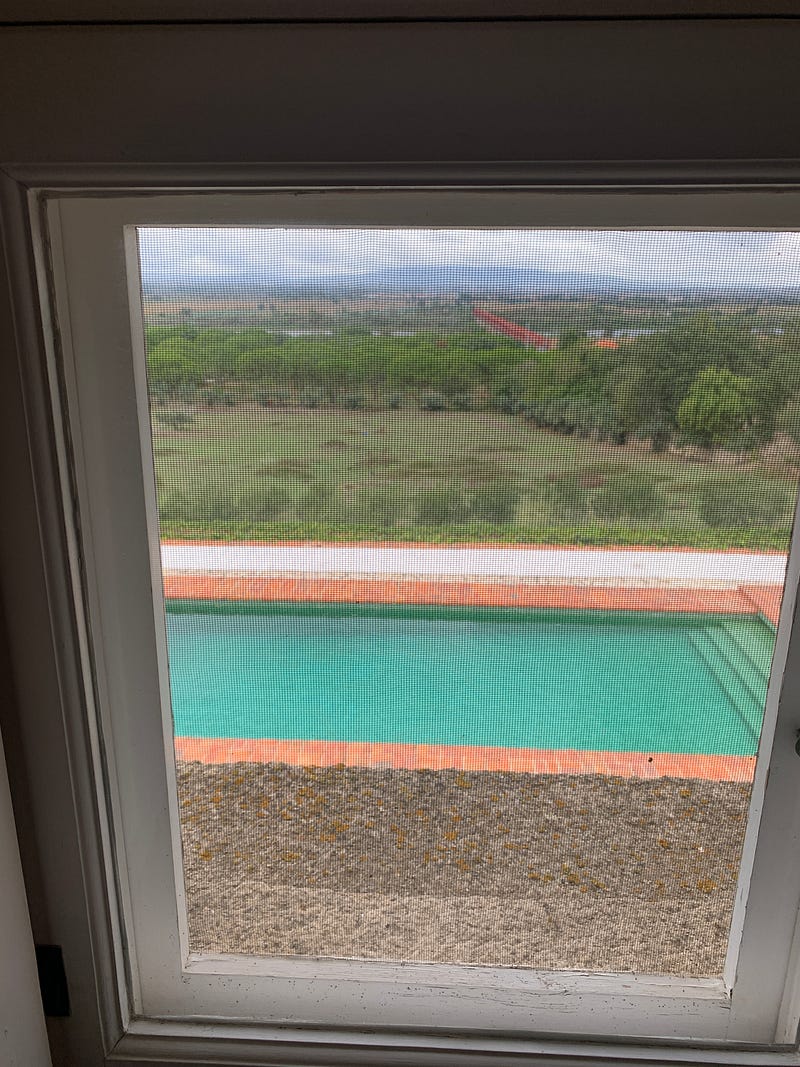
Outside the window of our room at the Conventinho de Santo Antonio, there is a swimming pool. It was not part of the original design. My beloved wife Teresa and I were on our way to Lisbon, and needed a stopover for the night, which is how we landed there. The convent was hidden behind high walls, up a dirt road into the hills overlooking the fertile farmlands between the Leziria and the Tagus rivers. There’s nothing in these hills, just cork and eucalyptus trees. We were not at all prepared for what awaited us inside these walls.
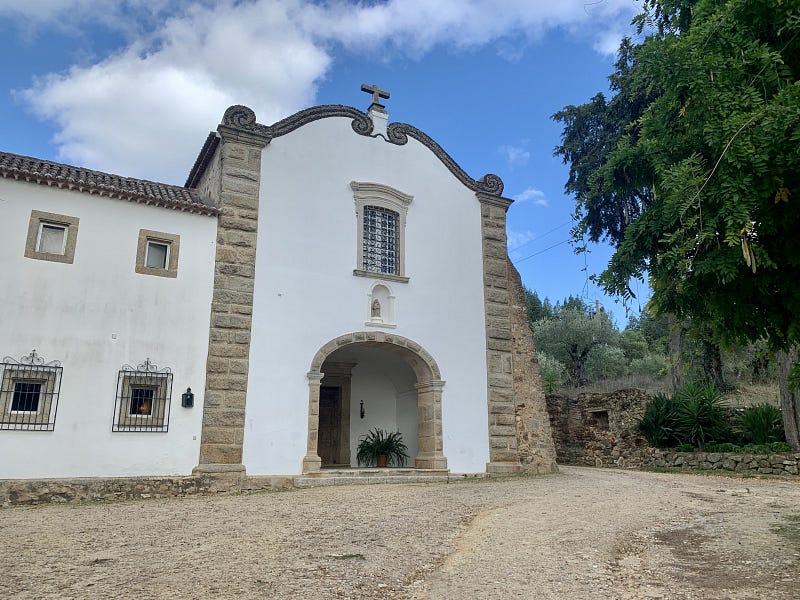
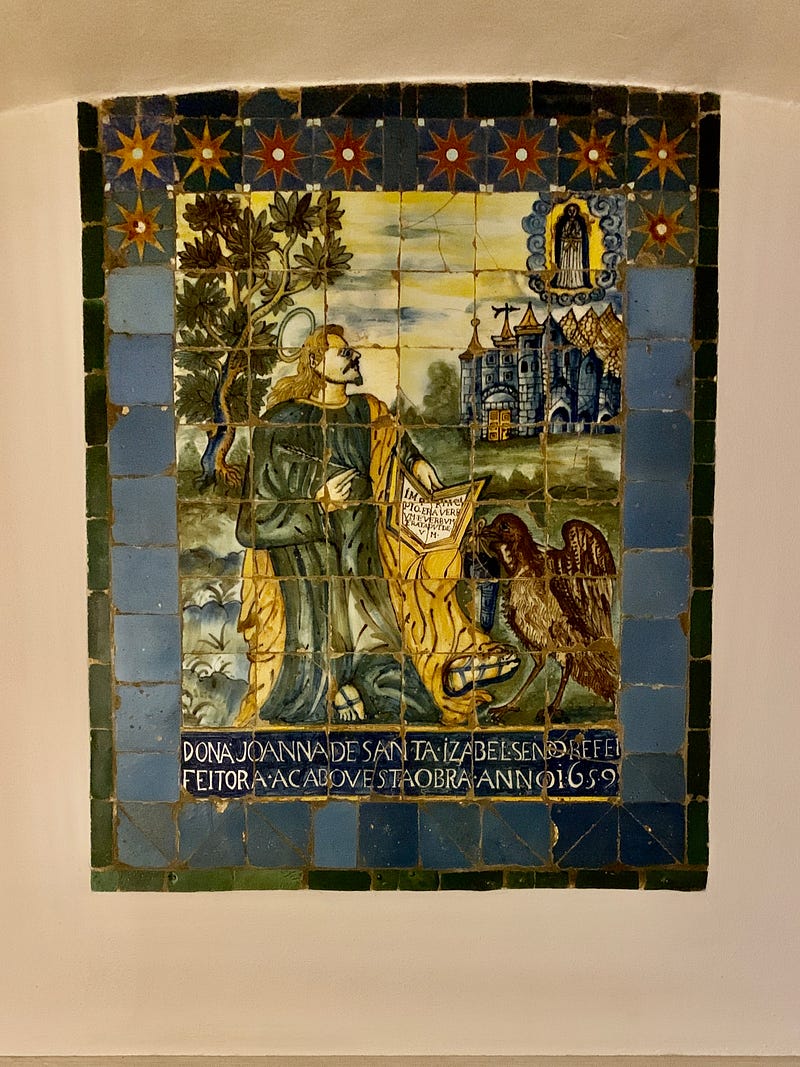
The convent was consecrated more than 500 years ago by King Manual 1. Later, Queen Donna Joanne de Santa Isabel took great interest in this remote hillside cloister and even visited the place. Above the fireplace, in the living room, a large azulejos painting memorializes in tiles one of her visits, in 1659 (above right). In the 1800s, political revolutions rocked Portugal, ending absolute monarchy, and with it, the political role of the church. The monasteries and convents were disbanded, their lands confiscated, and the buildings sold.
The little convent passed from owner to owner, its treasures stripped away. In the 20th century, it lay in ruins until it was bought in the 1970s by Maria Amélia Vaz Monteiro Gomes, the matriarch of a wealthy Lisbon family, who happened to be Jewish. Maria lovingly restored and refurbished the property to become her family’s weekend home. She filled it with bright colors and azulejos tiles, modern works of art from her collection, an impressive library, flower gardens, and, of course, a swimming pool for the children.
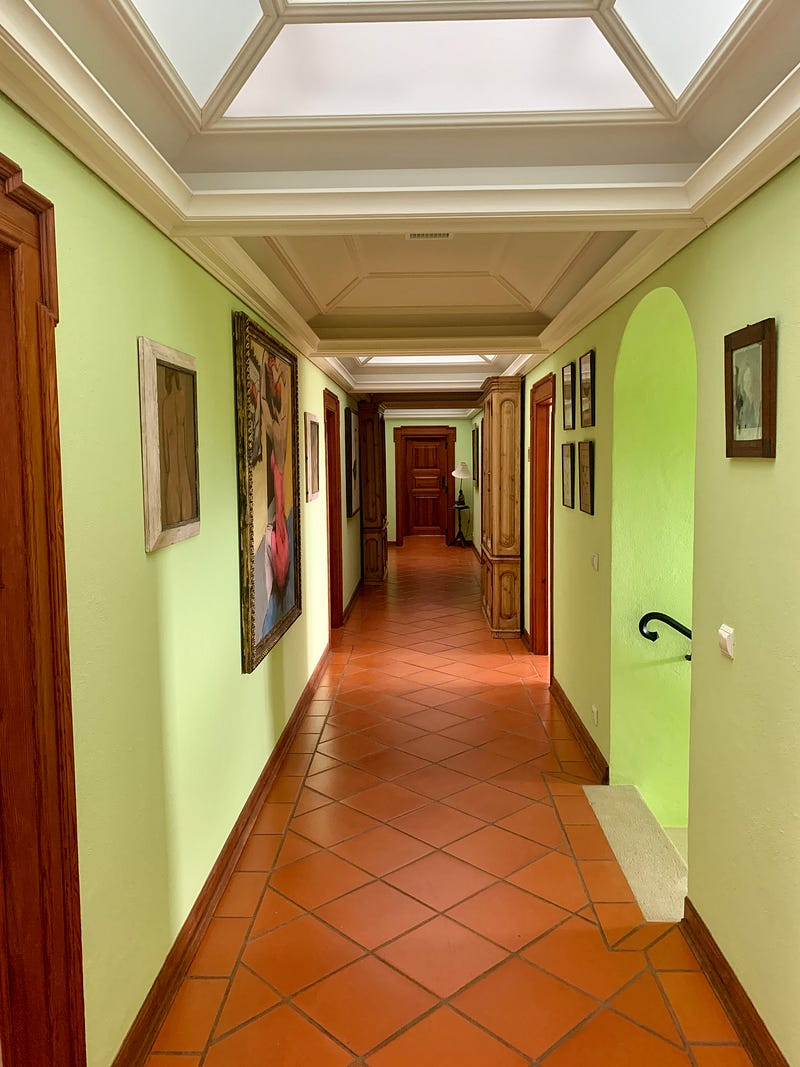
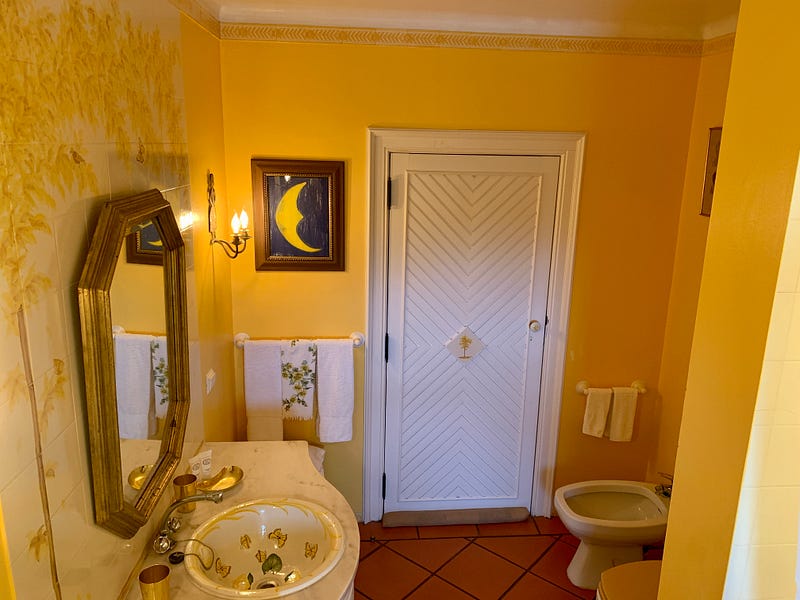
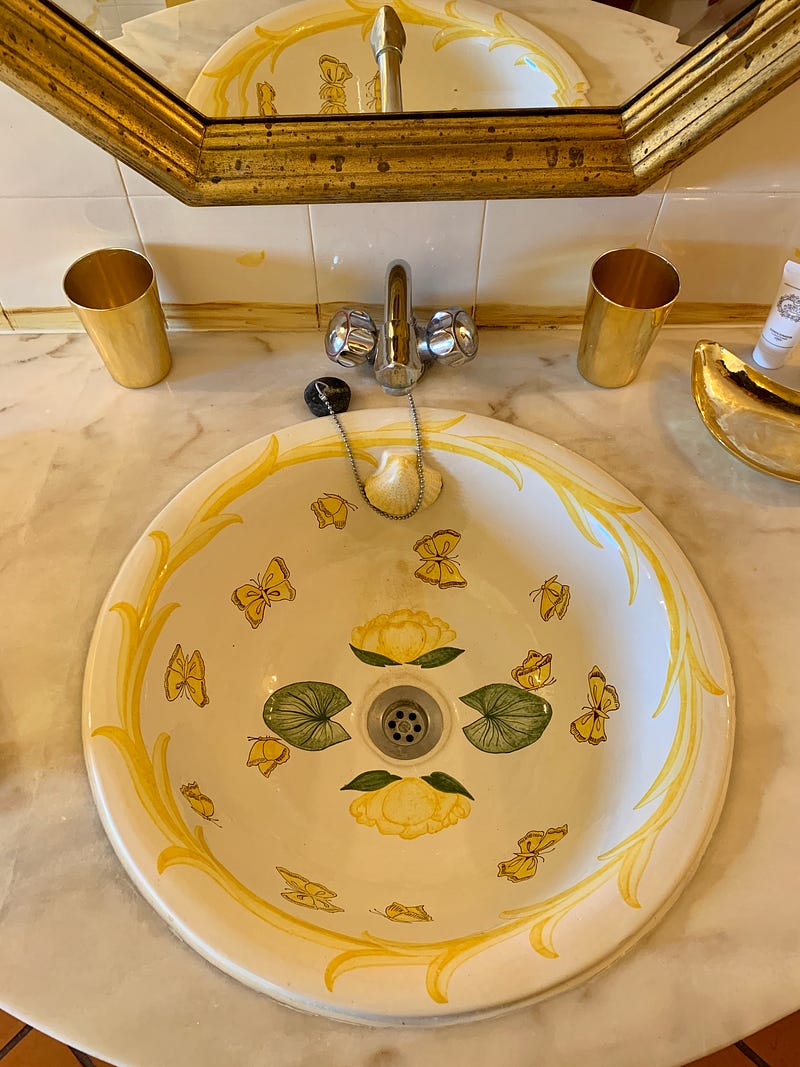
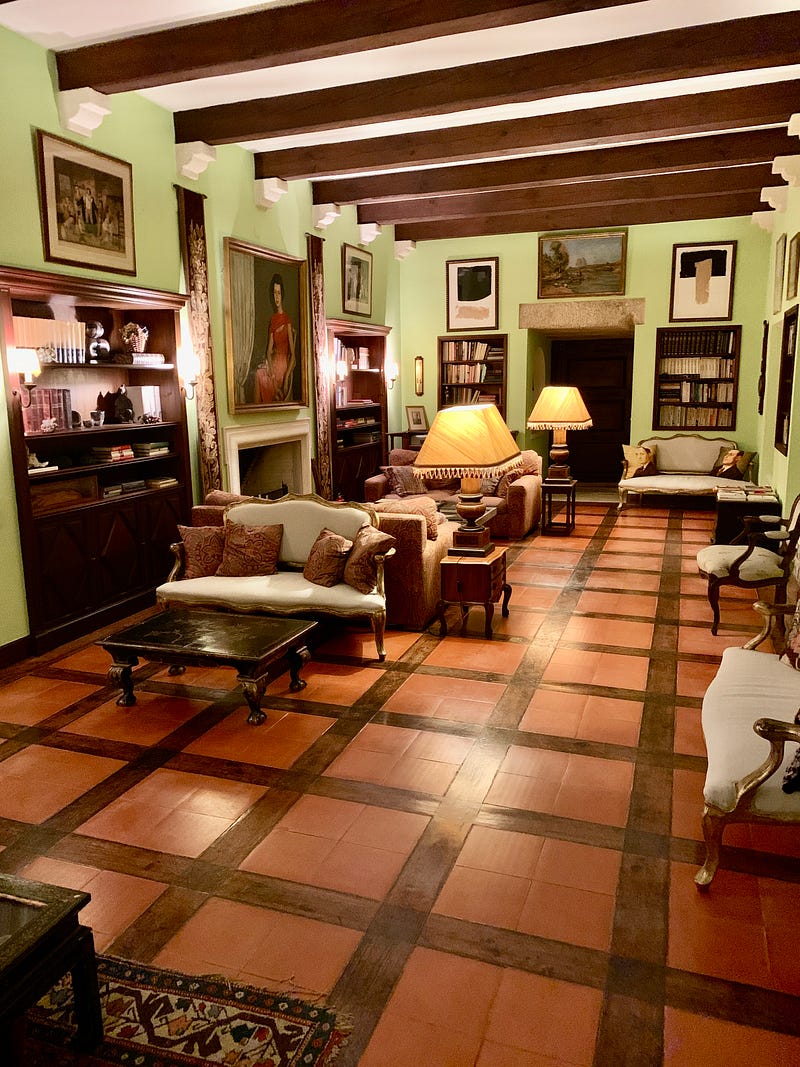
The minute we stepped inside, you could tell Maria remade the convent not just as a weekend-holiday home, but to be a special place of beauty. Walking the corridors, we could feel this woman’s love of the place, and the care with which she decorated every room, and every corner. She transformed crumbling walls into a living art experience. She brought the building back to life.
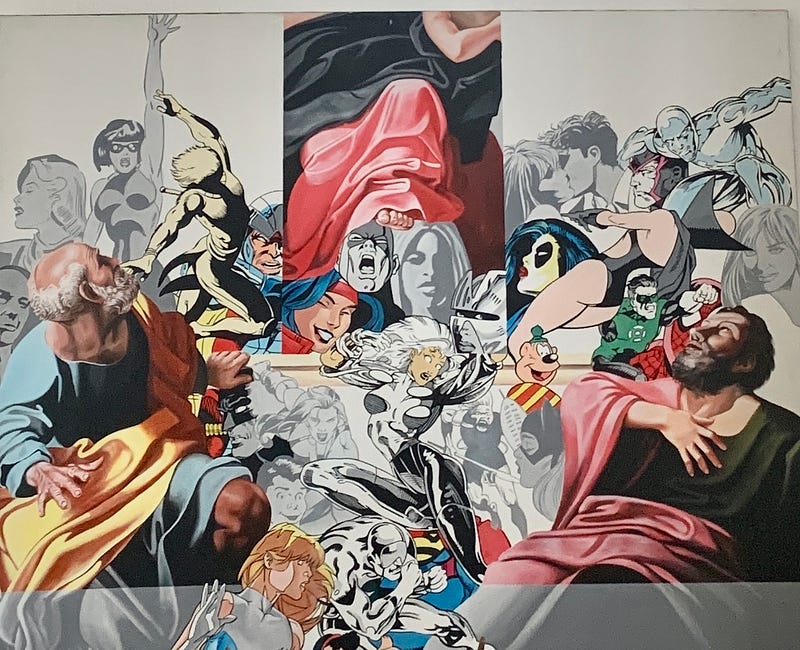
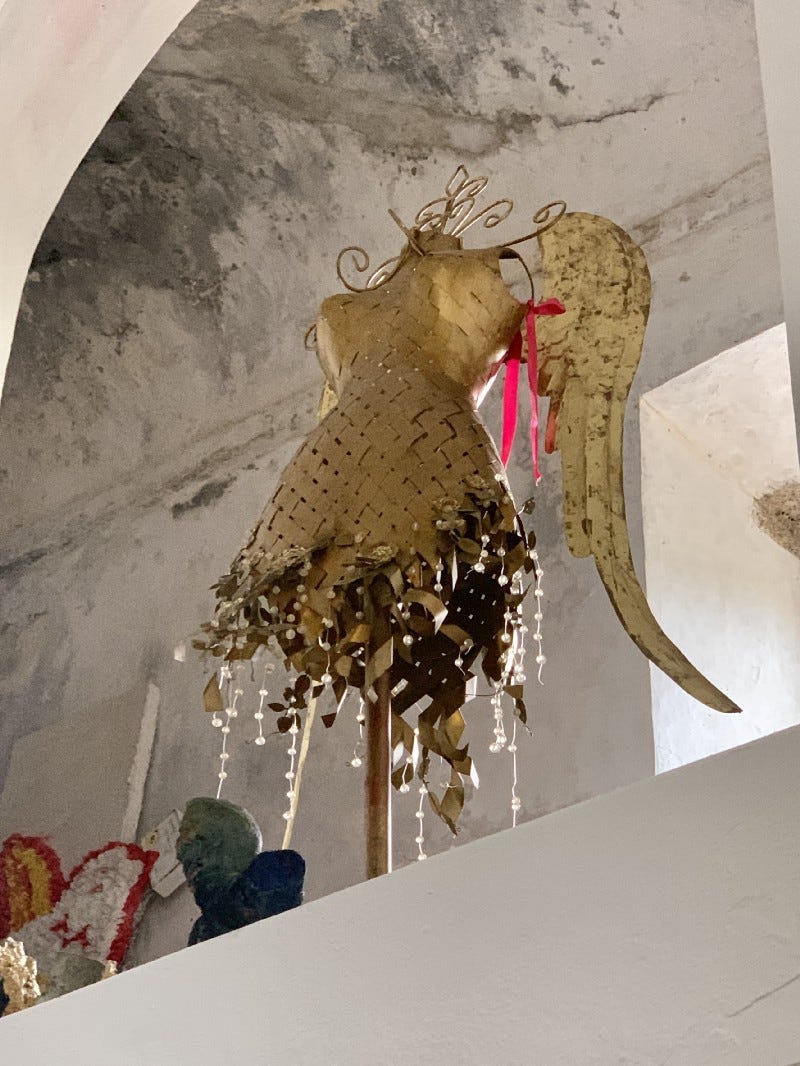
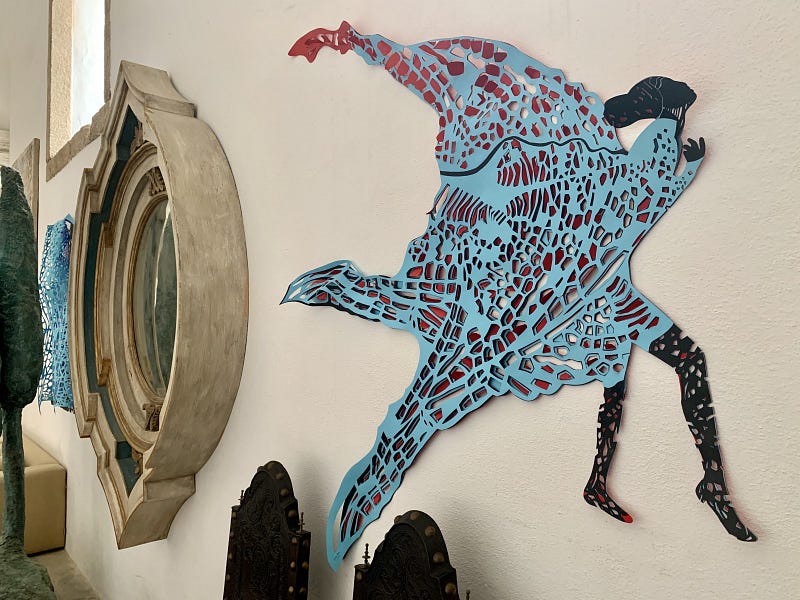
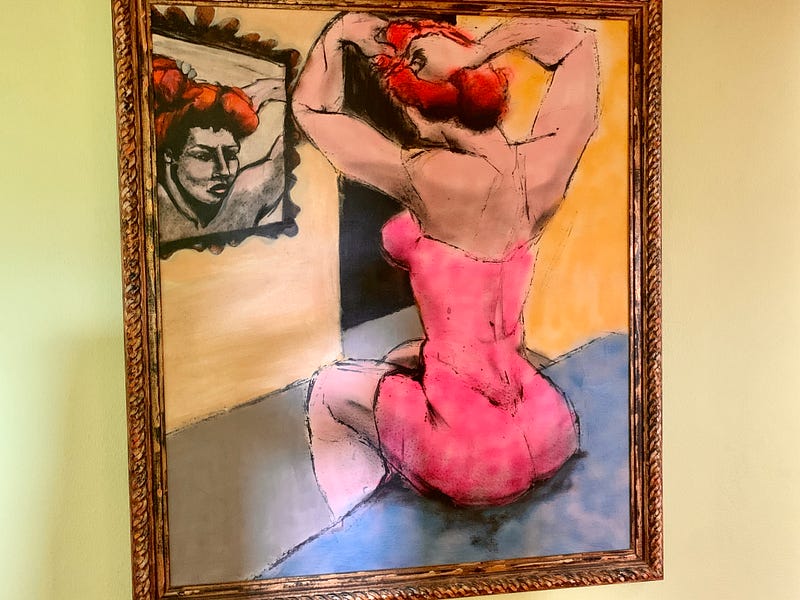
After she died, Maria’s adult children eventually sold the convent to its present owner, Carlos do Amaral Netto, in the early 2000s. He kept Maria’s gorgeous restoration intact and deftly turned the convent into a small hotel with just six rooms. But, then, in a stroke of inspiration, Carlos dedicated two of the rooms to an “artist in residence.” Selected monthly, the artist is a guest of the hotel. Carlos transformed an upper balcony above the chapel into an artist studio. Artists now come from all over to work here in peace and solitude. In return, each donates one of their works, which now adorn the convent walls (If you are an artist you can learn more about the residency and apply here).
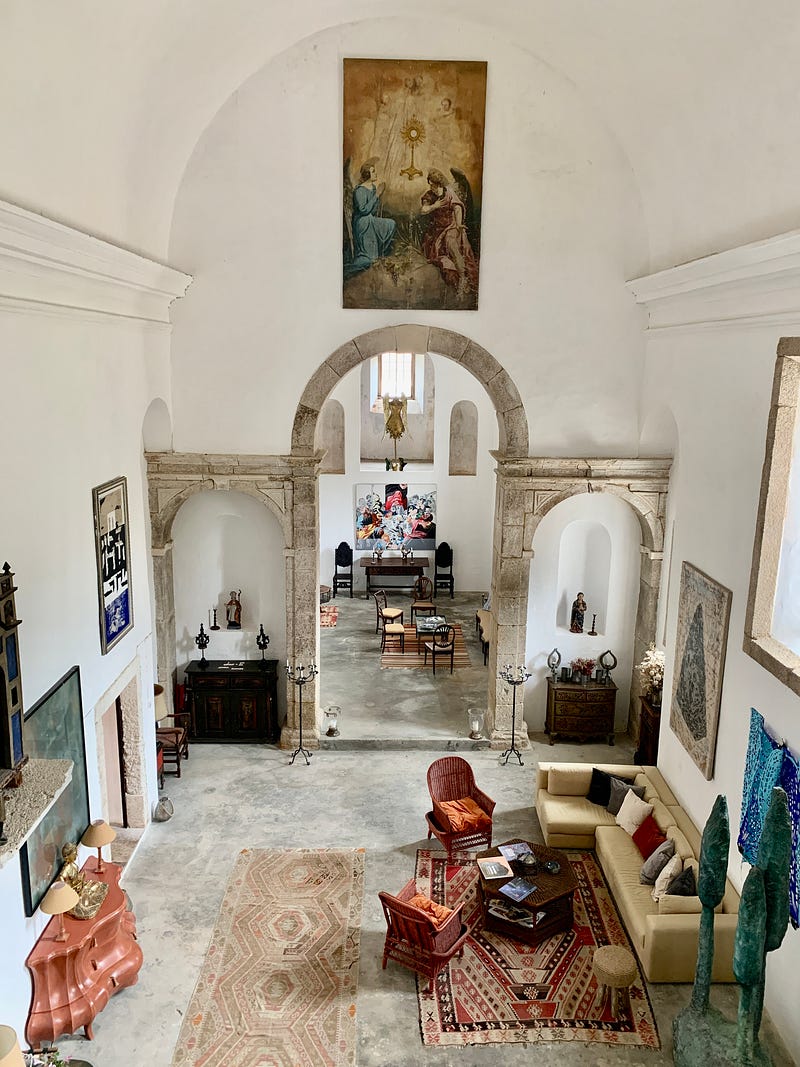
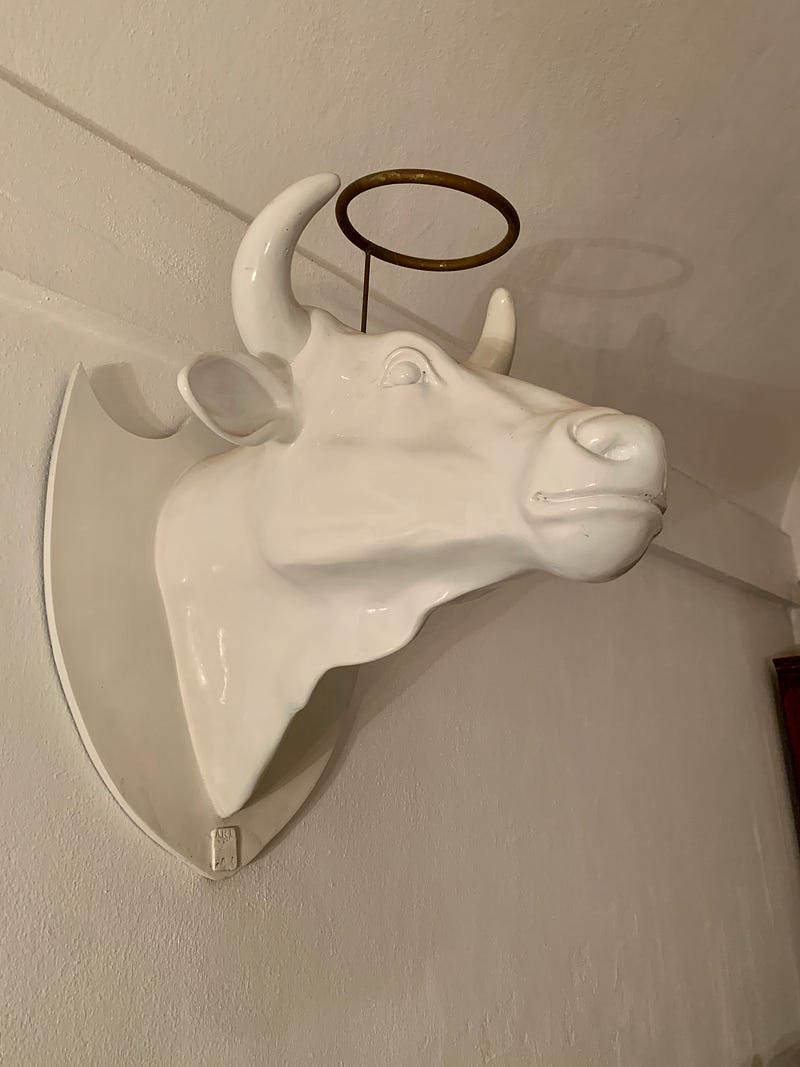
Most of these donated works are…not at all religious. And this imbues the whole convent with a fantastic creative tension, like pouring new wine into old wineskins. Some of the work deliberately subverts religious iconography:
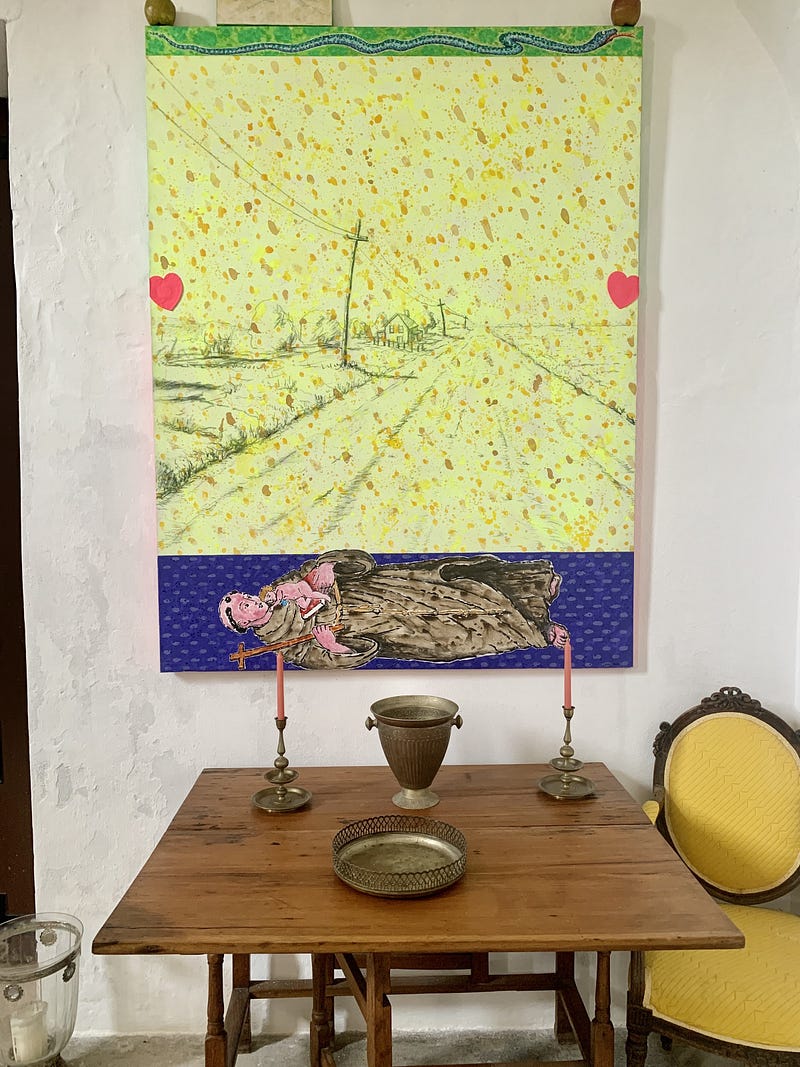
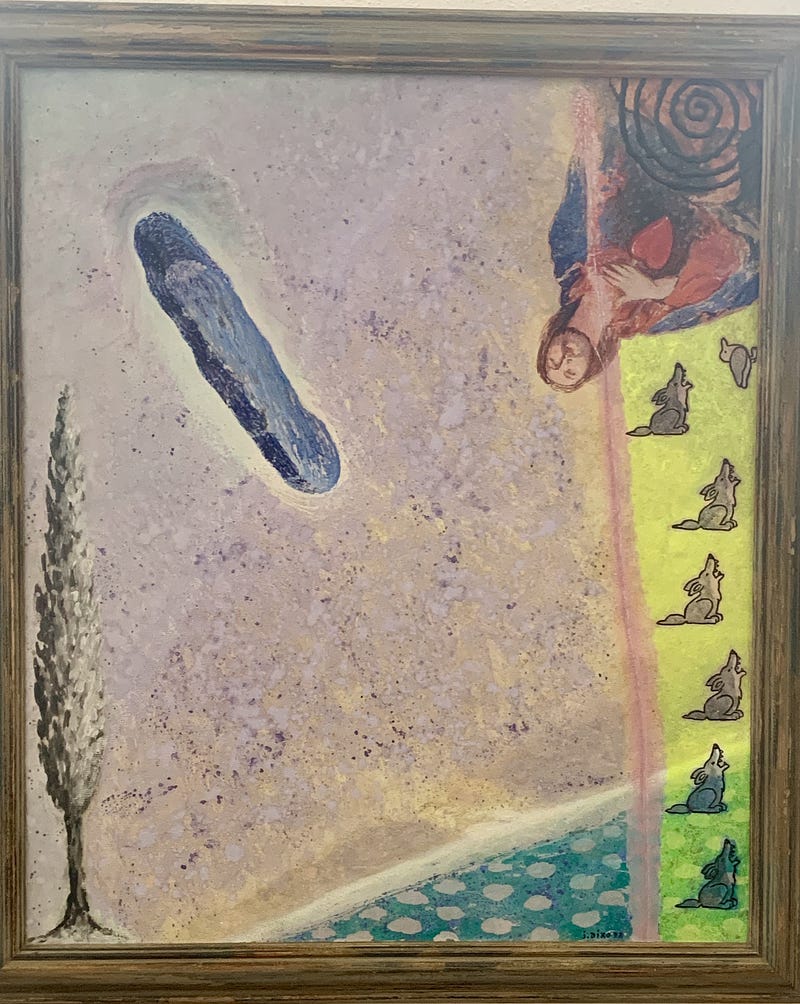
Other creations revel in the kind of sensuality you would not expect to encounter within the walls of a convent:
Here is what the hotel website has to say about the artist-in-residency program:
Designed in recognition of a lifestyle of generosity and harmony with nature, the secret of this place is the aesthetic dialogue it establishes with its environment and history. The concept combines hospitality with art and thought, offering a unique home to all those who want to engage the mind and explore themselves as they discover the essence of a new place…
Our host and guide for our visit was the groundskeeper and caretaker, who asked us to call him simply J.P.. He alluded to the wild life he had lived before settling down to a serene and monk-like existence at this job, 14 years ago. J.P. has a private apartment in one wing of the convent, and though the summers are busy, in the off-season he often has the place all to himself.
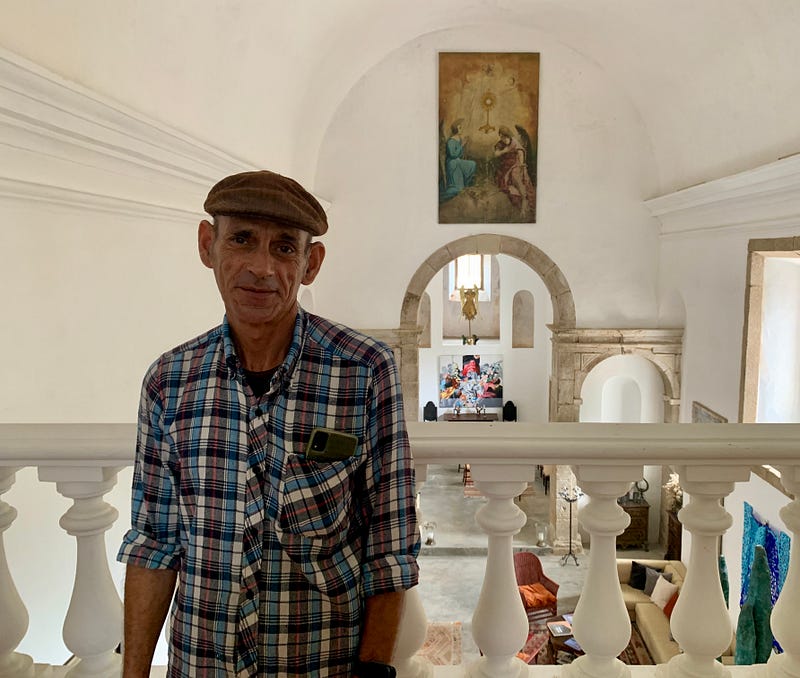
“I have no money, but I live like a millionaire!” he told us with a smile.
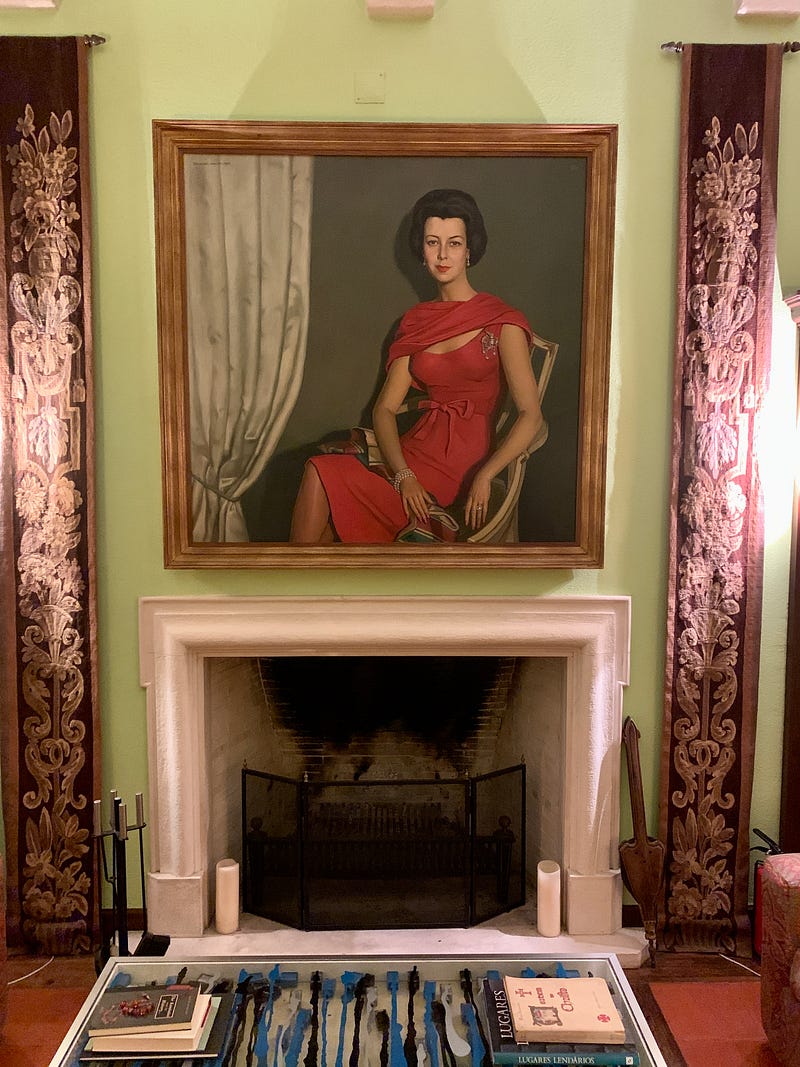
J.P. lovingly showed us around and told us the whole story of the convent. It was obvious that he knew every corner, every detail, and that he watched over all the artworks in the place as if they were his children. In the library, he proudly showed us the large portrait of a self-possessed and confident woman in a red dress that dominated the room. This was Maria, the wealthy matriarch who gave the convent its second life.
In its third incarnation, as an artist’s residence and hotel, that creative spirit continues to dwell within the walls of the former convent. We felt blessed to have experienced it, if only for one night.