
A Concept Of Materialism:
SHATTERING THE ORIGINALITY
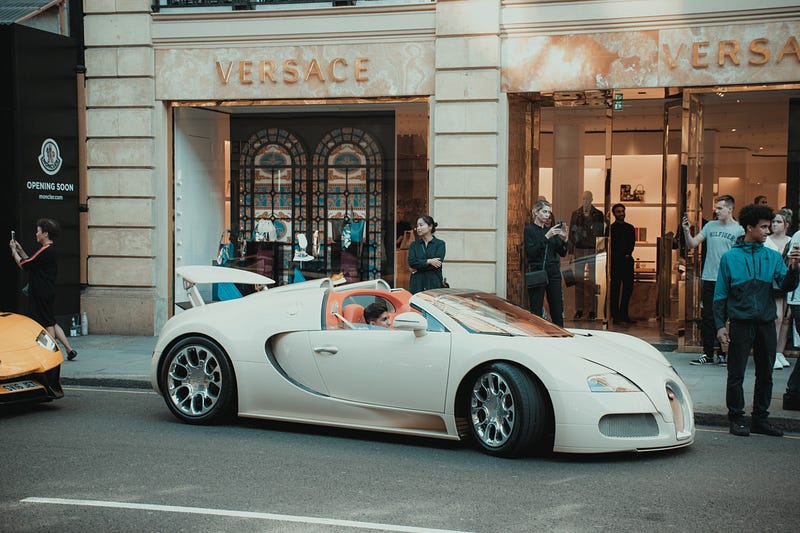
Materialism refers to a collection of personality traits. This contemporary world is full of people who possess materialistic traits. They have a belief that owning properties, of any kind, is a vital ingredient of happiness. Unfortunately, this trait is widely spreading and eating away our rationality and other moral values.
What is materialism?
Materialism, in my point of view, is a concept of considering tangible and physical things more important as compared to all other values or it can be described as a thin barrier between originality and imitation/artificiality.
What is meant by a materialistic person?
A person who worships only their worldly desires and thinks that only physical things can bring them happiness and completely disregard everything else.
What exactly are physical things?
Now physical things don’t relate to the term ‘matter’, anything that occupies space and has mass, they can be anything including wealth, cars, fame, success, gold, etc.
Kinds of Materialism:
1. MATERIALISM AS A WAY OF LIFE:
Attractiveness, wealth, and success are the way of life and it keeps you happy while in reality, it brings anything but happiness. The more you focus on these things, the more stressed you become.
For instance, speaking from experience, a person who tends to check their bank balance a lot is usually more unhappy and dissatisfied.
2. MATERIALISM AS A PHILOSOPHY:
The whole of the 20th century, unluckily, is materialistic believing that there is no originality or spirituality left in the world. Meaning, living life thinking there is no existence of God living without guidance.
3. MATERIALISM OPPOSED TO DUALISM:
Mind-body dualism is the relation between mind and body which claims that mental phenomena, in some respect, are non-physical. This kind of materialism says that spirituality sure is important but it’s not all that matters. Materialism matters too, there is a reason why God has created this world and we will be held accountable for the use and treatment of God’s creation.
4. MATERIALISM IN SOCIETY:
It is human nature to desire material possessions. Why? Because they want to satisfy their wants. And every time that wants is achieved, a new craving takes place which makes it a constant cycle of hunger for more. The more you get, the more you desire and this is exactly how this world works. People, nowadays, have a messed-up concept of possessions, they think that the number of possessions defines who they are and determine their level of happiness while in actuality, some of these things only describe who you want to be and not actually who you are.
For example, you upgrade your phone to the latest and better version than the one you own right now even though its condition is absolutely fine, but you just have this sudden urge to own it irrespective of the cost or the billing expenditures of the phone. In a world where most of society defines “socially acceptable” as the material possessions, one owns such as the latest clothing, the biggest house, or the fastest car one comes to believe that you need all of these things to be viewed as a part of society.
MATERIALISM’S GOALS
● Acquisition of material goods (lust, envy, false comfort, idolatry)
● Self-interests, (selfishness, no compassion, greed, denies eternal soul and the Creator)
● Accumulation is equivalent to success (no morals, no sense of right or wrong, preoccupation with money, jealousy, thievery)
● Voiding all faith and spiritual deity (hopelessness, unrepentant sin, despair, eternal death)
WHY YOU SHOULD NEVER DEVELOP A SENSE OF MATERIALISM
● The evolution of products is limitless.
● The anticipated satisfaction is usually higher than actual satisfaction.
● A lot of research has proved that materialistic people are less happy.
● You are not grateful for the blessings that nature has bestowed you with.
● The more possessions you have, the more chances there are that you would use them very rarely.
● Materialism devalues relationships and leads to loneliness.
● Sometimes, you purchase not what you need but what you desire or what is appealing to your eye.
● People never remember you for the possessions you own.
● Being materialistic is bad, as it leads to the creation of a world of difference in the way people treat other human beings.
HOW CAN WE PREVENT OUR SOCIETY FROM MATERIALISM?
I will start with the most basic things that I think are necessary for the removal of materialism:
● Be thrifty, don’t make shopping a regular habit.
● If you can, try to find second-hand things that are in good condition. Nobody’s going to kick you out if you don’t have the latest model.
● Try to limit the use of television. Why? Because advertisements attract unnecessary attention and lure you to buy the respective product.
● Become more environmentally conscious.
● Declutter.
● Clear extra space.
● Participate in non-material forms of entertainment.
● Prefer outdoor games rather than indoor ones.
● Create a system of goals and challenges.
● See wealth as a challenge, not a result.
● Use the money to free and not chain yourself.
● Judge yourself by your ethics and understanding.
● Evaluate yourself critically.
LIVE IN THE PRESENT STATE
In life, you’re presented with opportunities to either fit the mold or break it, to fall in line or buck the status quo. We have but one precious life and you may be born inside the game, but you can choose to play your hand differently.
We claim to value originality, individuality, self-expression, and uniqueness, yet many of us cave to fitting in rather than standing out.
There is a serious lack of originality in our daily lives, and societies are defaulting to what they should stand for, instead of what they stand for. Your ideology and spirituality are an extension of who you are, your history, and your tribe. If you don’t believe in your ideas, why should anyone else? Try and be different, be creative, be someone’s inspiration but remember to never lose yourself. Be who you are and someone else. Sameness is a prison and we should all do well to break free from it. Originality is interesting. Originality is what makes things matter.