
The Best Time of Day to Do HIIT
A comprehensive guide to HIIT training.
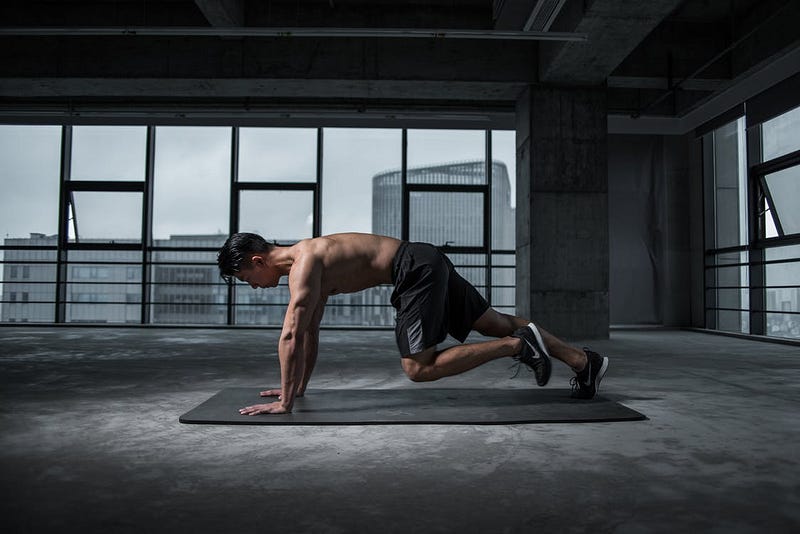
I’m an avid fan of morning routines, and exercise is one thing that I highly advocate for in a morning routine. But what type of exercise should we do in the morning, and how to we incorporate this into our routine?
For me, the idea of doing HIIT in the morning is appealing; it’s quick, it’s intense, and it has so many benefits. It seems like the ideal exercise to do before you start your day.
But as I started reading more into it, I found that for a lot of people, it’s not the best idea. How your body responds to exercise is highly dependent on your chronotype. For some people, HIIT in the morning is great. For others, it can actually have adverse consequences. So I wanted to outline who should be doing HIIT in the morning, and who should be saving it until later in the day, as well as the benefits of each and how to implement it in your routine.
Chronotype
According to the Munich Morningness-Eveningness questionnaire, we are either a morning type, evening type, or neither type. These are sometimes also referred to as larks and owls.
Morning type
These people wake up early and feel their best in the mornings. They tend to be most productive before lunch time, and get sleepy in the evenings.
Evening type
These people wake up later and can feel groggy until mid morning to afternoon. They are most productive in the afternoons and evenings and often don’t feel sleepy until late at night.
According to Dr. Michael Brues, we are either a dolphin, lion, bear, or wolf. You can find the quiz to find out your type here.
Dolphin
Often referred to as insomniacs, dolphins have trouble getting to sleep and/or staying asleep. They are subsequently often tired throughout the day, and tend to be anxious people. Their ideal sleep times are 11:30pm-6:30am, and focus best in the late afternoon to early evening.
Lion
The lions are the early risers. They have the most energy and focus in the mornings, and waking up is no problem for them. Their ideal sleep times are 10pm-6am and they focus best from 8am till noon.
Bear
The most common of the chronotypes, the bear rises and sleeps with the sun. Their ideal sleep times are 11pm-7am and their best focus is from 10am-2pm.
Wolf
The wolf is productive around dusk and late into the night. They struggle to wake up early and don’t feel awake until well into the day. Their ideal sleep time is 12am-7:30am and they focus best after 5pm until midnight.
Your chronotype will decide whether you should engage in intense exercise such as HIIT in the morning or the evening. A study has shown that athletic performance can vary by as much as 26 percent depending on the time of day someone exercises, and that the biggest predictor of athletic performance is the time of exercising relative to the time the athlete woke up.
Another study investigated the effects of morning and afternoon exercise on morning types and evening types. For the morning types, engaging in evening workouts reduced sleep quality. This shows that exercising at the wrong time can actually be detrimental to your health.
According to morning-eveningness, here are the ideal times to work out:
- Morning types: late morning
- In-between types: afternoon
- Evening types: evening
Dr. Michael Breus, author of The Power of When, states the following exercise times for the various chronotypes:
“Lions: 5:30 p.m. Lions will receive a welcome energy boost from this late-afternoon run.
Dolphins: 7:30 a.m. Morning runs will help these light sleepers sleep longer and more deeply.
Bears: 7:30 a.m. or noon. The early-morning run takes advantage of the fat-burn that comes from working out before breakfast and the midday run will keep appetite in check for the afternoon.
Wolves: 6 p.m. Wolves can take advantage of the evening fat burn and appetite suppressant (they tend to be hungriest at night), and enjoy their peak performance at this time.”
But regardless of your chronotype, exercise of some form in the morning has many advantages. HIIT just may not be the best option for you. You can read more about the benefits here:
Benefits of morning HIIT
Metabolism boost — burn more calories all day
HIIT is a great way to boost your metabolism. Not only does it burn more calories than steady-state cardio of equal length, but you will also continue burning calories long after your workout is finished.
“By jump-starting your metabolism and increasing your core temperature early in the day, you increase your post-exercise oxygen deficit and calorie-burning rate throughout the remainder of the day. Therefore, if you are trying to lose weight or burn fat, a morning exercise session can be highly effective.” — Ben Greenfield
Increased energy levels
Movement releases cortisol and endorphins, and increases your core temperature as well as circulation, all of which are going to make you feel more alert, full of energy, and ready to focus.
“According to the NIFS [National Institute for Fitness & Sport], working out in the morning can help increase your energy level for the day. Exercise increases oxygen and nutrients throughout your body, which can give you an energy boost.” — Premier Health
Improved cognitive performance
Morning exercise has been found to increase cognitive abilities as effectively as a cup of coffee, and has also been shown to improve decision-making later in the day. Therefore, doing HIIT in the morning may lead to a more productive day, with higher levels of focus and thinking abilities.
Nothing else will come up beforehand
Exercising in the morning ensures it gets done before anything gets in your way. We all have the intention of going to the gym after work or after the chores are done, but something always comes up. We also tend to be so exhausted by the end of the day that the last thing we feel like doing is exercising.
It can therefore get really hard to motivate yourself to go to the gym after a long day. Exercise tends to be the one thing that gets continually rescheduled in our busy lives. If you prioritize exercising first thing in the morning, nothing can get in the way of it. And according to Ben Greenfield, light exercise in the morning actually makes it more likely that you’ll exercise later in the day.
“Psychologically, you may be more likely to exercise in the morning, versus after a hard day of work, when your mind and body may be tired or you may have too many other duties to fulfill. It doesn’t matter if you’re able to exercise with higher intensity in the afternoon if you never actually get around to doing it!”
Important points for morning HIIT
- Eat before you train, if possible. HIIT is too intense to do in a fasted state
- Allow about 30 minutes from when you wake up before you start, to actually wake up
- Hydrate prior to starting
- Have protein after, to support your muscles

Benefits of afternoon HIIT
Core temperature and testosterone peak
Both your core temperature and your testosterone levels peak in the afternoon. Having an increased core temperature and higher testosterone levels mean that you will perform better than earlier in the day when your core temperature is lower. However, it is important to note that HIIT isn’t about performance, but rather about getting fit. So performance might not be a deal breaker for you.
This also means that your energy levels are likely to be higher than they would be in the morning. Which leads us to the next point.
Exercising is mentally easier
Waking up and doing a high intensity workout right away is tough, whether you’re a morning type or an evening type. Working out later in the day usually results in less mental resistance to starting the workout, and makes it more likely that you will do it. It won’t feel like so much of a chore.
Increased fitness
Related to the point above, doing HIIT in the afternoon will probably make it more likely that you will go harder than if you were to do the workout in the morning. Although performance isn’t a big deal with HIIT as the main point is to increase fitness, going harder will be more beneficial to your fitness levels.
“Studies have shown that people who work out in the afternoon are more likely to receive a higher degree of fitness because they tend to work out harder…. Your lungs are also at their peak efficiency.” — Kelly Alexander, of Escape Haven
Increase late-afternoon energy levels
Exercising in the afternoon can help mitigate that afternoon slump that most of us feel. Getting your blood flowing and the release of endorphins are a great way to increase your energy levels — the same effect as exercising in the morning.
Before your workout you may feel tired and sluggish, but after a quick and intense HIIT session, you will have renewed energy levels.
How to know which is right for you
Listen to your body
I have said this so many times, but it is so important to listen to your body when deciding when to exercise, what exercises to do, what food to eat, etc. Everything is highly individual and each body will respond differently. I tried fasting and it didn’t work for me, but it works wonders for others. HIIT will work great for some, but won’t work great for others. You might respond well to HIIT in the morning, but for others there are way more drawbacks than benefits.
Try doing HIIT at different times, and take note of how you feel before and after the session, as well as the next day. Write this down. You’ll quickly see patterns and you’ll be able to discern which time of day is right for you.
Look at your schedule
Sometimes you don’t have many options about what time you can workout. Sometimes the morning is the only option, or sometimes the evening is the only option. This makes things easier — just do your HIIT session when you can fit it in.
Maybe you can squeeze in a quick lunch time HIIT session if your schedule doesn’t allow for a morning or afternoon session. Maybe you’ll just have to do them on the weekend. Just work them into your schedule where you can. And remember: they can be as short as 4 minutes — it shouldn’t be hard to find 4 spare minutes in your day.
Types of HIIT
Tabata
Pick a movement that you can do at a very high intensity. Some personal favourites are the assault bike or spin bike, burpees, or the rowing machine. But you can also do:
- Jumping rope
- Kettlebell swings
- Run
- Jumping lunges or squats
Pick one movement, go as hard as you can for 20 seconds, then have 10 seconds of rest. Repeat for 8 rounds for a total of 4 minutes. The key is to go as hard as you possibly can during the 20 seconds.
Little Method
Again, pick a movement. Go hard for 60 seconds and then go easy for 75 seconds. Repeat 12 times for a total of 27 minutes.
Turbulence Training
This one has a strength training component. You complete a strength set of 8 reps, so for example, 8 barbell squats, and then you complete 1–2 minutes of cardio before doing 8 reps of another exercise. Do 45 minutes in total (including warm up and cool down). With this one, you want to create a circuit, either bodyweight or with weights.
For example, you might do 8 goblet squats followed by 2 minutes on the bike, then 8 push ups followed by 2 minutes on the rower, then 8 barbell rows followed by a 2 minute run. Rest for one minute at the end of the circuit and then go again for about 35–40 minutes, depending on how long you need for warm up and cool down.
Put simply,
Tabata: 8x(20s on, 10s off) = 4 minutes
Little: 12x(60s on, 75s low) = 27 minutes
Turbulence: 45 minutes of 8 rep strength set circuit with 1–2 minutes of cardio between each set
To conclude
HIIT is a powerful tool for increasing fitness and improving health in general. However, certain times of the day are not equal in terms of the benefits you will reap from the workout. The best time for you is largely based on your chronotype. You must learn to listen to your body and see how your body responds to HIIT at different times of the day. This will make HIIT not only easier for you, but more effective as well.

You just read another post from In Fitness And In Health: a health and fitness community dedicated to sharing knowledge, lessons, and suggestions to living happier, healthier lives.
If you’d like to join our newsletter and receive more stories like this one, tap here.


