
A Coin has Two Sides
A story about my parents
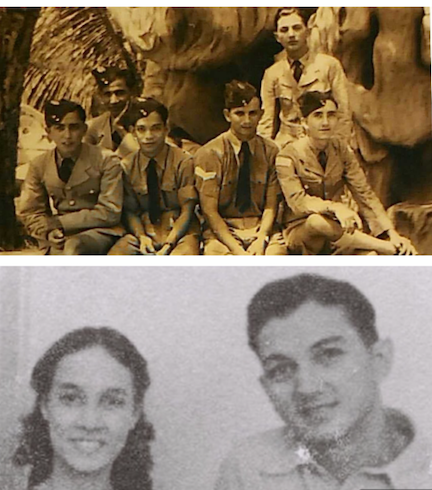
During World War II, my father served as an aircraft mechanic in the Royal Air Force based in Singapore. My mother, his girlfriend at the time, resided with her family in Penang, off the northern coast of the Malayan peninsular.
When the Japanese captured Singapore, my father was interned in Changi prison. Because he was a non-combatant, he was classified as a civilian during his internment. While he was in prison, my mother developed a very serious goiter that required surgery. The surgery was performed by a Japanese military surgeon who was interested and intrigued by her medical condition. Goiters were unknown in Japan as the population’s diet includes seaweed. Seaweed is a rich source of iodine which is a goiter deterent. The surgery was successful but left a very large scar across my mother’s lower neck. I remember from early days that she often wore a string of pearls to cover the scar.
While in prison my father recalled that he was only fed a daily portion of rice porridge and bits of salted fish. After some time in Changi prison, the Japanese released my father and some other civilians. Overjoyed, but rail thin, he left the prison and went straight to his brother’s home in Singapore. There, he was informed of my mother’s condition and promptly made his way from Singapore to Penang, traveling along the 400 mile peninsular by foot, bullock cart and any other helpful means of transport.
The day after he left Singapore, the Japanese came to his brother’s home to take him back to prison. They discovered they had wrongly released him, overlooking his service in the RAF. My uncle informed them that he had left for Malaya and did not know his whereabouts.
Eventually, after days of walking and bullock cart rides, my father arrived in Penang to be with my mother. They were married during the war. He did not know of the clerical error that resulted in his release until my uncle informed him of it after the war.
I have often wondered how my father would have handled continued internment if he had not been mistakenly released. If my mother was not ailing, would he have been caught and sent back to Changi? I have also wondered if my mother would have had her medical condition corrected during the war without the intervention of the Japanese surgeon.
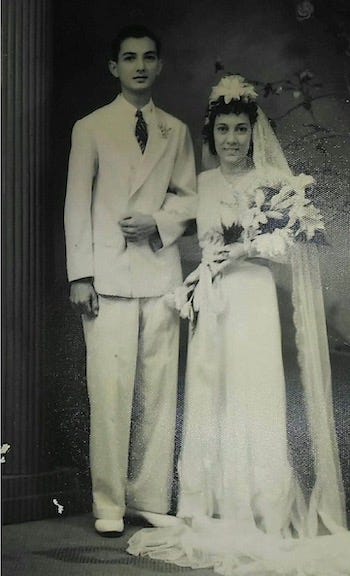
My mother and father went through much during the war, but were blessed and fortunate to have survived the experience. They went on to have five children and more than forty years together before my mother passed away in 1985. My father followed her in 1994.
If you are not a member of Medium, please consider using this link to join. I get a small commission which will not increase the cost of your membership and you get full access to all the writing on Medium. Thank you for your support.


