
A Chinese Parable about Fish That Helps You Get Through a Breakup
Words of wisdom from Zhuangzi.
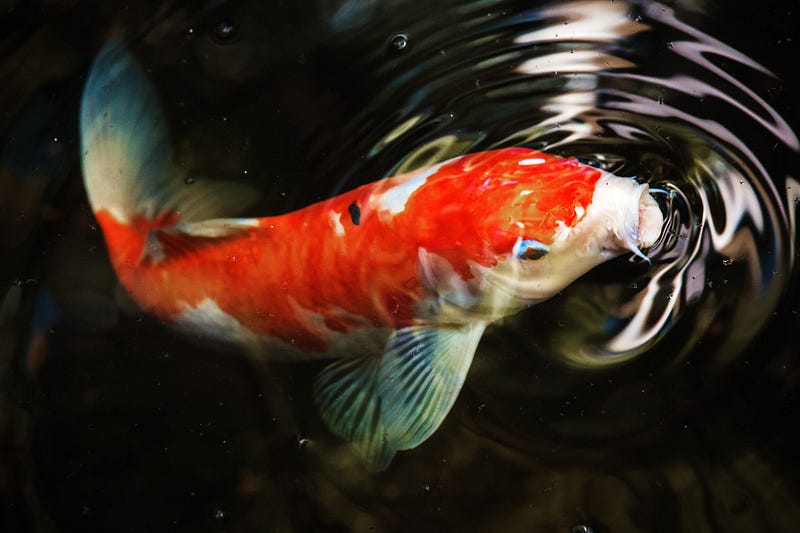
The ancient Chinese philosopher Zhuangzi once told a story:
“A pond dried up, leaving two fish stranded on the dry land. They stayed together and kept spitting their saliva onto each other’s bodies, so they could use the moisture to stay wet and alive on land. It is better if they just decide to forget about one another and swim towards separate rivers and lakes.”
— Translation of the text “泉涸,魚相與處於陸,相呴以溼,相濡以沫,不如相忘於江湖” from “Zhuangzi : Inner Chapters : The Great and Most Honoured Master” by the author.
This is not a parable honoring selfless behavior and how noble it is to sacrifice for your loved one. It expresses the sorrowful feeling of holding onto a relationship that was already broken, where both sides are exhausting their energy to keep the love alive — the fish were better off going their separate ways than struggling to keep each other alive.
When both sides in a relationship already gave their all to maintain the love, but it still doesn’t work out, it is time to let go of the bond and put a pause to the suffering.
As a Taoist, Zhuangzi believed in pursuing a carefree mindset in life. He believed that we should follow the natural course of life and go along with the cosmic arrangements of the universe. That means acknowledging it when a relationship ended and stopped serving you, then letting it go. If being selfish means finding your happiness, it’s perfectly fine to do it.
Letting go is something that takes a lot of work, but it is not a bad thing. It means prioritizing your needs over saving a relationship that has already sunk. It forces you to re-evaluate how unhealthy your relationship is, and think realistically about what makes you happier in the long run.
You don’t end things because you stopped loving your partner, you end it because you recognize that loving yourself comes first.
Besides, love for your partner comes in many forms:
Allowing the other person space to breathe is love.
Allowing the other person time to heal and grow is love.
If you are willing to see it the Taoist way, a breakup can be a beautiful beginning.


