
A Child Lost, A Mother’s Grief
Bereft anew on a hot August day.

Walking my dog on another 100-degree August day, I ran into a neighbor heading to the mailboxes to collect her bills, letters, and supermarket ads. She paused and inquired if I had enjoyed the pool this year. I replied that I take a dip every Sunday.
Then out of the blue, she asked, “Don’t you have a daughter named Michelle also?”
I don’t recall ever sharing that name with anyone in my current life.
“I did,” I answered slowly, “she died a long time ago.”
Confused and flustered by my response, she muttered (as most people do), “I’m sorry, no parent should outlive their child.” She ambled away, back to her condo, head down, never having made it to the mailbox.
A Mother’s Grief
Grief is extremely intense as any mother digests the finality of never seeing her child again alive. The incredulity of it, the overwhelming sorrow in her heart, the pain at the loss of future hopes, dreams, and plans.
I read Joan Didion’s Blue Nights many years after Michelle’s death. As one critic commented, “a work of stunning frankness about losing a daughter.” Although under an entirely different set of circumstances, I empathized with her loss, and ensuing resiliency. In a 2011 interview with NPR promoting her work, Joan noted:
We all survive more than we think we can,” Didion says of living on after the deaths of her loved ones. “We imagine things — that we wouldn’t be able to survive, but in fact, we do survive. … We have no choice, so we do it.”
Didion also recently experienced the loss of her husband, and I, my father a year before almost to the day that I lost Michelle. ‘Immersed in death’ she called it. I can relate. A grandmother, a father, a daughter all in a row — I shan’t recount the details here, it’s much too painful to dredge up the whole memory. Silly me — that was clearly inescapable; invoking her name alone brought a tsunami of grief.
Yes, Joan, we survive, but diminished.
A Daughter’s Death
Michelle died a few weeks past her August birthday. She was barely two years old.
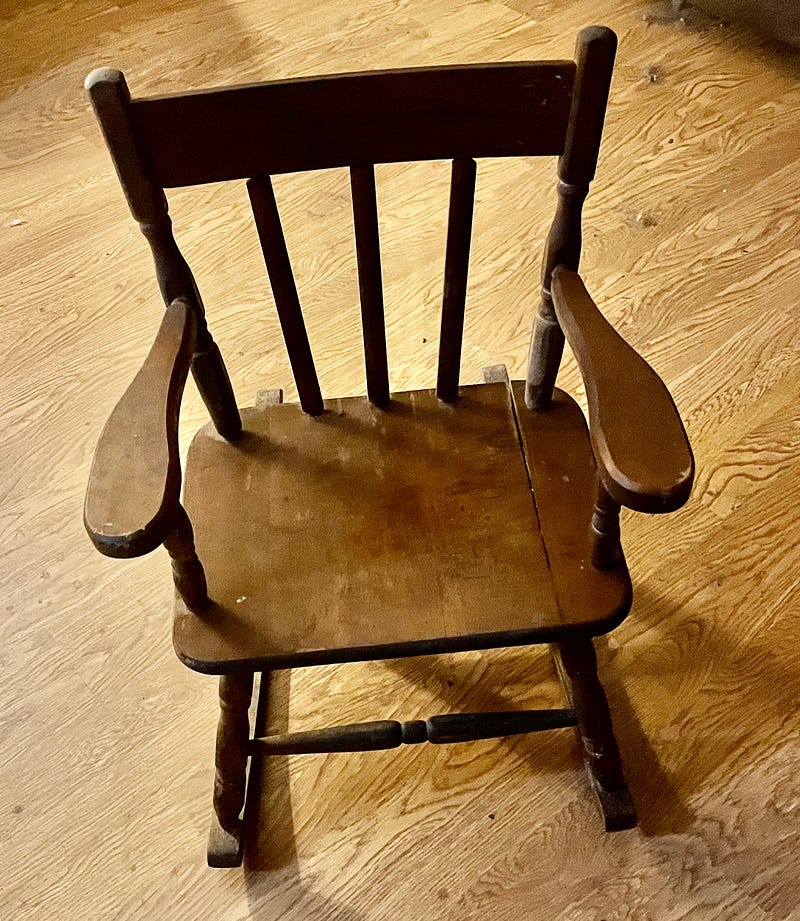
That last day, we were in the basement. I was cutting out squares for a quilt. She rode her tricycle around, handing me the scraps of cloth. I needed batting to fill the would-be comforter. I left to go to the store. When I returned, she was not in the house or yard. Her father was repairing the frame on the back door.
As you can imagine, there are gaps in my memory of that day. Screaming as I found her. A neighbor vaulting over the fence. Sitting on the side of the house squashing the impatiens. Inconsolable. Intractable pain. Uncontrollable crying.
No flashing red lights or blaring sirens as she lay across my lap in the ambulance. The stark whiteness of the hospital walls. Pink burial dress. I recall scuffed, brown shoes. Irrational embarrassment at the remembrance.
Our children are our legacy.
Children are gifts we are entrusted with to love, care for, and keep safe. I failed. I wasn’t there to protect her. The guilt remains palpable. The rawness resurfaced on this hot August day. Bereft anew as another season passes without her. A reminder yet again of all things lost.
The September death date is quickly drawing near. Michelle would be 52 years old now — but she never made it to adulthood, let alone adolescence. A one-time mother cannot help but wonder how her daughter’s life would have unfolded. First day of school. First love. First job. Would she be happy, healthy, hopeful? Look like me, but a newer, improved model?
Isn’t that what all parents wish for? A better time of it for our kids than we ourselves have had. A chance to experience life to the fullest, maximize their potential, and succeed on their own terms? But seriously, in the end, we want our children to outlive us. They are our legacy. I was left with none.
Yes, as I told my neighbor on that hot August day, Michelle died long ago, but I still carry her in my heart, as I once did in my womb.
Mary Lou Heater is a certified grief specialist. Employed as a mental health provider, she holds a doctorate in nursing practice. A widow, she’s outlived both her daughter and stepdaughter. She works in a community behavioral health outpatient clinic in Houston, Texas.