
A Chance Encounter Near the Himalayas
And the kindness of an inspiring stranger
August 31, 2016
“… one has to wander through all the outer worlds to reach the innermost shrine at the end.” — Rabindranath Tagore
Though not yet 10 a.m., the Zirakpur bus station had long come to life. Fellow patrons scurried along, scanning each of the rusty vehicles for the right ride. Others leisurely passed the time by sipping chai or scrolling through their phones.
I boarded my bus. Bounding up the steps, I took stock of my fellow travelers — largely families and couples who munched on finger foods or stared stoically out the scratched-up windows. My eyes scanned the rows of passengers, instinctually seeking someone with whom the 9-hour ride might seem slightly more bearable.
Near the front, a woman with shoulder-length black hair sat solemnly, her almond-shaped eyes fixated on a large brown book. She wore a black cardigan and indigo leggings, with a gray coat hanging on the seat behind her. Among those already inside the bus, she looked like the only person who might speak English. I approached her.
“Excuse me,” I said, clearing my throat. “Is this seat taken?”
“No, no,” she said with a slight Indian accent, smiling slightly as she shifted in her seat to give me space. “Please sit.”
I squeezed in, putting my items below my seat. The woman continued reading. With East Asian features and skin slightly darker than mine, I wondered where she might be from. I considered starting a conversation and eventually asking, though after hearing the perplexed “Where are you from?” question countless times on this trip myself (my accented Hindi and western attire quickly gave me away), I decided against it.
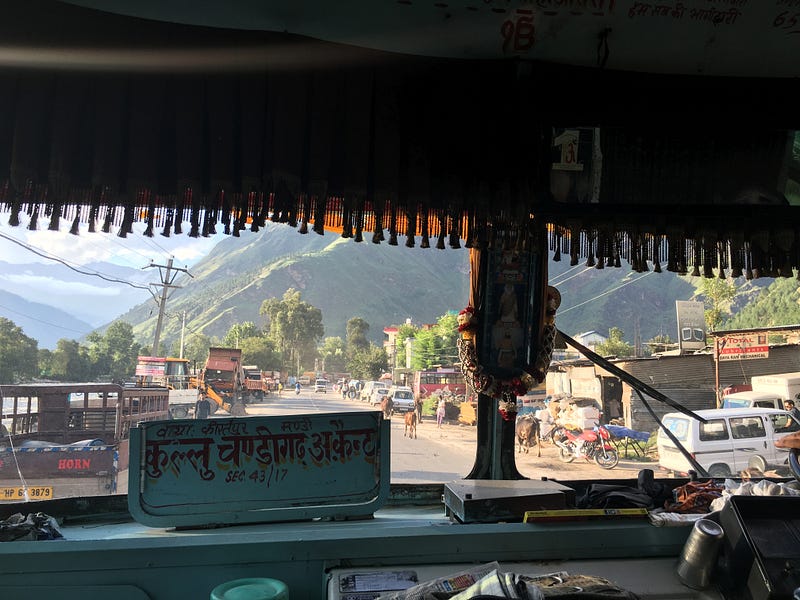
I’d been in India nearly eight weeks now, on an indefinite gap year volunteering and backpacking trip that would ultimately last a little over nine months. The first few weeks had been a whirlwind of reunions and sightseeing, as my brother, two college friends, and I visited my family’s ancestral village in Gujarat. We then traced India’s Golden Triangle — New Delhi, Agra, and Jaipur, with a side trip to the holy city of Varanasi.
Upon my companions’ departure, my solo journey began, first taking me to a volunteer project in the Rajasthani desert, and then onwards to the northern state of Punjab. I’d spent a few days in Chandigarh, considered one of the most orderly cities in India, and then Amritsar, home of the esteemed Golden Temple.
Due to a financial emergency, my journey unexpectedly took me to Zirakpur, close to Chandigarh. One of my aunt’s relatives happened to live there with her husband, and they happily hosted me for the night. After many frantic calls back home, I resolved the money issue and had enough cash to carry me through the next several weeks. Sweet, sweet relief.
The kind auntie and uncle accompanied me to the nearest bus station in the morning, helping me find the right one to Manali, a high-altitude town in Punjab’s neighboring Himachal Pradesh, where I’d be continuing onwards. We bid each other adieu, expressing as much as we could with the limited Hindi/English we had.
As I sat in my seat, a constant stream of emotions buzzed through my body. I felt overwhelming gratitude for all the kindness I’d experienced on the journey thus far. Like the Zirakpur couple, so many people I’d met extended unconditional care and took me in as their own. I realized that much of the messaging I’d previously encountered — which endlessly emphasized that the world was full of ill-intentioned individuals, waiting to pounce once you let your guard down — was immensely flawed.
However, despite having constantly been around people — it’s unavoidable in a country with over 1.3 billion people — I felt lonely.
Many of the questions I’d encountered in the past year, that had fueled my desire to delay entering the workforce — “What career do you plan to pursue? When do you plan on settling down?” — only echoed louder in my ears, almost to a deafening level. I needed space to think through it all, and to find someone who could relate.
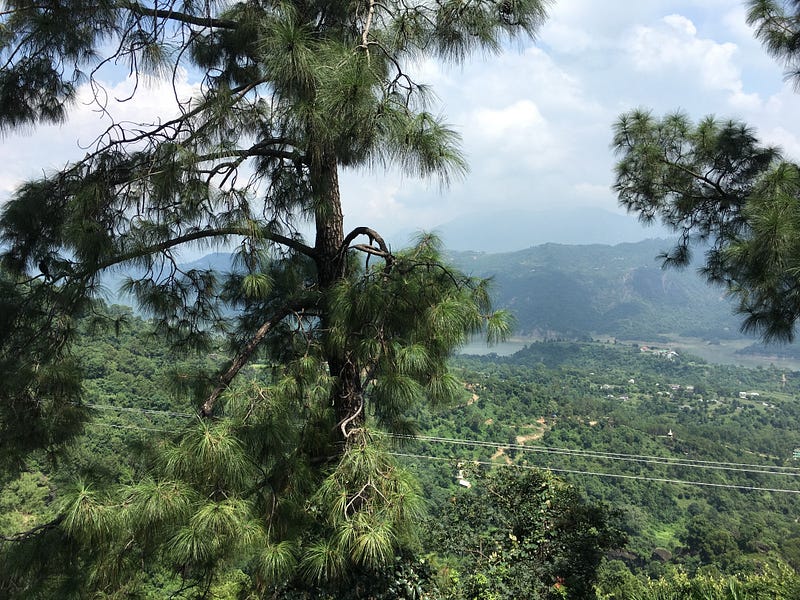
“I’m guessing this is your first time taking this trip?” my seatmate asked, breaking the silence between us. She set her book down.
“Yeah, it is,” I said, taken by surprise. “How about you?”
“Oh, no,” she said. “I’m a regular at this point. Probably take this route a couple times a month.” She closed her book and sat back in her seat.
“I’m Suchita, by the way,” she said, extending a hand. Shaking it, I introduced myself in return.
We spent the next couple of hours chatting, sharing our life stories and discussing our interests — books, travel, dogs. Suchita was on her way home from Chandigarh, where she’d been wrapping up a work project. An accomplished architect, she lived with her family in Kalath, a small village not too far from Manali, a popular hub for those into adventure activities and Himalayan hikes. Suchita had completed her studies in New Delhi, and her line of work involved designing homes from mud.
Raised Buddhist, Suchita no longer identified with the religion, but mentioned how the faith influenced her affinity for the spiritual. At 28, she remained a clear outlier in her community. Her chosen lifestyle — unmarried, childfree, career-oriented — wasn’t common among most Indian women her age.
Suchita frequently worked with impoverished populations, which played a major role in influencing her decisions. “It’s saddening,” she said. “I see so many of these women forced into marriage very young. Then they have kids they can barely care for and remain stuck in this cycle of poverty.”
“That’s why I don’t plan on having kids,” she continued. “And at this point, I’m not set on getting married, either. I’ve worked hard to build this life and I feel called to help other people break out of these generational patterns. There’s a lot of untapped potential in India.”
A mix of admiration and surprise gave way, as I hadn’t ever encountered anyone — let alone a fellow South Asian woman — speak such statements aloud with unwavering confidence and conviction. I’d always believed marriage and children had to be a part of my own story; of every woman’s story. There was no other way, right? And not only this, but like so many, I’d bought into the notion that these milestones had to happen at a particular time.
Suchita and I intermittently talked for the remainder of the ride. As the hours ticked by, some of the heaviness within me dissipated.
The sun soon set, leaving orange hues in its wake before gradually blanketing the sky in complete darkness. Our bus emptied out as passengers exited at their respective cities and villages. I glanced at my phone to check the time. 8:00 p.m. Had the ride really lasted that long?
“My stop is coming up soon,” Suchita said. “Please stay with me and my family tonight, and continue on to Manali tomorrow. It’s getting quite late.”
“Oh, that’s so kind of you,” I replied. “But it’s okay, really, I’ll be fine.”
“No, don’t be silly!” she said, waving her hand to emphasize her point. “I’d much rather you go to Manali during the day. It’ll be easier to find your way around.”
We went on like this for a little while, until Suchita convinced me to accept her invite. A mix of excitement and anxiety arose as I followed her off the bus when we reached Kalath. My legs, stiff from several hours of sitting, rejoiced at the prospect of movement.
The darkness washed over us, yet instead of inducing fear and trepidation, its presence carried a pleasant anticipation. Given the minimal light pollution in the area, the stars, which peered out behind wispy clouds, were visible. I hadn’t been prepared for such a strong evening chill, having grown accustomed to the often unbearable heat of Rajasthan and Punjab. Zipping up my jacket, I shivered and embraced the sudden shift.
I trailed along next to Suchita, who used her phone screen to complement the faint light of the minimal streetlamps. After a couple of minutes, we reached her home. Lanterns cast a glow against the minimalist two-story white exterior, with warm lighting and red curtains peering out from the windows. A pebbled walkway led up to the front porch, and we followed it indoors, kicking off our shoes and setting down our bags after a long day on the road.

A black-and-white mixed-breed dog greeted us with a flapping tongue and wagging tail. Suchita’s father, who looked to be in his late fifties, had been sitting with his back against the wall, deep in prayer. He hoisted himself up and approached us, first speaking to Suchita in their native dialect and then switching to Hindi to greet me. With his bald head, glasses, Tibetan features, and soft-spoken nature, he reminded me of the Dalai Lama.
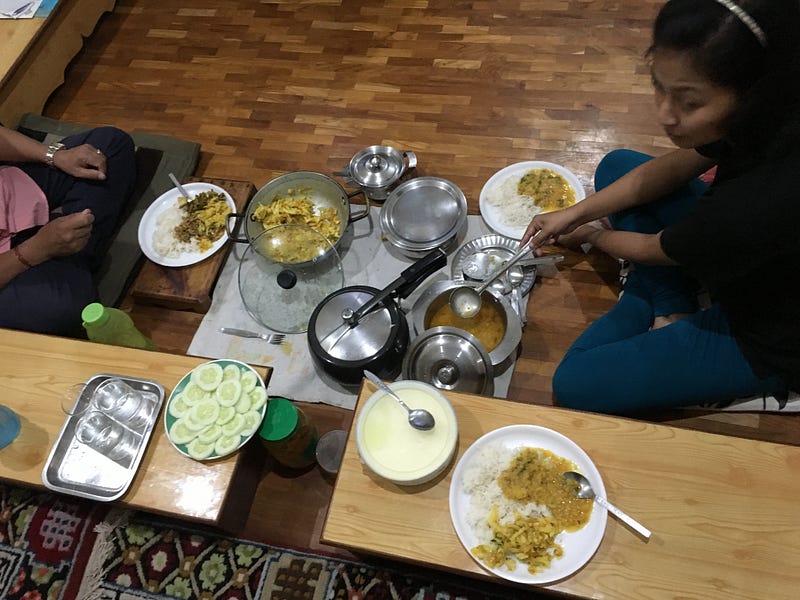
Insisting I “take rest,” Suchita prepared dinner while I settled in and freshened up. Shortly after, I joined her and her father downstairs, where we enjoyed a warm meal of rice, dal, sliced cucumbers, achaar, and cabbage sabji.
We ate mostly in silence, savoring the nourishment after a long day of bumpy highways and light snacking. Once we’d cleaned our plates, we made our way upstairs. I welcomed the silence that enveloped us, and soon my eyelids grew heavier with sleep. Wrapped up in covers and blankets, I felt truly cozy for the first time in weeks. Warmth and fullness cocooned me. In a literal sense, these feelings had come from the meal we’d just eaten and the heated air. But I knew they went much deeper than this; that I’d found the comfort and companionship that renewed my spirit.
September 1, 2016
The morning light peered through the beige curtains. Blinking my eyes, I felt momentarily disoriented, and it took a few moments to register my whereabouts.
Suchita had long been up and preparing to head out for the day.
I freshened up and met her downstairs. We sat where we had the night before, a spread of apples, biscuits, chai, and peanut butter before us. Sadness weighed my chest down as I acknowledged that our time together was coming to an abrupt close. This proved to be one of the aspects of travel I struggled with the most — of saying goodbye just as quickly as I met someone.
“You know you are always welcome here,” Suchita said, looking my way as she took a sip of her chai. “If you need anything, please reach out.”
“I don’t even know how to begin to thank you,” I said, my voice catching in my throat.
“No need,” she said, nonchalantly as she patted my shoulder. “I’m glad we got to meet.”
“Likewise,” I replied.
“Just keep doing what you’re doing,” she said. “And don’t ever let anyone make you feel like you have to justify your life decisions.”
I nodded, taking her words in.
“Well, I’ll be leaving now,” Suchita said, standing up to put her mug in the sink. “Please take as much time as you need before heading out. I’ve left a bag of apples for you. Oh, and before you go, do take in the view from our rooftop. If you look further ahead, you can see some of the Himalayan mountains.”
She winked and stood up to leave. We hugged and exchanged contact information, and she gave me instructions on how to catch the next bus to Manali. With that, Suchita walked out the door.
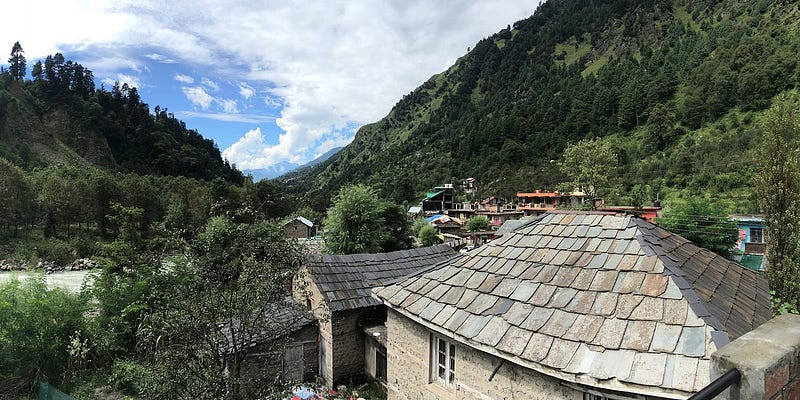
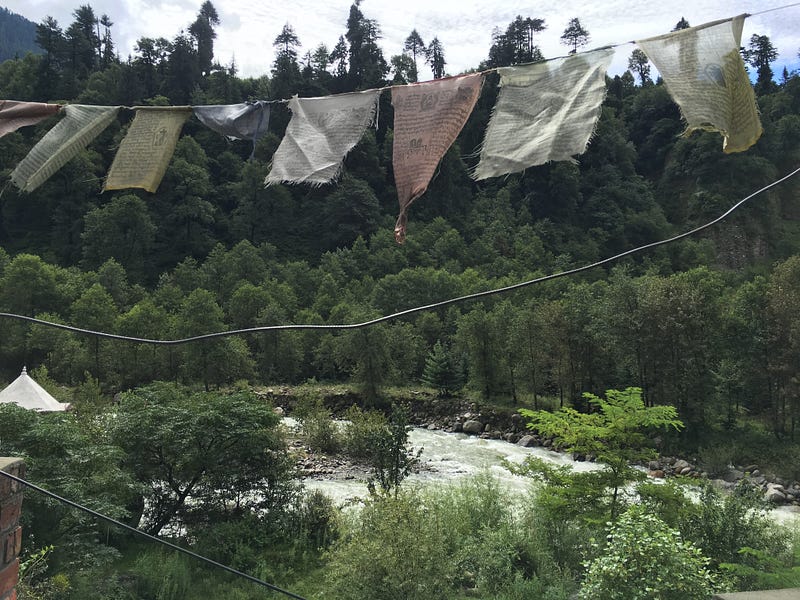
Following her instructions, I packed my belongings and took the stairs to the rooftop before departing. I gasped as I beheld the expansive view. A river flowed to the left, its waters roaring in the background, providing a steady soundtrack alongside cheerfully chirping birds. A hilly expanse full of evergreens dipped down to the sides, with the snow-capped Himalayas faintly visible in the distance. Fellow villagers’ homes — a mix of beige cottage-like façades and pastel edifices made up the foreground. Tibetan prayer flags swayed gently in the breeze, adding to the sheer grandeur of the entire scene.
I reflected on all that had transpired the past twenty-four hours.
Suchita was the first of many remarkable women with whom I’d crossed paths on this India trip; women who changed my perspectives on what it meant to live a meaningful life. Like Suchita, these women challenged societal norms and charted their own paths, leaning into the pushback that often resulted. They embraced marriage and parenting on their own terms (or forwent it altogether), shaped their career trajectories according to their passions, and spoke openly about injustices in a society that so often encourages women to keep quiet.
It surprised me that in India, of all places, I found the representation I didn’t know I’d always needed; that I so readily encountered other women who, in their own ways, redefined what it meant to be… women. In a part of the world where those born female still had little agency, and defying prewritten rules could be dangerous, I found their actions all the more respectable.
I’d ultimately realized that travel isn’t just about the places we visit. It’s about the people we cross paths with, and the inner shifts we undergo as we witness new ways of thinking, living, and being.
Travel opens us up to people who take us in as their own and remind us that love is always accessible. And we walk away from these encounters feeling a bit lighter, freer, and better able to handle the myriad uncertainties of this human experience.
Thank you to the Globetrotters editors (Anne Bonfert, JoAnn Ryan, Jillian Amatt - Artistic Voyages, Adrienne Beaumont, and Michele Maize) for editing and supporting all of our work!
Full version originally published at https://thetuesdaytapestry.substack.com.


