
A Card Game Master Class on Career Decision-making
What deck-builders teach us about choosing strategically in a flood of options

How can two competitors start with equal resources in the exact same market, but one becomes wildly successful while the other flounders?
Business classics like Good to Great explore this concept in exquisite detail, comparing pairs of companies in detail and studying them to see the differences. Still, with all their resources, they could only find eleven examples for their research.
Yet every day, tens of thousands of deck-builder card game fans worldwide test this exact scenario, and the resulting strategies from millions of games played over hundreds of variants both validate and innovate on those we find in the classic texts.
Deck-builders: career decision-making in micro.
The basic concept of a deck-builder game is simple:
- Everyone starts with the same basic, mediocre deck of cards.
- These cards grant resources that allow you to score points or buy better cards from a shared center pool.
- Once bought and in your deck, these cards cycle and return to be played repeatedly.
- With smart play and a little luck, despite starting with the same hand and pulling from the same deck, you squeeze out more points than the other players to win.
While the simplicity of the game cuts through much of the noise we get in our daily decisions, these games model, in many ways, the choice architecture facing starting entrepreneurs and freelancers:
- Each day, time deals us a new hand to use the skills, assets, knowledge, and connections we own to improve our position.
- The cards in the shared deck represent the new education, assets, opportunities, and partnerships we can make in a given time, and we have to choose among them with the finite resources we have.
- We define victory with our fellow players. Everyone aiming for the same goal, drawing from the same resources, is in the game with us.
The emergent, big-picture strategies that lead to success in a deck-builder are the same strategies top performers use daily to identify and exploit their environments to win their chosen games.
Balance Future Gains With Immediate Needs
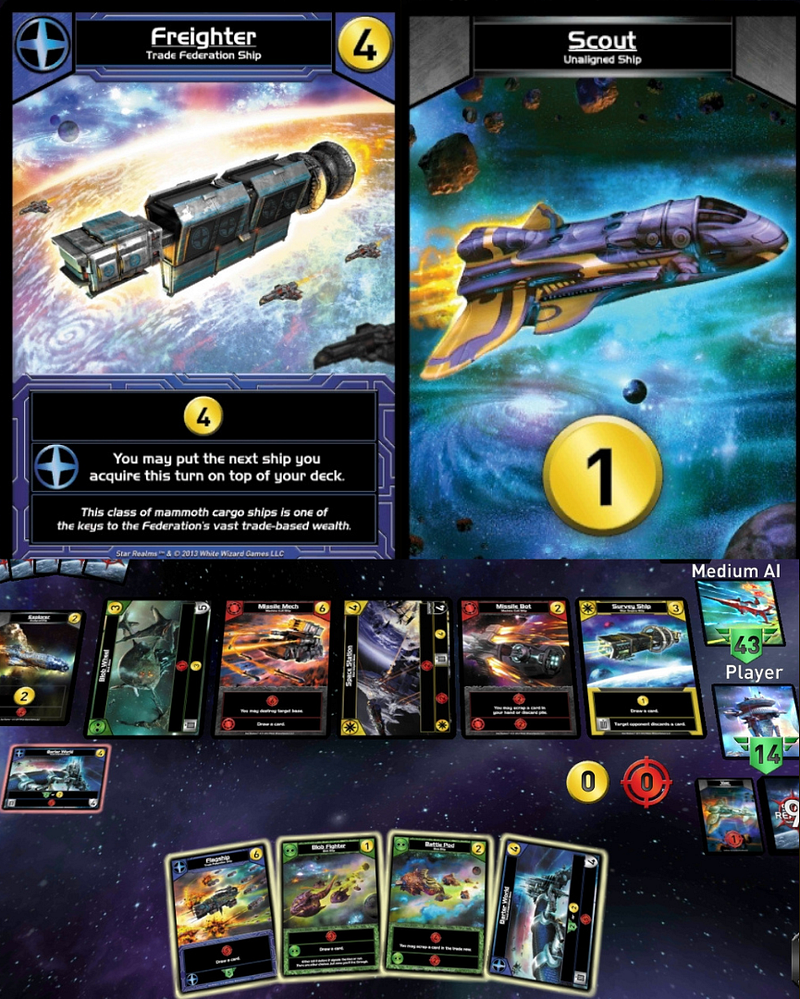
In deck-builders, some cards’ value comes from earning you better cards or greater flexibility in the future. These growth cards are essential as they cycle back through the deck and compound their effects over time.
However, the point of the game isn’t to collect cards. The player should always keep the final victory in mind and recognize when to capitalize on the cards they’ve collected. If you spend too many rounds building an elaborate engine of growth, your opponent may seize an initiative you can’t catch before the game’s end.
For freelancers and solo entrepreneurs, these growth cards are the force-multipliers in personal development — new skills, automation, efficient systems, apps, and assistants. We can pull a few practical lessons from deck-builder strategy to make sure we’re making the best investment of our personal development time:
- Time spent early replacing junk cards with better ones won’t win immediate points, but they make each hour more productive later when your experience and momentum make you far more effective.
- The balance of growth cards over action cards — investment over ‘putting in the hours’ — depends on the timeline of the game. Sometimes, we face sprints — moments where it’s essential to make the pivot or get the product out the door — and long-term growth has to take a back seat to cranking out code and making phone calls.
- Life is a long game. If you play a fifty point strategy in a five-hundred point game, racing from quick win to quick win, the patient player may fall behind at first, but they’ll eventually build such momentum that you can’t touch them.
- Don’t worship the cards. We can get so caught up in the beauty of our systems — agonizing over the perfect platform or designing the perfect website before acting — that we never succeed. As Steven Pressfield repeatedly insists in his books The War of Art and Do the Work, you have to ship.
Starting traits aren’t a trap but a bonus. Use them.
In most deck-builder games, the players don’t start exactly the same. Each player often gets some small benefit — balanced, but not equal — that reacts differently with the possible cards in play.
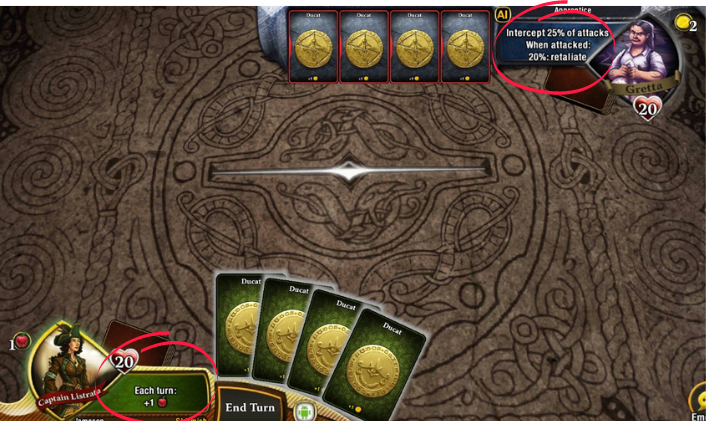
These small differences make some cards slightly more effective and change how the player uses them. These small biases in one direction or the other, over time, can lead to vast differences in strategy by the endgame.
In his book Change Maker, Dr. John Berardi calls these ‘unique abilities’ — transferable qualities like being able to hold space in a critical conversation or consider a technical product from the eye of the customer — that you’ve been developing for a lifetime.
- If you’re starting a new career or embarking on a brand new project, you already what Dr. John Berardi calls in his book Change Maker your “unique abilities.” These are transferable, generable qualities — things like being able to hold space for someone or see a customer’s perspective — that you’ve been developing your entire life across everything you’ve done. Consider these unique abilities when selecting out of your options.
- This unique combination of starting traits is what your opponents can’t match. It will make opportunities that seem obvious to others a poor choice for you, and will enable you to win with cards others see as junk. Especially look for these opportunities where your uniqueness means claiming success in an open market.
- Don’t feel trapped by your history. Sometimes, the cards in the pool don’t seem to line up with your unique abilities or expertise. That’s okay. Pick what works best at the moment with an eye towards using your gift later on.
Identify where ‘better’ leads to opportunity stacks.
In most deck-builders, the strategy is in the interactions between cards.
When selecting from the pool — like selecting between new opportunities — winners don’t chase the highest-cost card they can afford. Instead, they look for cards that make powerful combinations with the cards already in their deck.
One example of this is Dr. Frank Benedetto, highlighted in the Online Trainer Podcast. Most of his work was in training and nutrition preparation for fighters, but training fighters directly isn’t lucrative. Fighters are, generally, broke. But his credentials as a Doctor of Physical Therapy, his credibility as a fight preparer, and connections he’d built through his career enabled him to make an opportunity stack: “train like a fighter” programs. By offering an authentic training experience for professionals who were fans of MMA, and nytaking referrals from other fighters and fight personalities who didn’t want to coach remotely, he aligned his expertise and his environment to make a new opportunity.
The opportunity stack concept applies not just to doing excellent work but in getting recognized for it. In The Formula, Dr. Laszlo-Barabasi outlines a problem in research science: most papers are team efforts. If you remain a scientific butterfly your whole career, jumping from topic to topic, regardless of the work you do, you’ll be seen as an accessory to someone else’s body of work. If instead, you find something that clicks for you, then start stacking future work on the same topic, your co-authors will be seen as side notes in your catalog.
The cards you buy decide the cards you buy
The last two rules present an inevitable side-effect. If you start by selecting available cards that align with your unique abilities, then choose cards that stack on those cards, the deeper you get in the game, the narrower your options become.
Scott Young describes this narrowing of paths as people grow more successful. At the beginning of a new pursuit, you have a great deal of freedom because improvement comes easily. But as you advance, small skill improvements require harder efforts. Additionally, buyers, tastemakers, and gatekeepers look for specific markers of value, so the ability to display those markers becomes more competitive, and collateral tasks aren’t valued.
Success, then, is a balancing act: you have to select winning cards at the moment while keeping your eyes up to see if you have a realistic chance in the endgame.
This may sound limiting and disheartening. With so few spots at the top, why bother? To a certain extent, that’s simply the price of aiming for the top: you have to play well to win. However, it’s not as bleak as it appears.
Although each path to success is narrow, there are many different ‘top’ destinations. If you learn the real demands of success and realistically look at the cards you have, you can often detour to pick a victory better suited to you before spending half the game on a losing strategy.
Round out your strategy with cards that fill your gaps
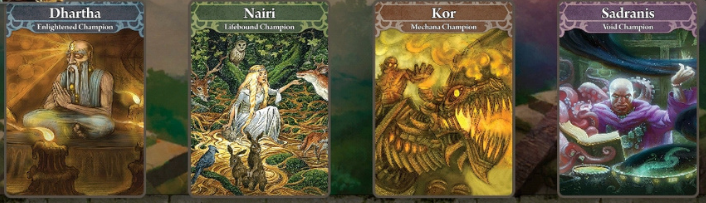
The above concepts might lead a deck-building player to only select cards of a particular faction or ability, but that’s often a big mistake.
Each card family has its strengths, and those strengths often leave wide gaps. If you get incredibly lucky with the shared draw deck, going all-in on one card type might secure victory, but most games, hyper-specializing, is a quick ticket to frustration and defeat.
When selecting our next cards — opportunities to take, skills to learn, employees to hire:
- Dial-in your core cards first. If you’re not delivering excellent results or a product that’s high enough quality consistently, you must address that.
- Once you’re capable (not masterful), aim to complement.
- ‘Complementary’ doesn’t mean ‘thorough’ as there will always be gaps in your deck. Identify two or three elements that matter most that you don’t deliver well yet and make a winning combination in the current market.
You Will Lose
Sometimes, Lady Luck has it out for us.
The shuffle doesn’t go our way. An unlikely draw of five straight monster cards jams up our hero-driven strategy. A pandemic hits the month after we take out a lease to open our new business.
Strategy matters. Good choices put us in the most likely position to take advantage of the next round’s opportunities. But ‘most likely’ implies there’s always a probability of failure.
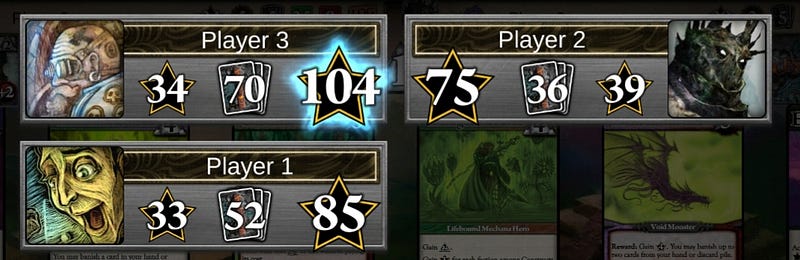
On the one hand, that’s terrifying. There are no guarantees.
Personally, though, I find it freeing. Losing a game, or missing a business target, isn’t a judgment on my character or a guarantee that I’ll fail next time.
After each game — each missed opportunity — I can review the board: “When could I have first realized my strategy wasn’t going to work?” “What choice could have saved me, and how would I have known?” “Was I missing key information about the game?”
Losing doesn’t make me a loser. I can assess the quality of my choices, commit to a different strategy, reshuffle the deck, try again, and maybe even have some fun in the process.
That’s the beauty of the game.


