
A Call for More Funding for Public Schools
by Madhav Patel
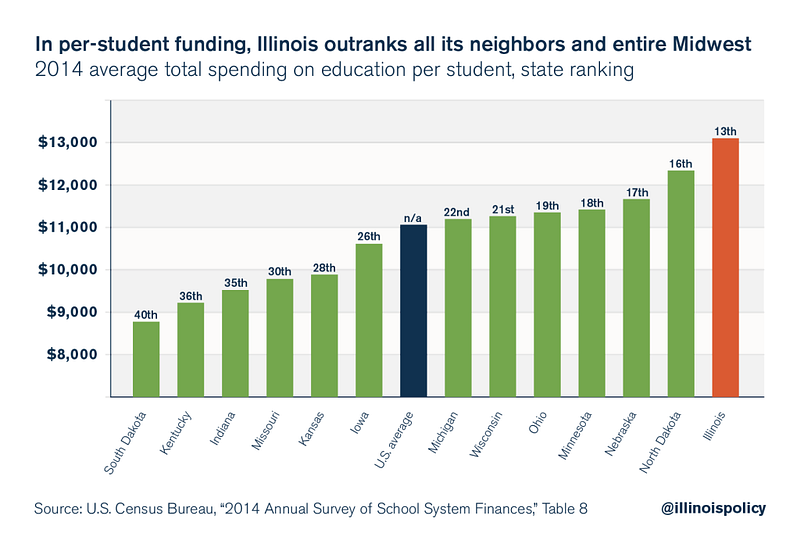
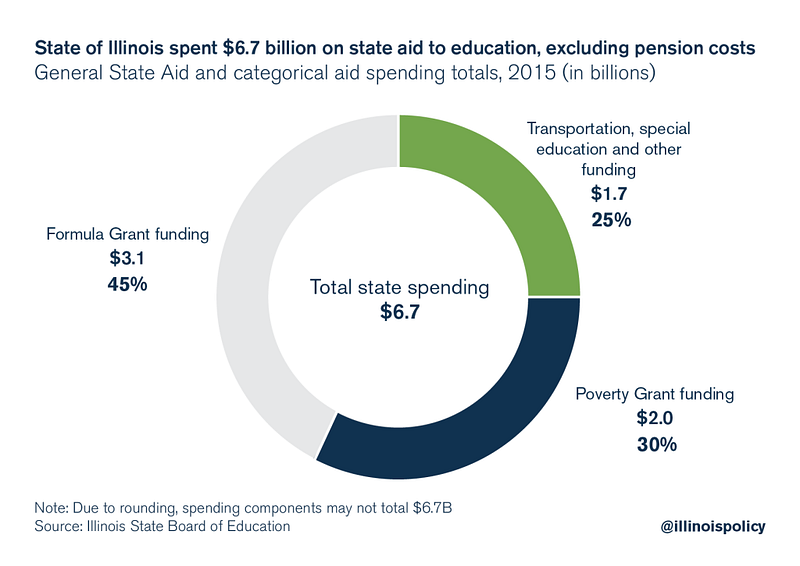
A lack of sufficient funding for U.S. public schools serves as a major concern in education, as lower funding is associated with less staff, programs, and resources for school children.1 Government funding is specifically important to consider, as it is the source for greater than 90% of public K-12 school funding.1 Within government funding, the majority of expenses are covered by state and local leadership (about 93%), with relatively little contribution (merely 7%) from the federal government.2 In this essay, I will highlight why increased funding can have a substantial positive impact on the quality of education.
Prior literature has shown that when schools are provided with increased funding, teachers and students benefit alike, as more teachers are hired, teachers are paid more, the student-to-teacher ratios are lowered, and the quality of education is enhanced.3 Moreover, authors found that with a 10 percent rise in per-pupil annual public school spending for 12 cumulative years, there may be a possibility of several long-term advantages: 0.27 greater years of acquired education, 7.25% increase in salary, and a reduction in annual poverty rates (3.67 percentage points).3 With greater employment among schools and greater pay for teachers, and increased in-school and post-graduate benefits for students, it is evident that increased funding can significantly improve the quality of education in America. Instead, the state of public school funding remains suboptimal and these benefits may not be received uniformly among the majority of teachers or children at public schools.
Another important factor to consider is the facilities that children learn in. Unfortunately, almost a fourth of public schools in America are in poor to fair condition and about half require renovations or repairs to recondition school facilities.1 Moreover, greater than 40% of American schools have been shown to face problems with their heating, ventilation, and air conditioning (HVAC) systems and about 40% of public schools were without a long-term plan for their facilities.4 This has major implications on learning. For instance, Bert Vandiver has shown that the quality of educational facilities is significantly linked to poorer student performance and a higher teacher turnover rate.5Furthermore, one article demonstrates how facilities can be divided by five main categories: 1) acoustics/noise, 2) air quality, 3) lighting, 4) temperature, and 5) space.6 With decreased funding and the potential for a decrease in either of these facets of school facilities, the quality of education is threatened.6 For instance, higher levels of external sound are associated with student stress and dissatisfaction, while lower levels of external sound are associated with increased student engagement and achievement.6 Additionally, poor air quality has been linked to lower attendance for school children, especially among students who suffer from asthma.6 It has also been demonstrated that temperature levels increase engagement and productivity when optimized.6 Ultimately, by increasing funding for public schools, facilities can be reconditioned and lead to enhancement of educational quality.
In conclusion, it is imperative for local, state, and federal governments to increase funding to public schools. By increasing funding, access to resources, facilities, and staff are improved and therefore the quality of education is substantially enhanced.
References
1. Major issues in education: 20 hot topics (covering every level). trade-schools.net. Published November 17, 2018. Accessed March 5, 2023.https://www.trade-schools.net/articles/issues-in-education
2. How is K-12 education funded? Accessed March 5, 2023. https://www.pgpf.org/budget-basics/how-is-k-12-education-funded
4. Schools. ASCE’s 2021 Infrastructure Report Card |. Published January 17, 2017. Accessed March 5, 2023. https://infrastructurereportcard.org/cat-item/schools-infrastructure/
6. The Importance of School Facilities in Improving Student Outcomes. Accessed March 5, 2023. https://sites.psu.edu/ceepa/2015/06/07/the-importance-of-school-facilities-in-improving-student-outcomes/