
A Button on the TV Remote Changes the Facts
Humanity requires respect, teamwork, courage
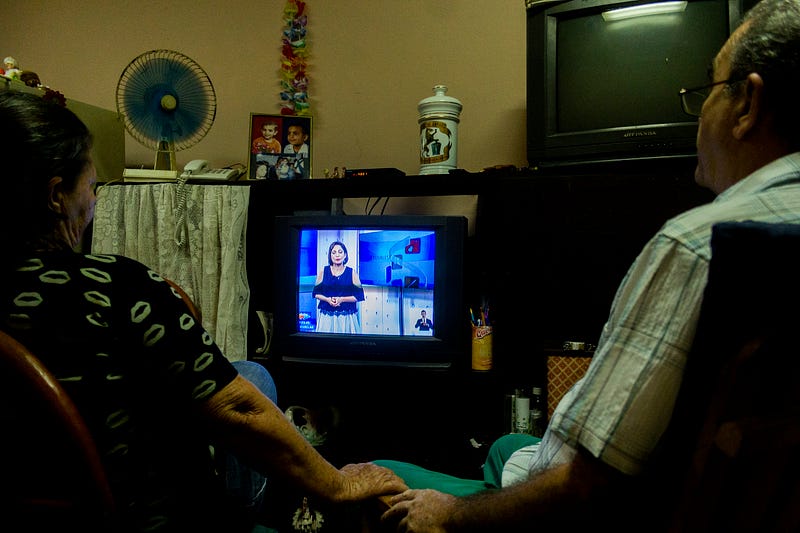
Families once watched the news together in the living room. Everyone gathered to witness the reporting of world events as prestigious men and women provided information about life changing events in a manner that commanded attention and respect. The option to change the channel didn’t exist because nothing else was available.
When Walter Cronkite ended the news with the words, “And that’s the way it is,” the audience believed they heard the truth and there wasn’t an alternative version on a different channel. Sure, adults argued about politics and the cause of current events; however they didn’t dispute the news because they did not believe it to be falsely reported. This was a time before video editing, Photoshop, and technology that allows mind-bending and abuse of information.
Respect
News anchors like Tom Brokaw, David Brinkley, and Tom Rather reported the news. They shared facts rather than opinions. They stated the problems and issues without adding their perceptions. Debates revolved around the interpretation of issues. Round-table discussions confronted issues of how to respond. Dialogue produced respectful communication where ideas were voiced, listened to, and responded to with feedback. But a news broadcast states the facts in a professional manner that can be respected.
As David Brinkley said in his 1995 autobiography, David Brinkley: A Memoir, “In talking over a television picture, never tell the viewers what they can easily see for themselves.” This statement reminds me of watching Dragnet when Detective Sargent Joe Friday said, “Just the facts, ma’am.”
Interpretations and opinions create skepticism. Viewers deserve facts that allow them to arrive at their own conclusions. Many news anchors editorialize or elaborate by stating the obvious.
Teamwork
December 1, 2004 Tom Brokaw shared these thoughts when he exited from the Nightly News.
“The time is here.
We’ve been through a lot together, through dark days and nights — and seasons of hope and joy.
Whatever the story, I had only one objective: to get it right. When I failed it was personally painful and there was no greater urgency than course correction. On those occasions I was grateful for your forbearance and always mindful that your patience and attention didn’t come with a lifetime warranty.
I was not alone here, of course. I am simply the most conspicuous part of a large, thoroughly dedicated and professional staff that extends from just behind these cameras, across this country and around the world, in too many instances, in places of grave danger and personal hardship. They’re family to me.
What have I learned here? More than we have time to recount this evening but the enduring lessons through the decades are these: it’s not the questions that get us in trouble. It’s the answers. And, just as important, no one person has all the answers. Just ask a member of the generation I came to know well, the men and women who came of age in the Great Depression, who at great personal sacrifice saved the world in World War II and returned home to dedicate their lives to improving the nation they had already served so nobly.
They weren’t perfect. No generation is. But this one left a large and vital legacy of common effort to find common ground here and abroad on which to solve our most vexing problems. They did not give up their personal beliefs and greatest passions but they never stopped learning from each other. And, most of all, they did not give up on the idea we’re all in this together.
We still are and it is in that spirit that I say thanks for all I have learned from you. It’s been my richest reward.
That’s ‘Nightly News’ for this Wednesday night. I’m Tom Brokaw. . . . I’ll see you along the way.”
Mr. Brokaw elegantly stated a fact. No one, no group, is perfect, but we all work together for the betterment of society. That is the purpose of the news, to enlighten all.
Society questions news broadcasts because fake news is a reality. Simply joining the words “fake” and “news” creates an oxymoron. Americans choose which channel they watch based upon the perspective they wish to hear. It requires a discerning ear to sift through sources to determine accuracy. Reports are only believable when the original source is consulted and truths are mined.
If the country is to unite in a common goal, information must be presented without bias. Americans deserve to be a part of a team but we can’t make informed decisions in a void. There is a need for all reporters to collaborate and share facts.
Courage
Tom Rather ended his final newscast with these words, reminding viewers of the courage it takes to report the news and stand up for truth.
“Not long after I first came to the anchor chair, I briefly signed off using the word, ‘Courage.’ I want to return to it now, in a different way: to a nation still nursing a broken heart for what happened here in 2001, and especially to those who found themselves closest to the events of September 11; to our soldiers, sailors, airmen and marines, in dangerous places; to those who have endured the tsunami, and to all who have suffered natural disasters, and must now find the will to rebuild; to the oppressed and to those whose lot it is to struggle in financial hardship or in failing health; to my fellow journalists in places where reporting the truth means risking all; and to each of you, Courage.”
For the CBS Evening News, Dan Rather reporting. Good night.
— Tom Rather’s speech at the end of his farewell newscast
Currently, the oppressed, the suffering, the essential workers, the medical personnel have the courage fight, to survive. Americans need news anchors with the courage to report the truth. Facts from the news should be reported, trusted and accepted.
As long as there exist ulterior motives, hidden agendas, and political purposes, viewers must be cautiously aware. Questioning information will always be essential. Since we cannot return to the innocence of the past, consumers will have to live wary of false prophets, soothsayers, shaman, and dishonest reporters.
NPR — This I believe
During an age when truth is debatable, I have been asking myself how Edward R. Murrow would report the news in the 21st Century. Prior to hosting This I Believe in the 1950’s Murrow risked his life working as a broadcast journalist to report events from London during WWII. He reported the news honestly and refuted any attacks on his credibility, believing it the responsibility of a reporter to provide facts.
NPR, National Public Radio, invites citizens from all walks of life and all ages to share essays about personal beliefs that provide direction to their lives. On it’s webpage it provides the history of This I Believe.
“This I Believe is based on a 1950s radio program of the same name, hosted by acclaimed journalist Edward R. Murrow. Each day, Americans gathered by their radios to hear compelling essays from the likes of Eleanor Roosevelt, Jackie Robinson, Helen Keller, and Harry Truman as well as corporate leaders, cab drivers, scientists, and secretaries — anyone able to distill into a few minutes the guiding principles by which they lived. These essayists’ words brought comfort and inspiration to a country worried about the Cold War, McCarthyism, and racial division.”
This I believe
In closing, if any readers struggle with my acceptance of the honesty of past news anchors I state my beliefs. I believe the Holocaust happened, man landed on the moon, the earth is round, and humans are basically good. I believe science and religion can live in unison. I believe the art of being human demands respect and courage because evil exists but good can prevail through teamwork.
Read more from this author, Brenda Mahler


