
A Brutally Honest Story About Toddler Sleep Training
I hate the cry-it-out method, but I learned that sometimes it’s necessary.
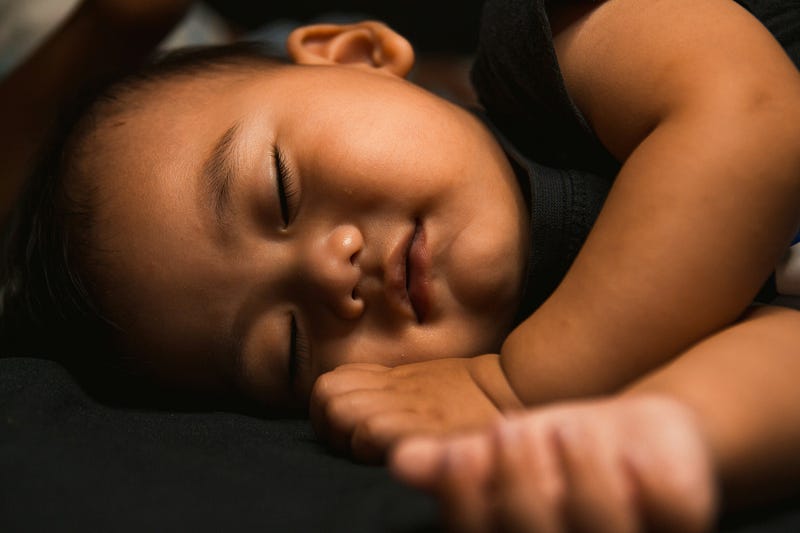
Maybe you’ve been here. It’s the middle of the night and your toddler is screaming. You try to get them back to sleep and end up lying on the floor next to their bed, anxiously watching to see if they have closed their eyes so that you can sneak out of the room. The minute you make a move, they start to cry again.
In this dark hour, you resort to google for sleep-training wisdom. How do other people get their kids to sleep? What do the experts say? Will you ever sleep again?
Some articles advise walking the child back to bed and firmly telling them to go to sleep. Others advise creating bedtime rituals. Still others advise something called “graduated extinction” in which parents go into the room “in gradually increasing intervals of time” (www.huckelberrycare.com). Hardly anyone tells the truth about their experiences with the good-old cry it out method in which you shut the door — lock it if necessary — and let the child cry themselves to sleep.
When we moved from Chicago, IL to Long Beach, CA, our two-year-old son Daniel stopped sleeping. Our new home is a tiny two-bedroom apartment where he shares the room with his four-year-old-sister and a wall with my husband and me. In these close quarters, Daniel woke up crying many times each night. Some nights, he would stay awake for hours, rolling around on his bed with eyes wide. I found myself sitting on the floor next to him watching hours pass, trying to keep him quiet so that he didn’t wake up everyone else.
Throughout this process, my husband advised that we let our son cry it out. We’d done this with our children before the move and had success with it. For a variety of reasons, though, I wasn’t willing to do it this time. Our son was older, I reasoned, and the and the situation was different. Cry it out had made sense when he was a baby in a crib, but now that he was a two-year old I became convinced that it was wrong to lock him in the room. I worried about the neighbors. The walls here were thin, and I was afraid they would think we were abusing our kids. (See recent This American Life piece about a couple who try the cry it out method and their neighbors call the police: https://www.thisamericanlife.org/821/embrace-the-suck). My son’s verbal ability compounded these fears. The few times we tried to let him cry it out, he would yell “open the door!” in the voice of a demon-possessed gremlin while banging on it violently, or he would try out his rhetoric on me, pleading, “I have no one!” “I am alone!” “Mommy, let me hear your voice!” I felt I just couldn’t do the cry it out method.
For three months, no one slept. Daniel woke up 2–4 times each night. He woke up in the morning as early as 5 AM and refused to go back to sleep. He didn’t nap at all, and he started acting crazy. He threw things in the toilet. He tossed a box of 300 Q-tips all over the apartment, including onto the lit stove. My four-year-old daughter felt the strain, too, and took to screaming at her brother at the top of her lungs to voice her frustration.
Our whole lives began to revolve around trying to get Daniel to sleep. We tried tiring him out by walking everywhere we went, somedays logging miles as we trekked to the park and back on foot. We stopped going to events outside the home because Daniel would fall asleep in the car and then we’d lose any chance of a nap.
My husband had it the worst. We had moved to California for him to start a new job as a professor at a large university. Despite his workload, he shouldered a heavy burden of dealing with night-time wake-ups because he was more successful than me at getting Daniel back to sleep. Although he was doing well at work, the lack of sleep started to take its toll on his physical and mental health. He experienced depression and a sense of desperation as I resisted his requests that Daniel cry it out.
Somehow, through all of this, I remained convinced that crying it out was the wrong thing for Daniel. The conviction that it would harm him had become firmly lodged in my brain, and I refused to do the one thing that my family desperately needed me to do.
At my husband’s request, I set up an appointment with my son’s pediatrician. She surprised me by recommending exactly what my husband had been advising all along. The pediatrician’s blessing was what I needed. That afternoon, I bought a one of those plastic doorknob cover locks, set up a baby camera, and got myself a pair of headphones.
That first night was brutal. He cried. He screamed. He banged on the door and tried to force the lock. His little fingers reached under the door to try to pry it open. He took off his diaper and peed on the floor in protest. I put on headphones, watched Daniel rage via the baby cam, and tried to remind myself that things would get better soon.
After a few days, they did. In time, he completely stopped crying during the night. Using a green-light alarm clock, we trained him to stay in the bedroom until it goes off at 7 AM each morning. The kids share a room peacefully now. Daniel naps for two hours in the afternoons. Now we no longer need to lock the door. He has realized that trying to challenge our sleep boundaries isn’t worthwhile anymore.
It was only after Daniel started sleeping again that I realized how serious a mistake I had made in refusing to let my son cry. As my husband and I finally found time to talk, I recognized that I had failed to take his parenting ideas seriously and hear the distress he was in. My fear of harming my son overpowered my concern about everyone else in the family. Reading people’s discussion on Reddit of sleep training, I read about husbands feeling steamrollered by their wives on issues of sleep. I recognized myself in those wives. If I’d given my husband an equal say in how we were going to manage Daniel’s sleep, I could have spared us months of misery.
I learned to recognize my limitations as a parent: my kids’ cries and distress are my weak point. I have a hard time maintaining rationality when one of my kids is crying. These are times when I need to step back, take a breath, and recognize that sometimes the most loving thing I can do is hold a firm boundary, even when it feels like I’m the worst mother in the world.
Daniel isn’t throwing things in the toilet anymore. His sister stopped screaming at him. It turns out he really needed his sleep. It turns out we all needed it.