
A Brief History of Programming
The Code of the coder
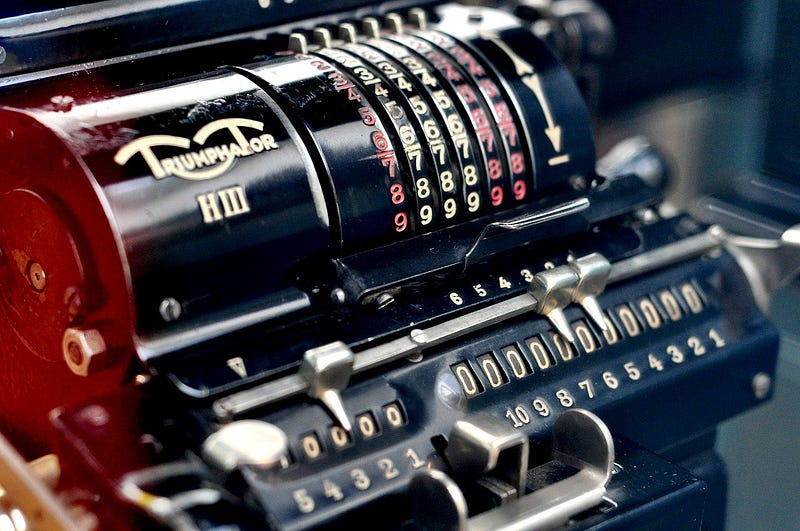
Late in 1939, in Dodge City, Kansas, Professor Marvin “The King Dweeb” Univac finished building the world’s first electronic computer in his garage.
“What’s that thing?” Marvin’s wife Myrna asked as she handed him a sack of groceries. She’d just pulled up in the driveway, home from the supermarket. Standing next to the car with the back door open, she’d already shouted, “Hey!” to him as he sat on some old paint cans by the garage door admiring his handiwork and ignoring her.
“Could I please get some help here?” she sounded exasperated, and somewhat miffed. His reverie broken, Marvin jumped up, grinning like some half-witted undergrad, and trotted over to help her carry in the groceries.
“That, my dear, is an electronic computing machine,” he said with much pride.
“A what?”
“You know, a computer.”
“Uh-huh. What does it do?”
“Well, it… it… Oh, all sorts of things. It’s mainly for solving big problems and stuff. I haven’t quite got that part figured out yet.”
“Marvin, did you fix the toilet like I asked you?”
“Uh, not yet. I — ”
“What about the gutters? Have you cleaned those out?” She looked up at the roof’s edges. “Nooo, I guess not. And the screen door? Not fixed. Oh, and look at those leaves. I bet they haven’t been raked and burned yet, either. But that’s okay. We can do all that later. Right now we have to build a… what did you call it?”
“A computer.”
“Yes, a computer that will solve big problems.”
She looked displeased and a little overweight.
The computer sat in his garage untouched for eighteen months until Myrna told Marvin to either make it do something useful or get rid of it. So, Marvin put this ad in the Kansas City Star’s Sunday classified section:
NOW HIRING
Ground floor opportunity in the exciting new field of computer nerdology. Two entry level positions available. Applicants must possess a working knowledge of geek related activities, such as laughing loudly at inappropriate times, putting white tape on your glasses, wearing glasses, reading copious amounts of science fiction. Requires as much knowledge and skill in science and electronics as your tormentors on the football team have in making bodily noises. Benefit package includes company paid bad haircuts, multi-colored ink pens, and various small pocket-sized screwdrivers. Must provide reliable plastic pocket liner. Send resumes with salary history to…
Professor Univac received over seven resumes and narrowed it down to four finalists: Frances “Icky” Cobol, George Frederick “The Fredster” Fortran, Robert “Space Cadet” Goddard, and Bob Basic.
No contest on Goddard’s brilliance and nerd-ability, but all he wanted to do was to launch the computer into outer space. And Basic’s concepts were… well, too simple. Not his first choices, but Cobol and Fortran got the jobs.
“I want you boys to come up with a language my computer here can understand,” Univac said to his new assistants. “I figure we’ve got six months at the most before the little woman turns it into scrap for the war effort. So, let’s get to work.”
Cobol and Fortran worked night and day for several months but made no progress. They tried Spanish, Swedish, Russian, Yemen, Uzbecki, Turkmeni, Afgani, British, French, Italian, and Thousand Island, but nothing got through to the brooding hulk of a computer.
Word spread of their endeavors, and folks gathered from as far away as Wichita to sit outside the garage on those hot, sultry Kansas nights to watch the three men trying to get the computer to respond.
One hot moonlit night, a small freckled-face boy named Toby approached the tired and dejected trio.
“Hey, mister,” Toby said. He held up the end of a power cord to Marvin. “Maybe if you plugged this thing into the wall…”
The three computer professionals, sweat glistening their faces and soaking their shirts in the hot and humid night air, looked at one another for several seconds saying nothing. The only sound came from the chirping of crickets in the hot, sweltering summer night. Finally, Fortran grabbed the plug from the boy and jammed it into a nearby electrical outlet.
“We knew that,” he said brusquely to the lad.
The metal and glass behemoth sparked and glittered to life. A great cheer went up from the perspiring crowd gathered on the edge of the garage light’s hot yellow glow. Then silence fell as Cobol stepped to the machine and placed his hands on the console. After a brief pause, his fingers raced across the keyboard.
“Swahili,” he said hoarsely to his colleagues.
“Swahili.” The whisper ricocheted through the hopeful, heat-worn crowd.
The machine ground and whirred and blinked, while Vanna and the crowd applauded. “Come on Vegas Trip,” Fortran said aloud, his face glazed with sweat and greed. Then it stopped.
Everyone leaned forward expectantly. “Ooooohh,” they said. Univac walked to the side of the machine, kicking it soundly, and it flashed to life again. “Aaaaahh,” said the crowd.
“Ptui,” it replied. A piece of paper ejected from its crude output port. Cobol retrieved it, glimpsed at it, frowned, and shook his sweat-dripping head.
The scientists slumped. “Oooooohh,” said the well-heated gallery again, as if the Great Wheel had stopped on “Bankrupt.”
The disconsolate head geek sank to a chair and stared darkly at the baked dirt floor. Cobol began listlessly throwing damp clothing and his back issues of Weird Stories for the Scientifically Inclined into his canvas travel bag.
Fortran shuffled about aimlessly with his hands in his pockets and banged his head slowly and repeatedly on the side of the indifferent computer. The crowd began to disperse in twos and threes into the hot, muggy night.
Out in the darkness a distant roar crackled and grumbled, faint at first but getting louder as it approached. Slowly, people in twos and threes turned their heads to search for the source of the approaching machine. The noise suddenly ceased as if switched off.
Atop a small hill on the very edge of the garage light, in swirling ground fog back-lit by a blue-white illumination, stood the silhouetted figure of a man sitting astride a Harley. He stood taller than Tom Cruise or Martin Short and bore a striking resemblance to Kevin Costner.
With his cold, steel-blue eyes hooded by the rim of his black Stetson, no one could tell he was a man who had never known the meaning of defeat. With the back-lit blue-white light and swirling fog obscuring his countenance, none there could tell he also didn’t know the meaning of ubiquitous nor mnemonics nor pteridology, to name but a few.
In one fluid movement, he dismounted the big bike and strode forward into the light. As he walked, his unbuttoned, ankle-length canvas coat flowed out from his body like an unbuttoned ankle-length canvas coat. Dust and fog swirled in his wake like dust and fog on a hot, dusty and foggy summer night in Kansas. It was so hot, dusty and sultry, it resembled a beer commercial, except the women weren’t as attractive.
Doc Univac looked up at the stranger standing silently before them. “Howdy, stranger,” he said cautiously.
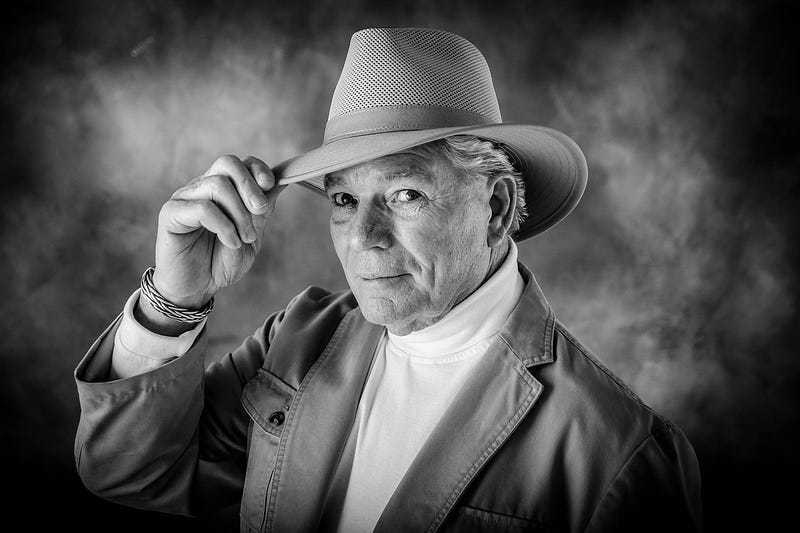
The Stranger touched a forefinger to the rim of his hat and nodded slightly. His blue-green eyes were kind of squinty because of the dust, and sweat ran in a rivulet down his cheeks because of the heat.
“You’re a stranger around here, aintcha Stranger?” the wary Fortran asked.
“Could be,” came the Stranger’s vigilant reply.
“What’s yer bidness in these parts, Stranger?” Cobol asked cautiously, with wary vigilance.
“I heard a voice. I believe it was a Cheyenne voice coming from a vast ocean. It said, ‘If they build it, you oughta go take a look-see.’ It said you boys were in trouble. It said I should come give you a hand.”
“Well now, don’t that beat all,” the sarcastic Fortran said sarcastically. “This here peckerwood thinks we need his hep.”
When the blue-white back-light and fog switched on, the crowd had started to re-form. They laughed derisively at Fortran’s derisive comment. More than a few of them mentioned the heat.
“Hold on there, Fredster,” Doc Univac said as he clamped a crooked little cigar between his teeth. “Let’s see what this stranger’s got.” He swiped a match across his pant leg and lit the crooked little cigar.
Holding the burning match a few inches from his sweaty beard-stubbled face so that you could see the flame’s yellow reflection in his pupils, Doc said, “Go ahead, Stranger. What ya got in mind.”
The stranger’s greenish-hazel eyes met Doc’s stare evenly. He slowly removed his ankle-length canvas coat, handed it to Fortran, and walked calmly over to the console.
“What you boys have failed to understand,” the Stranger said as he placed his large rough fingers onto the keyboard, “is that this machine ain’t human. It’s a machine.”
He typed. Slowly at first, then with increasing speed and intensity. Sweat poured down the side of his face, and into his intense brown eyes, which he blinked away. Dark wet circles grew on his shirt under his arms.
The sound of clicking keys drowned out the chirping of the hot night’s crickets, which caused them to file a grievance with the United Swarmhood of Noisome Insects.
Finally, the sweating stranger stopped. “There now,” he said. “Let’s see what we got. Someone ask it a question.”
A murmur went up from the crowd.
“Wh-What’s your name?” Doc Univac asked tentatively.
The Stranger keyed in the question, and the great machine blinked and clicked and whirred. Then it spit out an answer.
The Stranger picked up the output and read the response. “I am Univac 1, but you can call me ‘U’.”
A gasp went up from the crowd. Small Picket signs went up from the crickets.
“Who is the President of the United States?” asked Fortran.
“Franklin Theodore Roosevelt,” came the reply.
“What’s the square root of 144?” asked Icky Cobol.
“Thirteen, no Twelve, no Thirteen… wait, twelve,” U burped out immediately.
The crowd erupted into excited crowd noise, which sounded a lot like thirty people randomly saying “peas and carrots, peas and carrots” over and over. A woman fainted; another screamed. “It’s an abomination!” someone yelled. Several in the mob brandished Pitchforks and torches. The entire third shift of crickets walked off the job.
Then one of the crowd’s number, a simple farmer, stepped out of the crowd and approached the scientists, his simple straw hat in his hands.
“Sir? Doctor Univac, sir?”
“Yes, what is it?” Univac said with irritation.
“Kin I mebbe ask it a question?”
“Okay, go ahead. But be quick about it.” He ran his gaze over the simple farmer. “Make it simple,” he added.
“Well, I was wonderin’, if it ain’t too much trouble…”
“Come on, man. Ask your question.”
“Okay, uh, well,” he paused and scratched the side of his head, cleared his throat. “I was wonderin’… Is the conjugate of the quotient of two conjugate numbers equal to the quotient of their respective conjugates, or what?”
All eyes turned to the Stranger. The Stranger keyed in the question. The massive computer groaned and belched forth its answer. The Stranger pulled it out and read it in silence.
“Well…” asked Cobol. “What does it say?”
“Yo mamma,” the Stranger read.
And so it went through the rest of the night. Finally, as the sun crested over the eastern hills, the Stranger put on his coat and hat and long canvas coat, which he left open so it could flow when he walked, and prepared to leave. The crickets working the first shift began arriving in their tiny pickups, but none of them crossed the picket lines.
“Looks like I’ve done everything I can here. You boys can handle it now. Just take it easy for a while ’til he gets used to you. Adios, amiga.” With that, the Stranger mounted his Harley and rode off to his big ranch in Montana.
“Who was that stranger,” Cobol asked no one in particular.
“Don’t you know?” said one of the hot, dusty and by now, odiferous farmers. “Why, that’s the Lone Assembler.”
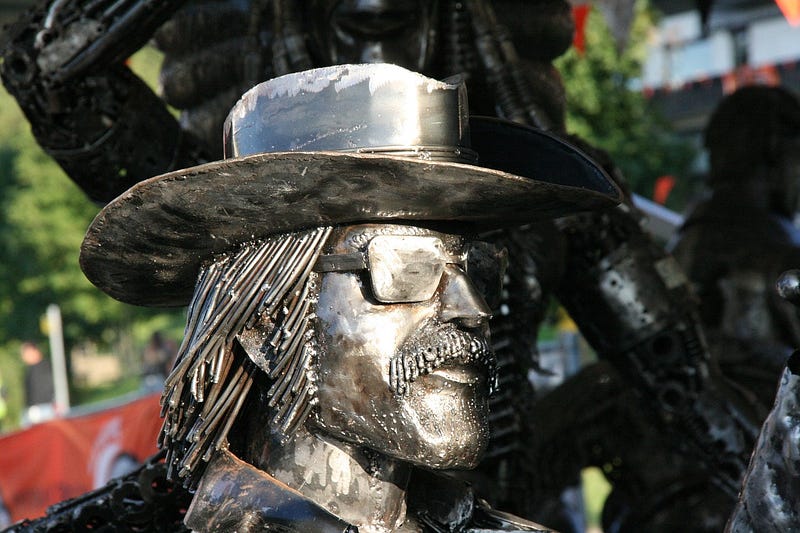
Not everyone knows this story of how computer programming began, because not everyone watches the History Channel. To be honest, this story hasn’t ever actually been told on the History Channel, but that doesn’t mean it couldn’t happen. I mean, look at Ancient Aliens.
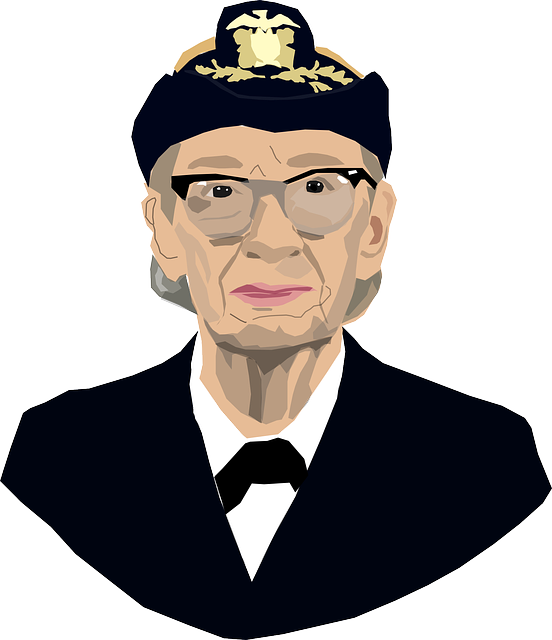
In 1982, the aged Professor Univac attended a dinner at the White House to honor Admiral Grace Hopper for her contribution to computer science, and Steve Jobs for what he brought to the world of suspenders. After the venerable geek Univac had related this story to President Reagan, the Great Communicator looked at the professor and said, “Well, could you pass the mashed potatoes, please?”
Thanks for taking time to go on this little journey with me.
Would love for you to visit my website. There, you can read previews of my novels, and perhaps join my readers group. When you do the latter, I will send you a copy of my short stories collection, Skins Game.

© 2020 by Phil Truman. All rights reserved.
A holiday shoutout to some of my writer friends:
Stuart Englander Liam Ireland Tree Langdon Genius Turner Jeff Herring Dr Mehmet Yildiz Fatim Hemraj Britni Pepper Lanu Pitan Tim Maudlin Jessica Cote Anne Young Randy Rather Chitara Smith Quy Ma Tatiana Santana Tobias Hermes Jennifer Marie


