

A Brief History of Bounties
“A copper pot went missing from my shop. Anyone who returns it to me will be given 65 bronze coins (sestertii). 20 more will be given for information leading to the capture of the thief. — Unknown Graffiteur, Pompeii pre 79 AD”
Since the moment humans first invented money, we’ve used it to reward each other for the completion of tasks. Usually this took one of two forms: individuals were paid on a continuous basis for their services (akin to how modern employment functions) or they were paid on an ad-hoc basis for the completion of discrete tasks, usually with a desired deliverable. The latter form of work, whether they knew it or not, was a bounty.

The First Qin Emperor used the bounty method for rewarding spies, offering money to encourage people to turn in their peers for not following his “legalist” ideology. Countless states and monarchies have used similar reward systems to capture their enemies, and such systems persist even to this day. While their functions have often been egregious, bounties have proven themselves to be a valuable tool in motivating individuals or groups to fulfill given tasks.
Any bounty can be boiled down into 4 distinct steps, which exist regardless of the task being rewarded:
- Issuance: A trusted party sets out the requirements for fulfillment of the task, and states the amount which will be paid upon successful receipt of deliverables.
- Fulfillment: An individual or group from the general public submits the deliverable for consideration.
- Acceptance: The issuer of the bounty determines whether or not the submission met the stated requirements, and accepts those submissions which are correct.
- Payment: The issuer disburses funds to the fulfiller or “Bounty Hunter”, completing the transaction.
Since historically bounties were almost exclusively issued by the state or crown, there was a high level of trust in the issuing party. Bounty hunters therefore never had to worry that the issuer of the bounty wouldn’t have sufficient liquidity to pay them if they successfully completed the task. And although individuals did have to trust that they would actually be paid for successful work, the point was largely moot — if the state took your submitted criminal and didn’t pay you for them, there wasn’t much recourse for you anyway.
In modern contexts, bounties have found a new niche: rewarding hackers for finding exploits in code.
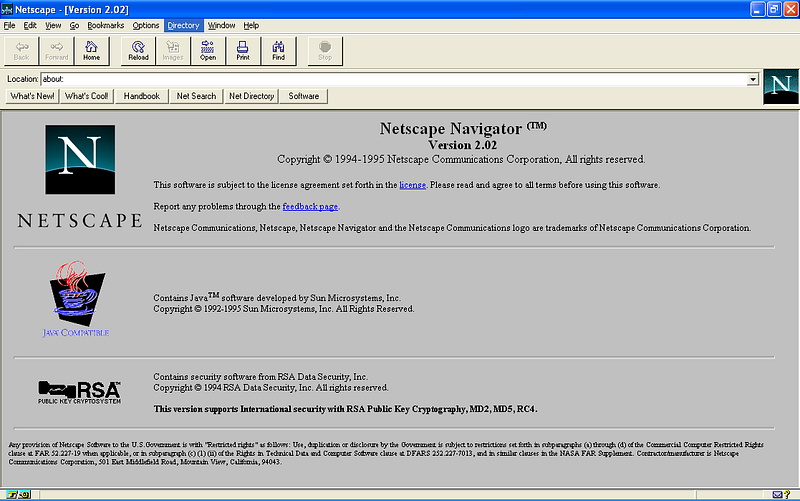
The “Netscape Bugs Bounty” was first launched in 1995 with the beta release of Netscape 2.0, after technical support engineer Jarrett Ridlinghafer convinced the Executive Team to give him a budget of $50,000 to reward individuals in the community for submitting bugs. These Bug Bounties have since become ubiquitous, with firms paying out upwards of $100,000 (Microsoft, 2014) for critical submissions, or in some cases, 1,000,000 frequent flyer miles (United Airlines).
The advent of Web2.0 also saw the rise of the freelancer economy, where people could work autonomously, picking up short-term contracts lasting between 5 minutes (my last uber ride) and several months (for the delivery of an app or website). This is a paradigm shift that sees some choosing to leave their full-time jobs in favour of ad-hoc employment, where they were in full control, and sometimes earn more than they would by entering a conventional job market.
While these advancements largely constituted steps forward for humanity, some issues did arise from these new forms of bounties:
- The issuer of the bounty wasn’t necessarily a trusted party anymore, and there was a chance they simply wouldn’t pay you for your services
- Bounty hunters could submit copyrighted or stolen material without the issuer’s knowledge, which would have consequences long after the reward was paid out
- There was no way to verify someone’s past performance or work or performance without a centralized reputation system like the one Uber employs
And while partial solutions for these problems do exist, they are still extremely pervasive. A solution to these problems must encapsulate not only what work an individual has already successfully completed, but also what previous employers have to say about them. It must also be decentralized.
These are some of the problems that Bounties.network is made to solve — to create a self sustaining, decentralized freelancer market that reduces the transaction costs for both issuers and fulfillers, while allowing for payouts in both ETH and ERC20 tokens.
This is the first of a series of articles introducing the Bounties.network platform. For more information, visit Bounties.network.


