
A Brief Guidebook to Chinese Music
Here are some flash points to classic and modern Chinese music
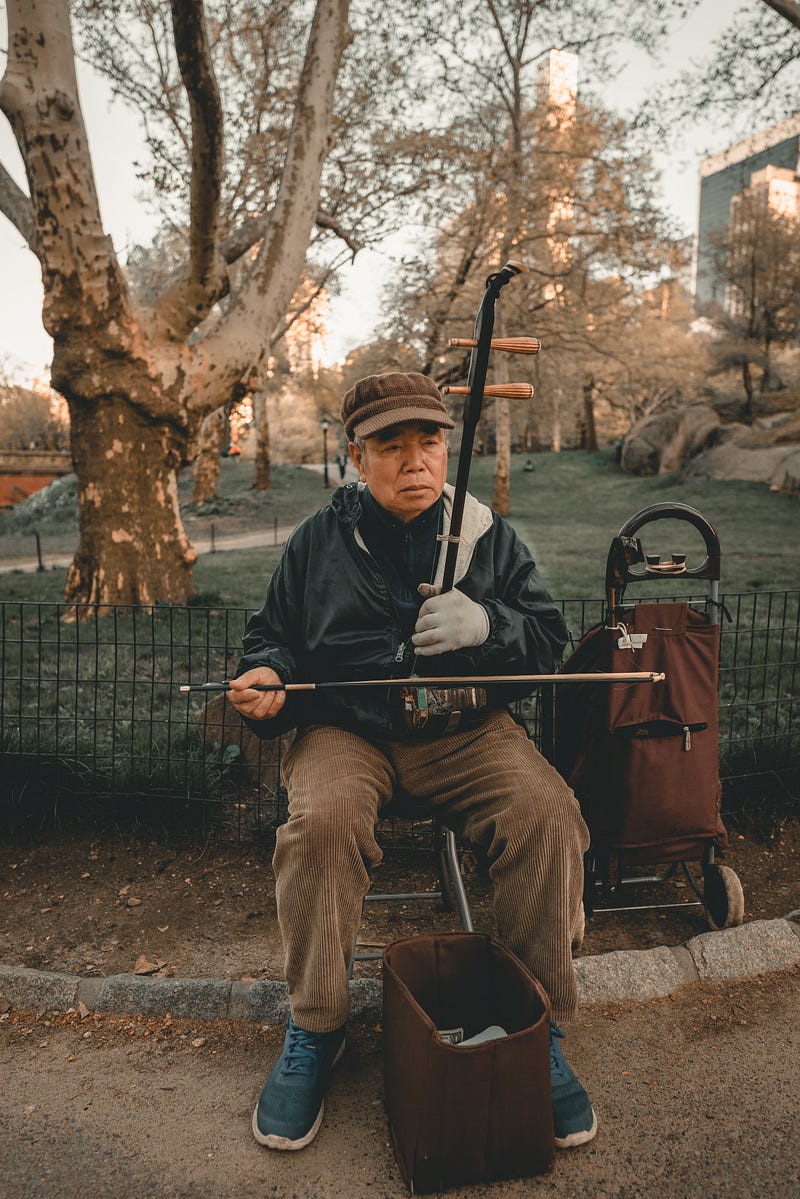
After living in China for a year I learned a lot about the country’s rich musical history. Whether it was listening to live music in parks or attending Beijing opera I was inundated with centuries of tradition through song and performance. It was a lovely experience. Each new music-related conversation would include another artist I wasn’t familiar with. By the end of the year, I had a basic understanding of China’s key musicians and regional sounds. If you are interested in Chinese music here are some places to start and areas of note.
Enjoy!
The Vibrations Vary By Region
Inner Mongolia — Inner Mongolia province derive their musical traditions from Mongolia. They share a name and culture, which largely consists of music. Inner Mongolia has adopted a lot of the same instruments, such as the limbe (indigenous flute), igil, and morin khuur (horse-head fiddle). These wind instruments add a peaceful texture to the music. The rhythmic pace is usually slow and the words can be drawn out. For instance, the traditional four minute “long-song” has only ten words! Inner Mongolia is a great place to hear subtle nuance.
Tibet — If you are a big fan of rhythmic and hypnotic music, then we suggest Tibetan folk songs. First, let’s explore the region’s history. While Tibetan spiritual music was largely banned and censored during the cultural revolution Tibetan folk music mainly survived it. The two genre’s have distinct compositions and use similar instruments. Calm meditative repetition is at the core of Tibetan spiritual songs. After listening to some Tibetan folk music you may hear parallels to opera and rhythmic dance music. So, what should we get out of Tibetan music? The purpose of Tibetan music is to free the soul from worldly possessions and stress.
Hua’er — Up in the vast mountains of northwest China Hua’er has existed for centuries. The a Capella folk music embodies romantic love. The music is largely sung by wives in the middle of farming and communities in communal meetings. These communal meetings are called Hua’er meets. They could last days sometimes. From afar the genre sounds as timeless as a glorious mountain range.

You Have To Know The Greats
Teresa Teng — Teresa Teng was an industry darling from the mid-20th century. She reached C-pop (Chinese popular music) prominence in the 1970’s and 1980’s before her premature death in 1995 at the young age of 42. Her songs reflect the passion of 60’s Motown soul and the simplicity of 70’s Americana folk. She was also known for her ballads and cross-country appeal. She sung in various eastern languages including Mandarin, Japanese, and Indonesian. Her lyrical repertoire included English and French
Faye Wong — Faye Wong was known as the Mariah Carey of the East. She was not limited to her fan-favorite ballads. Wong also had had an ear for alternative and R&B music. Furthermore, her ability to sing in Cantonese and Mandarin expanded her popularity across the continent. She’s was and still is a BIG deal in the East. Fans would gather in the hundreds of thousands from South Korea all the way down to Singapore.
Jay Chou — Jay Chou went from China’s C-Pop sweetheart to director extraordinaire. He is truly a jack-of-all-trades. Chou started out mixing and engineering behind the scenes. After years of production work Jay stepped into center stage. 30 million records and a dozen movies later, the pop sensation proves that he is more than a pretty face. His music takes a unique dive into social commentary and his flow has been both praised and criticized for its mumbling qualities.
Cui Jian — As a rebel with a powerful cause Cui Jian has been the voice of a generation for over three decades. In the aftermath of the Tiananmen Square incident the multi-instrumentalist made protest music in consolidation with protestors. However, he does not characterize his music as political. Rather, he claims that it is just “the truth”. Cui sings with a fire under his belly and apparently his throat. One of his most endearing qualities is his raspy tenor. His tense musical passion passes through all of his rock anthems.
Modern Underground
There is a lot of talent coming out of China at the moment. From the avant-garde disposition of ChaCha, aka the eastern Bjork, to the jazzy electronic producer LinFeng, the options are wide. In the 90’s and early aughts a lot of Chinese pop music was influenced by western stars like Brittney Spears and Celine Dion. In this new age of Chinese music musicians are influenced by big and small artists alike. For example, LinFeng sample style is reminiscent of Kaytranada. The band Future Orients tackles indie rock with excellent math rock textures and energetic pop drive. No matter your taste, you can find music in China that matches your preference. For starters, check out the rosters on rising labels SVBKVLT and Maybe Mars.
Did They Win the Golden Melody Award?
Artists do not compete for Grammy accolades in the East. Instead, there is the prestigious Golden Melody Award. This award is the highest musical honor in the mandarin-speaking world. A lot of their awards reflect the Grammy categories, from Album of The Year to Best New Artist. However, they split some awards by popular music and traditional arts and music. Taiwan’s Ministry of Culture, which is the government body in control of the awards, breaks down best album by unique categories like Best Mandarin Album, Best Taiwanese Album, Best Hakka Album and Best Aboriginal Album. Eason Chan won the 2017 Album of The Year award for his adult contemporary project, C’mon In. If you’re a fan of Michael Buble or Josh Groban, Eason is your guy. The year before that Sangpuy won AOTY for his modern reinterpretation of the traditional Chinese sound with Yaangad. If you’re ever interested in music that is highly regarded in the East, I recommend checking out the winners of the Golden Melody Awards.
There it is! A quick guidebook to China’s past and present music landscape. There is a lot to explore. I’m sure that you will discover sounds that resonate with you.