avatarRene Volpi Jr.

Summary

The article discusses the liberating experience of embracing minimalism, emphasizing that the essence of a person cannot be confined to material possessions.

Abstract

The author shares a personal journey of moving out and discovering minimalism, realizing that years of accumulated possessions do not define one's identity. The process of discarding 75% of their belongings initially caused separation anxiety but was ultimately liberating. The article reflects on the idea that character and personal growth are more valuable than material wealth, suggesting that a simplified lifestyle can lead to greater peace and joy. It advocates for focusing on personal evolution rather than accumulating clutter, and it draws a parallel to the tranquility found in a Zen monastery, implying that a minimalist approach can contribute to a better disposition in life.

Opinions

  • The author believes that material possessions are not representative of one's identity or soul.
  • There is a sentiment that character and personal growth are the true measures of a person's worth.
  • The article suggests that society's tendency to equate well-being with material possessions is misguided.
  • It is implied that minimalism, while potentially extreme for some, can lead to a sense of peace and order.
  • The author posits that simplifying one's life, including material goods and behaviors, can aid in self-discovery.
  • The piece conveys that the complexity of life is often a result of ego and that a return to basics can be beneficial.
  • It is expressed that the peace and joy observed in simplistic lifestyles, such as in a Zen monastery, are byproducts of intentional design and not coincidental.

A Box Cannot Contain The Human Soul

It doesn't matter how many valuable objects there may be in it.

Photo by Erda Estremera on Unsplash

A while back, as I was moving out of my NY apartment, I came to the realization that I was packing stuff that I hadn’t used in years.

Bam! Hello, Minimalism!
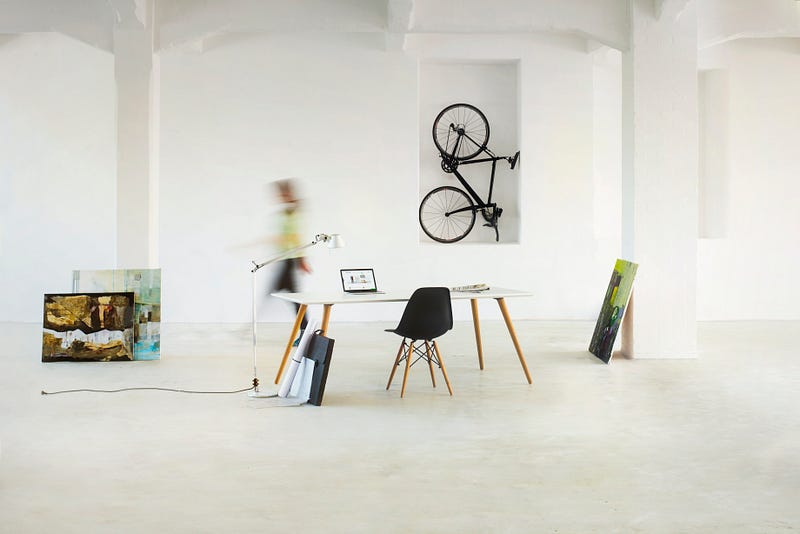
Photo by Pickawood on Unsplash

It was a relief to throw away 75% of all that clutter.

Sure, it was tough at first. Separation anxiety — of sorts — hit hard.

Although material, these items I was disengaging from were part of my identity.

Am I throwing away parts of myself? —The thought hounded me.

But then, I read an excellent quote: “Character is property. It is the noblest of possessions.” ~Samuel Smiles
Photo by Rajat Verma on Unsplash

And I exhaled like never before.

I was free. Free of the chains identifying me with someone else.

Life is simple. It’s our frenemy, ego, that complicates it.

We aren’t boxes packed with 40 years of collecting.

We are magic beings who cannot be put inside a box.

If we could go back to basics instead, life would be conducive to a better disposition all around. There’s no need to see and equate with what others have to measure our own well-being.

Minimalism may be extreme, but it illustrates a point. For example, there’s a sense of peace and order when one steps inside a Zen monastery. That state of calmness doesn't just happen; it’s by design.

One may say it’s not for everyone, but on the other hand, you can observe that that way of life, as simplistic as it is, brings them much peace and joy.

Our efforts are better placed in our evolution as beings, not as collectors of clutter.

Simplifying the whole lot of our lives, from the material to our behaviors and endeavors, can put us on a track of self-discovery.

These days, we need to observe that more than ever in our evolutionary history.

Human Condition
Minimalism
Consumerism
Freedom
Materialism
Recommended from ReadMedium
avatarMichelle Scorziello
The limitless Wealth Within

We all possess

4 min read