
TRAVEL
A Blessing in Shangri-La
Trekking in the heart of a Buddhist sanctuary
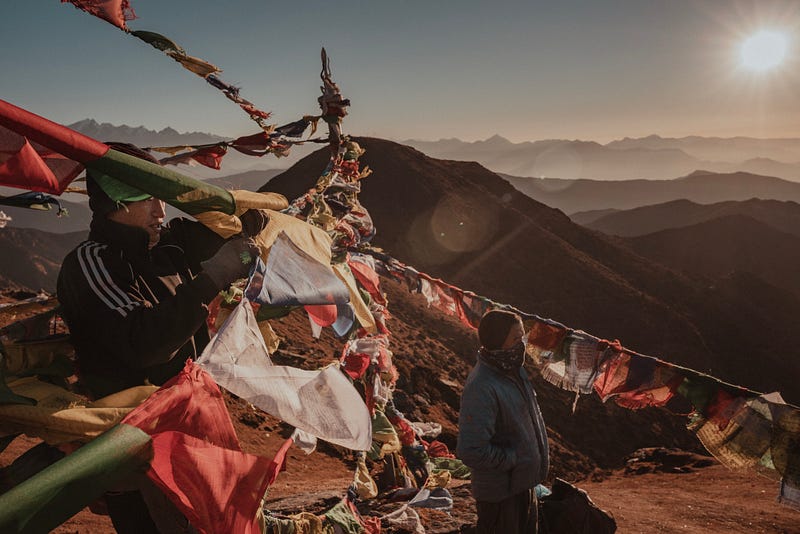
“In another life-this isn’t what I know, but how I feel — these mountains were my home; there is a rising of forgotten knowledge, like a spring from hidden aquifers under the earth. To glimpse one’s own true nature is a kind of homegoing, to a place East of the Sun, West of the Moon” — Peter Matthiessen, ‘The Snow Leopard.’
A second shooting star fizzled out above me as I continued to climb in a howling wind toward the dark summit. The headlamps of the Sherpas faintly twinkled a short distance below me: Mingma, our guide, and our porters, Lakpa and Ongchu, who carried all of our food and cooking and camping gear for the nights in the Himalayan wilderness. Despite wearing all of my layers, the wind bit through to my bones, and I marched breathlessly forward up stone steps on an icy morning.
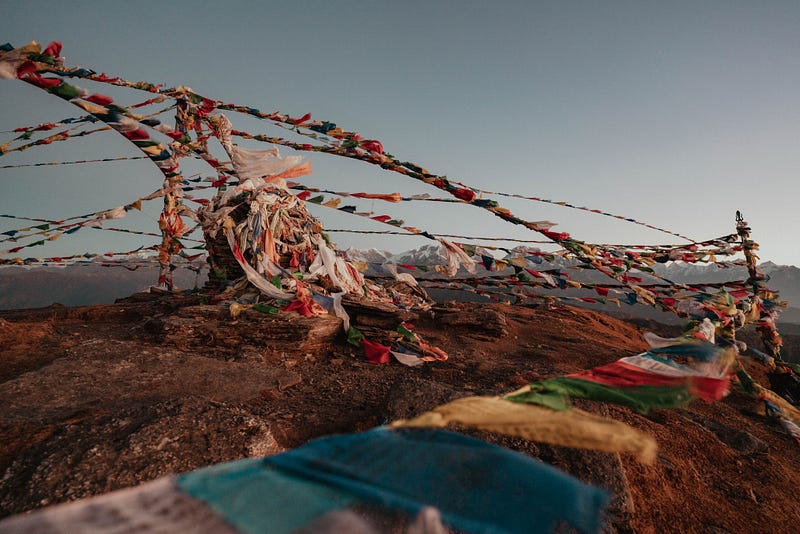
Hundreds of prayer flags rippled fiercely as I arrived at the mountaintop, and I was soon joined by the Sherpas and my friend Kevin from Halifax, Nova Scotia. Soon we put down our packs and waited for sunrise from the only peak on earth from which you can see eight of the ten highest mountains on earth: Everest, Kanchenjunga, Lhotse, Makalu, Dhaulagiri, Cho Oyu, Manaslu and Annapurna.
After a glorious sunrise, the boys hung a few more strands of prayer flags from the colorful cairn to send prayers and peace to the far corners of the earth in these relentless winds. Then we looked into the golden distance, trying to sense a trace of our way to Shangri-La, to the sacred lake of Dudh Kunda. We began our descent from Pekay Peak, trading the stars of our ascent for the distant warmth of a December sun.
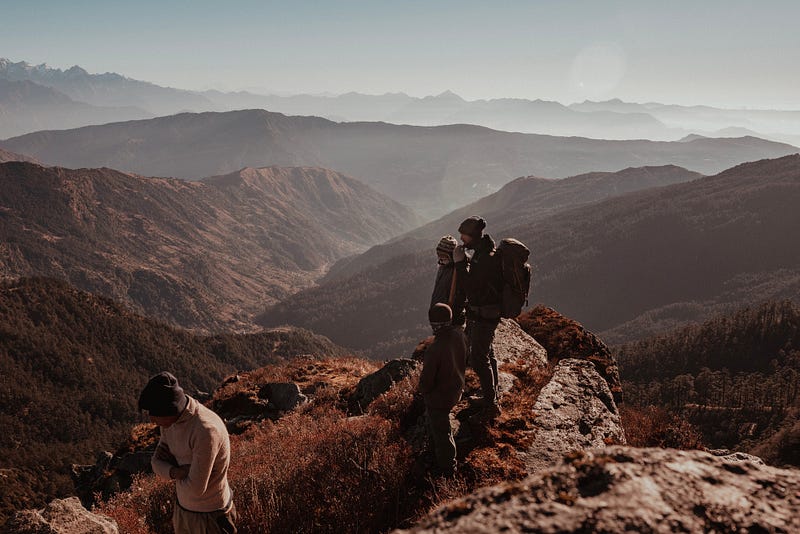
While traveling in Nepal after the country had reopened in 2021, I stumbled upon an incredible opportunity to hike and photograph a prospective new trekking route in Nepal. The photography clients I had met in the Balkans were unable to leave due to the COVID lockdown in their home country, and so they offered to send me out to the Solukhumbu with Sherpas and porters who would guide (and pamper me) while I scouted and photographed the proposed route.
I had recently befriended Kevin at a guesthouse near Muktinath, just after crossing a 17,700ft pass on the Annapurna Circuit. He was super excited to learn about this opportunity to be the first to walk a new trekking route, and so I asked my clients if they would sponsor him to join me — I needed a model after all, for their marketing photos — and they happily agreed, and sent us out to the Everest Region via a long and tumultuous Jeep ride to Phaplu.
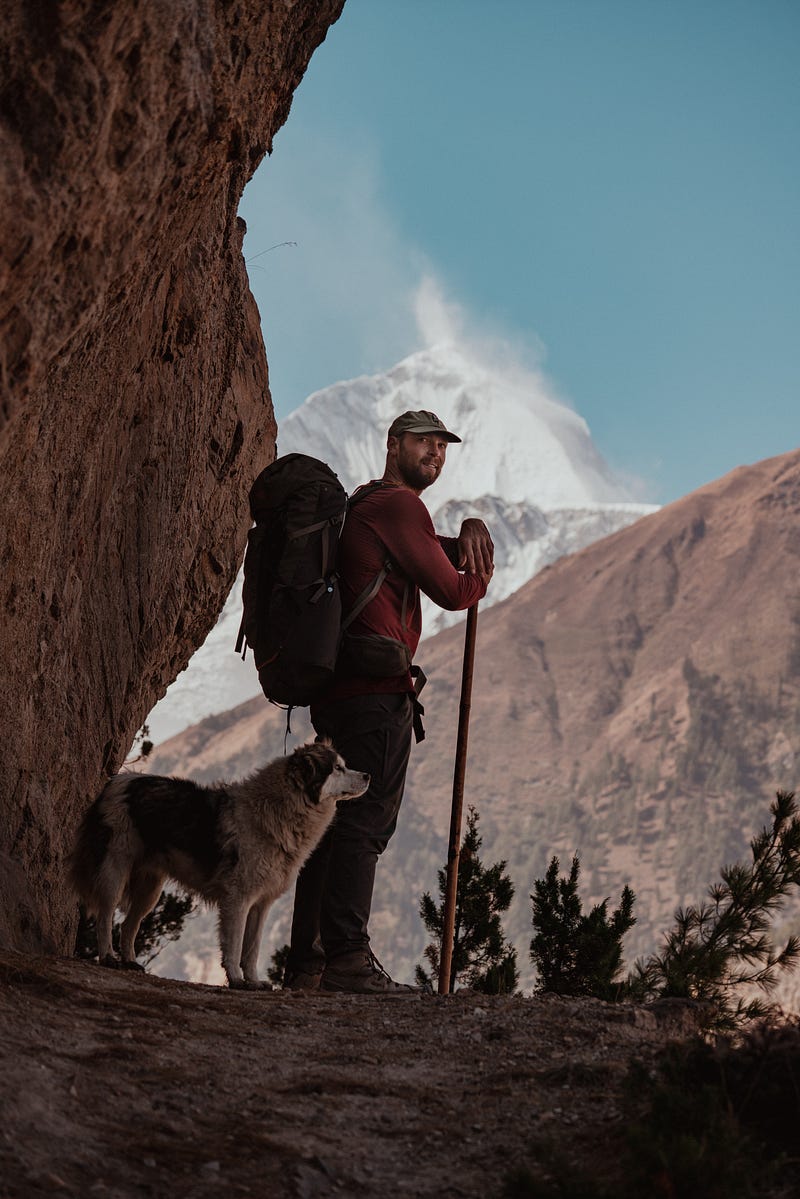
After leaving Phaplu, we ascended ancient paths into an enchanting forest of hemlock and rhododendron. At the haunting ruins of Denasa Gumba, we faintly heard the voice of a solitary lama reciting sacred sutras in a nearby chamber. Evening found us sitting around a campfire, enjoying a warm, well-earned meal, camped on a high plain at 10,000ft in view of the awe-inspiring peaks of Everest, Thamserku, and Numbur, the guardian deity of the region.
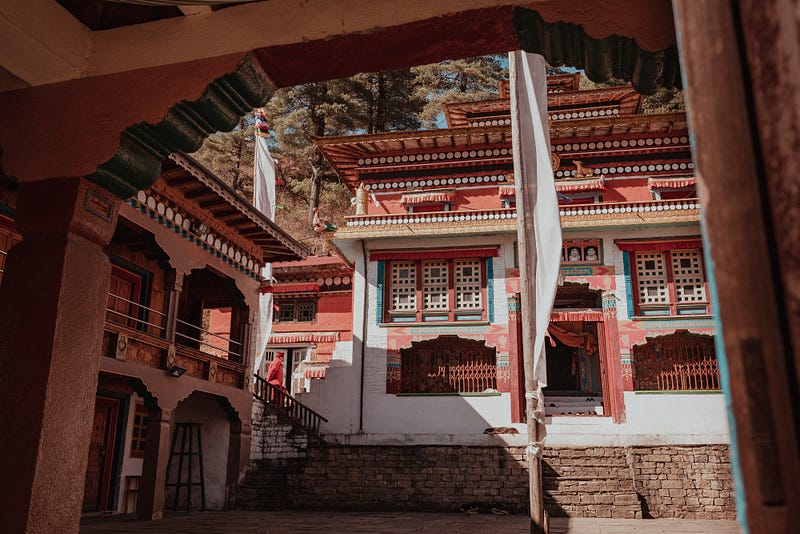
After arriving in Junbesi, which is a center of Tibetan Buddhism, the surrounding monasteries host several hundred monks — some of whom are refugees from Tibet. We visited three of these monasteries, and at the first of which, we had the opportunity of a lifetime to not only meet but be blessed by a Rinpoche (“sacred one”), a reincarnated master of a sacred lineage. I don’t remember much from the conversation, aside from sipping the salty butter tea (a Tibetan staple) and feeling a sense of calm and reassurance of being in his presence.
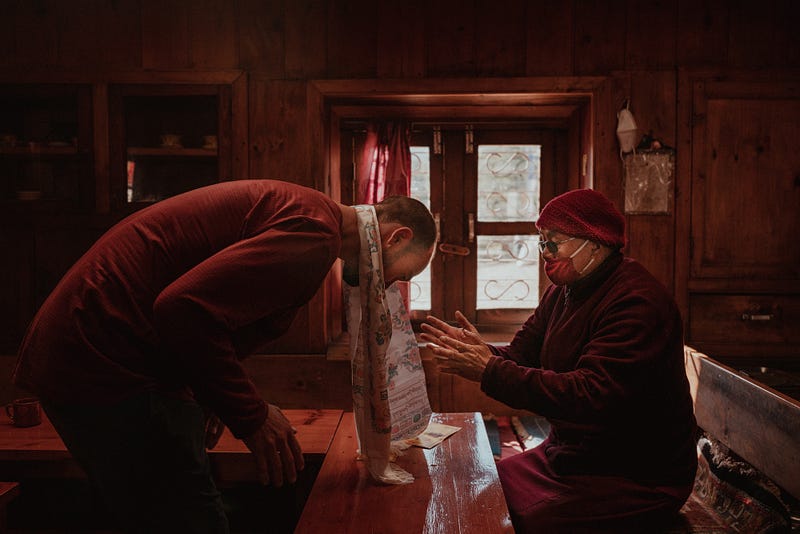
Thinking back to the invisible lama at Denasa a few days ago, I asked the Rinpoche if it was difficult to dedicate multiple years to silent meditation, as I was about to undergo only a ten-day silent meditation retreat in a couple of weeks. He answered nonchalantly, “It’s all in the mind. If you think it’s hard, then it will be hard. If you think that it’s easy, it will be easy.”
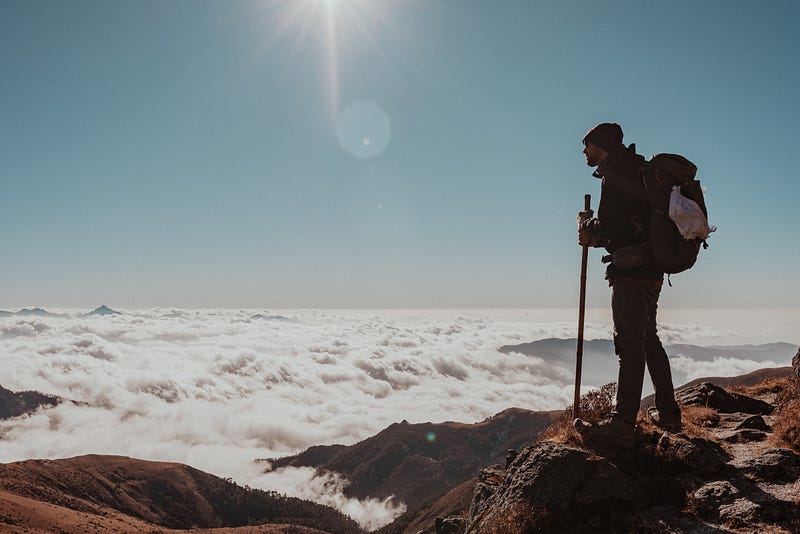
The next day, we ascended a grueling and seemingly endless path that led upward to a high ridge. So far up above the treeline, water would be hard to find, but our Sherpas found a source, as well as a great spot to camp and cook for the night. We watched the sunrise from our vantage point above a sea of clouds, and had a delicious dinner served up in our sleeping bags as the temperature outside had plummeted. We slept peacefully somewhere between clouds and constellations.
The next day led us even higher into the Himalayas, to the shores of the sacred lake of Dudh Kunda. Hauntingly quiet and unbelievably beautiful, there were stone cairns and prayer flags everywhere, but no other souls in sight. We then set up camp at 15,000 feet in near isolation at one of the most beautiful places on Earth, a veritable Shangri-La. The peaks of Numbur, Khatang and Karyolung gleamed above like spires of higher kingdoms; and all cares and concerns melted away as we fell asleep to the groaning of glaciers in the frigid, towering heights.
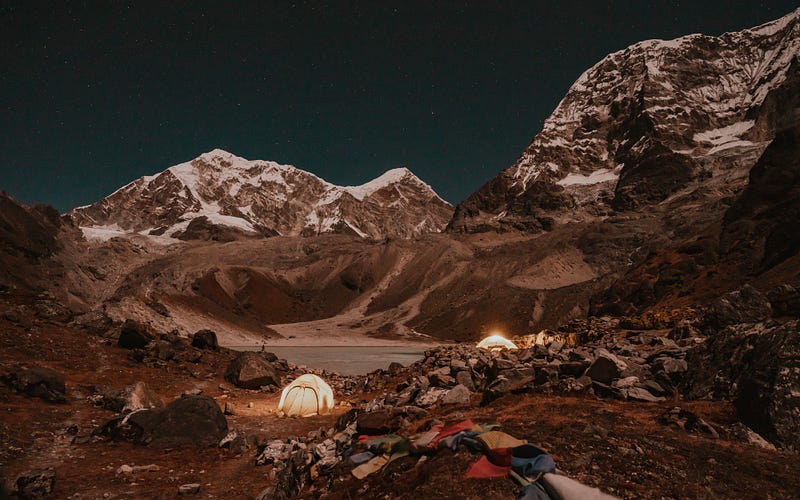
It’s hard to explain in words, but that mixture of rarefied air, shimmering holy waters, the sounds of prayer flags rippling in a crisp wind, and that knowledge that you are standing in a place that precious few others will ever get to experience — combined for a feeling of total peace and fulfillment.
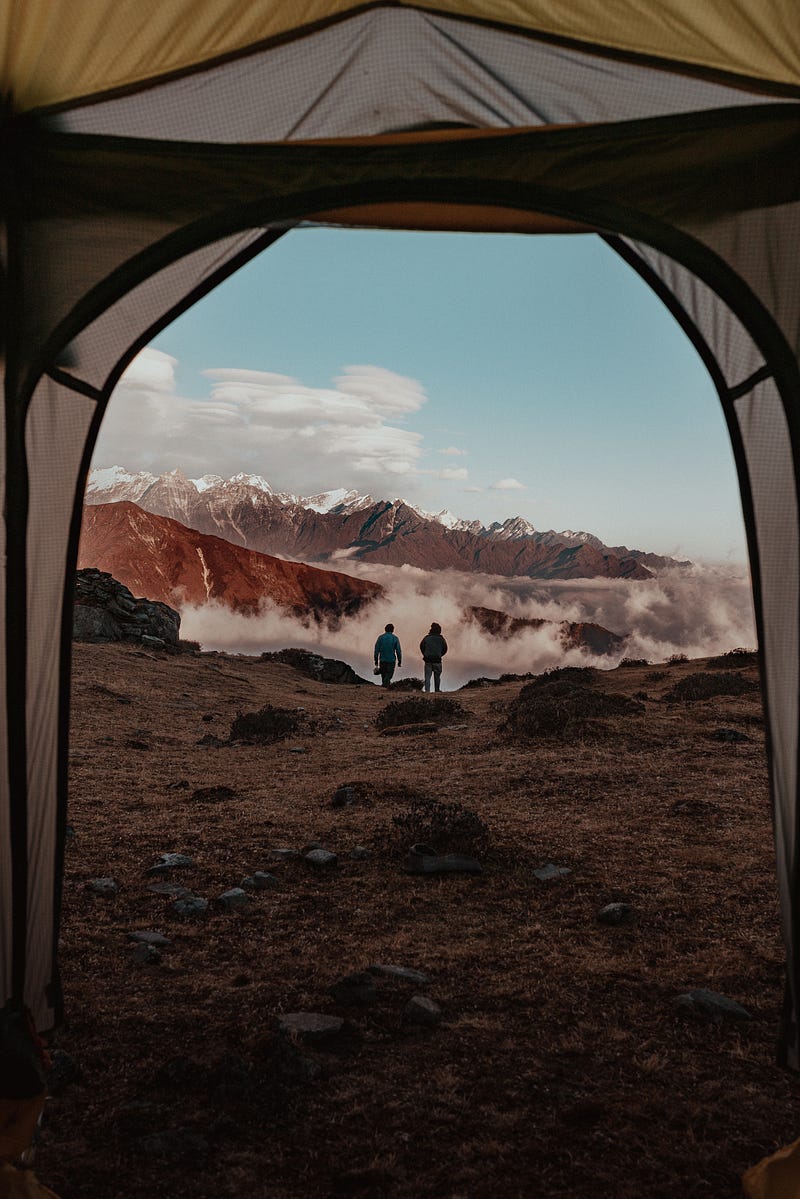
We woke up to the most splendid sunrise, seen from our sleeping bags as we sipped coffee with the tent door unzipped. Our final two days on the Buddhism Sanctuary Trail had arrived. We descended after taking one last look at the frozen surface of Dudh Kunda, and with light hearts and spirits picked our way among boulders and rocks on our way down to a hidden valley that had been obscured from view days before. Through an enchanting old-growth rhododendron and hemlock forest, we came out to a ridge from which we could take a closer look at Everest, Lhotse, and Ama Dablam. We had one more pass to cross before arriving at Taksindu, a village with (you guessed it) another monastery that sits along the old route to Everest Base Camp that starts in Jiri.
The next morning before dawn, we attended an hour-long gong meditation ritual with the monks at Taksindu Gumba. A censer of burning juniper, gongs, horns, and vibrations led by the guttural chants of the monks — we couldn’t help but step out of there with a lighter, calmer, and more equanimous mind, as if this was even possible on day seven of this journey.
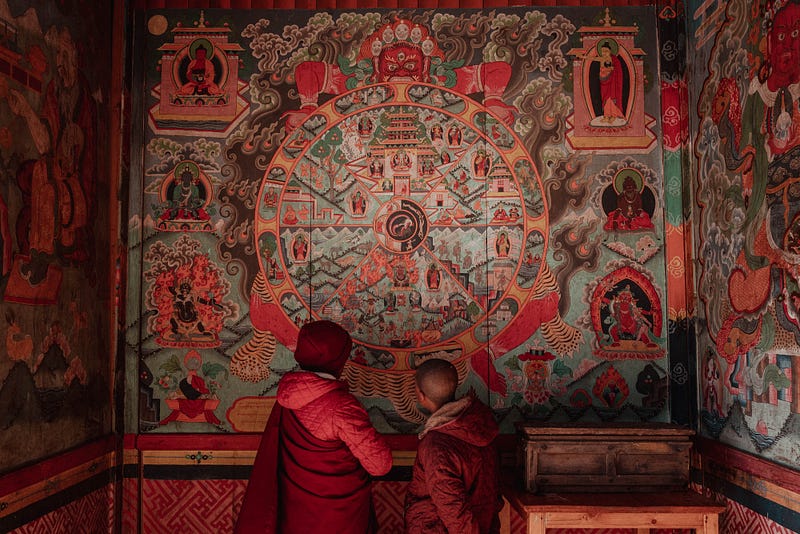
After visiting yet another monastery, at the eagle’s nest that is Chiwang Gumba, we finally headed back to civilization. The blessing of the Rinpoche turned out to have helped me more than I could imagine. In the months that followed, one of my images from the Buddhism Sanctuary Trail would be published in the April 2022 issue of National Geographic Traveler Magazine (UK). It was also my first publishing credit as a photographer.
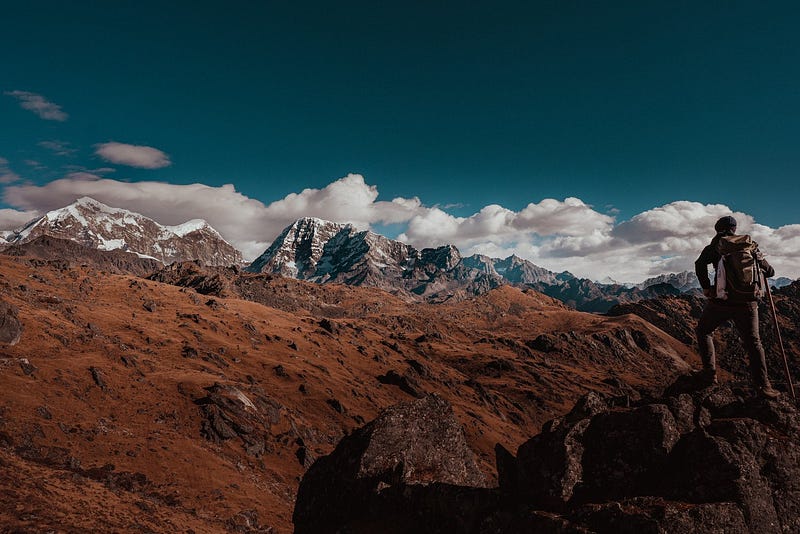
I know for certain that I’ll return to the Buddhism Sanctuary, as there are depths to it that I know will reveal new secrets to me upon each visit. And even as I write this, I feel the call to return to those paths and reenter the dream world that lies within the soul of the Solukhumbu.


