
A Bike Ride Across Spain: Part 2
Rest & Recovery & the “Land Without Bread”
When I set off on my bike trip in early June, I had intended to periodically write and post about my trip as I went. However, I quickly realized that wouldn’t be practical. You see, there’s a unique cadence you fall into when cycling and staying at the albergues along the Camino: wake up early, ride 5–6 hours, check into the albergue, shower, wash your clothes by hand, hang them up, eat lunch, take a siesta, walk around town, pick up any groceries/supplies, talk to the other pilgrims, eat dinner, read/journal, and go to bed at a reasonable time. As you can see, it doesn’t leave a whole lot of time for writing, editing, incorporating photos, etc.
Now it’s August, I’m back in Sevilla, and I don’t start teaching again until October, which means I have more than enough time to write about and document my trip. So, without any more blabbering on, here’s Part 2.
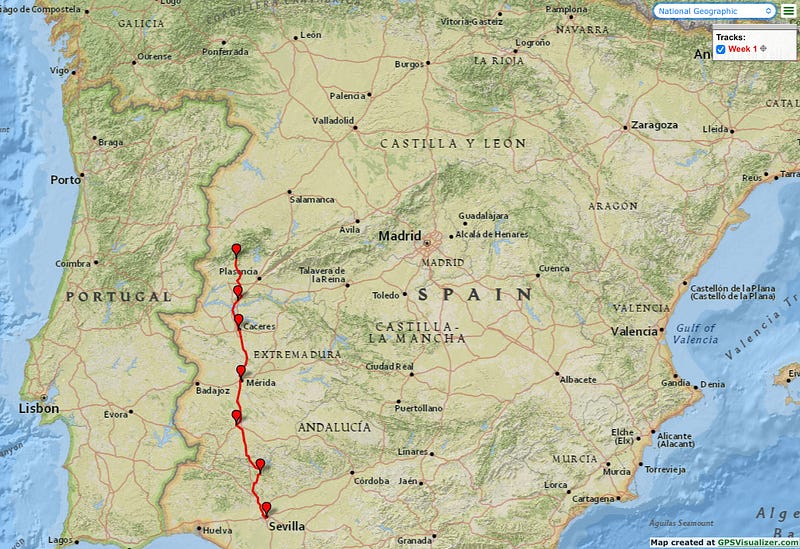
So where were we? Ah yes, I had just arrived in Torrecilla de Los Ángeles soaking wet and shivering after being caught out in the rain for the last 5 kilometers of my ride. Torrecilla de Los Ángeles, a small town of 500 inhabitants in northern Extremadura, was serving as a detour off of the actual route I was following: la Vía de la Plata. I was making the detour to this small town on the fringe of the Sierra de Gata mountain range thanks to a combination of my co-worker Alicia and my worryingly achy knee. Alicia grew up in Torrecilla de Los Ángeles and now owns her childhood home along with her sisters which they use as a vacation home. When she found out that I was going to be following the Vía de la Plata, she gave me a set of keys in case I wanted to stop by. I had seen pictures of the little town tucked up against the mountains and I liked the idea of spending a few days in a scenic, quiet town. I liked the idea even more after my knee began to erupt in pain every time I started to pedal. The pain had started a few days back and was getting worse and worse each day. I knew it was a case of overuse; I definitely underestimated how much I needed to train for the ride. What I wasn’t so sure about was whether I was going to be able to continue if the pain continued. I was hoping that a few days’ rest would do the trick and serve as a handy “reset” button.
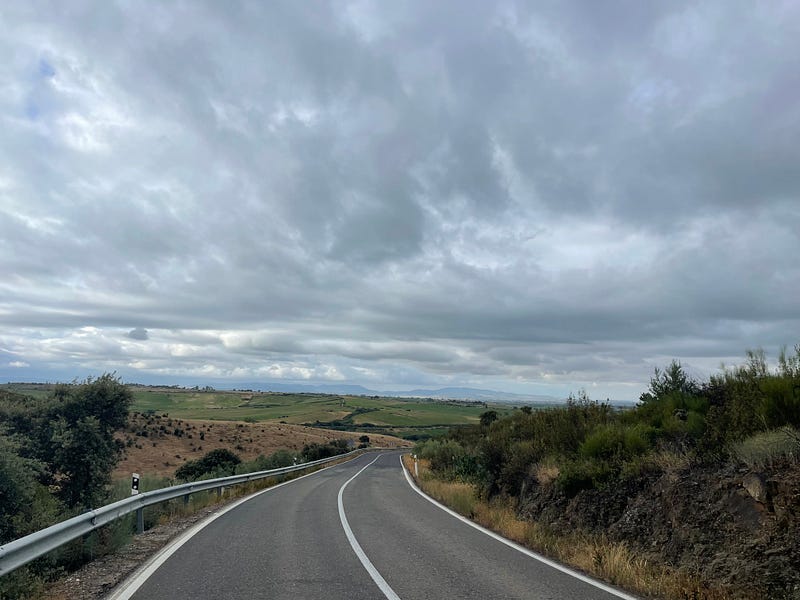
After getting showered and changed, I set off to find something for lunch. Alicia had warned me that the town lacked a real restaurant–I’d have to travel some 10 kilometers to reach the nearest one–but it did have two bars: one in the center and one on the outskirts. I decided I’d walk around and try to find the one nearby in the center. The rain had stopped but a heavy fog had descended over the town blocking any potential view of the nearby hills. The narrow, windy streets of the town were empty and quiet. I kept walking. Soon, as I approached the main plaza, I began to notice the first signs of life in town: the faint clinking of glasses and the distant murmur of lively conversations. I followed the noise, crossing the plaza and jutting down a side street as the voices and clinking of glasses grew louder and louder. Soon I found myself outside of the source of the noise: Bar La Herradura (the Horseshoe Bar).
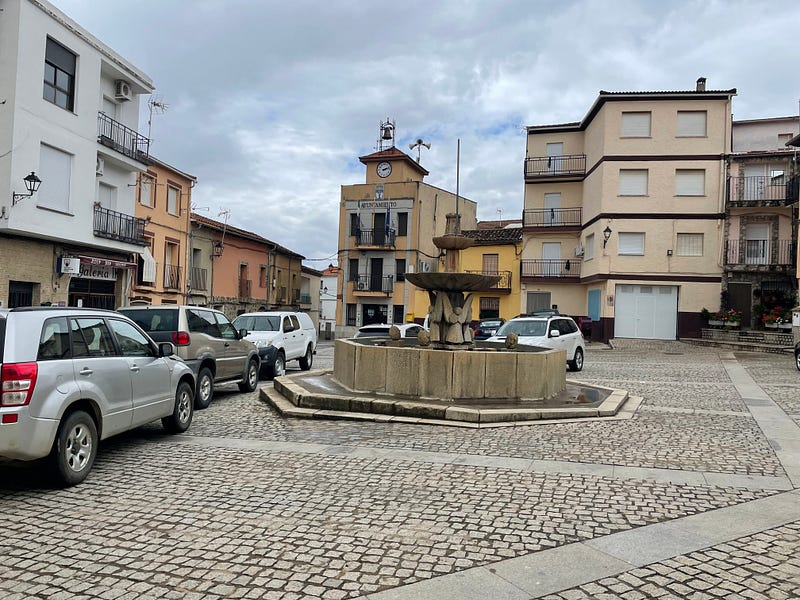
I opened the large wooden door and immediately felt like I was crashing a party. The bar was jam-packed and full of people standing around engaged in lively conversations with drinks in hand. Seemingly half the bar turned to look at me. Not in a menacing or inhospitable way, but more in a “what-the-heck-are-you-doing-here?” way. I worked my way up to the bar and managed to find what appeared to be an unoccupied barstool. I got the bartender’s attention and ordered a drink which was served with a free tapa of meatballs and a few potato wedges. Starving, I eagerly went to take a bite but I was stopped by a tapping on my shoulder. I turned around and was greeted by an older man (80 years old I would later find out) with his hand outstretched. He introduced himself and ever-so politely asked where I was from and what exactly I was doing in town. I explained to him my bike trip and my connection to Alicia. His eyes lit up when I mentioned Alicia’s name and bombarded me with questions: How’s she doing? What about her sisters? And her parents? What are they up to? He then turned around and called over his brother to introduce himself. As we chatted, he ordered me another beer which was accompanied by another tapa. I thanked him and he told me about how he and his brother had lived in the same town their whole lives and that they knew everybody in town. If I needed anything at all, just mention their names and I’d be taken care of like family, they claimed. Only halfway through my second drink, they were already trying to buy me a third. I thanked them profusely but politely told them what I desperately needed was real food–not more alcohol and two bites of a tapa. One of the brothers called over the bartender and explained to him that the poor foreigner over here was starving and needed something to eat. The bartender apologized and explained that since the day before was the town’s major festival and that today was a Sunday, the kitchen was closed. But if I wanted real food, I could go down the street to the other bar on the outskirts of town. I thanked the bartender and the two brothers and set out across town.
The other bar was a mix of your typical Spanish bar and a country supply store. It sold a mismatch of basic gadgets (lighters, batteries, etc.) and local products such as bread, eggs, and charcuterie. I walked up to the bar and asked the bartender for a food menu. She let out a chuckle and told me that they didn’t serve any “real food”; they served toasts and frozen pizzas. While one of my favorite aspects of travel is trying the local cuisine, I was starving and exhausted and had absolutely no intention of getting back on my bike to travel 20 kilometers roundtrip to a restaurant, so I ordered a frozen tuna pizza. Hey, at least the tuna-on-pizza aspect of it is Spanish, right?
After realizing that perhaps the culinary aspect of my stay in town may be disappointing, I decided it was probably a good idea to go buy groceries. However, this being a small little town, I knew wasn’t going to be able to find a supermarket; Alicia had also warned me about that. I weaved my way through town looking for the corner store I had seen earlier on Google maps. As I wandered through the streets, I began to take stock of what all was in town. Besides the two bars, there was a pharmacy, a sweets shop, a church, a bank (without a functioning ATM and only open one day a week), a library/cultural center, and a small doctor’s office. Oh yes, and also the all-important corner store which I eventually found. While it lacked the variety of a supermarket, it had all of the essentials and I stocked up on a couple of days’ worth of food. An older woman was working the cash register and began asking me about what I was doing in town. Unsurprisingly, she also knew Alicia and was soon asking about her sisters and the rest of her family. She then began giving me recommendations on what to see in town and the surrounding areas. In particular, she recommended that I venture deep into Las Hurdes. When hearing the name “Las Hurdes”, I couldn’t help but perk up. I’d heard of Las Hurdes. It’s quite infamous, in fact, and boasts a quite unsavory nickname: La Tierra Sin Pan or “The Land Without Bread”.
Las Hurdes is a historical region and present-day comarca (kind of like the U.S. equivalent of a country) located in the mountains of northern Extremadura tucked up against the border of Castilla & León. Its harsh geographical features and sparse population led to it becoming isolated from the rest of Spain and developing a less-than-savory reputation.
Las Hurdes’s reputation as a backward, desolate place dates back to at least the 17th century; in his 1635 play “Las Batuecas del Duque de Alba” famous Spanish playwright Lope de Vega wrote about the barbarousness of inhabitants of Las Hurdes:
“Because they do not know that there is a God/neither a world beyond this valley.”
While comments like those of Lope de Vega would create a bleak legend around Las Hurdes, there was more than a little bit of truth about the state of the region. Illiteracy, inbreeding, and diseases ran rampant throughout the region. Travelers would complain about the stench and wretched living conditions. Despite attempted interventions by the government over the years, Las Hurdes remained largely isolated even at the turn of the 20th century. In 1922 King Alonfoso XIII famously visited Las Hurdes to see for himself the rumors and legends of the region’s unsavoriness. During this visit, a quite famous incident occurred: King Alfonso was strictly drinking his coffee black since he did not trust the milk coming from the local cows. One of the local guides was concerned and went out of his way to procure milk that he knew to be safe and presented it to the King. The King gladly accepted and enjoyed his café con leche. It was only after the fact that the guide revealed his source of the “safe” milk: his wife who had just recently given birth.
Las Hurdes’s infamy would only continue to grow when in 1932 Spanish film director Luis Buñuel released a documentary titled Las Hurdes: Tierra Sin Pan. The documentary depicted the less-than-ideal living conditions, poverty, and despair of the region and highlighted that the region was so poor and disconnected that the people didn’t even have access to bread. Instead, they mainly relied on animal products since that was the only thing they had access to. Buñuel has since been accused of staging scenes to make it look worse than it really was. However, that, of course, didn’t stop it from spreading like wildfire and further tainting the name “Las Hurdes”.
Nowadays, Las Hurdes is still relatively disconnected in terms of public transportation, but it is no poorer nor better off than the other numerous rural regions within Spain. Today, Las Hurdes has even built up a reputation as a popular retreat and gateway to nature thanks to its beautiful mountains. This has led to a small boom in “eco-tourism” which has become the focus of many towns in the region.
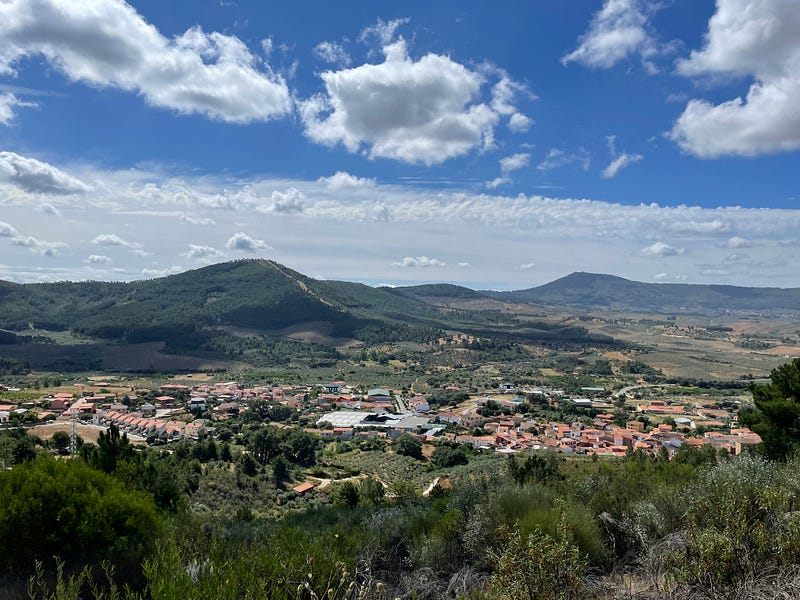
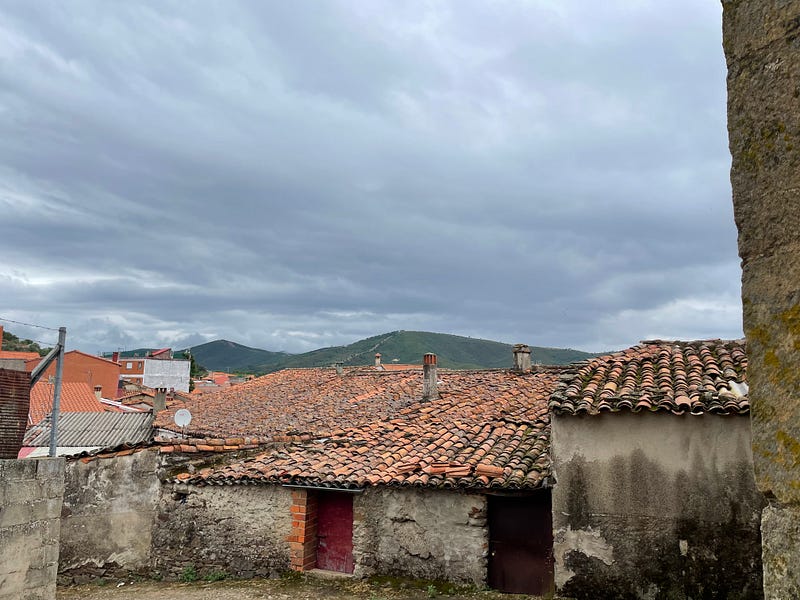
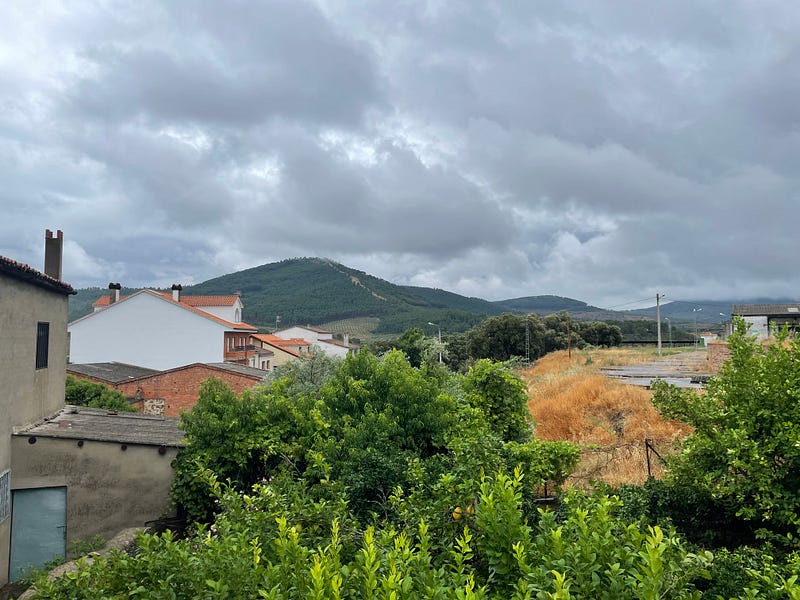
Back to Torrecilla de Los Angeles, which, admittedly, is technically not in Las Hurdes but in the comarca Sierra de Gata (named after the mountain range) which directly borders Las Hurdes. As much as I would have loved to venture deep into Las Hurdes as the woman at the grocery store recommended, the pain in my knee meant I would be staying put in the town for the next couple of days. Besides, on my way to join back up with the Vía de la Plata, I would briefly pass through the southern part of the region. I spent the next 3 days lounging about Alicia’s house, enjoying the views from her patio, and wandering around town. I was able to do some writing, call friends and family, and most importantly rest my knee. Well, with one exception.
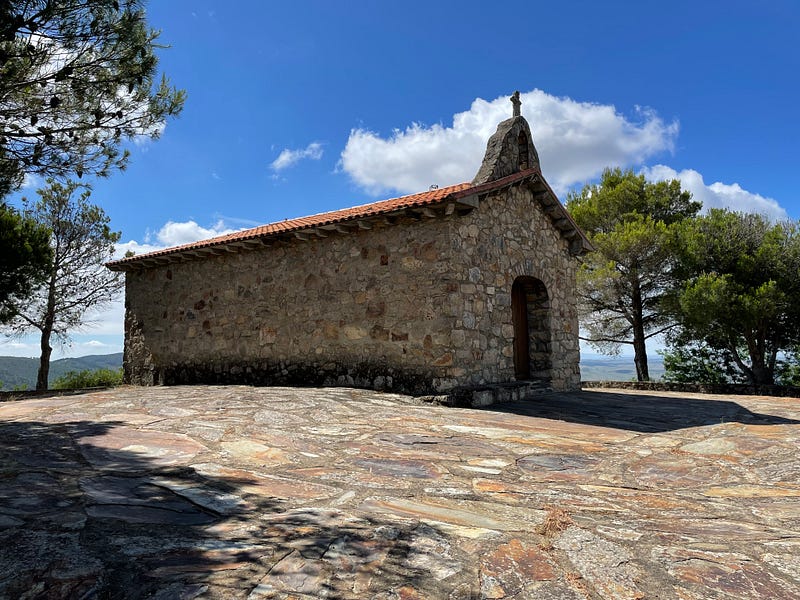
The lady at the grocery store had also recommended that I take a short hike up to the ermita (the Spanish term for a small chapel located on the outskirts of a town, often on a hilltop or other hard-to-reach location) located on the hill overlooking the town. Despite protests from my knee, I made it to the hilltop where I was rewarded with a beautiful view of the town on one side and a glance into the valley and the surrounding mountains of Las Hurdes in the distance. I spent a while up on that hilltop, watching vultures, eagles, and hawks soar and seemingly float–ducking and bobbing–in the various currents of air swirling between the mountains and down into the green valley.
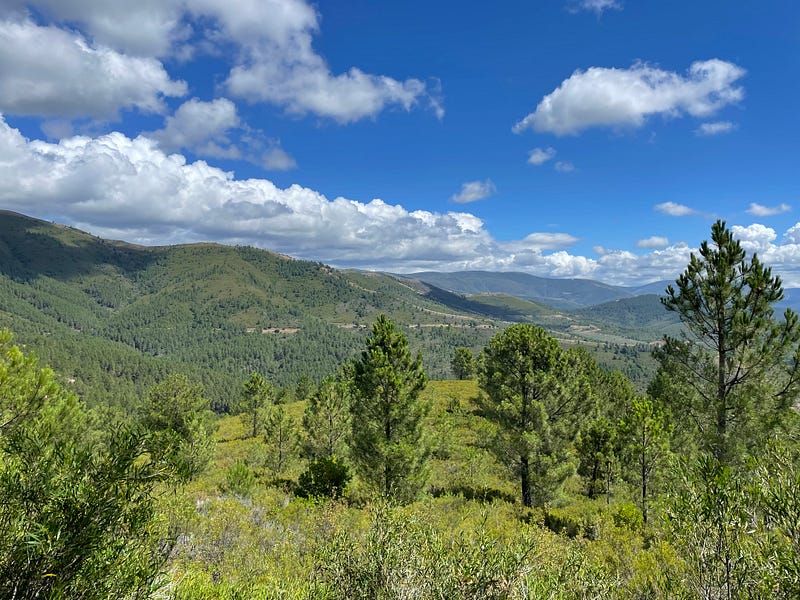
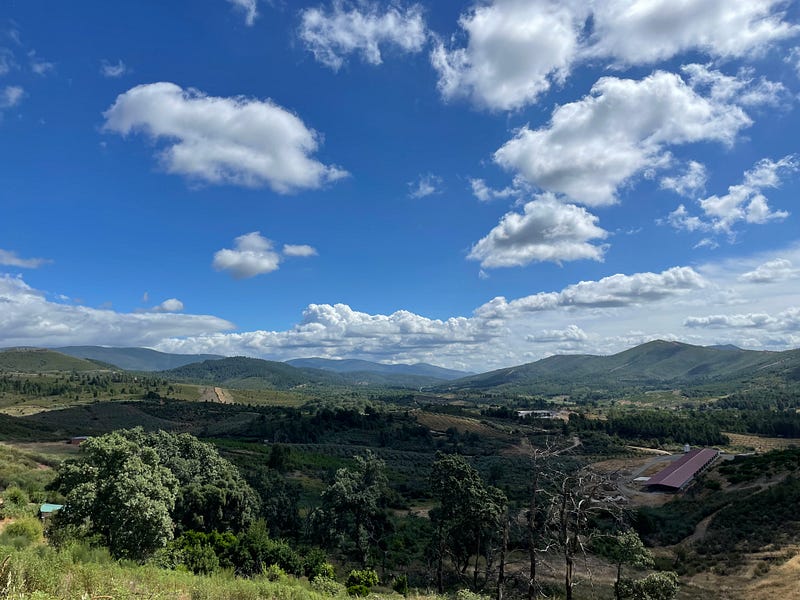
After spending 3 days resting, my knee was feeling better–not 100% — but good enough to continue onwards. I was also incredibly super eager to get back on the road and to get moving after spending the last couple of days rather sedentary. So what was up next? Crossing through Las Hurdes before crossing the Sierra de Bejár mountain range — my biggest challenge yet.


