
A Better Way to Document Travel
Heaps of scrapbooks just don’t cut it anymore.
I’ve always wanted to remember my life because I’m scared that one day I’ll forget it. And for me, the best way to do that is by capturing memories throughout my life.
My biggest memories have come from travelling. Everything’s new, unfamiliar to home and every day is different. So I document what and where I can.
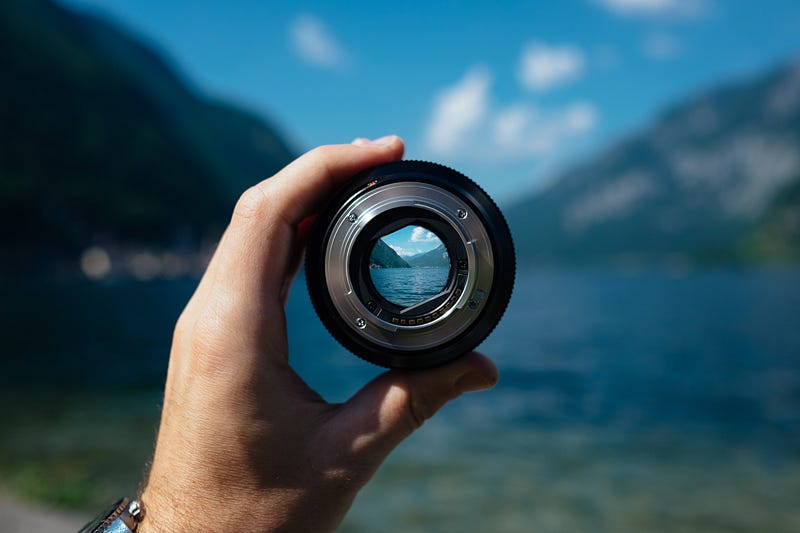
But what I’ve come to realise is that photos don’t feel like enough. I can’t look at the photo and remember the moment truly as if I were there again. It’s almost as if photos don’t show the whole picture (…ironic, I know).
So I started taking videos instead.
Showing progression
During lockdown (when nothing else was happening), my boyfriend and I decided that we would practice a handstand every day. Over the course of a few months, there was a notable progression. One day, I managed to complete one and I captured it as a photo. A still moment of achievement after months of practice.
But what lights me up more is the montage of attempt videos leading up to it. Watching my progression over time through mini clips. The flips, tumbles and falls, and eventually, the hold (albeit, it was a good 2 seconds).
So I incorporated this whilst travelling.
A picture says a thousand words. But a video can be a thousand pictures.
Reminiscing is easier
I believe there’s more to a story than what can be recorded through a still snapshot. And that’s what travel is — it’s a combination of stories and memories that may be just experienced, or recorded to be re-experienced in the future.
Looking at a photo, in later years, I don’t want to have to try so hard to remember the scene behind it. Sensory reminiscence is a subject that is yet to be studied in-depth, but it seems there is a link between the more senses attuned and the likeliness of evoking a memory.
The sunrise view I captured from Mount Batur in Bali is one I treasure dearly. But I can relive that same moment from my panning video —only I can hear the sounds of people around me which leads me to remember the monkey behind me that stole my breakfast biscuit immediately after I took that shot.
I can also see the whole view of what was in front of me at that time, not just what my lens could capture at one angle. The ever so slowly moving sky, surfacing sunrise and brisk wind is one I feel a snapshot would find impossible to achieve.
As I’m back from a recent trip to Italy, I hope to pull the short clips I have together to make a montage video. The panning views of Italian mountains, candid moments during a morning espresso, cheers-ing vodka shots on a hostel pub crawl, fatigue struggles of a steep hike at midday — they all merge together so I can relive a two-week Italian venture.
More so than if I was to flick through a photo album of the same shots.
Videos are the closest thing to reliving the moment.
Watching myself in those videos, it’s as powerful as reliving the moment: where I was, who I was with, how I spoke, was I out of breath, was I laughing or ranting? Sounds in the background, was it birdsongs or a gushing waterfall?
Seeing yourself from a different perspective
Living our lives through a first-person perspective, we seldom see ourselves through a third-person view.
And that’s how you can truly see yourself through ‘someone else’s eyes’. Whilst portrait photos can capture me at a certain point, there’s something about seeing them in action. For example, how I speak, walk, or my general behaviour is something a picture cannot truly reflect.
And over time, I can see how these change. From 16 to 18, to 21 through to 30.
I appreciate everyone has different ways of documenting their life through pictures or words. And there’s certainly not one size fits all.
This is just one that I’ve only learned to appreciate over the past few years— one I find to evoke the most feelings when I’m flicking back.


