
A Basic Guide to Bitcoin Wallets
How to Store Your Bitcoin
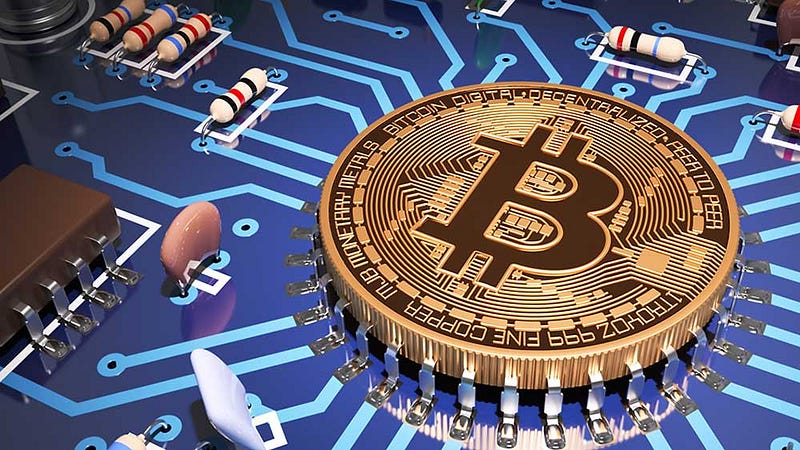
Bitcoin is valuable. Just as you have a system to store and manage the money you earn, you should also have a system to store and manage your bitcoin in a safe and responsible way. A bitcoin or cryptocurrency wallet is a tool to store, manage, and protect your holdings.
A bitcoin or cryptocurrency wallet is a tool to store, manage, and protect your holdings.
Consider Your Traditional Wallet
A physical wallet you keep in your pocket or purse holds your credit and debit cards, cash, and maybe an ID card.
Consider Your Traditional Bank Account
You access your bank account online with a computer or via an app on your phone. You sign in using a password and you can deposit and withdraw money to and from it either online or in person.
A bitcoin wallet is similar to both your traditional wallet and your bank account. Just like your traditional wallet and banks accounts though, there are also different types of bitcoin wallets you can use. They differ in overall functionality and sometimes user experience in the same way your banks may differ or the type of physical wallet you have differs in what it looks like and the type of cards or money it can store.
A bitcoin wallet is similar to both your traditional wallet and your bank account. Just like your traditional wallet and banks accounts though, there are also different types of bitcoin wallets you can use.
For the sake of simplicity, we’ll speak mainly in terms of bitcoin but much of this information applies to other cryptocurrencies.
Security and Convenience
There are two primary things to consider when deciding what type of bitcoin wallet you want to use — security and convenience.
It’s not always the case but typically, the more secure the bitcoin wallet, the less convenient it is to access. This is a generalization but you’ll see what I mean when we review the types of wallets. It’s also important to note that even more secure types of bitcoin wallets are improving their user experience and functionalities as technology progresses and as they see what customers are interested in being able to do with their wallets.
There are two primary things to consider when deciding what type of bitcoin wallet you want to use — security and convenience.
Hot and Cold Wallets
There are two general types of bitcoin wallets — hot wallets and a cold wallets. In the simplest sense, a hot wallet is connected to the internet and a cold wallet is not. A cold wallet may be able to connect to the internet but it at least remains offline the majority of the time.
In the simplest sense, a hot wallet is connected to the internet and a cold wallet is not.
How Wallets Work
In order to send or receive bitcoin to and from your wallet, the wallet needs to sync up with the bitcoin network. That requires an internet connection at least temporarily in order to connect with the network and find any incoming or outgoing transactions.
If you are using your bitcoin to transact more frequently, a hot wallet may make more sense in terms of convenience. Hot wallets provide quicker and easier access to the network because they’re already online and connected.
A cold wallet may not be as convenient when it comes to transacting frequently because it’s not connected to the network. Cold wallets will, however, always be more secure than hot wallets.
Cold wallets are offline at least the majority of the time. They are less susceptible to hackers because they’re not exposed via an internet connection or some other access point that a third party exchange or wallet platform may have. Okay, deep breath. Hot wallets, cold wallets, hackers… Let’s pause for a second and reset with a solid rule of thumb.
The kind of bitcoiner you are depends on the amount of bitcoin you own and the reasons you own it. You don’t necessarily need to know everything about every kind of bitcoin wallet, but you should know which one makes the most sense for you to use.
The kind of bitcoiner you are depends on the amount of bitcoin you own and the reasons you own it. You don’t necessarily need to know everything about every kind of bitcoin wallet, but you should know which one makes the most sense for you to use.
Basic Wallet Considerations
Here’s another basic rule of thumb — the more bitcoin you own, the more secure your wallet strategy ought to be. Think in terms of your cash for a second. You wouldn’t walk down the street with $10,000 worth of cash in your pocket, would you? If you really had to transport or hold that much cash, you’d likely do it in a more secure way than just carrying it in your pocket.
Here’s another basic rule of thumb — the more bitcoin you own, the more secure your wallet strategy ought to be.
Similar to the $10,000 worth of cash scenario, if you have $10,000 worth of bitcoin, you wouldn’t keep it in a wallet that was not secure. In terms of bitcoin wallets here, that means you wouldn’t trust a less than reputable company, website, or app to store that much bitcoin for you.
If you had $100 worth of bitcoin instead of $10,000, you may be more willing to hold in in a less secure wallet. Having more bitcoin though should typically equate with using a wallet that is more secure.
Some Nuance Around Usage
Another basic rule of thumb that may include caveats that contradict the above rule of thumb about using a more secure wallet if you have more bitcoin is that — what you intend to do with your bitcoin also determines the type of wallet you should be using.
How are you planning to use your bitcoin? Are you just storing it and holding it for the long term? Or, are you planning to transact with it regularly?
What you intend to do with your bitcoin also determines the type of wallet you should be using.
So, we’ve concluded that:
- If you own more bitcoin, especially as the price rises, you need to make sure you’ve stored it securely.
- Also important to consider though is what you’re doing with your bitcoin. Sometimes convenience outweighs security.
Exchange Wallets
You can buy bitcoin on cryptocurrency exchanges. An example of a cryptocurrency exchange is Coinbase. Coinbase provides you access to the bitcoin you buy right on their platform. You can also send and receive bitcoin in the wallet that Coinbase has provided you right on their exchange.
Think about Coinbase in the same way you would your bank. You’re accessing the exchange, and in turn accessing your wallet, by logging into Coinbase on a computer or via an app just like you would with your bank. In some ways, this is very convenient.
If your intent is to buy and sell bitcoin regularly then keeping your bitcoin in the wallet that Coinbase has provided you might make sense. You want the ease of access for trading purposes. Such convenience, however, comes at a price and that’s something to consider.
Storing your bitcoin on an exchange means that you are giving up ownership over it. Coinbase, not you, holds the actual private keys to your bitcoin. They are liable when it comes to protecting your funds. Just like a bank is liable when you deposit your money into your account, the same can be said of cryptocurrency exchanges. They may have insurance policies for hacks or other losses of funds but, ultimately, using an exchange wallet means you’re giving up some control over your bitcoin for the sake of convenience.
Using an exchange wallet means you’re giving up some control over your bitcoin for the sake of convenience.
Public and Private Keys
What is a private key? A private key is like a password. The private key provides you access to your bitcoin and initiates transactions.
A public key is like a username. When you sign into your bank account online, you need both a username and password to get into the account and use its full functionality.
Here’s a non-banking but helpful analogy — a public key it’s like an email address. Anyone in the world can see that email address and send anything to it. BUT, in order to access the email account associated with that email address, you need the password — the password is the private key.
Only the holder of a private key can fully access a bitcoin wallet, check balances, and sign off on transactions associated with it.
More On Exchanges
On a centralized cryptocurrency exchange, you give up ownership over your private key. It is the exchange who really owns it. Now, this is not necessarily a bad thing because we’ve established that if you want to use an exchange wallet, you’re likely using it because it’s convenient to do so and you’re willing to give up some control, i.e. your private key.
The exchange might provide the type of service you are looking to use for your bitcoin. If so, it makes sense for you to use an exchange wallet. For example, maybe the exchange offers interest bearing accounts for your crypto, or maybe they offer free swaps between cryptocurrencies, or maybe they allow you to make recurring purchases. There are any number of reasons why you might want to use a cryptocurrency exchange.
Hot Wallets
As mentioned above, a hot wallet is connected to the internet. It’s online. An example of a hot wallet provider is Exodus.
Exodus allows you to store bitcoin and other cryptocurrencies in a wallet that is accessible via both desktop and mobile apps. Even though hot wallets are less secure than cold wallets, that doesn’t mean they aren’t at all secure. In fact, they are often considered more secure than exchanges.
Hot wallets generate a replacement for your private key that is called a seed phrase, recovery phrase, or backup phrase. This is a 12 or 24-word phrase that can be used to restore access to your wallet at any point if you’ve lost access to the device you used it on.
Benefits of a hot wallet are:
- access to your crypto anywhere
- customer support
- most allow conversions between cryptocurrencies
- some even pay interest or allow staking
Downsides of a hot wallet are:
- reliance on a company or centralized service
- not all hot wallets are open source which means you’re trusting the company to secure its software and core functions
- you’re at least one-step removed to selling your bitcoin
These are generalizations about hot wallets. Not all hot wallets are created equal. Some provide more transparency than others just as some provide higher levels of security and overall functionalities.
Word of Advice
I recommend trying out a few different types of hot wallets in order to see what you like best. Try these — Exodus, Electrum, or Atomic Wallet. That advice applies to cryptocurrency exchanges too. You may find that different exchanges offer different functionalities — interest, staking, lower fees, free recurring purchases, and so on.
Check out the user experience and see what works best for you. If you’re holding bitcoin for the long term, take it off the exchange you bought it from and try holding it in one of the hot wallets you like for a while.
Also important to note is that as your journey through bitcoin evolves, so will your strategy for storing and managing your holdings.
Check out the user experience and see what works best for you. If you’re holding bitcoin for the long term, take it off the exchange you bought it from and try holding it in one of the hot wallets you like for a while.
Cold Wallets
Now, let’s discuss cold wallets. Cold wallets are offline and tend to be considered the most secure option for storing bitcoin.
Cold wallets are, at least, more secure than hot wallets or exchanges. Examples of cold wallets are Ledger or Trezor. These are also called “hardware wallets.” Think of them like a hard drive for your bitcoin. You put your bitcoin on an external device and can keep it offline, unattached to your computer or other devices.
It’s important to note that even cold wallets come with some risks. You may have heard that Ledger was hacked in 2020. Even though your actual bitcoin on your hardware device is secure, the company you purchased your device from may keep some of your personal information in their databases. This is the type of info that was hacked in 2020.
So, while your bitcoin and funds will remain safe, a hack of the company could still make you susceptible to phishing scams or other ways bad actors may try to social engineer you into giving them your private key. As long as you keep your private key, the password, safe and offline though, only you have access to and ownership over your bitcoin.
Cold wallets nowadays have some great UX features too. Many provide you a live look at your holdings via a desktop or mobile interface while still keeping your crypto secure. They typically connect to your computer or smart phone via bluetooth or some type of USB connection and you get to decide when to sync up with the network and connect them to the internet.
Avoid Self-Sabotage
Self-sabotage is something to consider not just for cold wallets but for any form of cryptocurrency storage. It just happens to be that cold wallets tend to have more layers of security that rely solely upon you.
You’ve heard stories of people being locked out of their bitcoin wallets, unable to access tens or hundreds of millions of dollars. This is where that backup seed phrase is so important. Keep the seed phrase somewhere safe where it won’t be lost, stolen, or deteriorate. If you entrust it to someone else, you need to be able to fully trust that person. If you lose your recovery phrase and forget the password to access your hot or cold wallet, you’re locked out.
That seed phrase is equivalent to your private key. Your public key is always available, like your email address, but you need that private key to access your wallet. Many recommend writing down your seed phrase and storing it somewhere safe. Of course, even written down on a piece of paper, it could burn up in a fire or be accidentally thrown away. The main point is just to keep it somewhere safe and don’t forget about it.
Don’t overthink the process either. When getting started, simply write it down and store it where you would other important documents. Make an extra two or three copies of it too. Then, as your bitcoin journey evolves and your holdings appreciate, you may want to inscribe it on something or store it on a piece of paper that’s kept somewhere like a safety deposit box.
Don’t overthink the process. When getting started, simply write it down and store it where you would other important documents. Make an extra two or three copies of it too. Then, as your bitcoin journey evolves and your holdings appreciate, you may want to inscribe it on something or store it on a piece of paper that’s kept somewhere like a safety deposit box.
Conclusion
Let’s review the rules of thumb that we discussed. Remember to consider these when deciding what type of wallet makes sense to you.
Basic Rules of Thumb
The more bitcoin you own, the more secure your wallet strategy ought to be.
The kind of bitcoiner you are depends on the amount of bitcoin you own and the reasons you own it.
What you intend to do with your bitcoin also determines the type of wallet you should be using.
Keep It Simple
Don’t overcomplicate things. Get started by trying out different wallets and seeing how they work. Holding your bitcoin shouldn’t be overly complicated. You can always do some testing of wallets and exchanges with a small amount first before you decide on any one strategy.
Whatever you do, make sure your bitcoin is secure, that you have a system, and be mindful of the type of user that you are. Find a storage solution that suites your needs and your ability.
Are you already using a crypto wallet or considering one? Let me know in the comments below and thanks for reading my post!
Thanks for reading! I am not an investment or financial advisor. This is not financial advice. All opinions expressed are mine alone. If you want more content like this, sign up for my weekly email.
Check out our new platform 👉 https://thecapital.io/
https://twitter.com/thecapital_io


