
A 72-hour Hackathon With Zero Programming Experience, Am I Crazy?
A short story on how I walked away with $5000.
You’re probably wondering, what was I thinking?
Well, I was still a youngin in high school.
Maybe I’m hoping that excuses my seemingly stupid and irrational decision. But, in retrospect, I don’t think it was stupid at all. Crazy? Absolutely.
If I were to summarize my story in six words, do crazy things — it builds confidence.
The majority of you reading this are probably are like me.
You have zero programming experience.
To us, Python is nothing but a snake in the Amazon. To the computer nerds at my hackathon, it was a coding language of the gods.
But my friends and I wanted to try new things, be open to new perspectives, and strengthen our résumé — at least, that’s what our parents thought.
Of course, there’s always something else, right?
It was Downtown Toronto, we were seniors, and there were universities left and right. Parties. We were interested in parties. Best of all, we had quite possibly the best alibi any teenager could ever dream of.
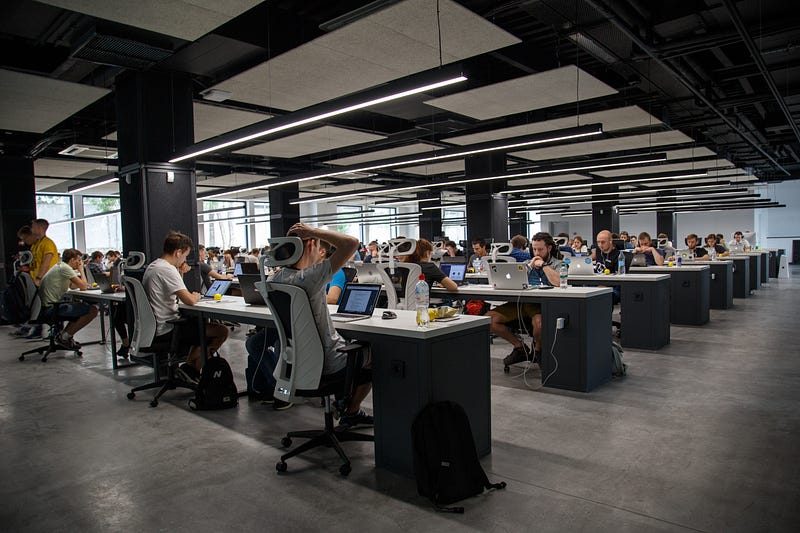
See, a hackathon is like a marathon for nerds. You don’t sleep, for 72 hours in this case, and you try to program a digital solution in the allotted time for a company that pays you a prize if you win against other broke teenagers.
In thrill-seeking rebellious teenager language, that meant for three days, we could stay downtown, doing whatever we wanted, without legal supervision.
Although we still chose to be productive, you can’t party 24/3 — practically speaking. Besides, we still wanted to derive some value, we were motivated individuals, who craved some thrill.
Unfortunately, that was what brought hell to our doorstep.
Day 1 of 3: Reality is Often Disappointing
When we spend so much time thinking of all the “fun” and the advantages of something, we forget to think practically.
As we arrived at the event, our fantasies were quickly buried under the harsh reality that our logical sides started to unfold.
For starters, of the four of us, no one knew how to actually code a system.
Meanwhile, we see university students sitting at the tables next to us voraciously murdering their keyboards and letting out heartfelt grunts when there was something wrong with their algorithm.
So, we just sat there, fiddling with our keyboards, pretending to be busy.
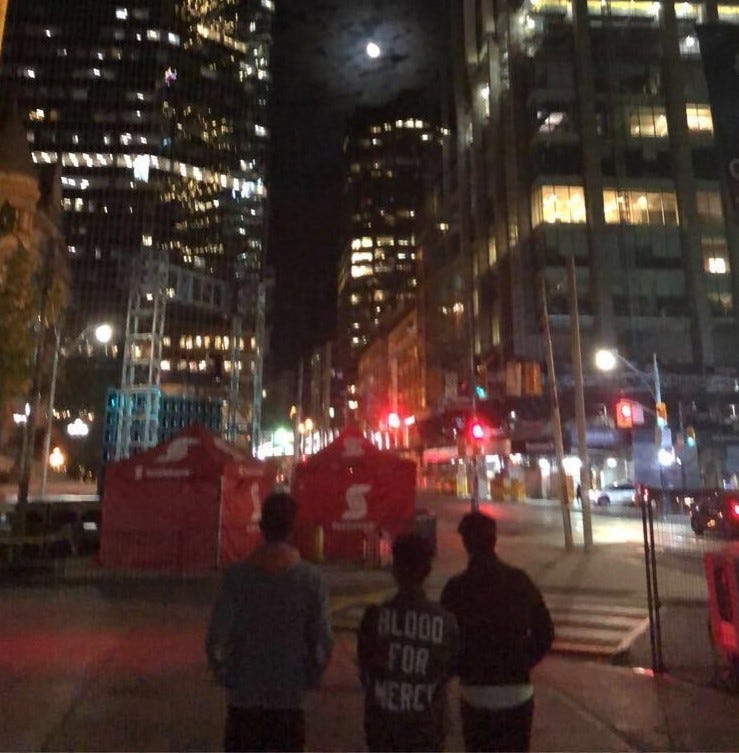
By nightfall, we ditch our “work” and flee to the illuminated city streets of Downtown Toronto. We hope to catch a university party or enter a bar, club — anything fun.
Yet again, our fantasies plummeted. Amid all the thrill and excitement, there was something we forgot to consider: It was exam season.
So, there weren’t many uni parties happening to begin with. We also weren’t sure how we’d get in anywhere, we had no IDs and we were underage.
Hours passed by, it was 3 AM, and still, nothing. Disappointed, we head back to the facility.
Now, we’re tired from the journey, and behind on the project. Awesome.
The problem Fidelity presented was one regarding customer acquisition. New investors were afraid of dipping their toes into the industry, usually from lack of skill and experience.
The best we could do was ideate a solution and present it using a mockup creator like InVision. After all, we figured it was the idea that needed selling. Fidelity Investments had no lack of programmers on their end — just a hunch.
Murto suggested we present an investing simulator, Ariful would make the mockups, Vicknesh would sleep like the useless sh*t he is, while I would start the necessary research.
For the first time that day, we started to think pragmatically. We didn’t let reality pin us down, as shouldn’t you. Just adapt to the circumstances.
Day 2 of 3: It’s the Memories You Make, You Know?
24 hours went by. We were officially sleep deprived.
Meanwhile, Vick peacefully wakes up and asks why we got so little done.
It was true, we got little done. Instead, I had a very deep conversation about life with Ariful and Murto. Honestly, I’d say it was worth.
It’s the memories you make, you know?
The day went by with market research, current competitors and their services, feasibility, profitability… blah blah — I don’t know why we were even trying.
Anyway, another night goes by, no parties found, no luck getting into bars, nothing. We did climb some buildings though, I don’t know if I should be saying that. But it was some fun though, right?
We had no luck with bars or clubs, we didn’t bother trying once we saw the huge bouncers who looked like they haven’t smiled in years.
But our spirits didn’t die yet, so we settled to eat at a restaurant. We found one at 12 AM and stayed there till 3 AM until it closed. It was a nice setting, velvet couches, a glass table in the middle, we talked for hours.
Just 4 best friends eating good food, at a restaurant in downtown, in the middle of a summer night, talking about life. Some may even say that was better than partying and getting drunk.
We were making memories, maybe different ones than we anticipated, but still worthy memories.
We could’ve given up and headed back home. But we didn’t. See, the adjective, worthy, is up to us and how we decide to see things.
It’s not what happens to us, but our response to what happens to us that hurts us.
— Stephen R. Covey
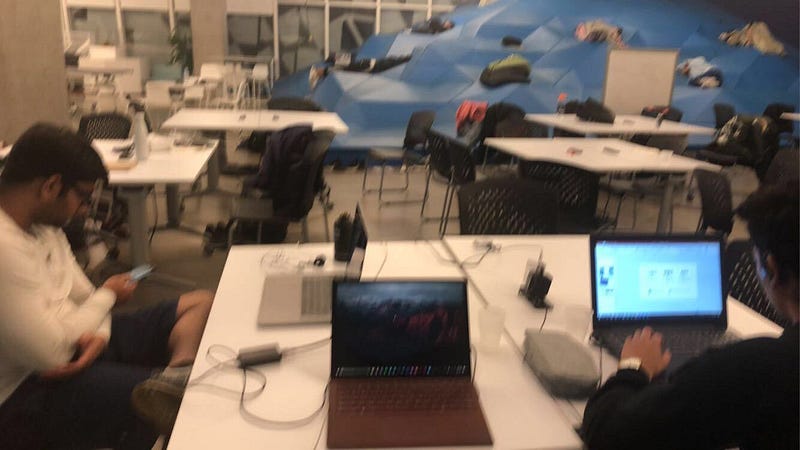
We walk back to the facility, it’s 4 AM, only to see this as we walk in:
Little did we know that this wasn’t the only surprise we had in store…
Day 3 of 3: Don’t Run Away, Even If You Feel Like Fainting.
It’s morning again, our program coordinator stops by to check up on us, he asks:
“Are you guys ready for the pitch competition?
We laugh, he’s clearly joking… right?
No. There was a pitch competition is less than 24 hours, and we weren’t even close to ready.
We considered dropping out of the competition, everything was a fail. No parties, no clubs, and, now we had nothing to show for either.
And of course, things got worse.
I had to be the one to present our non-existent solution.
The circumstances gave us every right to give up, it seemed like the “practical” thing to do, we’d just embarrass ourselves. We could ruin our image and destroy any chance of networking with others in that organization.
It was risky, but hey, we came here for a bit of thrill, didn’t we?
Whenever there’s something difficult in my way, I like to think, somewhere in the world, someone has it harder and they’re still getting it done.
If they can do it, why can’t we?
That’s what pushed us. It can push you too.
Ariful finished some nice mock-ups, Murto and I worked on making slides and preparing the presentation, and Vick was there for… moral support?
My head was racing and my heart was beating abnormally fast. I didn’t know if it was the anxiety, coffee, or lack of sleep — probably all.
My main fear was that I’d mess up the presentation and make a fool out of myself. Under normal circumstances, I’d say I'm a decent presenter, but this was far from that.
My head ached, I was facing the wrath of sleep deprivation. I wanted to puke, I had too much coffee. I looked like a mess, I didn’t shower in three days. My muscles were sore because I went to the gym before all this, things just couldn’t be worse right now.
Anything could go wrong. What if I fainted?
The clock was ticking closer to my imminent failure and embarrassment.
Tick tock, tick tock, tick… tock.
“Team C, please make your way down to Room 21c.”
I could’ve sworn that I would’ve run away. Though I didn’t, every inch of me wanted to. I could literally hear the heartbeat in my chest.
Why couldn’t Vick do the job? He never does anything! Whatever, I took a deep breath, and I entered the room with a smile.
It was game time.
Four judges, sitting at the table, at least a hundred others sitting behind them, including the competing teams who worked day and night to actually program a solution — which didn’t exactly help our morale.
I blocked all negative thoughts out, they wouldn’t help here, or frankly anywhere.
I mustered up the last bit of energy I had left, forced a smile, projected the best selling voice I could, and told the judges why we had the best idea ever.
The 5-minute presentation felt like 30 seconds. The question session is what felt like forever. But, we were finally done, now came time for the results.
We anxiously waited for the judges to release the results. I don’t why we were even anxious, yet something, a peck of hope I suppose, was responsible for it.
It was time. The announcer, we knew him, held the mike to his mouth, smiling at the paper in his hands, then he looked at us, my heart started to beat even faster than it already was. He opened his mouth…
Congratulations to Team D, your solution has won!
The team beside us, the ones who voraciously murdered their keyboards won.
I laughed to myself, how silly I was to think… but I wasn’t sad.
After all, we must’ve done something right because although we didn't win (frankly, we didn’t deserve to), we finished as finalists. That was more than enough for me. For us.
Somehow, we managed to beat 15 other teams that had experienced university programmers to enter the finalist round.
I guess it was the idea that needed selling after all. This story is a prime example of why working smart and not hard works.
Key takeaways
- Sh*t happens, make memories anyway, they could turn out better than we think.
- Don’t just try new things, try new, crazy, and scary ones — something that makes you want to run in the other direction.
Emphasis on that second point.
Why do you think Navy SEALS go through hell week? Because after their human capabilities are challenged to the very max, SEALS feel like they can tackle anything in their missions.
Sometimes, trying crazy and scary things has the same effect on us, maybe on a less “save the world” type of level, but you get what I mean.
After experiencing one of the hardest extracurriculars of my high school life, I‘m confident that I can do seemingly “impossible” tasks to this day, by being resilient, staying calm, and working smartly.
Thank you for reading!


