
A 1960s Protest Song Pleads With The National Anthem
“Home of the Brave” by Jody Miller
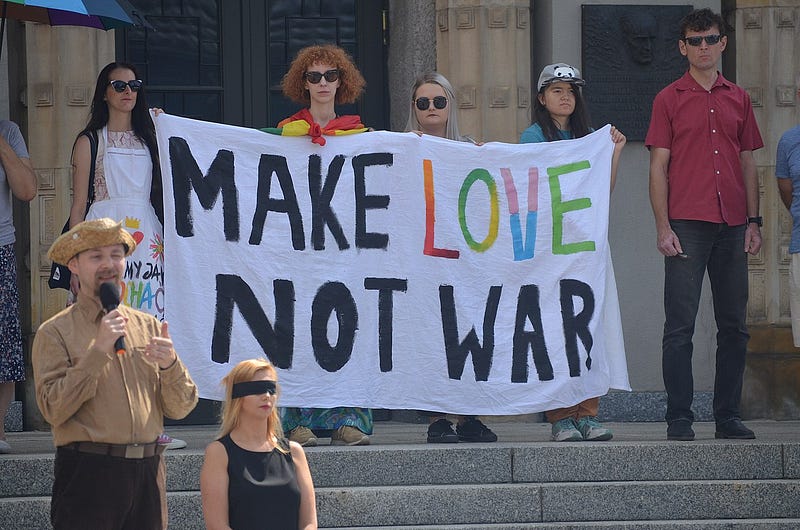
Before the 1960s, such notables like Pete Seeger, Woody Guthrie, and The Weavers wrote and recorded songs about the labor movement, non-intervention in World War II, and unequal treatment of Black draftees.
The age of McCarthyism began to see activities like this in the entertainment industry as acts of pro-communism. The Hollywood Blacklist was formed, naming 151 individuals believed to be communists or involved in communist activity.
Of note were Harry Belafonte, Barbara Bel Geddes (the matriarch on “Dallas”), and actors Eddie Albert and Frances Farmer. Screenwriters were hit particularly hard for spreading communist “propaganda” in their works.
Whereas earlier leftist movements were oriented towards labor activism, the 1960s brought a whole slew of new issues: civil rights, The New Left, the War in Vietnam, and the hippie lifestyle. The music reflected this shift in society.
Most notably, Bob Dylan began the trend in the new decade with 1962's “Blowin’ in the Wind” and 1964's “The Times They Are A-Changing.” In addition, Peter, Paul, and Mary covered Pete Seeger’s “If I Had a Hammer,” which became a top ten hit in 1962.
The first protest song to hit #1 on the Billboard charts was “Eve of Destruction” by Barry McGuire. He was once a member of The New Christy Minstrels, which also produced Kenny Rogers and Kim Carnes — now I understand why this unlikely duo sang the hit “Don’t Fall in Love with a Stranger” in 1980.
Many musicians found their footing at The Troubador nightclub in West Hollywood. These included several folk/rock acts: The Byrds, Bob Dylan, Nina Simone, Buffalo Springfield, and Joni Mitchell.
Western movie actor Dale Robertson “discovered” Jody Miller at The Troubador in the early 60s and introduced her to Capitol Records, where she was signed. Her first release was “Queen of the House,” a “response” record to Roger Miller’s “King of the Road.”
Peaking at #25 on the Billboard charts, “Home of the Brave” was a song that tackled the leftist issues of non-conformity and tolerance. With the chorus based on the national anthem, it was conformist in its non-conformity. For example, whereas short hair in the 1960s represented conformity, hippies wore their hair long in protest of the war in Vietnam. As a result, schools and businesses began to make rules about the acceptable length of men’s and boy’s hair.
Here then are the lyrics to “Home of the Brave”:
The school board says “he can’t come to school , no more” unless he wears his hair like he wore it before. The PTA and all the mothers, say he ought to look like the others
Home of the brave, land of the free why won’t you let him be what he wants to be
The kids all laugh at this hair and his funny clothes. And more than once he’s gone home with a bloody nose he’s not like them and they can’t ignore it. So they all hate him for it.
Home of the brave, land of the free why won’t you let him be what he wants to be
It really burns me up, when they put him down He’s the only one whose saying something in this whole town Instead of those the trouble they hand him, why don’t they try to understand him.
Home of the brave, land of the free why won’t you let him be what he wants to be he never hurt nobody, why won’t you let him be what he wants to be h’s just a little bit different why won’t you let him be what he wants to be You got to understand him. why won’t you let him be what he wants to be
As the 1960s progressed, many musical acts joined the bandwagon of protesting social issues of the day. Here are a few that come to mind:
- “For What Its Worth” — Buffalo Springfield. This might be the most familiar protest song among the generations because of its inclusion in the 1994 film “Forrest Gump.” It peaked at #7 in 1967.
- “Love Child” — Diana Ross & The Supremes Just three weeks after its release, this song hit the #1 spot on the Billboard charts. Although not the traditional protest song, it dealt with the then-controversial matter of illegitimacy.
- “Harper Valley P.T.A.” — Jeannie C. Riley At the same time that public schools were cracking down on the length of boy’s hair, girls were facing another vendetta: short skirts. Riley “socked it” to the P.T.A. and came out with a hit topping the Billboard chart in 1968. It was to be her only top 40 hit.
- “In the Ghetto” — Elvis Presley In the same vein as “Love Child,” this song deals with a mother in a Chicago ghetto who has more children than she can feed. It speaks to the cycle of poverty and violence in the inner city. “In the Ghetto” peaked at #3 on Billboard in 1969.
These songs from the early 1970s receive honorable mentions:
- “Indian Reservation” — The Raiders (sans Paul Revere) This song was initially penned in 1958 and released in 1959 to no success. Don Farden re-released it in 1968, and it hit #20 on the Billboard charts. However, its actual claim to fame came in 1971 with The Raiders version, which hit #1. (Interestingly, none of the Cherokee lived on reservations.)
- “Mercy Mercy Me (The Ecology)” — Marvin Gaye America started to realize its effect on the environment, and this song from one of Motown’s most prominent stars rose to #4 on Billboard’s Pop Singles chart in 1971.
- “Half Breed” — Cher Dare I go here? Recorded in 1973, this was her solo career’s second #1 song.
Sources:
- “Home of the Brave” songwriters: Steven Lee Lukather, David Paich, Jimmy Webb, Joseph William. © Sony/ATV Music Publishing L.L.C., Warner Chappell Music, Inc., Universal Music Publishing Group, Spirit Music Group.
- Wikipedia
- The Billboard Book of Top 40 Hits — Joel Whitburn
- Vancouversignaturesounds.com
Please read my other stories in “The Riff”:
If you’d like unlimited access to more of my writing and everything else on Medium, please click below. (Note: this is an affiliate link, and I will receive a portion of your membership fees.)