
A 100-Mile Search for the Northern Lights
With tears in my eyes, I had the biggest smile. After years of looking at other people’s photos, I couldn’t believe I was really seeing the Aurora Borealis.
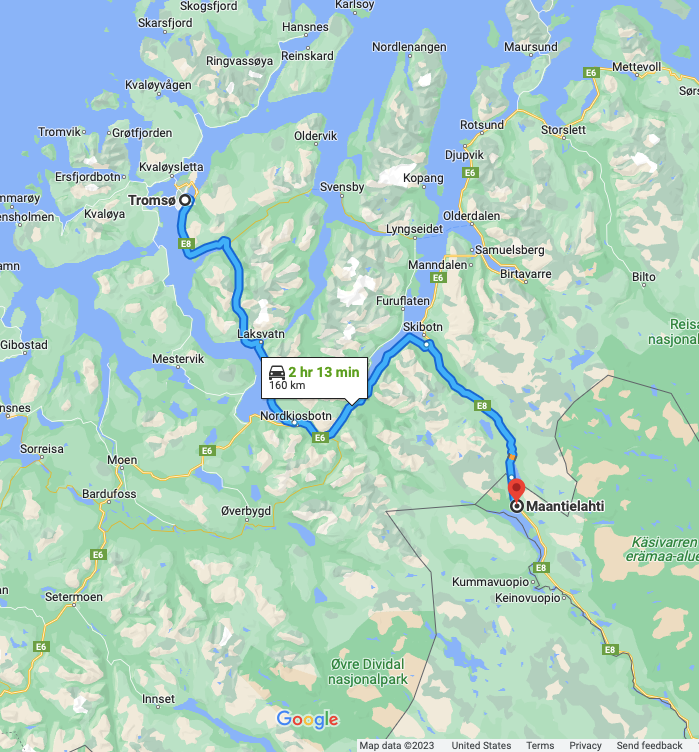
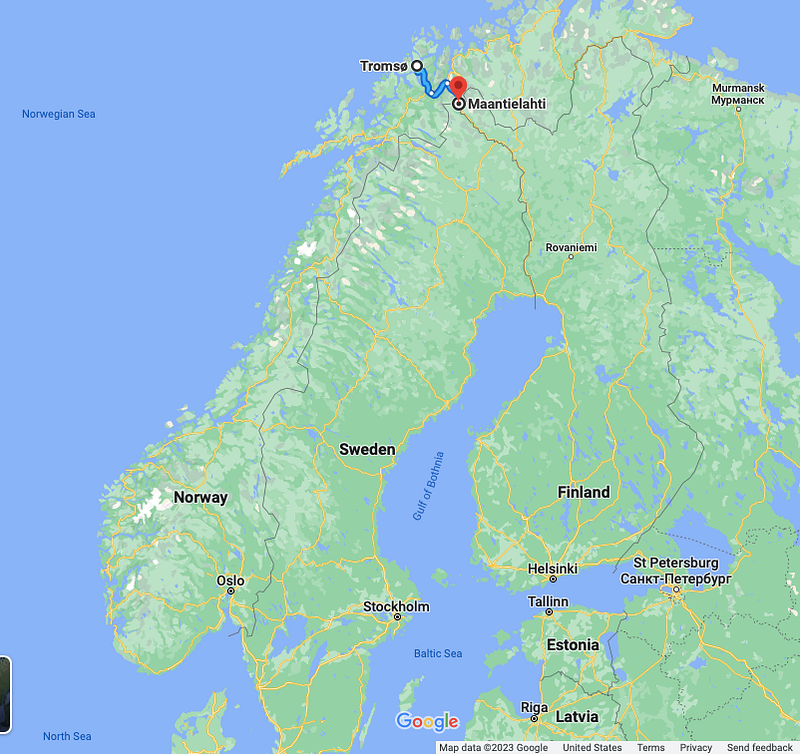
It was 5:30 pm in Tromsø, Norway, 214 miles above the Arctic Circle. My brother and I hopped into a small van with strangers. Our Northern Soul Adventures guide took the driver’s seat, looked back and asked:
“Does everyone have their passports? Because I think we need to drive to Finland tonight.”
A light rain had blanketed the city for much of the day, diminishing what little hope I had in seeing the Northern Lights on our only day in Tromsø.
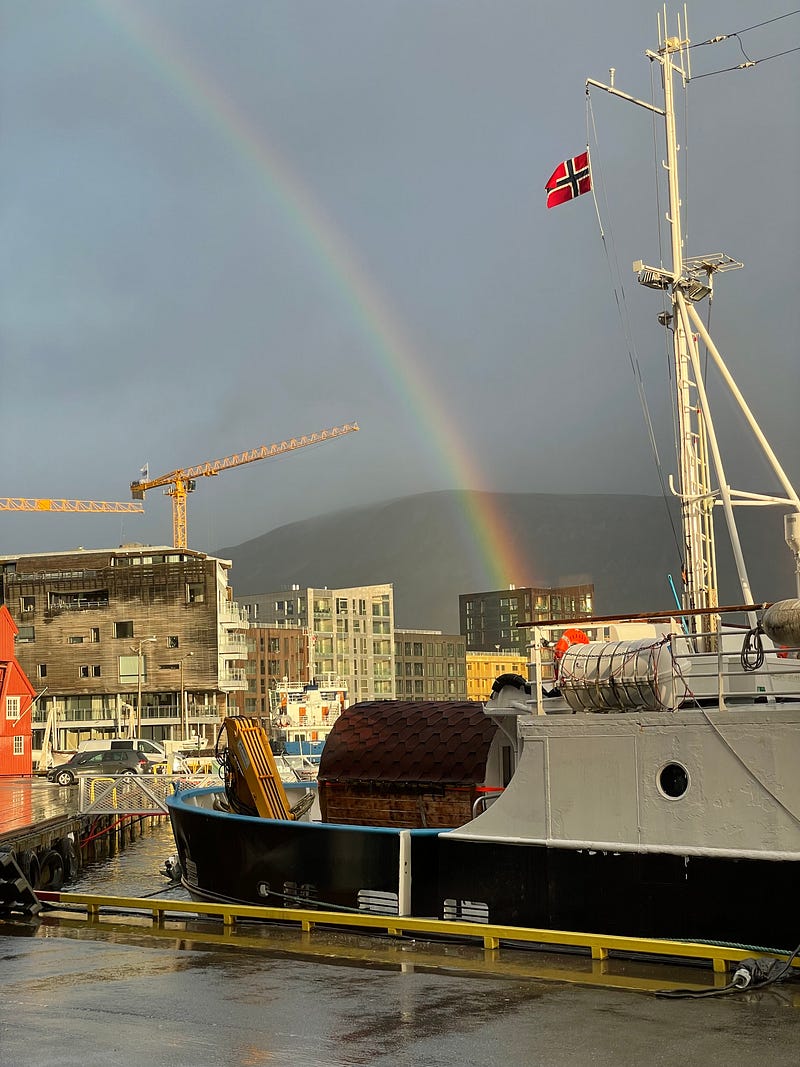
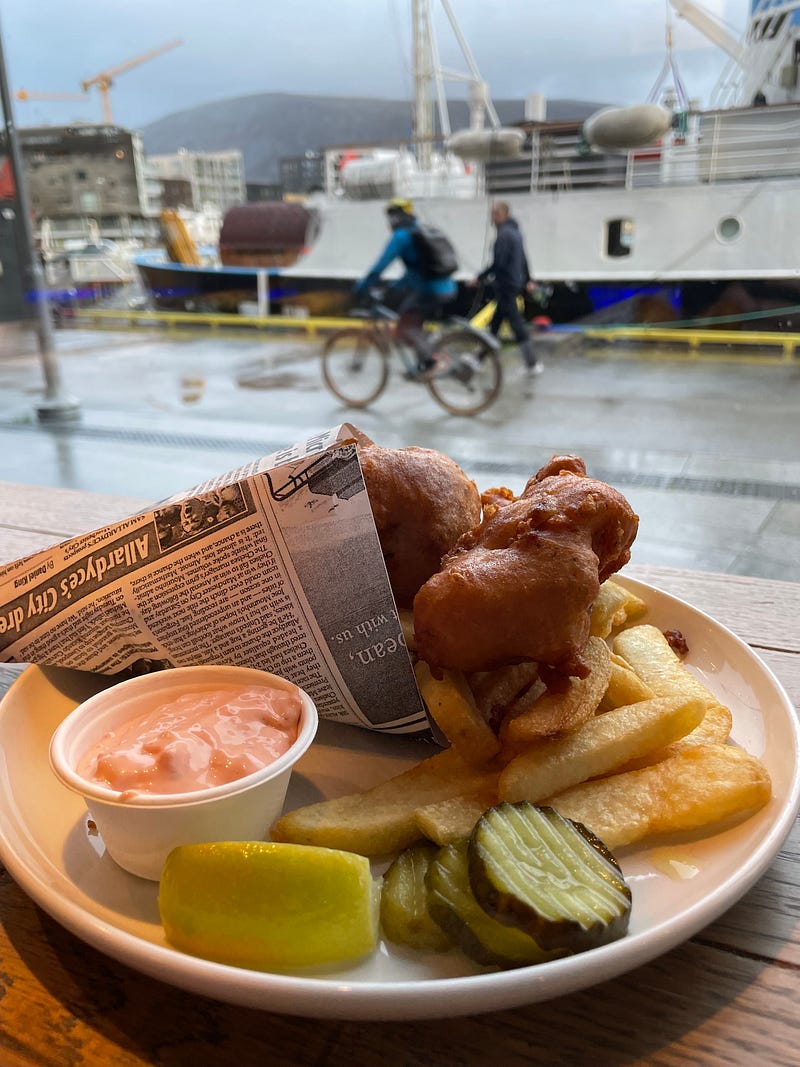
We looked in vain for breaks in the clouds. Our only glimmer of hope was the appearance of a rainbow over the harbor as we enjoyed a fish and chips lunch at the local market.
Every article I read cautioned that because weather conditions and the earth’s magnetic activity are constantly changing, one had to allow three to four nights of viewing to ensure actually seeing the Aurora Borealis.
We had just one night.
Our guide, György Gombos (we called him George), a photographer from Hungary who had been offering these tours for more than four years, made no promises as we began the drive.
We were a small group — myself, my brother Michael, a young man from India, and two women from Germany.
The drive passed quickly, with George explaining the history, mythology and science behind the lights, and answering our many questions.
“Who is familiar with the Kp index?” he asked.
I raised my hand immediately, as I had been obsessively tracking this Northern Lights forecast for weeks.
“Don’t pay attention to the Kp index,” George explained. “It might have some meaning in locations that don’t normally see the lights, but it doesn’t mean much up here above the Arctic Circle.
He directed us instead to speaceweatherlive.com, and explained that we should be looking at solar wind speed and the magnetic orientation of the solar wind. A negative orientation meant that the Earth’s magnetic field would be directing the solar radiation toward us.
It could fluctuate minute to minute, hour to hour, and last he saw, the numbers were negative and trending downward, a good sign for us. Wind speed was also in our favor, at a powerful 350 km/second.
Not only were the numbers good, but we saw a fox along the way and, recalling the Sami myth that the Aurora come from the movements of the white fox, we took it as a good omen.
We made a quick pit stop at a Circle K, where George shared some Swedish Fish, for more good luck.
About 20 minutes before we crossed into Finland, George pulled over to get a good look at the skies.
Not clear enough, he said.
Onward to Finland we went.
A blue and yellow European Union logo marked the crossing between Norway and Finland, and about a kilometer after the actual crossing, we passed a larger border complex, though no one stopped us.
Once we found a good spot, an off-road clearing near a lake with a view of Sweden, George offered warm clothing to those who wanted it. He showed me how to shoot 10-second exposures on my iPhone 12, he lent my brother a tripod and showed him how to shoot the Lights on his DSLR — and, throughout the evening, George offered us coffee and tea, lentil soup and bread, and cookies.
Skies were mostly clear, with a full moon rising behind us. As George set up his camera, he pointed to a glow above the northern horizon.
“You see that glow,” he said?
I assumed he was going to tell us that these were the lights of a nearby town.
No, this was Aurora activity.
Really, I thought?
Yes, George confirmed, as he aimed his camera at the horizon, and we saw green on the screen.
I aimed my phone in the same direction, took a 10-second exposure, and sure enough, green.
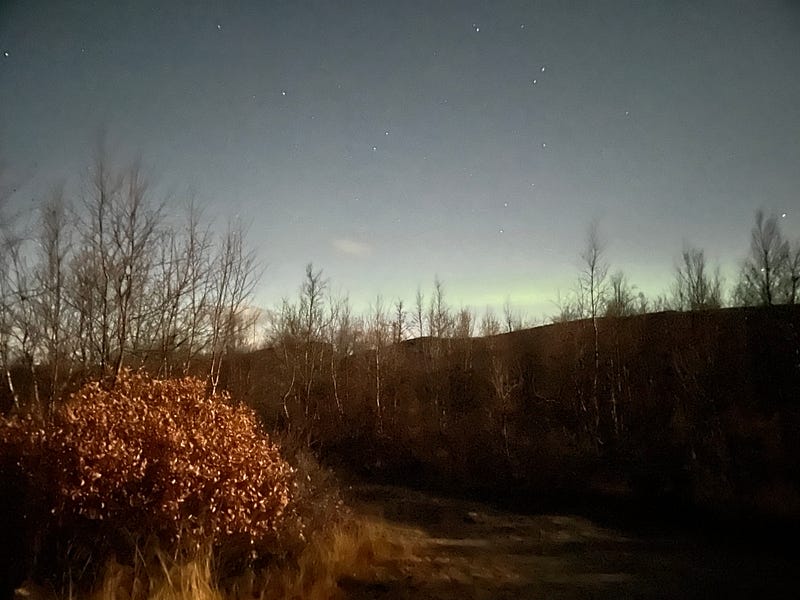
This is what I was expecting of the evening, especially knowing that we were just two days after the full moon, which could outshine the Aurora.
If nothing else happened that night, I could say I had seen the Northern Lights, even if it was just a faint glow on the horizon.
George set up a fire and arranged chairs for us. He offered us all hot coffee or tea. And he checked his phone often — solar wind and the earth’s magnetic activity were in our favor, but the lights were being “lazy,” he said.
Patience.
We didn’t have to wait long.
Within a half hour of our arrival, we began to see white streaks in the sky. I pointed my phone at them, and again, green.
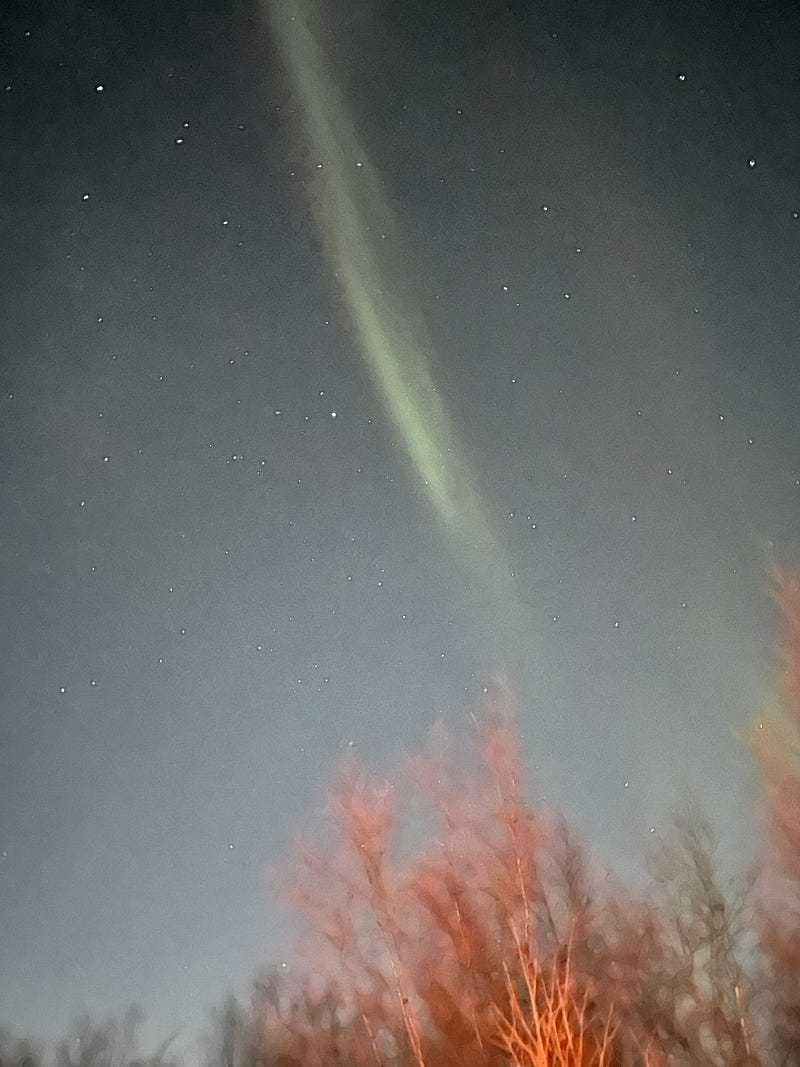
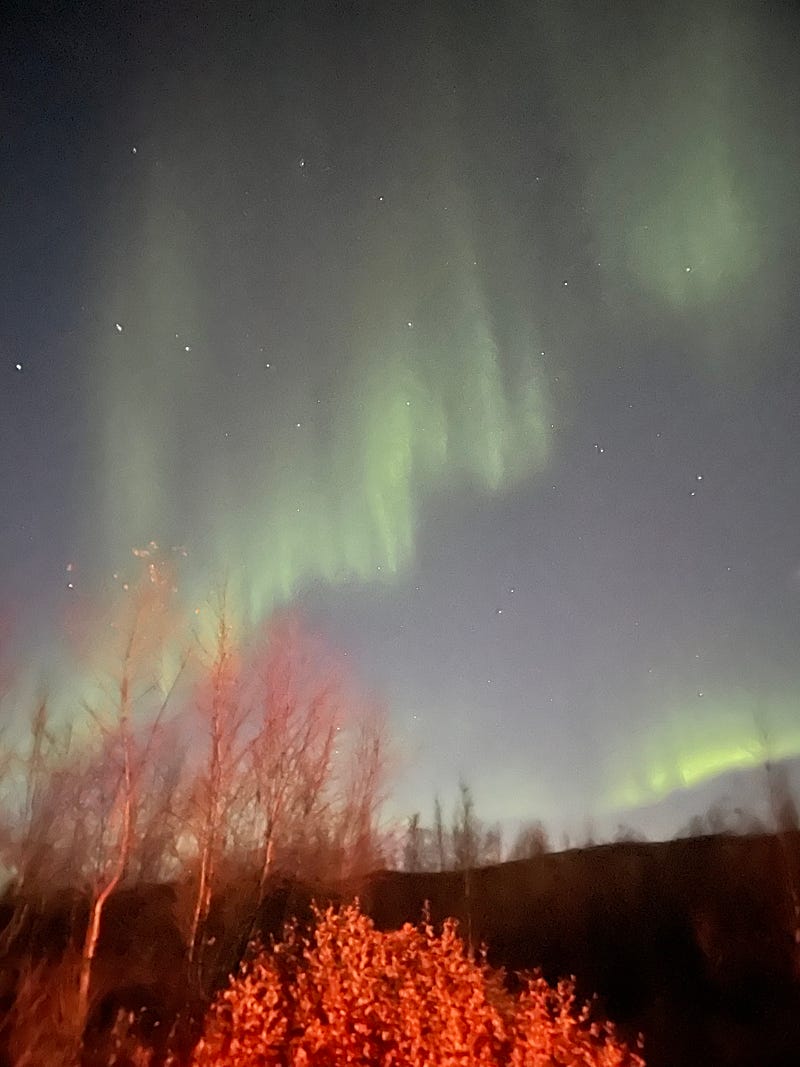
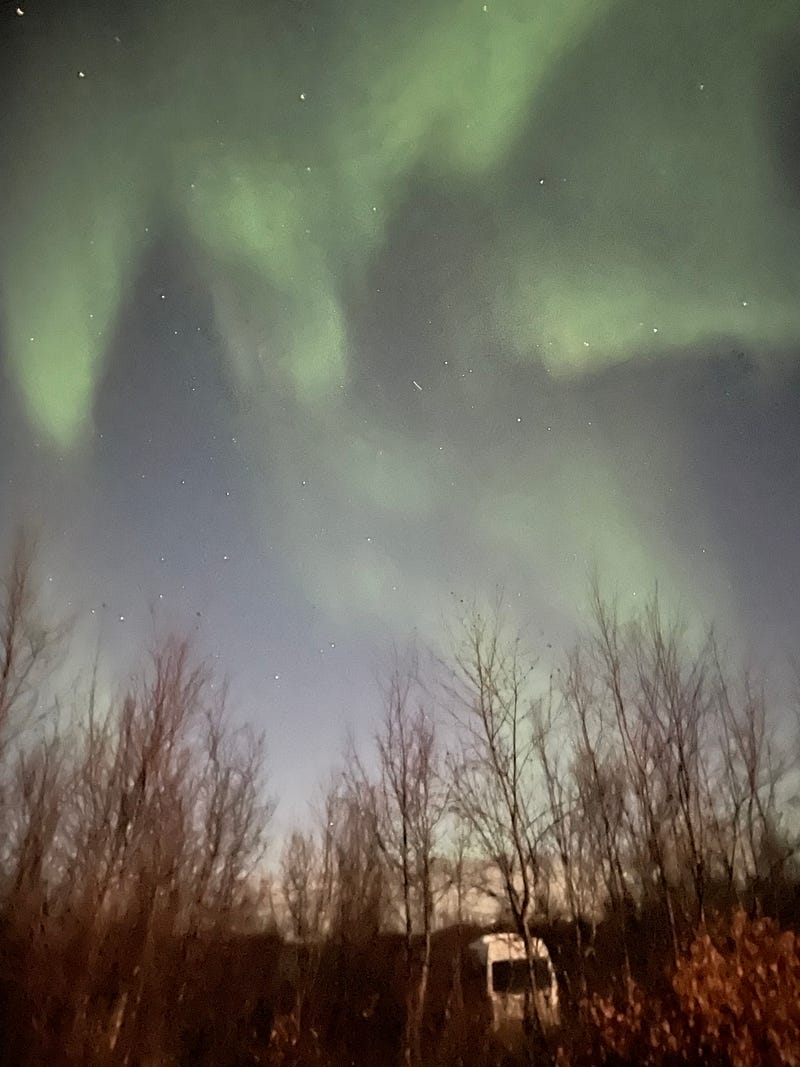
The streaks continued over and over and over and over, in various shapes and movements.
I was overwhelmed — with a rare combination of the biggest smile on my face and tears in my eyes as the streaks continued.
Soon, they were in every part of the sky.
“Who wants a picture?” George asked.
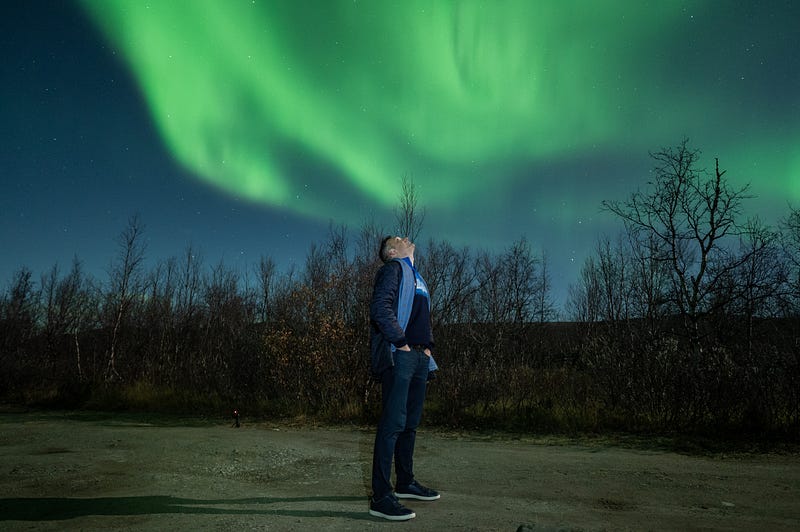
I was not going to be shy here and, after five seconds of silence, I stepped up for the first of three solo photos under the Northern Lights.
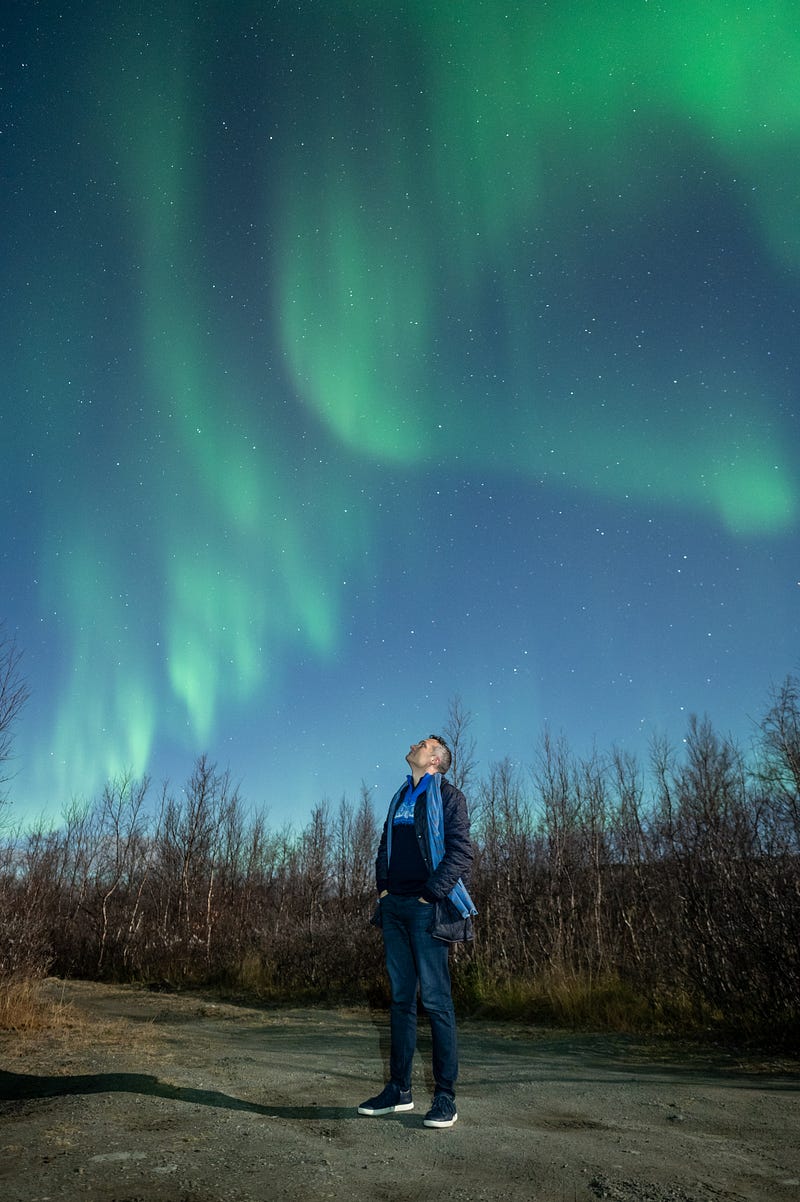
The streaks continued in various shapes and sizes, rising high into the sky, coming and going, as George took everyone’s photos.
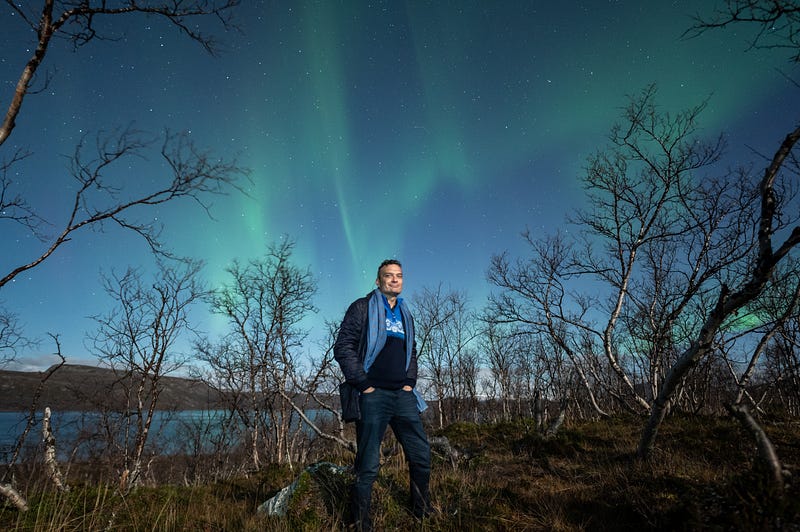
George then took a short walk through dried vegetation toward a lake, and I followed right behind. There, we continued to see the Aurora with Lake Kilpisjärvi and Sweden on the other side.
I continued to take photos, and George took another of me.
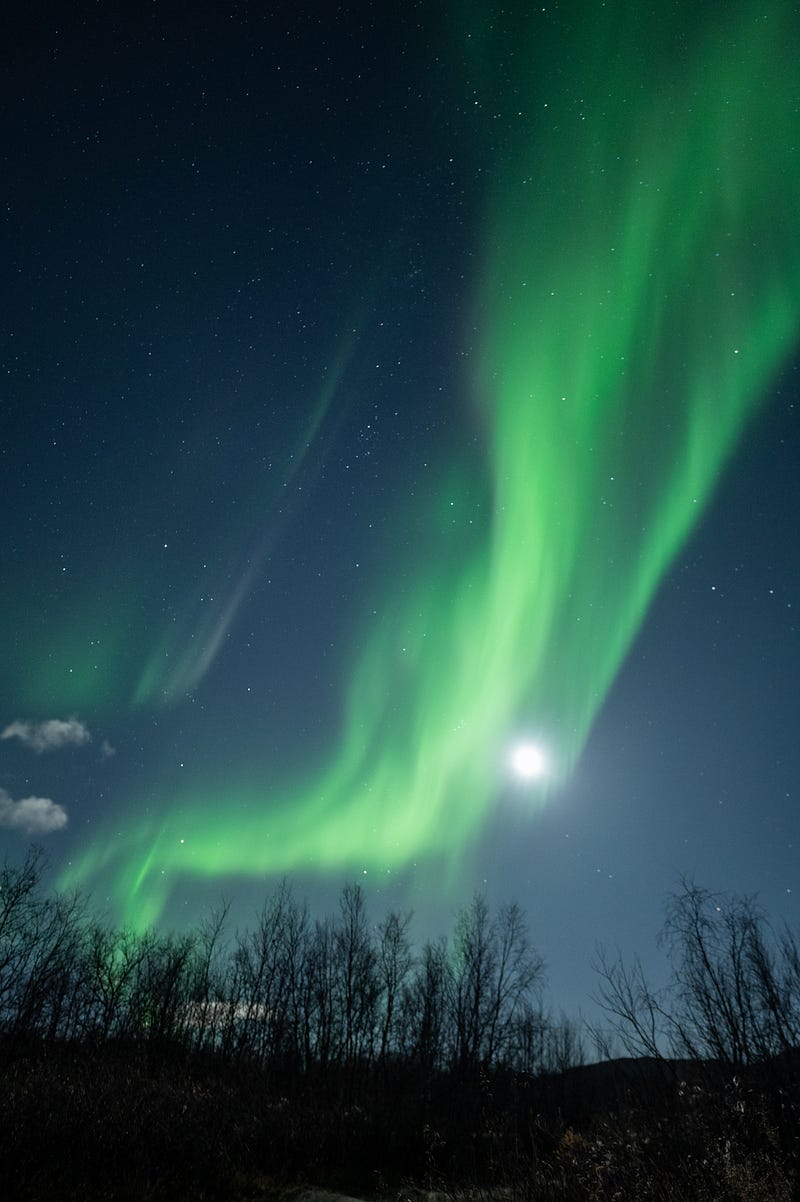
Back at the original clearing spot, George pointed out Aurora activity around the moon.
Yes, streaks of light right alongside the full moon that I thought would ruin our viewing.
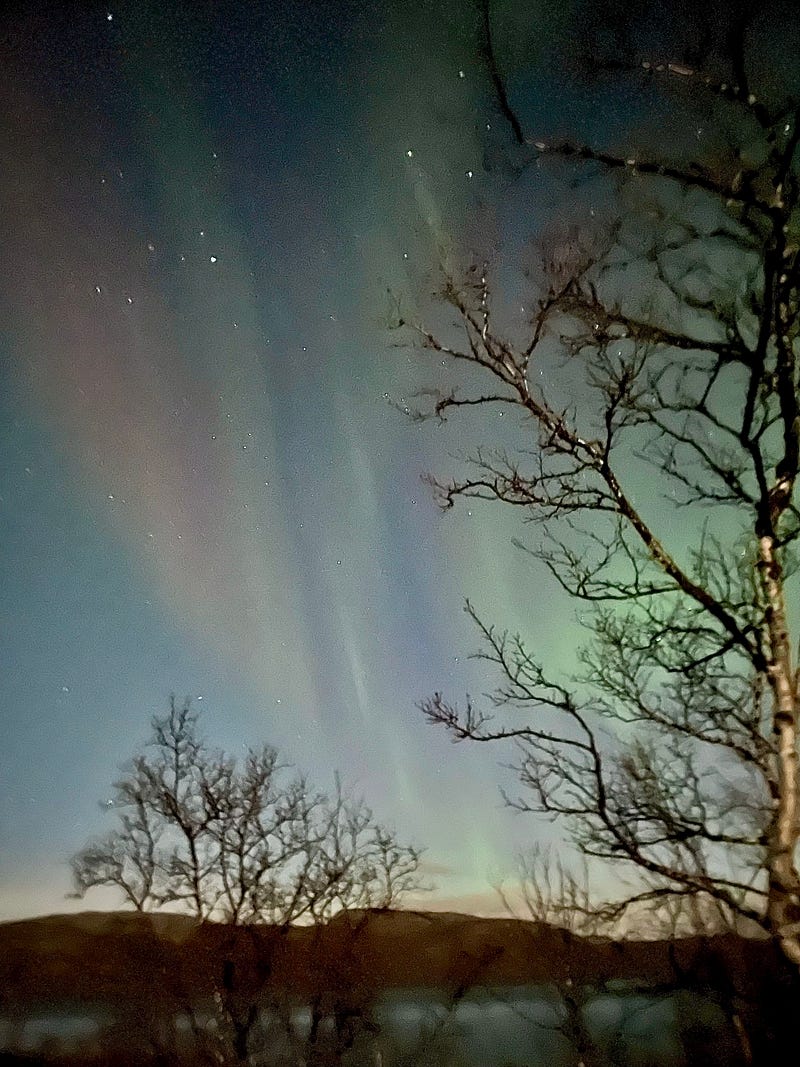
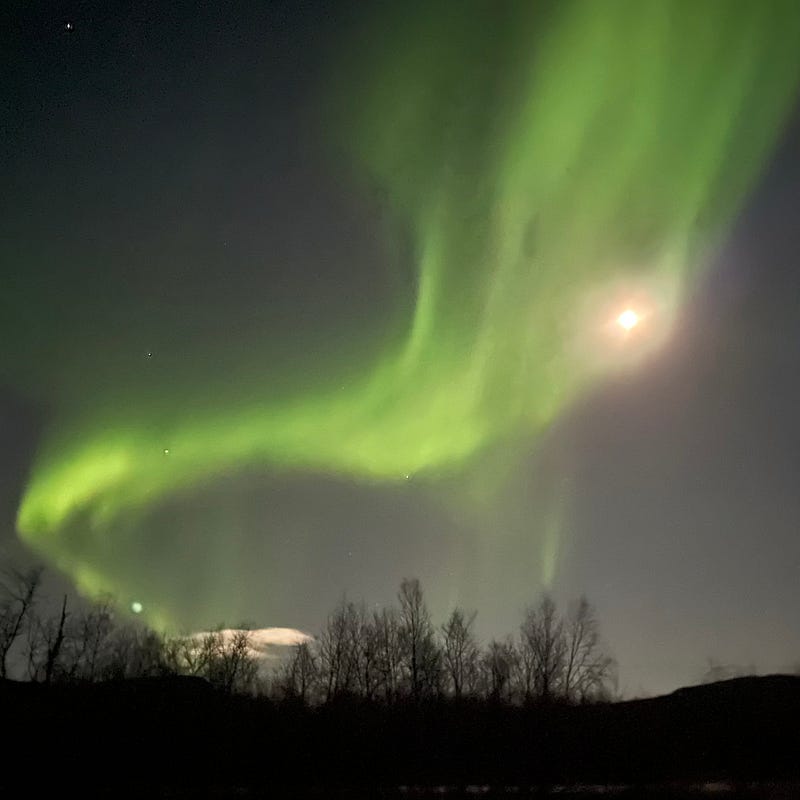
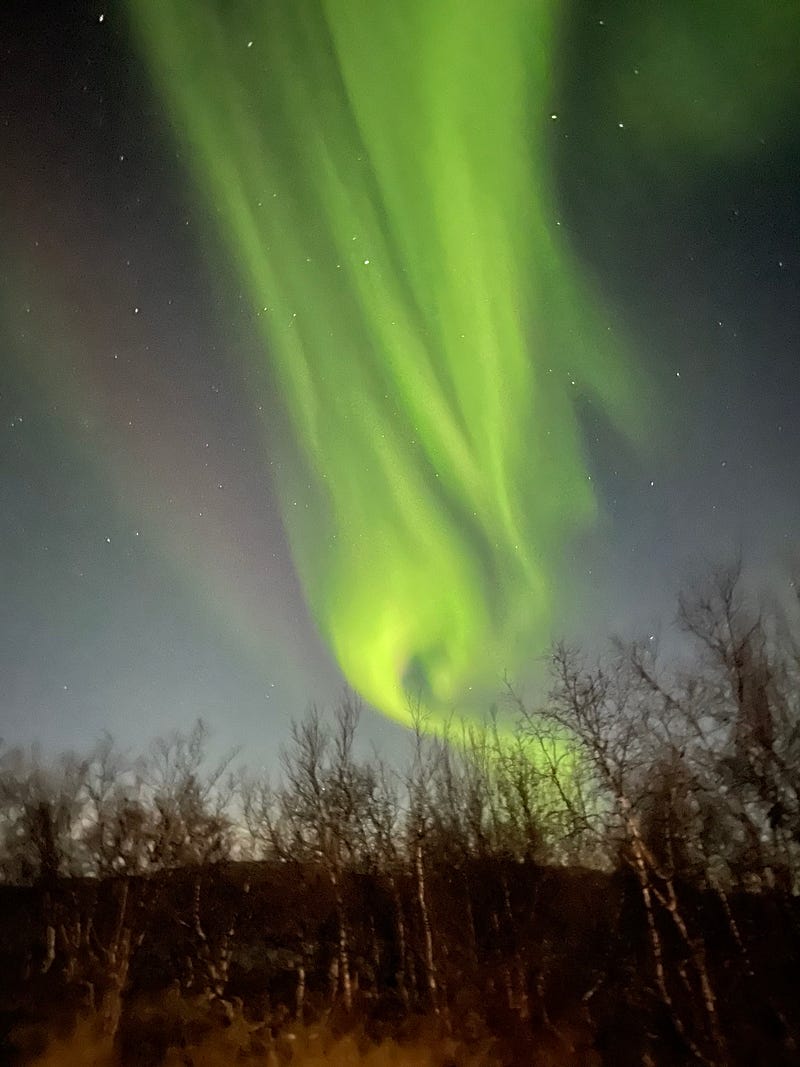
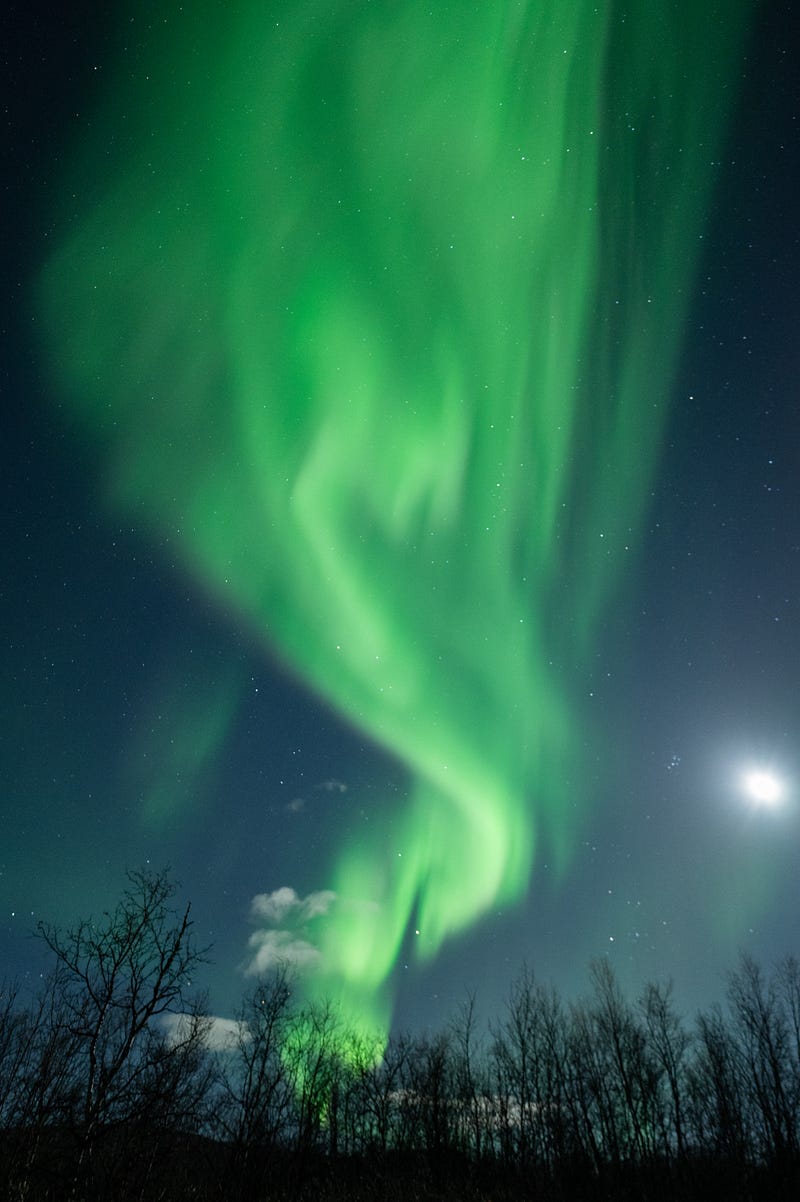
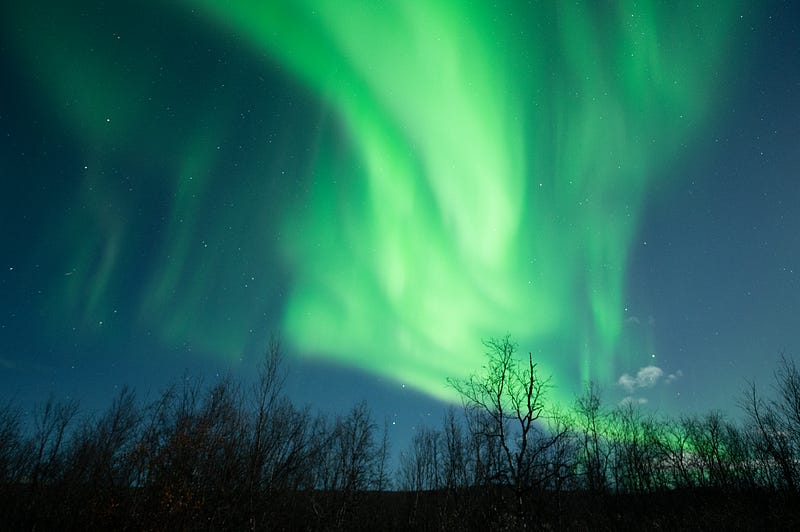
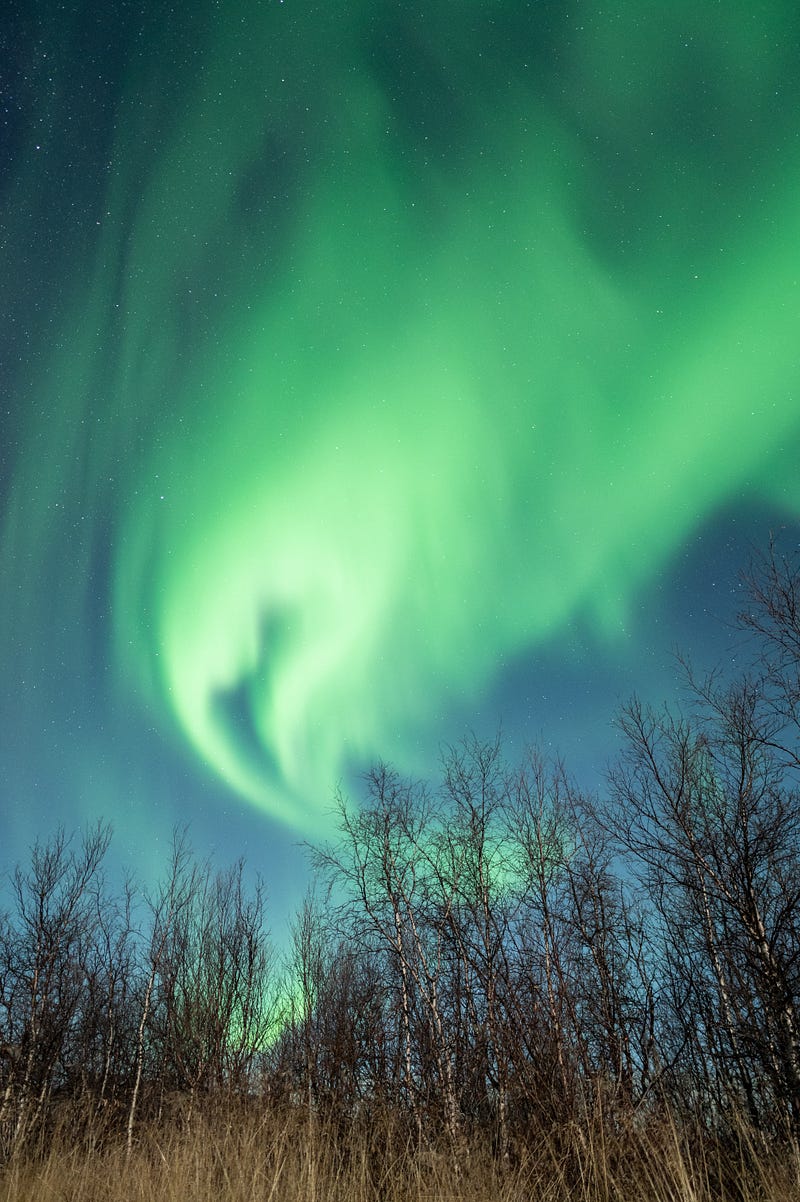
And then, we saw streaks of light dance across the sky, like a thick flowing ribbon over our heads from north to south.
Again the tears welled up as I watched the Lights take various shapes and move across the sky, flowing like a sideways funnel cloud.
I search for words to describe the experience, and all I can come up with is, overwhelming.
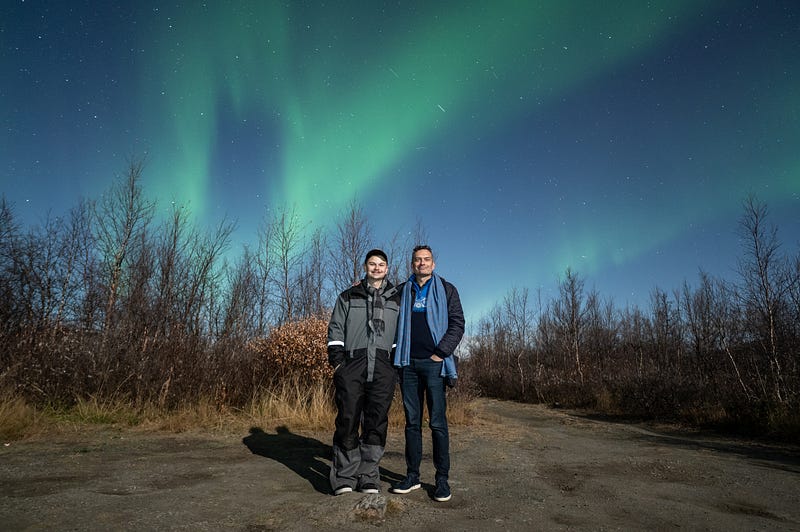
The lights continued, mostly in the northern sky.
After about two hours in this spot, George let us know that the lights were probably dying down, and that while he’d keep an eye on the sky for the drive back, it might be time to start packing our stuff for the 2.5-hour drive back to Tromsø.
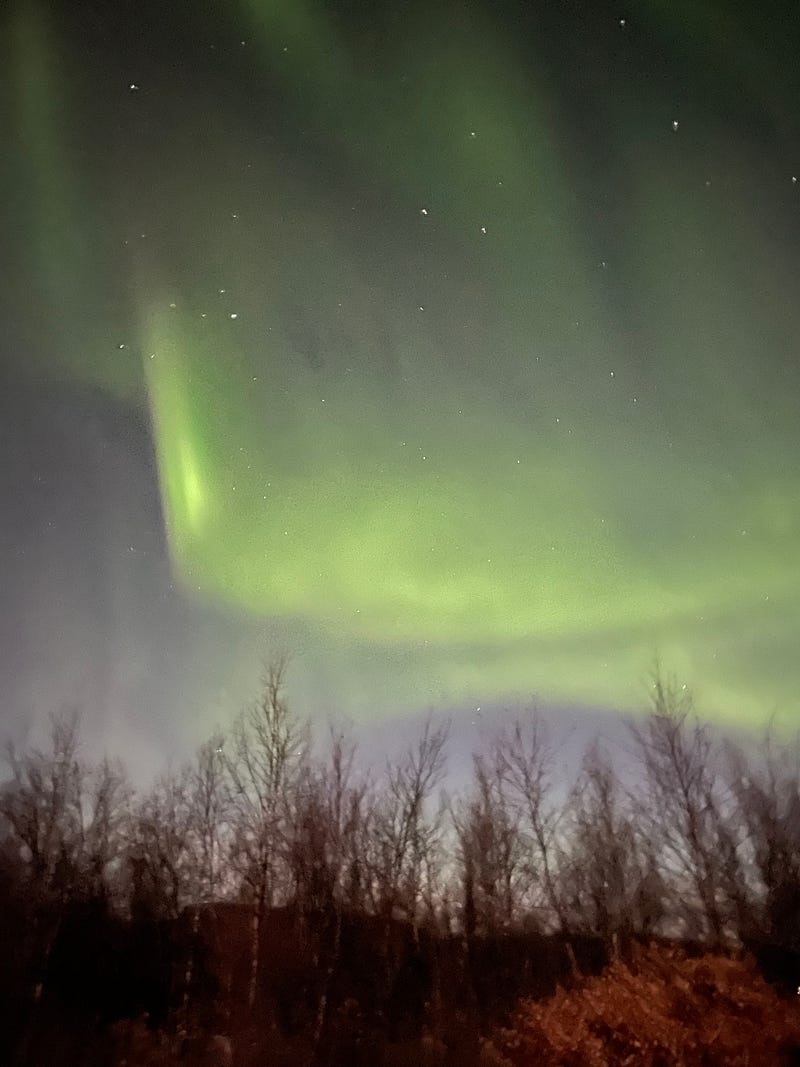
Once the van was packed and my seat belt clicked, George suggested we all come back out, as the lights were again putting on a good show.
Again, tall streaks across the northern sky — this time, my camera picked up purple light in addition to the ubiquitous green.
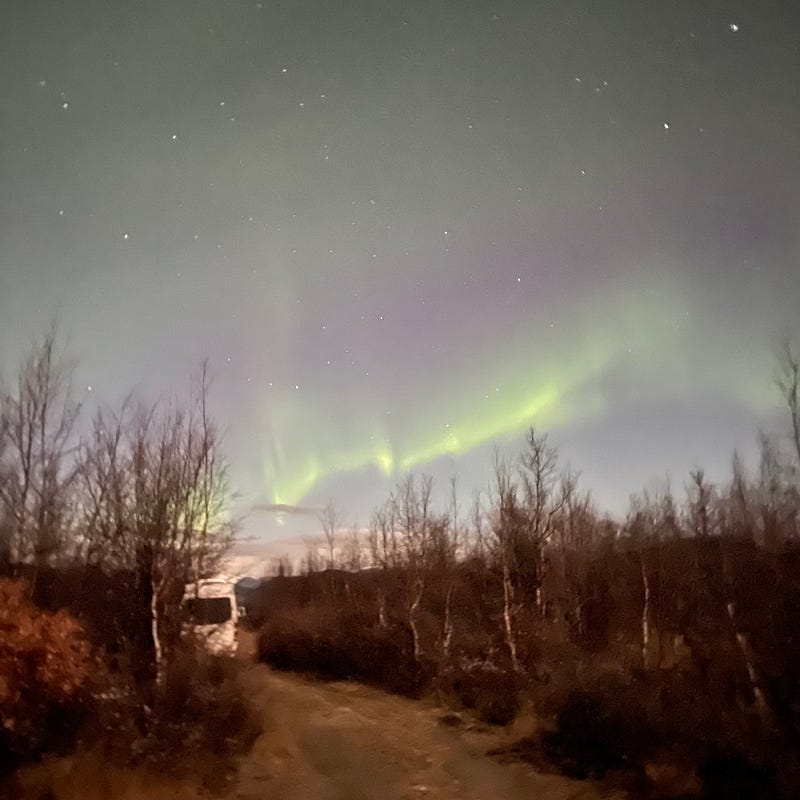
We spent much of the drive home in silence, me reviewing my photos and texting family and friends — and watching the Nordic landscape pass us by.
When we reached Tromsø, George dropped each of us where we were staying.
It may have been after 1 am, but both my brother and I found it difficult to get to sleep after that experience.
As much as I loved the photos I took — it was great to receive within 48 hours a link to download George’s photos.
Through my iPhone 12, the Northern Lights appeared a lime green. Through George’s DSLR, they were a deep green against a dark sky.
If you want to see a the Northern Lights, my advice is threefold:
- Go above Arctic Circle. Don’t expect to see the Northern Lights from a Scandinavian capital. You need to take a plane or a train much farther north (though I am told they are more visible in lower North American latitudes, so, Fairbanks, while south of the Arctic Circle, may be a good bet).
- Find someone intent on helping you find the Lights. If they’re not willing to drive for an hour or two, cloud cover could scuttle the show.
- Go with a small group. If you board a large bus, it is not going to be able to go off road, and you will not get the personal attention we received with Northern Soul Adventures.
In short: For many, seeing the Northern Lights is a once-in-a-lifetime experience. Don’t skimp or cut corners when making plans.
For more inspiration, check out Northern Soul Adventures, György Gombos and his colleague Nicola Noventa on Instagram. Or check out my own Instagram reel of the experience.
And if you want to read more about how I reached Tromsø by train and bus, check out my piece, Night Train to the Arctic Circle: