
How to Make Sense of Cases Spiking Among Young Kids
New increases in cases seem to contradict previous knowledge
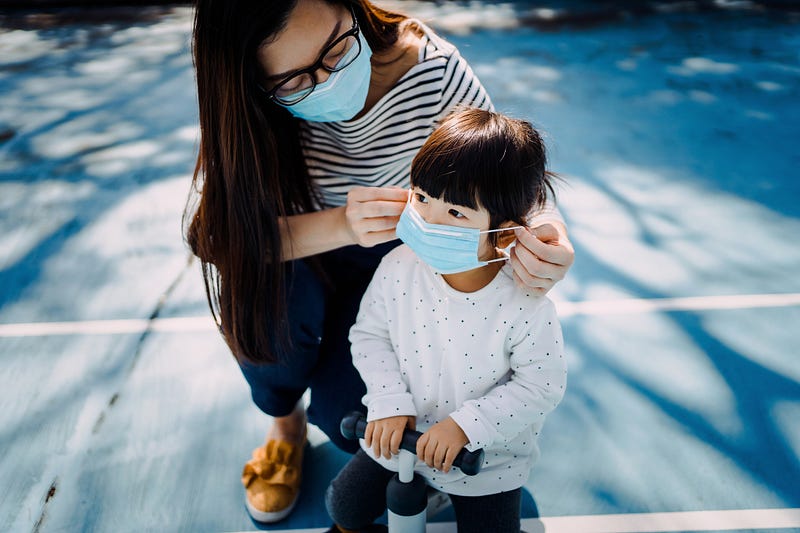
A lot of the early research on kids and the coronavirus was optimistic. While it suggested that kids could spread the virus, it also showed that they didn’t get infected too often, and when they did, their symptoms were mild. For a time, it seemed that parents could breathe a little easier.
But a lot has changed — especially in the last month, as the United States has reopened. As cases spike in over 41 states, epidemiologists are noticing that cases among kids are increasing. On July 4, Florida reported a record high number of cases among children aged 19 and younger. In Oregon, cases among kids younger than 10 grew fivefold during June. Texas reports that the number of cases is rising among kids attending daycare.
One reason these trends are inconsistent with the early research is because, well, it was early. “I think, unfortunately, the jury is still out on the likelihood of infection and the relative transmissibility of the virus in children,” University of South Florida epidemiology professor Jason Salemi tells the Medium Coronavirus Blog. Salemi helped establish the Coronavirus in Kids (COVKID) Tracking and Education Project, which monitors and compiles epidemiologic surveillance data on Covid-19 in children and teens across the United States. The program is run by the Women’s Institute for Independent Social Enquiry, a nonpartisan, D.C.-based think tank.
Salemi points to a small recent study from Switzerland showing that 12 symptomatic kids had a viral load (amount of virus in their systems) and virus-shedding patterns that resembled those of adults. It’s more evidence that ‘transmission of SARS-CoV-2 from children is plausible,’” he says, though the data on infections and deaths already bear that out. On July 4, COVKID’s most recent count, the total number of current Covid-19 cases in American children and teens was over 190,000. The number of kids who had been admitted into intensive care was 670, and 64 children had died in 19 states.
While testing rates have increased, they alone don’t account for the uptick in cases among kids, says Salemi. There “is absolutely community spread — and children are not immune to that spread.” In Florida, for example, testing among kids increased 28% from June 12 to July 3, but new cases increased 238%.
A number of factors may be responsible for that sharp uptick. For one, Salemi speculates that most kids under age 17 don’t get tested “just because,” like adults. In other words, kids may be more likely to get tested if they already have clear symptoms, and they’d be less likely to get tested if they’re asymptomatic compared to asymptomatic people in other age groups. If that’s true, it would mean that most kids getting tested are actually sick and test positive for the virus, driving up the number of new positive cases.
Increasingly relaxed mitigation efforts may also play a role in the uptick in cases among children. “Summer camps have opened,” Salemi says of Florida. As for twenty- and thirtysomethings, the age group that had the largest spikes in cases in June, “many of them have kids.”
Public health physician Melissa Sutton, MD, MPH, part of the public health division of the Oregon Health Authority, likewise points to reopening and relaxed social distancing as factors. “We are concerned about rising case numbers in our population, including rises [in] case numbers in children. We believe that this trend is a result of reopening and increased social mixing,” she says, urging Oregonians to heed Governor Kate Brown’s masking rules and guidelines about physical distancing and handwashing.
Rising Covid-19 numbers among children are of increasing concern across the United States, albeit in some places more than others. In a video blog published June 29, COVKID director Beth Pathak, PhD, compared the rise of pediatric cases in different U.S. regions between April 26 and June 25, showing that the cumulative number of cases has grown at varying degrees across the country, but the spikes are most dramatic in the South Atlantic states.
Salemi says the COVKID project is the best resource for national Covid-19 data on kids, but “we’re only as good as the data”; the nation’s data, in his opinion, is in a “pretty woeful state,” making it hard to identify geographic differences, temporal trends, race/ethnic disparities, and differences between age groups within the pediatric population. COVKID fills out a “report card” for the quality of each state’s data, in part to urge states to do better.
As experts try to understand Covid-19’s effect on kids, social distancing — now complicated by summer vacation — continues to take a toll on parents juggling work, child care, and other duties within their own homes. At the end of June, the American Academy of Pediatrics offered parents a glimmer of hope by releasing controversial guidance saying that getting kids back into physically distanced classrooms this fall should be the goal. “Although many questions remain, the preponderance of evidence indicates that children and adolescents are less likely to be symptomatic and less likely to have severe disease resulting from SARS-CoV-2 infection,” they wrote. “In addition, children may be less likely to become infected and to spread infection.”
Entry testing isn’t perfect, but it’s extremely important as schools open back up, says Salemi. (The CDC, notably, doesn’t recommend it.) A father of a two-year-old, he and his family take the same precautions as everyone else: They wash their hands often and thoroughly, they avoid close contact with people they don’t live with, they wear masks, and they clean and disinfect surfaces they touch frequently. He pays attention to reliable sources of information — an easier task for a scientist, he admits — and acknowledges that the “level of misinformation makes it extremely hard for people do the right thing.”
His family also tries not to “overreact,” he says. “Despite being only 25 months, my son knows things are quite different and grandparents are no longer smooching all over him. So we try to maintain a healthy, stress-free environment around him, because the mental health of all of us is also of paramount importance.”