
5 reasons why I stopped wearing an Apple Watch
Functionally, the Apple Watch is an amazing piece of kit. It constantly ranks as the most accurate in its category for tracking steps, sleep, blood oxygen, and heart irregularities.
I’ve used mine for logging steps, seeing my active and resting heart rate, tracking my workouts, guiding my runs, controlling my Apple TV, controlling my smart lights, and a whole host of other things.
A couple of years ago, my father saw a heart specialist for some tests and when they compared the hospital’s ECG to those from his Apple Watch, they were almost identical.
The convenience of talking to Siri for reminders, alarms, making phone calls and sending messages is incredibly useful when your hands are dirty or full. The array of watch complications mean that a timer, the weather, Apple TV remote, or even the news are always right there at your fingertips.
Unquestionably, the Apple Watch offers more to a wearer than a luxury brand like Patek Phillippe, whose entry-level prices are around $20,000 and who set a new price record at Sotheby’s when a watch sold for $7.68 million.
Yet despite all of this functionality, after 4 years of daily use I’ve finally stopped wearing my Apple Watch — and I don’t miss it. Here are the reasons why, and what I wear instead:
1. It’s kinda ugly
Its popularity often masks this, but if we’re being honest, the Apple Watch is not an attractive device. It looks like someone put an iPad into the Honey, I Shrunk the Kids laser, stuck a strap on it, and boxed it up.
The customisation options are useful and allow each owner to inject some of their own personality into it, but fundamentally it’s a grey rectangle on your wrist. When you consider the beauty, ingenuity, and downright breathtaking innovations of watches in the pre-smartwatch era, the Apple Watch’s design is a serious fail.
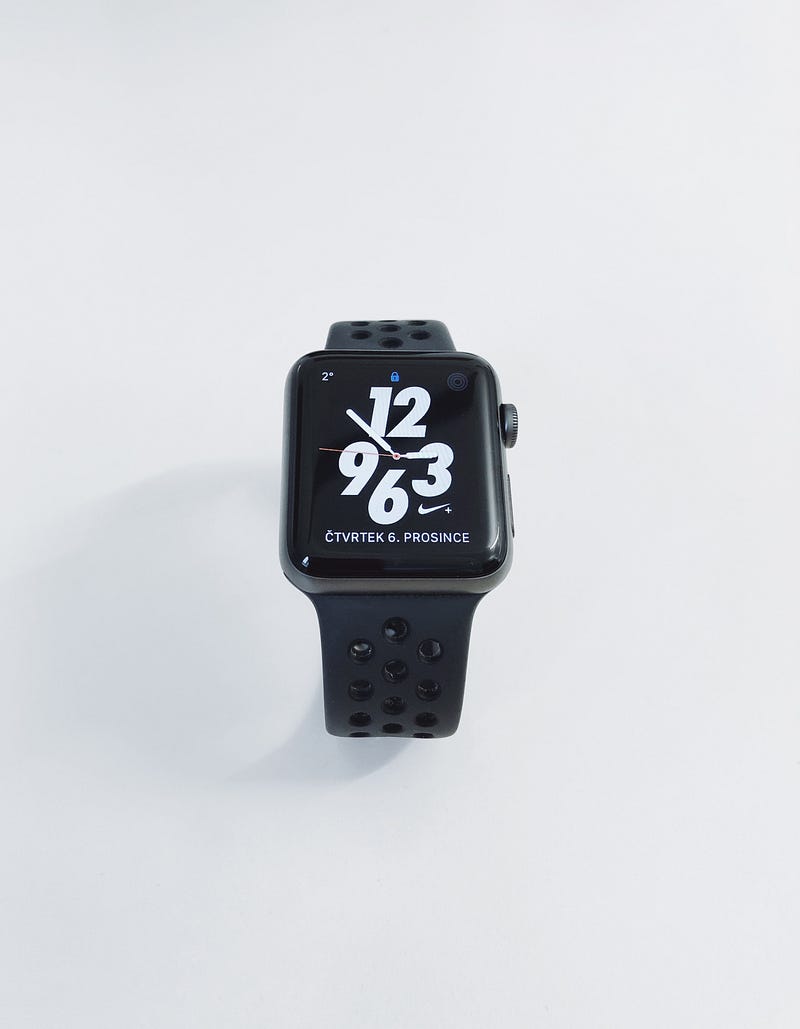
Nobody is going to call the Apple Watch elegant.
Yet, that’s exactly what watches have been for a long time. For men in particular, a nice watch is a statement, jewellery that conveys their personality and sense of style.
Apple is a company renowned for its design prowess, yet with its watch it ultimately told the world that a consistent design language (i.e. a grey rectangle) was more important.
And it’s a fail.
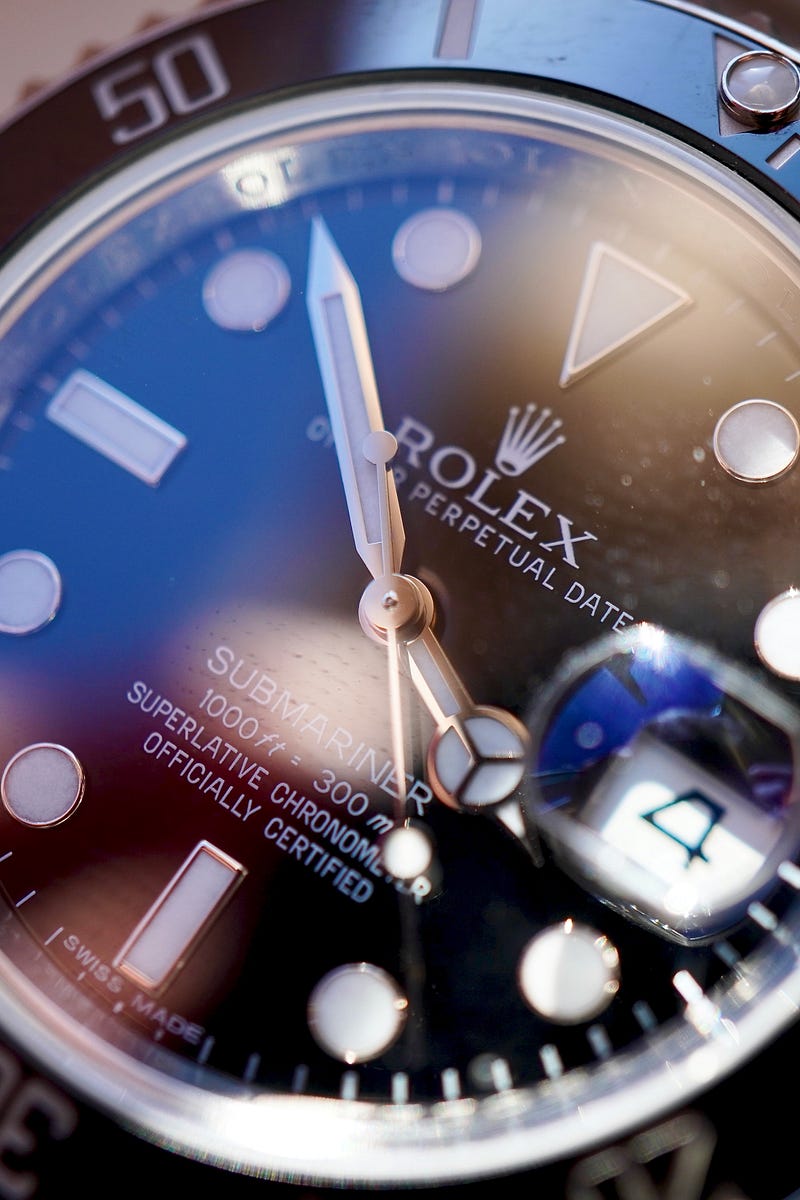
This is Rolex’s famous Submariner:
This is Apple Watch’s GMT face:
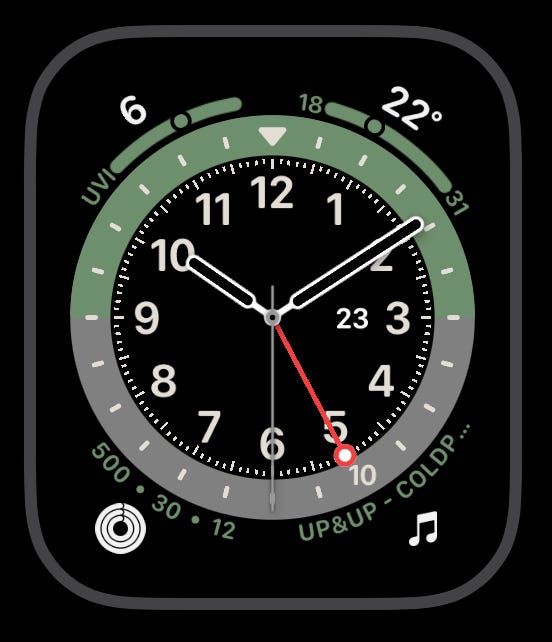
Seriously, what’s this? A round dial in a square face? It’s lazy and an attempted shortcut to make the wearer feel like they’re wearing a watch.
We’re quite used to smartwatches looking more like tech gadget than watch, so the market let it slide. Maybe it’s not realistic to want a smartwatch that looks like a watch.
Except, this is the Withings ScanWatch Horizon:
That’s a stunning watch. It looks like a real watch, yet packs the features of a smartwatch from sleep analysis to exercise tracking to heart rate tracking.
And unlike Apple, Withings offers a couple of different designs, with different colours:
And not only does it look like a watch but perform like a smartwatch, its battery life lasts up to a month! And it also packs an additional 20 days of battery, in power reserve mode with limited features.
This brings me nicely to point 2:
2. You’re tethered to a charger
The battery life on the Apple Watch is shockingly bad, and almost useless if you want to use its features.
I’m on my second Apple Watch, starting with a series 3 and upgrading to a series 6. While the functionality is excellent, there’s always a sense of panic that if you actually use the features you’ll run out of juice.
An increased battery life is a common expectation with a device upgrade, but my series 6 was noticeably worse than the series 3. So much worse, in fact, that I had to disable multiple features just to get a day out of it.
Sure, the Apple Watch will track your sleep, steps, and exercise, but it draws a lot of power to do so. It’s incredible to think that in the seven years since its initial release, the Apple Watch still can’t last users more than a couple of days (at best).
The Oura ring boasts battery life of up to a week, Withings’ watches a month, and Garmin devices are usually somewhere between. Yet the biggest tech company on the planet can’t figure it out? Hmm.
Articles abound for tips on how to get more than a day out of the battery, so it’s a common problem. But ultimately, those tips come down to disabling features like the always-on screen (a feature many users, myself included, wanted — because a watch that always shows you the time is the bare minimum function of a watch), using darker faces, turn on power saving, and switch off notifications.
So, y’know, turn off all the things that made you want to buy it in the first place. And all the features Apple enthusiastically announces from the stage? Yeah, turn those off too.
3. Constant notifications
The Apple Watch is like an eager puppy excitedly bouncing between your feet. It wants to be with you and tries to make you happy, but you end up stressed and trying not to trip over.
Wearing my Apple Watch increased my stress, ironically. Even though I disabled most of the notifications (no, I don’t want social media, WhatsApp, or email alerts on my watch) it still pings constantly.
Hey, there’s someone at your door!
Hey, stand up!
Yo, you can still close your rings !
It’s time to go to bed!
You’ve not read that message that came through on your phone 10 seconds ago, let me buzz you about it here
EVENT COMING UP, OMFG!!!!
Feeling stressed bro? Here, breathe along with me.
Look dude, all this help I’ve given you today has taken its toll on me. You need to charge me up if you want me to track your sleep tonight.
There were times I had to turn on Do Not Disturb just to stop the pinging on my wrist. And this is after already disabling features like the handwashing reminders.
How other people manage to cope while also getting alerts for Facebook, email, WhatsApp and other things, I have no idea.
And, yes, all this constant nudging is largely responsible for the poor battery. And, yes, you could turn it all off — but then what’s the point in owning one in the first place?
4. Sportspeople don’t wear them
I noticed this curiosity recently. Look at active people who you’d expect to wear fitness trackers and… they don’t.
I’ll add a caveat here: the incredibly wealthy will likely spend their money on more advanced facilities, and those who are active for a living probably use more specific devices. But what they’re not doing is wearing a 24/7 smartwatch.
Celebrities, who know the importance of cutting a sharp image, aren’t photographed wearing an Apple Watch. Take Dwayne Johnson here, wearing a Mont Blanc, for example.
Because watches have a purpose that Apple hasn’t figured out yet: they say something about you. They’re an item of jewellery. They complement your outfit. They start conversations. Nobody sees an Apple Watch wearer and decides to go over to ask “That’s a nice watch, what is it?” — that grey rectangle design tells us all exactly what it is.
Like well-fitting clothes and good quality shoes, a watch conveys a message. Even more so nowadays, where traditional watches are less commonly seen thanks to the rise in smartwatches.
Perhaps Withings has shown the world, and its competitors, that wanting function and style is not too much to ask. Perhaps Apple will remember its place as the biggest tech company, its huge bank balance and, proud of its innovative past, decide to upgrade the Watch to what it should be.
What I wear instead
When I decided it was time to leave my Apple Watch in the drawer, I had a small dilemma.
What do I wear instead?
Did I find an alternative smart watch, or revert to a traditional watch? And if I opt for a traditional watch, what should I use for a fitness tracker?
I decided it was time to wear my Omega Seamaster Aquaterra again. I originally purchased this with a nod to my grandfather, a sailing enthusiast. The Seamaster’s vertical lines reminded me of a ship deck, and the watch has an understated elegance. The blue face is indescribably rich and gorgeous, and the crystal dome so clear that at times it looks like there’s nothing to stop you touching the dials.
Unlike the Apple Watch, the Omega encourages me to smile a little each time I see it — it’s a mixture of sentimentality, engineering ingenuity, and the sheer beauty of it.
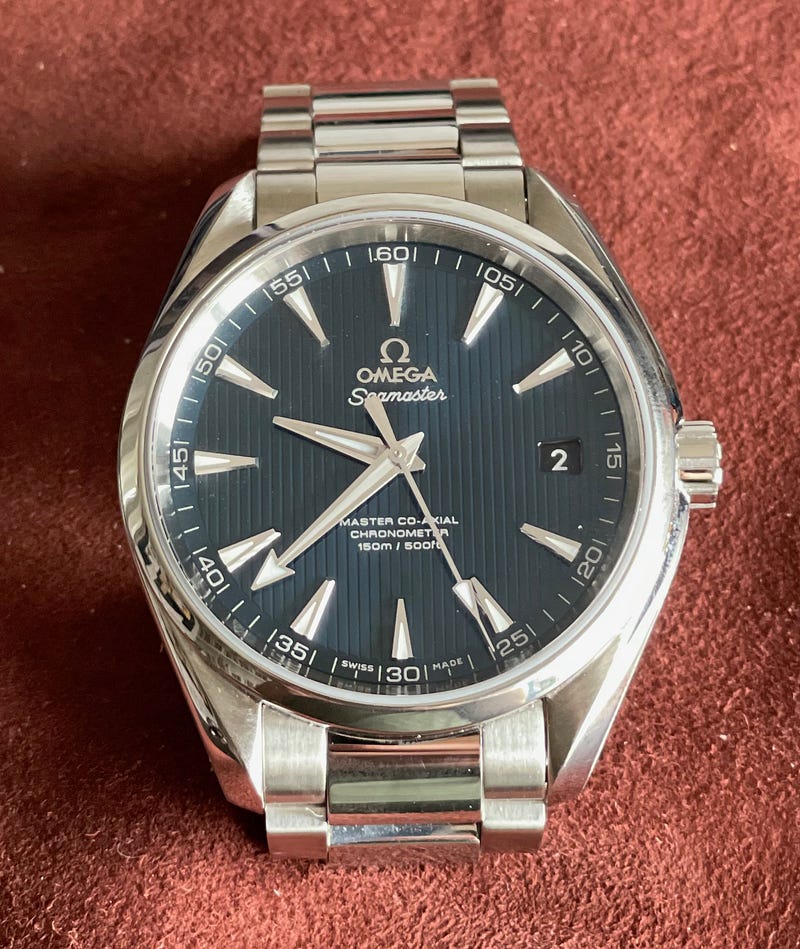
What do I mean about engineering ingenuity? That’s my fifth reason for putting the Apple Watch in the drawer:
5. Timepieces stand on the shoulders of giants
Watches are a marvel of human ingenuity and engineering, though easily taken for granted today because of their ubiquity.
Automatic watches continue to amaze me. Craftsmanship created incredibly small components that move in perpetual motion to keep accurate time without ever needing a battery or a charge or winding up unless the watch is left idle for a prolonged period of time.
My watch is a clear-backed automatic, so I can see the movement, and it never fails to take my breath away for a moment. I mean, look at it:
There’s just something remarkable about this, in a way that a computer chip isn’t — despite the fact the chip is impressive in its own way and vastly superior in its capabilities.
The next decision was a fitness tracker. I didn’t want to wear a second watch, so it was down to other wearables.
I strongly considered the Oura ring. I love the minimalism, and was even prepared to pay the small monthly subscription if the features justified it. Unfortunately with the release of the third generation ring, Oura is requesting users pay for features that aren’t released yet — which also means we don’t know how accurate they’ll be when they launch. Oura also advises not to wear the ring for weight lifting — a sensible recommendation, but as I lift a few times a week it ultimately removed the ring from my possibilities because I would miss out on heart rate data for my workouts.
That essentially left me looking at bracelet-style trackers. FitBit is the obvious company in this space, but I’ve had reliability problems with them in the past and the broad consensus is the step tracking isn’t very accurate.
To cut a medium-length story short, I decided on Garmin. Known for long battery life, accuracy and reliability, I bought a Vivosmart 4.
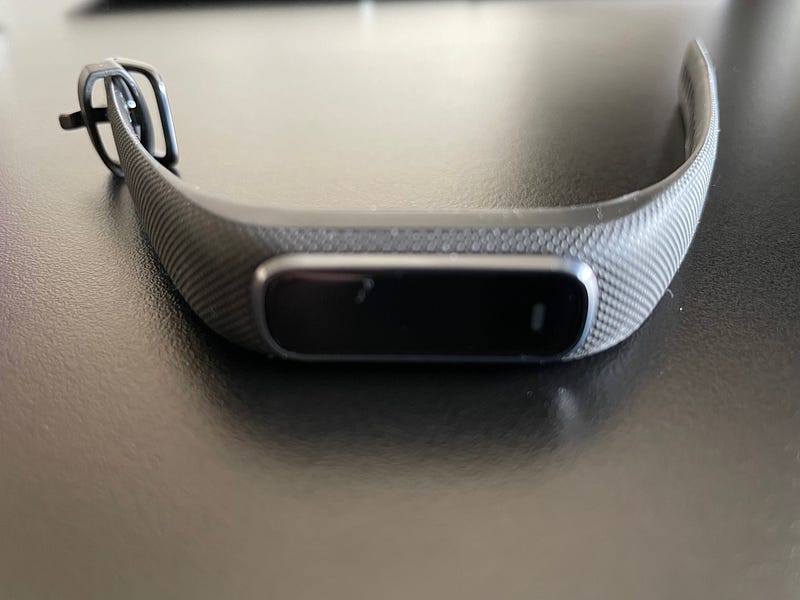
Light and unobtrusive, it sits on my opposite wrist with a permanently off display. Certainly, the user experience isn’t as polished as Apple — navigating through the menus isn’t as quick or sleek.
But it distils the essence of the Apple Watch into a minimalist and easygoing device. It tracks my sleep, pulse oxygen, steps, workouts (it even detects which exercises I’m performing), fitness, movement intensity. It identifies when I’m stressed and offers guided breathing, and has a useful feature called Body Battery. Like the name suggests, it takes your data and considers your sleep and overall rested state to let you know if you should take it easy today or go all-out in the gym.
And best of all, I get a consistent week out of its battery life. The Omega, as an automatic watch, has no battery at all.
With the Apple Watch sitting on my nightstand, depleted of its remaining juice, I feel liberated. I can go away for a weekend without worrying that I’ll forget the charger. I no longer get pinged before bed with an alert that the watch will die overnight and not be able to monitor my sleep. And I can leave my phone in a room and be free from notifications.
If Apple releases a bracelet tracker with a sufficient battery life, I’ll be the first in line to buy one.
But having ditched the smartwatch, I don’t see myself going back.
Before you leave
If you’d like to earn money as a writer on Medium, or read unlimited articles, you can join with my affiliate link. I’ll get a small portion of your membership fee and it won’t cost you anything extra.


