
How to Invest in Gold: A Guide
An overview of the key methods you can use to hold the yellow metal, and a comparison of the relative pros and cons.
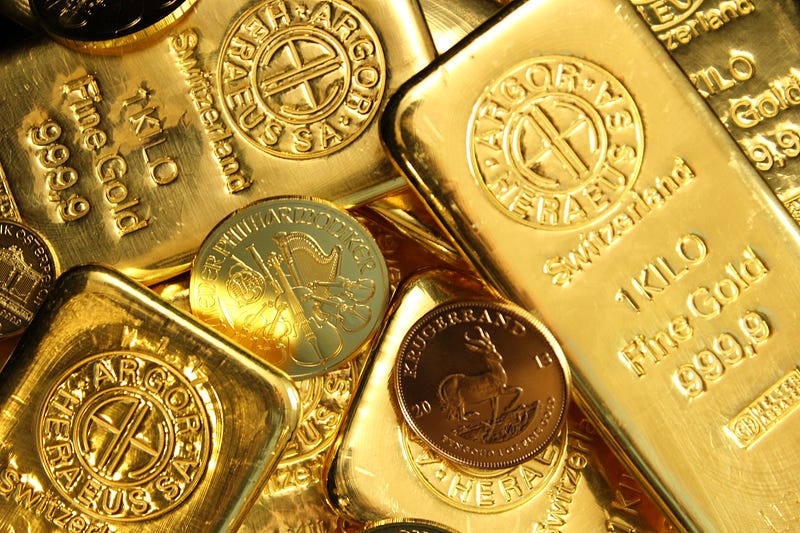
Gold, gold, gold… Many people either love it or hate it.
Whilst I’m not a true “gold bug”, I’ve been intrigued by the yellow metal ever since I saw Scrooge McDuck from Ducktails diving into his sea of gold coins.
In a recent article, I talked about the reasons that I’m currently bullish on gold and why I think everyone should consider owning some. You may wish to check that out first if you want to understand the case for gold.
I also want to say at the outset that just because I’m bullish on gold does not mean I’m anti-Bitcoin or crypto. There are many out there who seem to think that Bitcoin and gold are mortal enemies, battling it out until the bitter end. I don’t see it that way. I like both and therefore I own both.
In this story, however, I wanted to get a little more practical and focus on the different mechanisms for buying and investing in gold.
Each has its own set of advantages and disadvantages and it’s worth exploring them in a little depth in order to make an educated choice.
There’s also at least one way of holding gold that has only appeared within the last few years so you may find it valuable to read further, even if you’re a gold veteran.
The 5 key methods to invest in gold that I’m going to cover are:
- Physical gold (in your possession)
- Physical gold (in third-party storage)
- Gold Exchange Traded Funds (ETFs)
- Digital gold-backed tokens
- Gold mining stocks
For each, I will briefly discuss the advantages and disadvantages and then provide some signposting to some vehicles and products that you can look up further for each.
1. Physical gold (in your possession)
Here we are talking about actually buying physical gold bullion or gold coins and taking delivery of them. This is pure Scrooge McDuck-esque. The gold is physically in your immediate possession and you are responsible for looking after it.
Advantages
- You know it’s definitely yours. You have it in your actual possession and therefore there is no counter-party risk i.e. relying on a third-party entity to look after it. There are many people who believe that unless you have gold in your actual hands then it isn’t yours. This has been accentuated by some bad press around some of the “paper” gold ETFs (see below).
- You can sleep with it. If you so desire… Not my thing personally, but people have done worse. On a serious note, you get the benefit of being able to take it out and enjoy looking at it.
- If things get really, really bad it may one day become a useful form of tender. To be honest, we would need to be imagining a world something like that in The Road by Cormac McCarthy. (Great book by the way — but not one that I would class as overly “uplifting”).
- Can have certain tax advantages depending on where you live. For example, in the UK if you buy gold Sovereign or gold Britannia coins you are exempt from Value Added Tax (VAT) and Capital Gains Tax (CGT). This is because they are classed as a legal form of tender. This can be a major advantage but as always do your research depending on where you live.
Disadvantages
- Storage costs and risk. Even though you are not paying a third party to store it, there will likely be costs, or at the very least risk of you having it in your possession. You may need to pay for insurance and/or you may need to buy a safe to keep it secure. You also have the risk of being stolen if you are burgled.
- Transaction costs. The actual cost of buying and potentially selling physical gold is typically higher than other methods. The “premium” is what the dealers charge per ounce. Think of the premium a little bit like the “spread” you pay on stocks and shares. These can get pretty high on physical from time to time, particularly if there are supply issues.
There are many places you can buy physical gold for delivery. Most will also offer to store it for you, for a fee (see #2 below). Some examples of dealers include:
2. Physical gold (in third-party storage)
This category is very similar to the first. The only difference is you are paying a third party to store it securely for you. The level of security is normally very high and typically independently audited and insured.
However, you should check to make sure the dealer is reputable and do a comparison of the premiums they charge and the storage costs.
Advantages
- Many similar to above in #1 (except you can’t sleep with it at night!).
- Probably safer, in my opinion. There will be some people who only trust themselves to look after their gold. Personally, I’m happy to trust the security of a local vault in the UK near where I live that has been externally audited. It’s also convenient in case I do ever want to go and pick it up or take delivery.
- Easy to buy and sell. You can literally buy (and sell) your gold within minutes. You don’t have to mess around with delivery and shipping costs (and associated risks) and a lot of these dealers normally have good liquidity on both the buy-side and sell-side.
Disadvantages
- Storage costs. You will have to pay a small fee to have your gold stored and insured for you by whichever provider you choose. These costs vary but are normally in the range of 0.5% to 1% of the value of your holding, per annum.
- Location and proximity. Not everyone lives close to a secure vault which may pose an issue if you do ever want to take delivery of your gold. My preference is to choose a supplier with a storage facility in the same country I reside in, which is conveniently not too far from where I live. It also avoids any jurisdictional risk that may occur in the unlikely event that the sh*t really were to hit the fan.
3. Gold Exchange Traded Funds (ETFs)
Also known as “paper” gold. There are various funds and in particular, Exchange Traded Funds (ETFs) where gold is the sole instrument purchased.
You effectively buy shares in the ETF and a custodian holds the gold on your behalf. These custodians are normally large financial institutions like HSBC, J.P. Morgan, etc. Each ETF has its own set of rules and policies so you need to make sure you read those in detail before jumping in.
Advantages
- Very easy to buy and sell via your chosen brokerage account. Many ETFs are readily available to purchase and because there is generally good liquidity, selling is fast and easy too.
- Costs are typically lower. You don’t have to pay what can be sometimes quite large premiums for buying physical gold, as discussed above. Also, you don’t have to worry about the costs and risks of storing your gold somewhere safe (either in a third-party vault or at home, etc.).
Disadvantages
- You don’t actually have it in your possession. Theoretically, with most ETFs, you can take delivery of your gold. However, there are rules and restrictions around doing this. Many will only allow you to do so if you hold above a certain (typically quite large) threshold. I’ve never tested this process personally but can’t imagine it to be straightforward, or cheap.
- The ETF may not have all the physical gold it claims to. This is a common criticism of gold ETFs i.e. that they are potentially selling more paper gold than they have locked away in physical as backing. In times of high demand, where customers may wish to take delivery of physical bullion, will they be able to supply it? Even if the ETF does have its full physical allocation, your must reminder that your assets are still being managed by another company, adding counter-party risk to your investment.
- Expense costs. Although you don’t have the premiums and storage costs to pay directly, as with all ETFs the provider will charge a fee for their management and administrative costs. These expenses can vary but are typically are in the range of 0.25–1% per annum.
- Availability. Depending on where you live, not all ETFs are available to all people. For example, in the UK, there are many US-based ETFs that we are unable to buy and sell. Luckily for gold, there are many options out there.
Two of the largest, most common, gold ETFs are:
- SPDR Gold Trust (GLD)
- iShares Gold Trust (IAU)
However, if you are going down this route, I would recommend checking out the following too:
- Sprott Physical Gold Trust (PHYS)
- The Royal Mint Physical Gold ETC (RMAU)
I like some of the features of these. The custodians are the Royal Canadian Mint and the Royal Mint respectively, rather than big banks like HSBC and J.P. Morgan. They are 100% physically backed with the gold held in segregated accounts. Also, the rules around redemption (taking physical delivery) tend to be much less restrictive than the larger ETFs.
Note, you should research all these carefully ETF providers all have different policies and also can change their rules over time.
4. Digital gold-backed tokens
This is one of the newest options available to hold gold and therefore less tried and tested than some of the methods above. However, there are some very attractive benefits to it so worth mentioning. Here we are not talking about Bitcoin (which sometimes gets referred to as “Digital Gold”).
Instead, we’re talking about a new breed of cryptos that are physically backed by gold. Think of them as stablecoins — like Dai, Tether, and USDC — but where the token is backed by physical gold rather than fiat currency.
Advantages
- Easy to buy and sell. Like ETFs, you can readily buy and sell these gold-backed “coins” on a crypto Exchange within minutes.
- Lower premiums than physical. Again you don’t have to worry about the large premiums typically associated with buying physical gold. Also, you don’t have the hassle of working out how to store and insure your gold (like ETFs).
- You can earn interest on your gold. This is probably the single most attractive benefit of this new method of holding gold. Gold typically is known as a product that has no yield. However, at the moment it’s actually possible to earn a yield on your “Digital” gold tokens using services like BlockFi and Nexo. (NB: Both the previous links are affiliate links— you will get a $10 USD bonus if you sign-up and so will I). The model is similar to how you can earn a yield on other cryptocurrencies and stablecoins. In many cases, the return can be 4–8% or even higher per annum, depending on the service you use. These rates do change over time.
Disadvantages
- Relatively new and unproven. These products have only really come to light within the last couple of years. Also, staking them for yield is a relatively new concept. Thus you are inherently taking on more risk by going down this route. For example, I’m not sure if anyone has attempted yet to take delivery in earnest on this type of gold and therefore what the implications would be.
- Counterparty risk. Again, you don’t physically have the gold in your hand and therefore counterparty risk applies, as it does for several of the other ways of investing in gold mentioned above.
If this method of holding gold intrigues you then there are a bunch of different products you can look into including:
- Pax Gold (PAXG)
- Digix
- Tether Gold (XAUt)
- Universal Gold (UpXAU)
Like with everything, do your due diligence and check they are a reputable service provider.
5. Gold mining stocks
Gold mining stocks (or gold miners) are another way to get exposure to the price of gold. The difference with miners is you are not actually buying the gold itself. You are buying a share in a business whose performance is, typically, highly correlated with the price of gold itself.
Advantages
- The cheapest gold is in the ground. There is an argument that the cheapest gold you can buy is in the ground. You effectively get to participate in a slice of the profits that the mining companies make from taking the gold out of the ground.
- Amplified gains. Buying miners is an indirect way of getting leverage into your investments in gold. When gold goes up, the price of gold miners can often shoot up much more significantly. The reason for this is because their costs typically remain the same to mine the gold regardless of its price. So if the price increases by say $200 per ounce, that difference is all pure margin for them. At $1,800 gold they may only make $200 per ounce but at $2,000 gold they would make $400 per ounce. A 100% increase in profit for an 11% increase in the price of gold itself.
- Dividends. Like with any company you invest in, if the company is profitable, there is a chance to earn a dividend. Hence in an indirect way, your “gold” provides you with a form of yield.
Disadvantages
- Amplified losses and greater volatility. Unfortunately, though there is potentially great upside with gold miners, the flipside is that you will have to deal with greater volatility and draw-down if the price of gold goes down. If this is not something you’re comfortable with then you should think carefully about investing this way.
- You may have to identify stocks. There are good miners out there and there are bad miners. You will need to weigh up the pros and cons of various factors of each such as the quality of their properties, their management team, and also geopolitics risks around their location. This can be both time-consuming and require a great deal of expertise. I’m not going to recommend individual miners here but there are many great sources and independent newsletters out there. For instance, Don Durrett gives a very comprehensive summary of how to value gold (and silver) mining companies in this article.
Alternatively, if you are just looking for exposure to the gold mining sector as a whole, some classic ETFs that are indices of gold miners to consider are:
- VanEck Vectors Gold Miners ETF (GDX)
- VanEck Vectors Junior Gold Miners ETF (GDXJ)
Each of these holds a basket of gold miners — the former being more established companies and the latter smaller (and therefore typically riskier) companies.
How do I (personally) invest in gold?
Let me start by reiterating that this is not a recommendation. You need to make your own decisions based on your appetite for risk, your personal situation, your own preferences, and your own research into the options.
However, I thought it would be helpful to lay out what I do to provide a point of reference.
As it turns out, I actually hold gold in 4 of the 5 forms discussed above. The reason is that each of the methods gives me some benefits which I like to take advantage of. There is also some merit in diversifying given the counterparty risks involved.
- I have some physical gold that I pay a small amount to a dealer to store on my behalf. The vault where this is stored is relatively local to me so, should I ever wish to take delivery, that would be relatively straightforward. NB: I probably never will!
- I have some gold in ETFs. Actually, this is where the majority of my gold position is allocated to. I like the flexibility this gives me to buy and sell more easily. There are also tax advantages where I’m based by holding it this way.
- I own some individual gold mining companies that I believe will do well over the long term. I also own a chunk of GDX and GDXJ ETFs to give me a broader exposure to the sector as a whole.
- Finally, I have a small allocation of gold in digital tokens like PAX Gold. For these, I stake them on Nexo (affiliate link) as I just couldn’t resist the ability to get a yield on my gold. The reason I’ve kept these positions smaller, for the time being, is due to the new and unproven nature of these products. I realize there is a degree of risk here and I’m comfortable with that.
I hope this article is helpful for those of you who are looking to get started investing in gold and. Or it may be insightful for those of you who are looking to expand on the existing ways you choose to invest.
Now go get your Scrooge McDuck on…
If you enjoy reading articles like this consider signing up to become a Medium member. It will give you unlimited access to all stories on Medium. If you sign up using my link, I’ll earn a small commission.
I write other articles about trading, investing, and economics. Click here to receive an email every time I publish a new article.
This article is for informational purposes only. It should not be considered Financial or Legal Advice. Not all information will be accurate. Consult a financial professional before making any major financial decisions.