
Covid-19 Is Amplifying the Toxic Effects of Modern Life
The more modern someone’s world becomes, the higher their risk of mental illness
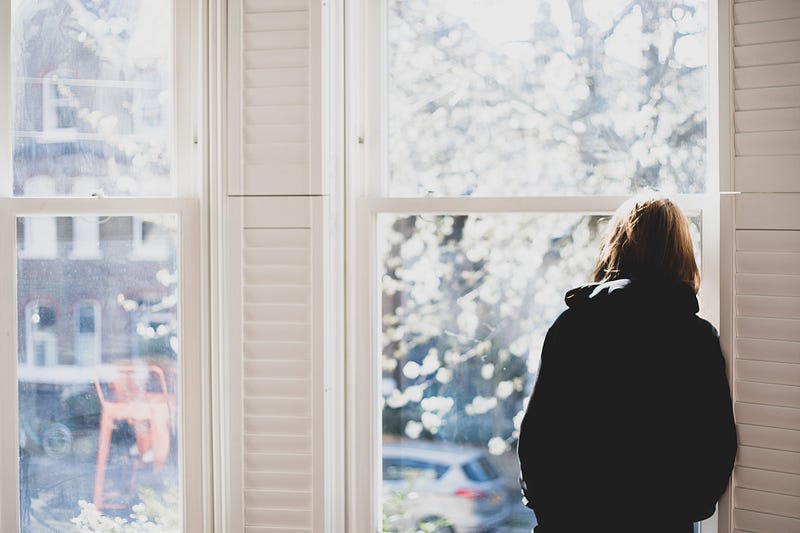
Every week, the drumbeat of news predicting a mental health fallout from Covid-19 becomes louder. Given all that is happening, and may still happen, you’d be hard-pressed to find anyone who disagrees. However, I believe things will be worse than even the most dire predictions.
The reason I’m making this ominous warning is that some of the same effects of Covid-19 were already alive and well long before the pandemic appeared.
For the sake of clarity and decency, I’ll state at the outset that I am not referring to the horrible death toll and the separation of families from their sick loved ones. Nor am I referring to the economic price being paid by millions of Americans for societal shutdown, the daily danger faced by frontline workers, and the stress we all feel in the face of a world turned upside down.
What Covid-19 has done to exacerbate its obvious impact is to redouble the toxic effects of modern life itself — a realm I’ve studied closely as a psychiatrist for the past 15 years. This is such an important phenomenon that it needs some background to fully flesh out.
The more modern someone’s world becomes, the higher their risk of mental illness.
For the past several generations, mental illnesses have become more common or have begun earlier in life. Depression, anxiety, addiction, and suicide are all more prevalent, almost decade by decade. The classic severe mental illnesses (severe by virtue of how sick and disabled they typically make someone) such as schizophrenia and bipolar disorder are not more common, but they appear earlier and have a worse course.
The changes we have seen in the incidence and severity of mental illness know no boundaries. They exist in almost all industrialized countries. The common denominator is modern life itself. The more modern someone’s world becomes, the higher their risk of mental illness. What is it about modern life — where time use, safety, and health have all been enhanced by technology — that is detrimental to psychic well-being? It seems like our stress levels should have gone down, not intensified.
In brief, the combination of social isolation and dependence on technology leaves us alone and trapped in our own minds. The more modern we are, the less connected we are to others and more reliant on devices.
Opioid abuse and overdose, depression, anxiety, the revolving doors of psychiatric hospitals, and suicide, especially in young people, have been the stuff of headlines for years.
Evolution has designed us to be entwined within groups of people and in constant contact with the physical world. Yet, today we find ourselves cut off from people as close as our families and as distant as familiar faces on our daily treks. Technology cuts us off from the physical world in favor of devices all of us use but very few of us really understand.
These effects of modern life on mental health had already begun to spin out of control before Covid-19. Opioid abuse and overdose, depression, anxiety, the revolving doors of psychiatric hospitals, and suicide, especially in young people, have been the stuff of headlines for years. Covid intensifies this modernity effect by keeping us indoors and making us more dependent on technology. There is already a flurry of reports of the exhausting effects of video chat platforms such as Zoom and FaceTime. In fact, people using these technologies for hours a day report feeling more alone, not more connected.
With Covid-19, we see an acceleration of the very process of modernization, which has brought us unsettled and troubled psyches.
So, we find ourselves anxious, depressed, and addicted in a modern life we were not built to thrive in. Much ink has been spilled advising us how to cope with Covid-19 and quarantine. A bigger question is how to cope with the intensification of modern life that Covid-19 has brought upon us.
I believe we need a two-pronged approach.
The first prong is to find ways to counteract the more toxic effects of modern life. Modernity is a very cognitive, internal way to live. The best way to undo the toxic effects of modern life is to make sure that other people are part of your everyday life. We all need intimate encounters, superficial encounters, and everything in between. Make the time to say hello to people, reveal your deepest feelings, or exchange whatever feels right at the time. Just be sure to connect with others every day.
Much ink has been spilled advising us how to cope with Covid-19 and quarantine. A bigger question is how to cope with the intensification of modern life that Covid-19 has brought upon us.
In addition, we all need to use other parts of our brain. Mostly this amounts to finding activities other than your normal daily tasks. For many people, this will mean indulging your senses: looking for beauty and sensory stimulation around you, listening to more music, or experimenting with different foods. What you do doesn’t need to be exotic, just different. Even watching TV shows that depict beautiful sites or places you have never seen can help.
Over the past few years, I have taken up painting. I soon found that just looking at other people’s paintings quickly gave me a sense of calm as my tired brain was suddenly relieved by using different muscles. In the same vein, switching from podcasts to music can provide relief. Beauty in the world around us is an underappreciated essential nutrient.
At first blush, the second prong might sound like a contradiction to all of the above. But in fact, it is an enhancer. As I stated, modern life is a very cognitive, internal affair. We are stuck inside our heads much of the time. Consequently, to grow beyond this, we must now obtain a degree of mastery over our internal lives. I say “now” because this was not as vital for past generations — much like daily exercise was not necessary for our grandparents, who walked more often and carried groceries up five flights of stairs.
Prior generations depended on culture, tradition, and large social groups for mental stability. More and more, this has become individual work.
It is no longer enough to “veg” in front of the TV to relax. We must have more refined ways to calm our minds. Meditation, prayer, or whatever you have practiced must become a pathway to quiet your mind. With a quiet mind, you can cultivate mindfulness — a calm awareness of your inner processes. This may sound like a simple recipe, but learning to quiet your mind and cultivating mindfulness are lifelong tasks.
Embracing this approach does not prevent mental health problems. But it can lessen the effects of modern life on our psyches and make us more prepared to respond when stress does strike. We live in an era unlike any other. Covid-19 has driven this home like a sledgehammer. Our psychological well-being can no longer rely on the culture and traditions of our surrounding worlds. We must become the authors of our own emotional welfare.


