
10 Reasons To Visit the Azores in Summer
Far, far away, in the middle of the ocean, nine islands are waiting
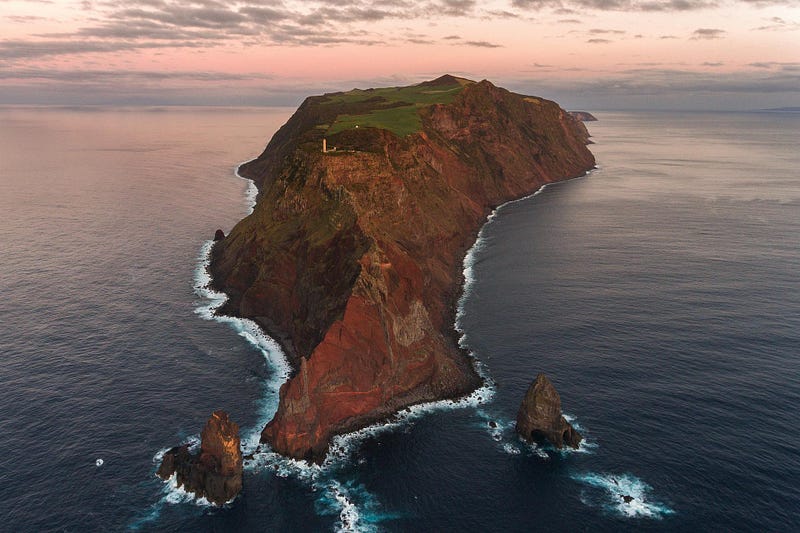
We spent three weeks on São Miguel, the largest of the Azores islands, this July. As a research freak, I’ve done tons of research before and then verified it on location.
Here is what will amaze, surprise, and delight you on this remote archipelago in the middle of the Atlantic.
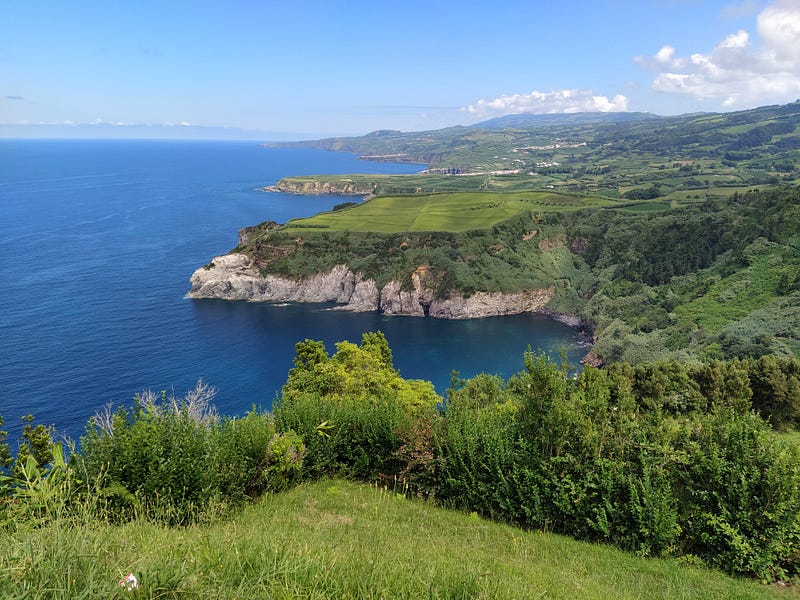
1. Lush, rugged, ocean-infused natural environment.
There are volcanic mountain ranges, crater lakes, rainforests, rivers, streams, waterfalls, and spectacular beaches everywhere. You can hike, climb, surf, swim, or sit back and enjoy.
In addition, many of the natural wonders are accessible by car with minimal walking required or nearby parking. In summer, there is a lot of sunshine and the cloud cover changes constantly which adds to the charm.
2. Not too many tourists
Due to the remote location of the Azores, it is not too crowded. Even at the peak of summer, we have not seen crazy crowds. Overtourism has not reached there yet, and I hope it stays that way.
You must be very intentional about visiting the Azores, it cannot be just a one-day hop in a packed European tour.
3. Water, water, water
Even on the largest of the Azores Islands, the nearest coast is never more than 15 minutes away.
Our last rental was on the rugged north coast of São Miguel and on two consecutive days, we went to two different (amazing!) beaches on the south coast. The drive was 18 minutes the first day and 28 minutes the next day. It takes me as long to drive to the nearest Costco and find a parking spot at home!
You can surf, go to a beach, take a boat tour, swim in a natural ocean pool, visit one of many hot springs, or go whale watching. All these activities will be nearby.
4. Volcanic everything
These islands have a volcanic origin, and everything is connected to the volcanoes.
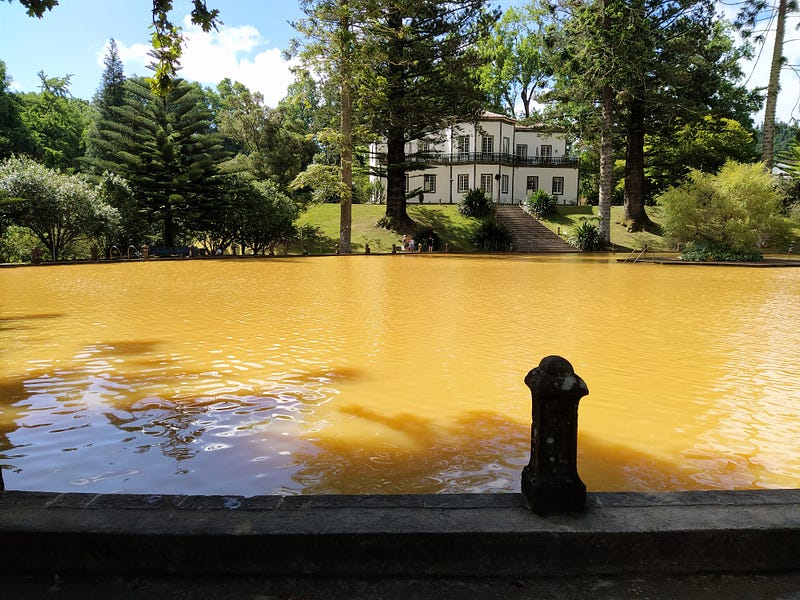
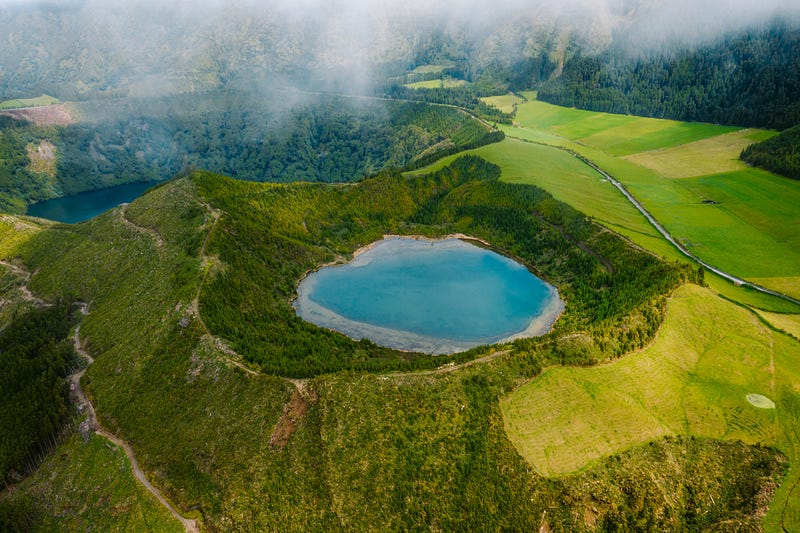
The beautiful caldera lakes were formed after eruptions. The volcanic activity provides energy to geothermal plants and sustains multiple hot springs.
Most beaches have black sand (wear shoes during the day as black sand can be very hot!)
Rugged lunar lava rock landscapes interrupt lush greenery — farmer’s fields are surrounded by bouldering walls made of volcanic rock, often covered with hydrangeas or an assortment of other flowers.
There is even a beach warmed by the underwater fumaroles. You can stand waist-deep in water and feel the hot sand below your feet!
On São Miguel, we visited a lava tunnel and learned how each volcano eruption impacted life on the islands. If you are a geology junkie, you will find educational information everywhere — with excellent English translations.
5. Wine and cheese
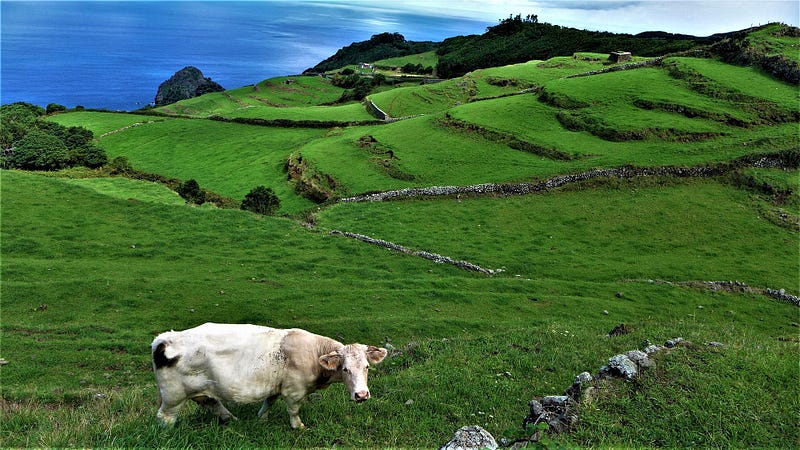
Yum! Cows rule on the Azores. You can often see them at the tops of green hills, roaming freely on spindly agile legs. Milk and dairy are excellent and cheap, and the variety and quality of local cheeses are mind-boggling. The Azores provide half of all cheese consumed in Portugal.
Every island has its specialties.
You can visit local stores like King of Cheese in Ponta Delgada and try them all. It will be hard to choose what to buy.
Portuguese wine is excellent and beyond affordable. And no, it’s not just port. There are many local reds and whites, and my favourite — young green wine, well chilled.
6. History
The Azores are an autonomous region of Portugal, have been first settled in the 15th century and have an interesting history. There are a few small local museums and lots of interpretive signs.
The churches are richly gilded with the gold that came from many colonized territories. You don’t have to admire the colonial pride — instead, consider the real-world history, seeing its reminders everywhere. What you take from the history of the place will depend on your mindset and views.
On the other hand, admire the resilience of the local population that was able to sustain and develop their economy, especially agriculture, in spite of setbacks, remote location, and several volcanic eruptions.
7. Hydrangeas in bloom
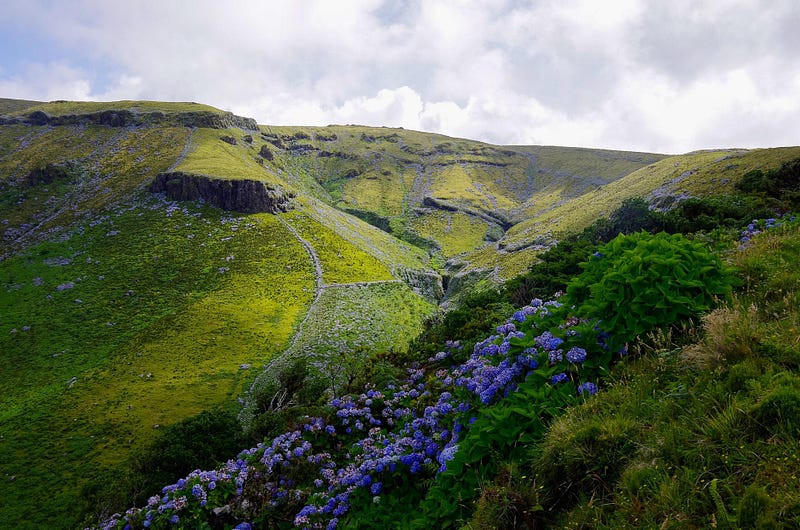
Hydrangeas are everywhere — on the rocky walls, in the gardens, and along every road.
They are huge here and can hold on to the soil in the most precarious places, including almost vertical walls. When they bloom in July — August, it is beyond amazing — you must come and see it.
8. The weather
The summer weather is perfect. Not as hot as in mainland Portugal or the rest of Southern Europe, with ocean breezes and hot enough so that the water is comfortable for swimming. While the overall advice is that the weather changes a lot and you should be prepared for precipitation, summer is the driest season.
We spend three weeks there and didn’t have a single rain.
9. Picturesque roads
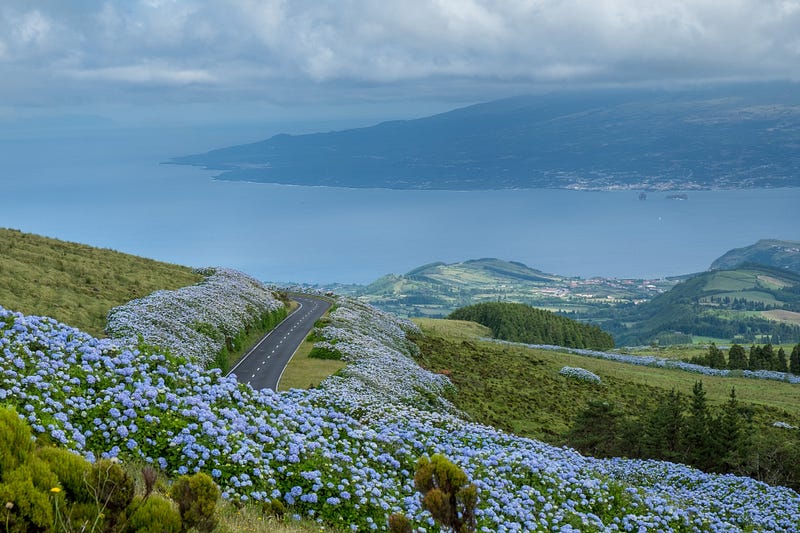
The views are amazing — ocean vistas, mountain ranges, greenery, hydrangeas and cows. There are many viewpoints with pockets where you can stop for a few minutes (any time you see a sign for a “miraduro” — a viewpoint in Portuguese — it’s worth a stop).
We especially liked the road that goes along the northern coast — it stays close to the ocean and there is a new vista at every twist of the road.
One caveat — many roads are narrow and can be nerve-wracking. Rent the smallest car possible and don’t speed.
10. It’s affordable
Compared to many other island destinations, the Azores are quite affordable, including rental properties.
The food is reasonably priced, museums are cheap, and many attractions and all beaches are free.
Since the islands are small and all distances are short, you will not spend a lot on gas. We only had to refill once during our three weeks there, even though we were driving somewhere every day.
One of your bigger expenses will be traveling between the islands if you choose to visit more than one. You can take a ferry to the island closest to you, or fly. Be sure to check about the ferries though — when we were planning our trip they were on strike with no end in sight.
We stayed on one island, the biggest (São Miguel) for three weeks. It was less hectic and allowed us to enjoy slow travel.
Check back with me for the best free things to do in São Miguel, and what else you need to know before booking a flight to the Azores.


