
The GOP is not the party of Lincoln
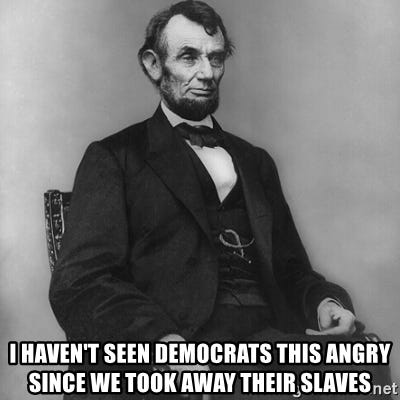
Republicans think they’re the party of racial equality, because Lincoln freed the slaves. I’ll see memes like this one, on Facebook:
Of course, 90% of Black voters chose the Democratic party, in 2016. The few that do vote for Republicans tend to be either rich, highly socially conservative, or mentally ill:
So, when did things switch? When and how did the Democrats go from being the party of slavery to the party pushing for racial equality?
First off, let’s do some research. Ask Google “which party did Lincoln belong to?”. We get this helpful dialog box:
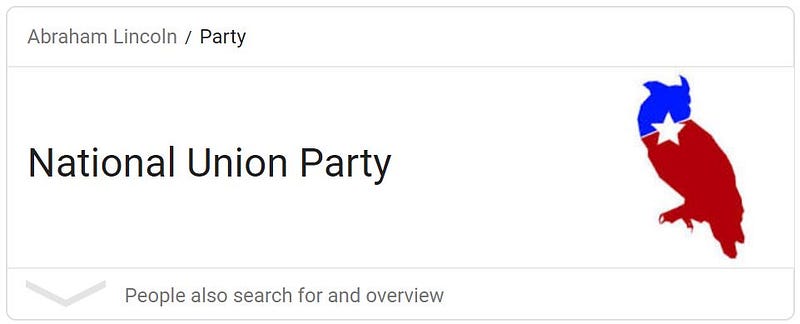
See, there’s an owl, not an elephant. Lincoln wasn’t a Republican. That wraps up this post…
It’s a funny ideological choice on Google’s part. The owl picture links to an twitter account which posts anti-Trump messages. Lincoln ran as a Republican in 1860, but the party temporarily rebranded itself in 1864 as the National Union Party, during that mid-war election. The name wasn’t entirely superficial — Lincoln chose a Democrat as his running mate in 1864 to build a better coalition.
Let’s try to give a better answer than Google, does. 100 years ago, the country was split between Democrats in the south and Republicans in the north. Today the parties are split between Democrats in cities and Republicans in rural areas. The South now votes consistently for Republicans:
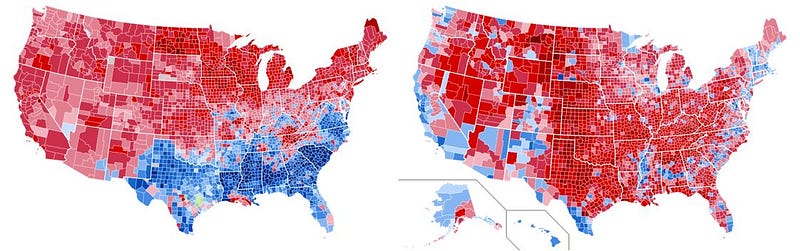
The north-south split was consistent for decades, but started to go through a chaotic transition, starting in 1948. This transition was sparked by racial tensions and desegregation, in the south.
First, let’s point out one feature in modern voting maps. There’s a thin blue band of Democratic voters across the deep south and down the Mississippi river:
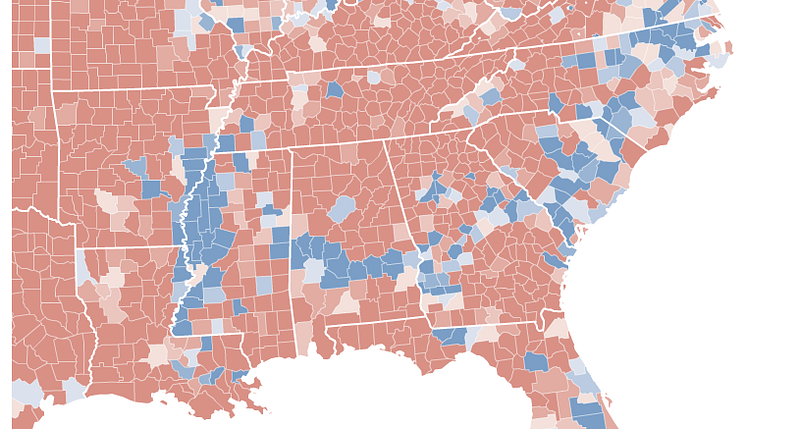
These are Black majority counties that vote Democratic today. Blacks live here because this was historically the richest land for growing cotton, and most slaves lived here in the 1800’s.
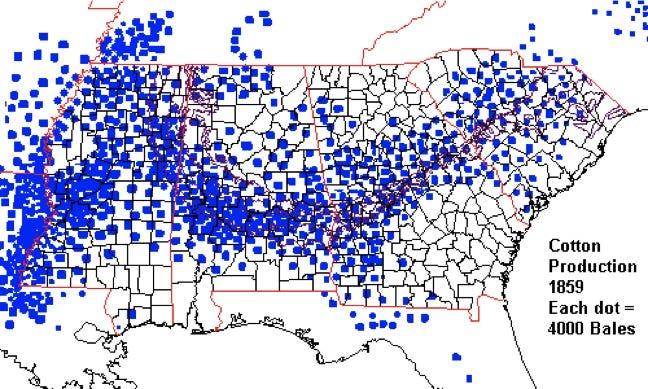
There’s an ancient geological reason why this land was so productive — this was a coastline, 100 million years prior.

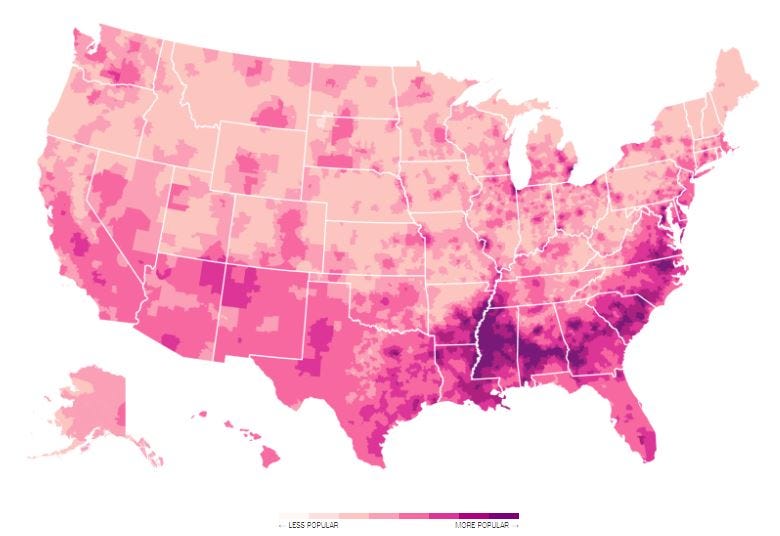
This band of Black Americans shows up in all kinds of cultural maps. Here’s a map of where Americans watch “Empire”:
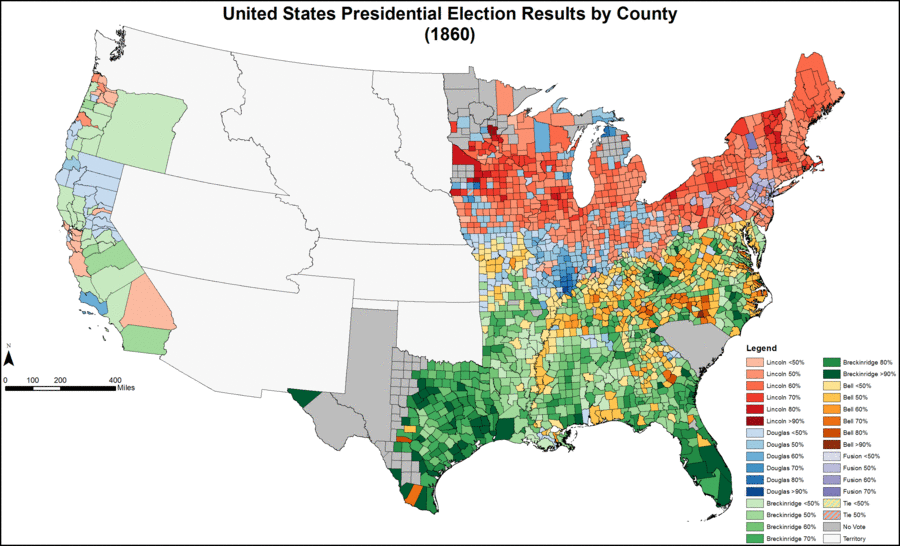
Politics in the South has always been about race. 1860 was a complex contest between 4 parties. The Republican party won a narrow victory, but the confederate South soon left the union over the issue of slavery.
When the nation reunified, after the civil war, slavery was abolished in the south and Blacks were given the right to vote. They voted for Republicans in 1868 and 1872, note how the Black majority belt across the south is now voting red:
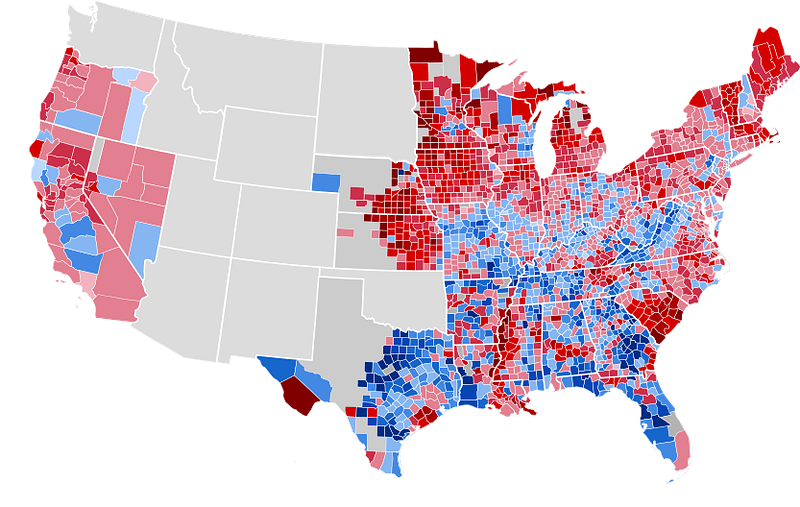
Every election afterwards, though, this pattern gets less visible. The feature is almost gone by 1888 and then disappears entirely for the next 80 years:
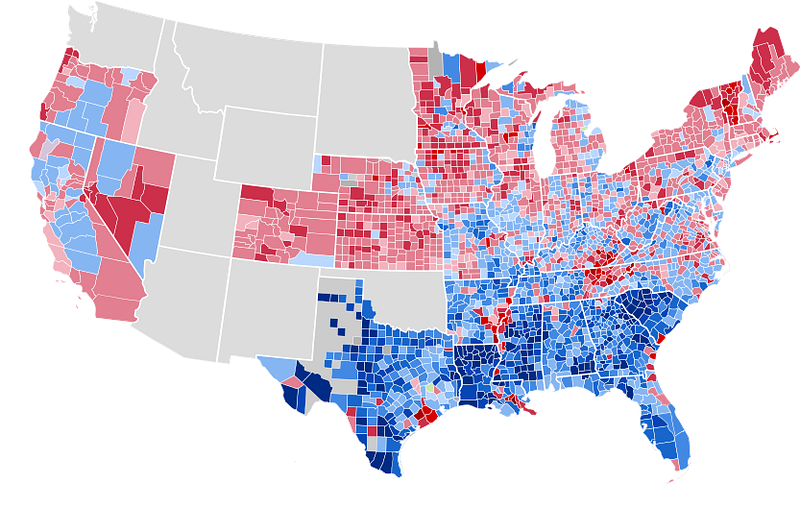
Did Black voters switch over to the Democratic party in 1888?
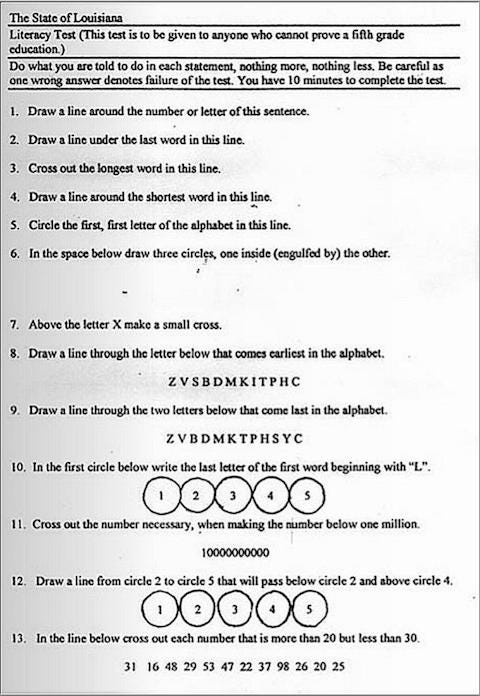
What we’re actually looking at is the disenfranchisement of Black voters. Blacks hadn’t switched parties, but white southerners found numerous ways to prevent them from voting, restricting voter registration or imposing “literacy tests” at the polls.
Would you have been literate enough to vote? Here, you have 10 minutes to answer these questions, one wrong answer is a failing grade, and the test proctor is a racist who’s looking for any excuse to fail you:


We see a consistent north-south split in the country for decades. The country shifted towards Republicans during the prosperous 1920’s and then swung hard back towards Democrats during the great depression.
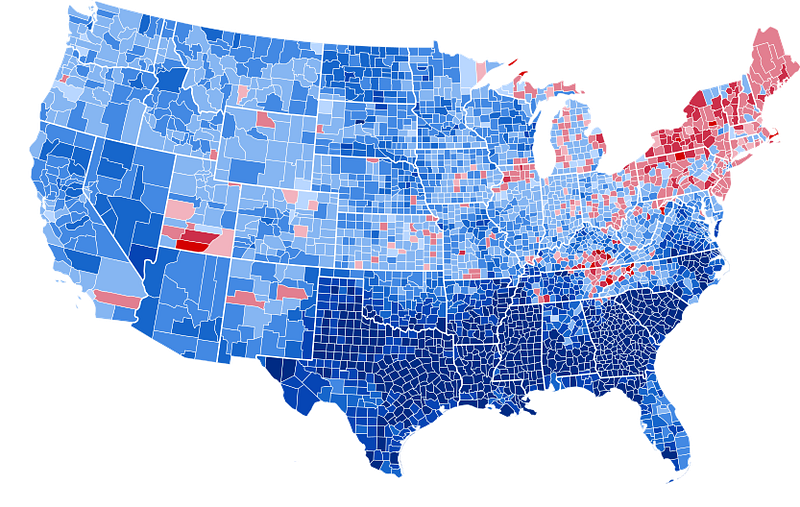
The first big sign of discontent in the south shows up in the 1948 election. Truman integrated Blacks into the armed forces in 1948 and included civil rights in his campaign platform. Strom Thurmond ran a 3rd party campaign opposed to civil rights and won 4 states in the deep south.
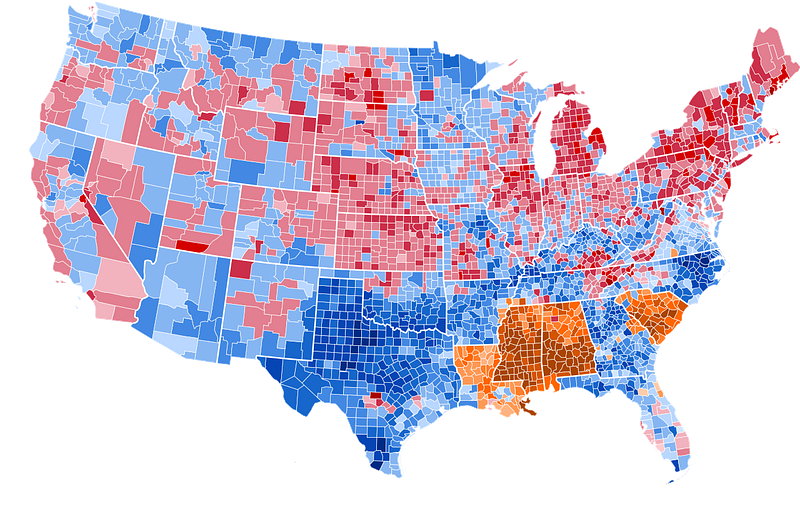
Southern states continued to vote in favor of segregation, whenever possible. Unpledged members of the electoral college in Mississippi and Alabama voted for a pro-segregation Byrd/Thurmond ticket, in 1960.
Southern voters chose Republican Barry Goldwater, in 1964, even as the rest of the nation swung Democratic. Goldwater, from Arizona, was not a southern leader, his economic policies were generally in opposition to recent Democratic platforms, and he once remarked to a news conference, “sometimes I think this country would be better off if we could just saw off the Eastern Seaboard and let it float out to sea”. Despite all this, Goldwater decided that desegregation was a states’ rights issue and claimed that the 1964 civil rights act was unconstitutional. This was enough to flip the deep south in support of his candidacy, winning him a remarkable 87% of all votes in Mississippi.
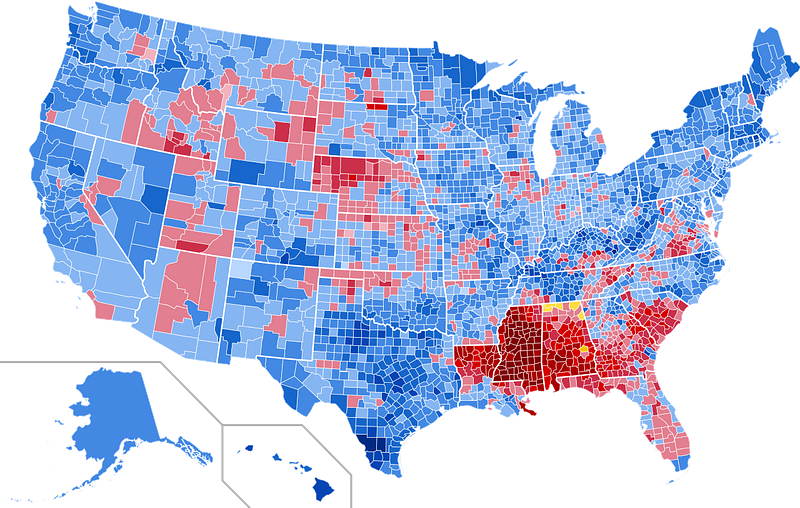
Suppression of Black voters in the south improved with federal intervention. President Johnson passed the Voting Rights Act in 1965. Black voter turnout in Mississippi went up from 6 percent to 60 percent, over the next 4 years.
The Black belt begins to show up again in voting maps, starting in 1968. Black men ostensibly got the right to vote in the 1860’s but it took a hundred years before this right was consistently available to most. White women couldn’t vote until 1920 and Black women were largely denied the right to vote until the mid-1960's.
Johnson, himself, seemed to quickly regret passing the Voting Rights Act. The president’s former press secretary, Bill Moyers, writes:
“When he signed the act he was euphoric, but late that very night I found him in a melancholy mood as he lay in bed reading the bulldog edition of the Washington Post with headlines celebrating the day. I asked him what was troubling him. “I think we just delivered the South to the Republican party for a long time to come,” he said.”
White southerners continued to vote for whichever candidate favored segregation. In 1968, they voted for third party candidate George Wallace, who called for “segregation now, segregation tomorrow and segregation forever”.
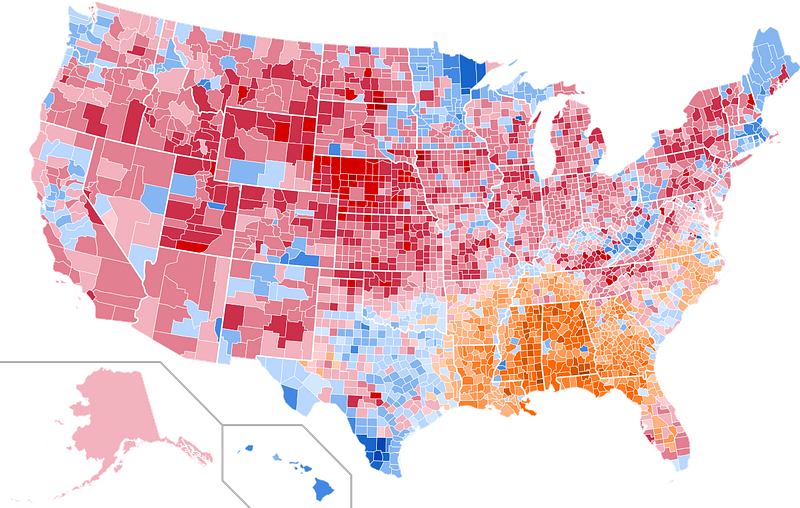
Nixon won the south in 1972, following a “southern strategy” that appealed to racist voters. Republican strategist, Kevin Phillips, seemed to have a unique ability to understand and capitalize on group conflicts:
“Philips had grown up in the Bronx. His observations of life in this polyglot borough had convinced him that all the talk about melting-pot America was buncombe. Most voters, he had found, still voted on the basis of ethnic or cultural enmities that could be graphed, predicted, and exploited. For instance, the old bitterness toward Protestant Yankee Republicans that had for generations made Democrats out of Irish, Italian, and Eastern European immigrants had now shifted, among their children and grandchildren, to resentment of the new immigrants — Negroes and Latinos — and against the national Democratic party, whose Great Society programs increasingly seemed to reflect favoritism for the new minorities over the old.”
Philips declared a strategy of supporting desegregation to win a backlash among white voters:
“From now on, the Republicans are never going to get more than 10 to 20 percent of the Negro vote and they don’t need any more than that… but Republicans would be shortsighted if they weakened enforcement of the Voting Rights Act. The more Negroes who register as Democrats in the South, the sooner the Negrophobe whites will quit the Democrats and become Republicans. That’s where the vote are. Without that prodding from the blacks, the whites will backslide into their old comfortable arrangement with the local Democrats.”
The last Democrat to win the southern vote was former Georgia Governor Jimmy Carter, in 1976. Carter did a fair job of supporting civil rights, in office, but won some campaigns against his primary election opponents with subtle appeals to racism. He praised George Wallace and criticized his Democratic opponents for their support of Martin Luther King, Jr.
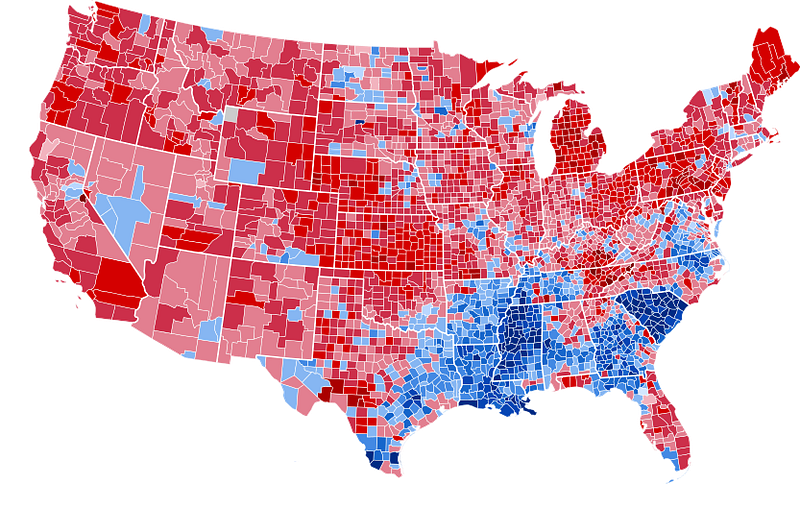
The south started consistently voting Republican in 1984, with Ronald Reagan’s second term, and southern voters haven’t turned back since. The 1984 voting map looks very similar to 2016 except that today, blue areas of the electoral map are smaller than ever, and deep red rural areas have expanded a bit.
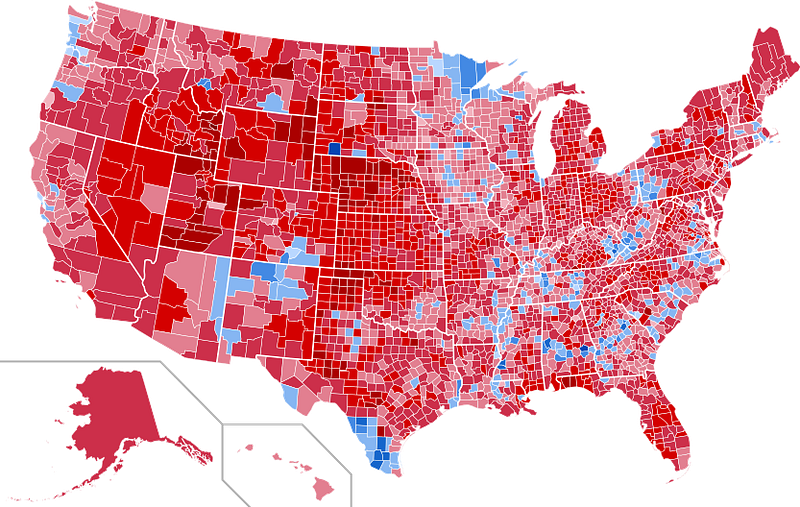
If you have a few minutes, you can watch the full shift happen, year by year:
The big story from the 1980’s to the present is not a regional shift between parties, but a sorting of people into like-minded areas that share the same politics. Democratic voters have increasingly moved to liberal cities to be around like-minded neighbors while rural areas have become increasingly polarized towards the right.
In a few past elections (1964, 1972, and 1984) one party won almost the entire country. This used to be possible because many counties were evenly split by politics, but it’s no longer likely to happen, because voters have sorted themselves into red and blue strongholds. The book, The Big Sort, looks at counties where the vote was close, and others where one candidate won by a landslide, getting 20% more votes than the other party, and finds:
In 1976, less than a quarter of Americans lived in places where the presidential election was a landslide. By 2004, nearly half of all voters lived in landslide counties.
So, the two big trends of the last century have been a big shift, with Republicans taking over the south, and a big sort, with voters moving into more polarized districts.
Demographic changes are such that Democrats now have the advantage of a few million extra votes in the popular vote, but Republicans can still win the electoral college as they lead in more of the smaller states.
Only a handful of swing states remain competitive. Electoral math suggests that the Republicans can win more easily by winning more white voters in these swing states, rather than appealing to all racial groups, nationwide. In 2000, conservative blogger Steve Sailer, a man just as cynically focused on ethnic group conflict as Kevin Phillips was, wrote that the Republicans’ best strategy would be to focus on getting a larger share of white voters, to win swing states. The key states he named — Michigan, Wisconsin, and Pennsylvania — were exactly the three that Trump flipped to win in 2016, with a campaign that played to white racial resentments.
There’s one big question remaining in my mind, through all this. What about all the other issues, aside from race? If you asked a southern voter what they thought about taxes or big government in 1960 and again in 1964, why did they shift on all these questions?
Note that from 1860 to 1936, both parties also gradually traded places on the role of big government. In the late 1800’s, the Republicans favored big government, federal aid for the railroads, a national currency and protective tariffs. By 1936, Democrats favored income taxes, welfare and the new deal while the Republicans started to oppose big government. The only constant here was that Republicans were always the party of big business. In the 1800’s, business needed federal help, in the form of tariffs and subsidies, while in the 1900’s, businesses wanted federal help in the form of lower taxes.
Through all of these changes in economic policy, though, the south remained Democratic and the north remained Republican. Was there a reason southern voters were opposed to big government in the 1880’s and for big government in the 1930’s and opposed to it again in the 1980's? Are views on any of these issues fixed, or do people just adapt their views for convenience, when conflicts between racial and religious groups are the real argument?
As Kevin Phillips put it,
“When the average voter steps into the booth he registers the prejudice or the allegiance bred by a mix of geography, history, and ethnic reaction which stems from a past he knows only murkily.”


