If We Colonize Space, We’ll Need Resources. Here’s How We Can Get Them
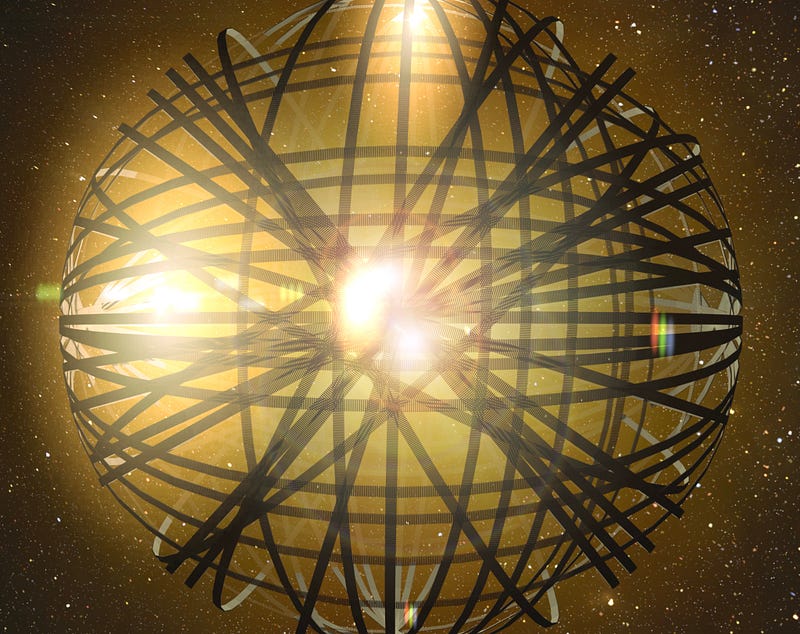
Agriculture was the most transformative invention in human history. It allowed our ancestors to trade hunting and gathering for a more stable lifestyle. It ensured a better quality of life for larger numbers of the population.
Although the agricultural age also brought undesirable foes like disease and war, it left us free to invent and create — paving the way for our current technologically advanced civilization.
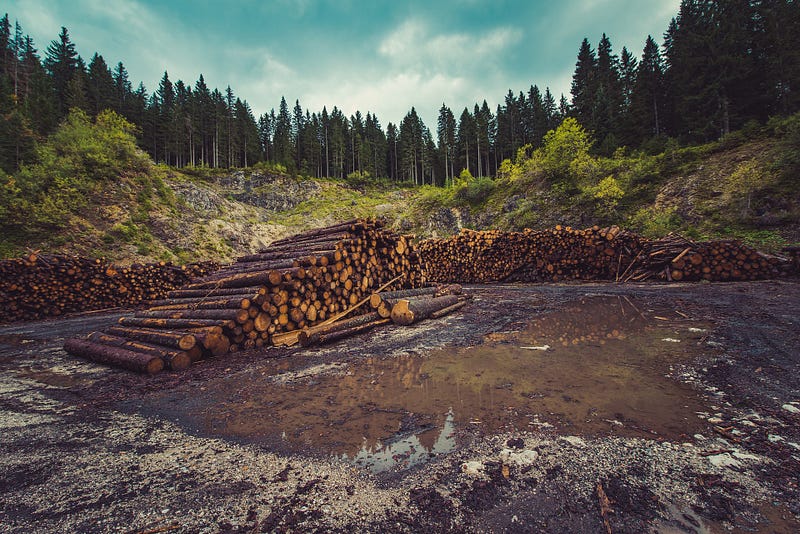
A vast portion of the world’s total wealth derives from Earth’s limited resources, but humanity’s extraction of those resources greatly contributes to the destruction of our habitat. With a global population already close to 7.7 billion people, we can’t give everyone a middle-class way of life without burning our environment to hell in the process (building houses, cars, iPhones, etc.)
Many scientists believe we are at the beginning of the sixth mass extinction. Species disappearing at a record pace due to the destruction of their ecosystems is directly related to our exploitation of planetary resources.
What other resource options are available?
The total mass of planet Earth is roughly 5,842 quintillion tons. So gigantic it generates a gravitational well that pulls everything down with a force of 1g, keeping the moon and our commercial satellites in orbit. Now imagine thousands of times that mass solely in metals and other valuable elements such as carbon, silicon, oxygen, and many others. The great news is, we don’t have to look far to find a resource like that.
Being a high metallicity star the sun has an incredible concentration of elements besides hydrogen and helium. It not only produces off-the-scale amounts of free energy, but the sun is also the answer to all our future resource needs.
A total of sixty-seven elements present on our planet have been detected in the sun and, even the rarest ones, exist in quantities that dwarf what we have on Earth. Take gold, for example. Our star contains close to 10.5 billion times the world’s gold reserves.
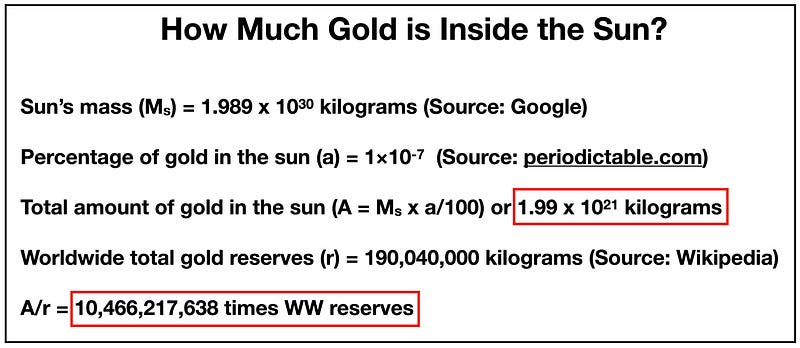
The sun also contains much larger quantities of other precious metals and rare-earth metals indispensable for building electronics. And lesser value elements, such as iron and aluminum, exist in concentrations orders-of-magnitude higher. We also know that these elements are not sunk down to the core, but swirling around the star, carried by its convective process, like a gargantuan conveyor belt.
Sounds great, but how do we extract them?
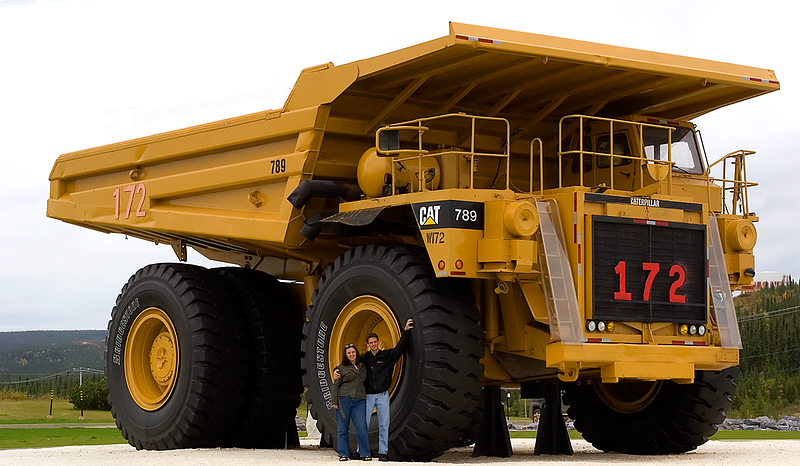
The largest gold mining operations on Earth today must refine gigantic amounts of soil to extract microscopic gold particles, invisible to the naked eye. It takes one metric ton of material to produce just half an ounce of gold. The arduous refining process is carbon- and energy-intensive, requiring a truckload the size of a house to produce a single gold-bar.
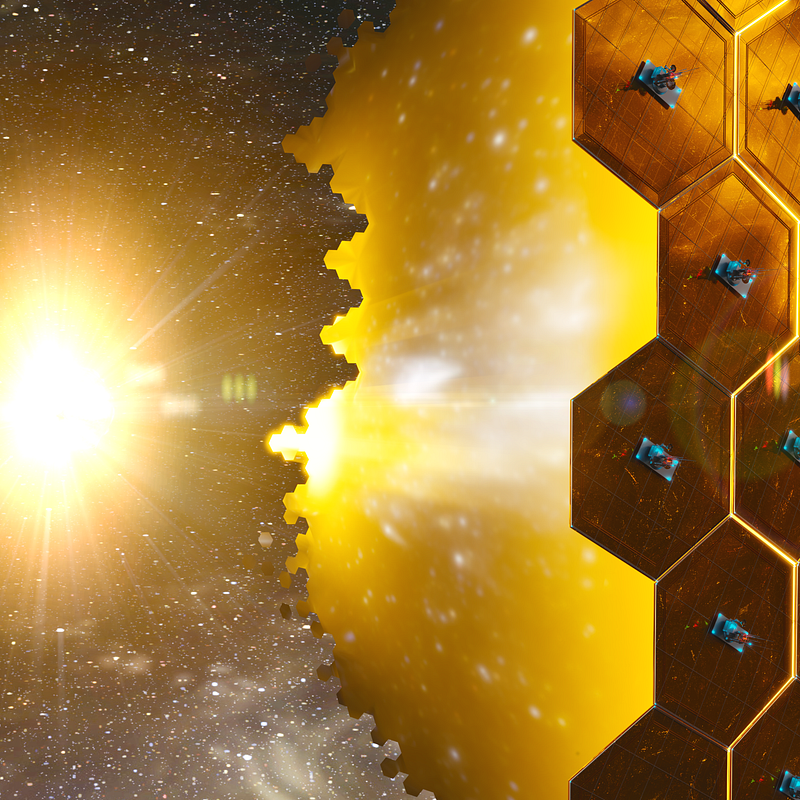
Mining the sun will be vastly more complex and thousands of times as energy-intensive, but the payoff will be well worth it. Valuable elements are loose individual particles floating around the star. They must be collected, sorted, and assembled — atom by atom — before they can be put to any practical applications.
The good news is, scientists have already conceived multiple star lifting concepts, and we don’t need to invent new physics to develop them. Furthermore, the sun’s virtually unlimited energy — our star releases 500,000 times the annual energy needs of our global civilization in one second — means that even an inefficient process will yield an incredible amount of resources.
“Just like agriculture, 15,000 years earlier, star lifting revolutionized human civilization forever. Living in a true post-scarcity society of virtually unlimited resources, triggered a baby boom across the space population. Many were having eight children or more for they had no economic constraints.” — Excerpt from my book K3+
Nevertheless, star lifting is a colossal undertaking that will require a massive infrastructure around the sun, taking centuries to assemble. But the process will not only yield a virtually unlimited influx of resources to power a gargantuan human civilization, it will also decrease the mass of our star.
It’s the sun’s fate to become a red giant toward the end of its life, annihilating the inner solar system and the Earth. Within a billion years a luminosity increase of 10 percent will have dire consequences for our planet’s biosphere. Extracting heavier elements can extend the sun’s life for an untold amount of time by slowing its path toward a red giant.
Mercury will also allow for the development of a star lifting infrastructure. After centuries of continued growth, star lifting will produce resources on a scale to support quintillions of souls inside billions of rotating habitats in space.
How do we start something so big?
Our current space-bound infrastructure is negligible compared to what a spacefaring civilization will need. Construction, manufacturing, electronics, and other industries, must be created in space.
Just as starting a campfire, we begin with small bits of wood, allowing the fire to burn large enough to consume slightly bigger pieces until it can swallow entire logs.
The small bits of wood to start the campfire will come from mining asteroids, the moon, and specialized components delivered from the ground — requiring tens of thousands of rocket launches.
Although there is a lack of legal clarity over the ownership of space resources, some near-Earth asteroids are worth tens of trillions of dollars, doubling in purpose as a cache of raw materials for construction and a source of capital to finance the first steps of our space infrastructure.
Extracting resources from asteroids will pave the way for developing a mining operation to be deployed on the planet Mercury, which is extremely rich in resources and has very low gravity, facilitating the extraction and delivery to factories and construction facilities in space.
Mining planet Mercury will yield raw materials on a scale orders of magnitude higher than what’s found on asteroids, enabling the construction of island-sized rotating habitats, each capable of comfortably housing tens of millions.
These cylindrical megastructures perfectly replicate Earth’s gravity and atmospheric conditions where people can feel right at home, without earthquakes, volcanoes, or storms. Many existing closed-loop technologies (and a few that we’ll need to develop) will make each of these colonies entirely self-reliant, zero-waste ecosystems.
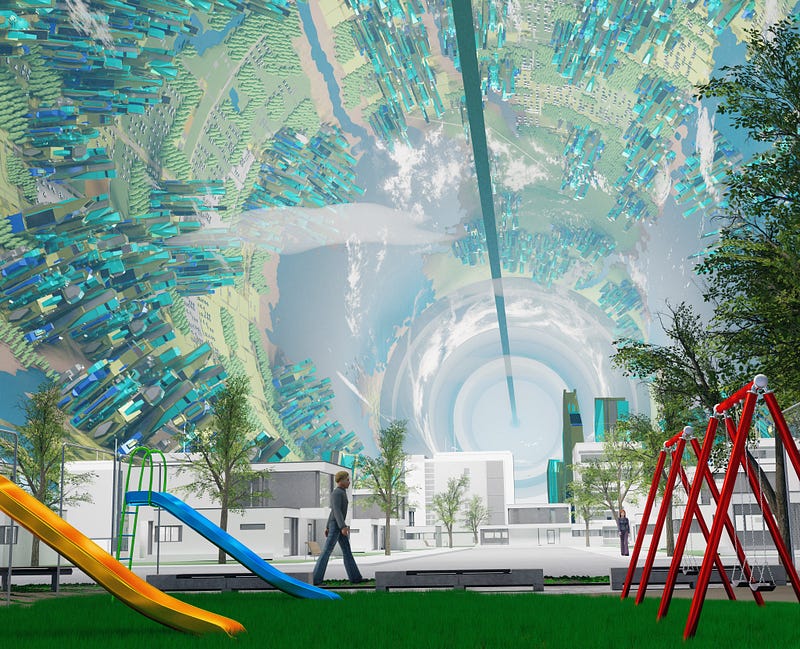
Mercury will also allow for the development of a star lifting infrastructure. After centuries of continued growth, star lifting will produce resources on a scale to support quintillions of souls inside billions of rotating habitats in space.
An economy is an exchange system designed to manage and distribute limited resources across a population. But if a civilization has free access to more energy and construction materials than it can use, those resources will be virtually unlimited. Would such a society still need an economy to satisfy the needs of its population, or will economics become an extinct science? — Excerpt from my book K3+
The economics of the future
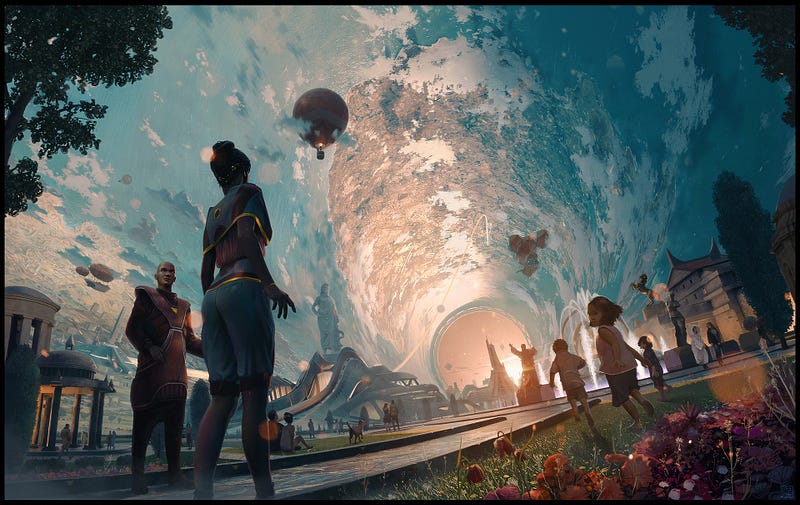
Harvesting resources from the sun will enable us to create a post-scarcity civilization where limited access to resources is no longer a challenge. In this utopia, goods, and services are produced with minimal or no human intervention and become available at extremely low prices, even free. Regardless of the population size, all individual needs — including housing, food, healthcare, even entertainment, and access to information — would be guaranteed. Every human’s wants and desires would be met, enabling people to live happier lives.
Humanity today is muddling its way through a pandemic and battling global climate change, all while we are blindly destroying our planet and guzzling its resources. Earth has been generous to our species, but it won’t last forever. We’ve virtually guaranteed that fact by the way we’ve treated our home planet. But there is a better future that awaits us.
Our ancestors worshiped the sun, but our star is vastly more bountiful than they could have imagined. Our current technology gives us the capability to take the first steps towards a post-scarcity spacefaring utopia of virtually unlimited resources. We can build a new civilization where people will live free from fear, disease, war, inequality, and every other malady that plagues us today. All we need is the wisdom and the vision to look beyond our planet toward the stars.
Want to know more about the economics of the future?
My dystopian novel K3+ is the story of Earth’s demise and humanity’s rise to become an intergalactic empire. A roadmap for putting our planetary bias aside, colonize space, and save humanity. The science-grounded story interweaves cutting-edge technologies and spellbinding fiction.


