9 surefire tactics to power a design and innovation revolution
The time has come to level up your practices.

If it hasn’t become totally obvious from my previous articles, a universe of organizations are leveraging design to drive business forward.
But why is it that some companies’ efforts are more influential than others? What makes them different? And what are the phases of change needed to deliver the highest results?
Understanding what differentiates the behaviors of these types of organizations is key to learning how companies can evolve and build better practices.
And most companies are only just scratching the surface of what’s possible.
Here are nine changes a company can make to power design and innovation across the company, and futureproof the business from competition.
#1) Hire Business Designers
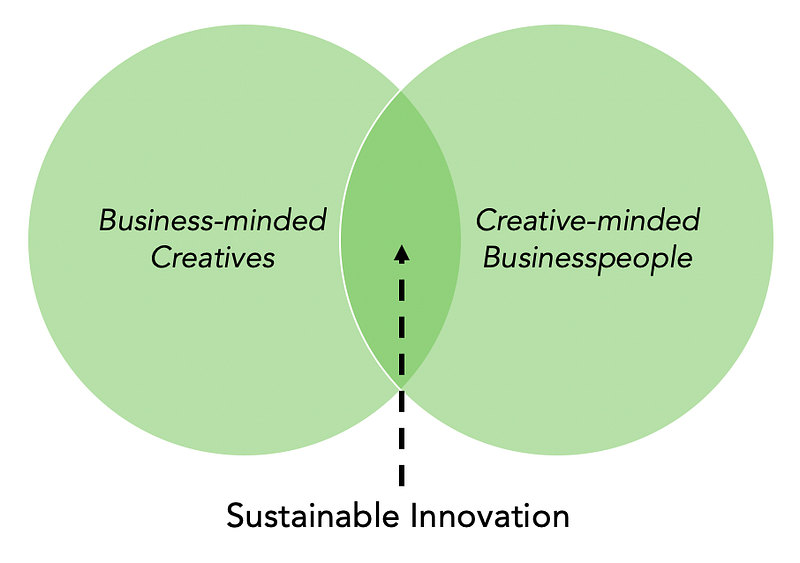
Traditional design organizations are augmenting their existing design-first capabilities with “business designers” asked to provide the tools, methods, and analytical horsepower to rapidly develop and test new business models and provide comprehensive feasibility assessment in support of the team’s design aims and ideas.
#2) Hire Multi-Faceted Designers
Organizations that aspire to be design-driven, but are not yet there, must seek designers that bring more than just their technical skills, those who possess patience and an innate willingness (and enthusiasm) to help lead and own the journey towards becoming design-first. This can be communicated explicitly through job descriptions, and implicitly through a specific mix of the right behavioral interview questions.
#3) Reinforce, Reinforce,….
Design-driven organizations regularly reinforce their belief in the approach to engender widespread buy-in. At Intuit, for example, the company hosts quarterly design conferences, and senior leaders routinely host visionaries from other firms who’ve crafted beautifully designed products to share insights with their employees.
#4) Flex your User Research Muscles!
It is nearly impossible to create a great user experience without understanding target users or their needs. And yet, this is what a great many organization do! User research is one of the most essential components of user experience design, and yet it remains one of the most underutilized skill sets within most organizations. Invest in a dedicated user research team, standardize research capture and impactful outputs, and reap the rewards!
#5) Pay Your Designers
Design-driven organizations pay their designers at a level on par with their engineering teams, while “design agnostic” or even “design interested” firms often pay designers significantly (i.e., upwards of 25–40%) less. If you truly believe in the business value of design, this is a black-and-white way to demonstrate it, and attract more great talent through word of mouth in the process.
#6) Data-Driven DOES NOT EQUAL Design-Driven
Organizations often confuse a data-driven culture with a design-driven culture. While data is very important, it is possible to over-index on quantitative data rather than carefully balancing both quantitative and qualitative data.
In a design-driven culture, qualitative data provides the context and story behind quantitative data. It brings meaning to the numbers and allows alignment around a common goal.
#7) Change How You Communicate the Concept of Design Internally to Change How the Company Perceives its Value
Despite what some may think, design is so much more than pixel pushing or beautifying a presentation or slide deck.
Design is strategy, and strategy is design:
“I strongly believe that design and innovation are exactly the same thing. Design is more than the aesthetics and artifacts associated with products; it’s a strategic function that focuses on what people want and need and dream of, then crafts experiences across the full brand ecosystem that are meaningful and relevant for customers.” — Chief Design Officer Mauro Porcini, Pepsi
Communicating this regularly (reinforce, reinforce, reinforce) — saying no to non-strategic opportunities and saying yes to inserting your design-minded perspective into strategic conversations — to the decision makers across your organization will pay long-term dividends.
#8) The Biggest Teams Don’t Always Shine the Brightest
Team size isn’t always an indication of business impact or a company’s design maturity. Many teams low on the maturity scale are large, and many teams displaying advanced benefits to their bottom line are small. It’s possible to dedicate a lot of resources to design and still see small returns if the design team, its processes, and its supporting structures aren’t properly calibrated.
#9) Establish Dedicated Collaboration Space
Cross-functional teams work in the same room simultaneously, using each wall to track a specific focus.
Where linear thinking is about sequences, ‘mind map’-style documentation is about connections; seeing the whole (in all its complexity) and visually creating transparency and alignment for the team. Furthermore, forcing your brain to think in doodles or graphics and arranging your ideas spatially inspires your brain to work differently, leading to ideas it otherwise wouldn’t have found.
What have you found to be successful?