
9 Steps for an Effective Evening Power-Down Routine
How to set yourself up for a good sleep.
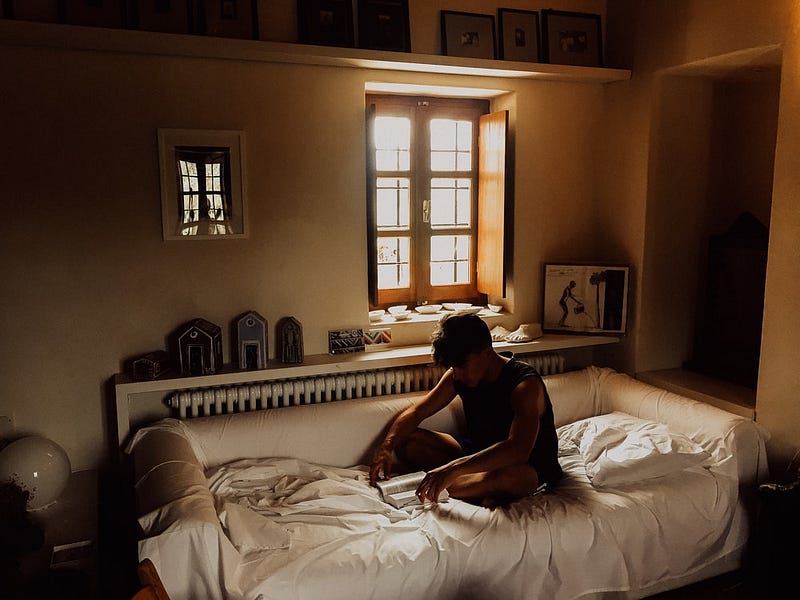
Last night, I couldn’t sleep. I was tossing and turning from about 10 pm until past midnight, and then considered getting up at about 4 am. I knew what the issue was as soon as my partner turned out the light: I hadn’t had even a sliver of an evening routine.
I was in the gym until 8:30 pm, I had a snack at about 9 pm, and had a cup of tea at 9:30 pm. I should have known better. And obviously, things come up and sometimes we need to deviate from our routines. But it will do us good to still try to control as much as we can. I could have had a snack before the workout. I could have shifted my workout until tomorrow, or could have done it in the morning. I could have taken 10 minutes to journal or meditate before going straight to bed.
I’m a sensitive person. My partner makes fun of me all the time because if everything isn’t just right, I can’t sleep. I’ve always been a light sleeper. And of course, there is merit to her teasing. However, there is also scientific research and physiologic reasons why we should have an evening power-down routine. This article aims to outline those; to help others like me to get the quality sleep they deserve.
Avoid food and drinks 3 hours before bed
This one is really important for my sleep. Other people probably aren’t so sensitive, but if I eat after 8 pm, my body knows. My heart rate stays high all night, my heart rate variability (HRV) is awful, my Oura ring gives me sassy comments in the morning about avoiding food before bed. It knows.
The issue with eating close to bedtime is that digesting food takes time and energy. Your body will drop all its pre-bed activities to digest this late-night snack, and therefore your body won’t be fully prepared for sleep when the time comes. The body will be digesting late into the night, taking resources away from other vital nighttime tasks such as muscle recovery and memory consolidation.
Dr. Satchin Panda, the author of The Circadian Code, has a wealth of knowledge on this topic. I will let him explain more:
“We should have our last meal at least 2 to 4 hours before going to bed to ensure that the body is able to cool down…. The same food that would have taken a couple of hours to digest at 6:00pm takes longer to digest at 8:00 because you are outside of that optimal 10-hour window…. Eating late at night is by far the worst choice you can make, and it will totally defeat any benefits you achieved throughout the day. First, snacking late at night disrupts the digestive clock: you reignite your metabolism in your gut, liver, and throughout your body. In this sense, you are literally waking the body when it is meant to be slowing down, cooling down, and getting ready for sleep.”
No alcohol
Alcohol has a similar effect to eating late at night, except that it’s worse. Although you may think that a drink will help you get to sleep, and indeed it might, the quality of your sleep is drastically reduced.
Alcohol consumption reduces the amount of REM sleep you get, and can also prevent you from entering deep sleep in the first few hours of the night — a time when most of our deep sleep occurs.
Furthermore, alcohol disrupts our circadian rhythms, arguably the most important consideration in regard to sleep quality.
Alcohol also disrupts melatonin production by up to 20% — the hormone that makes us sleepy and helps us to sleep well.
If you are having a drink, have your final sip at least 90 minutes before getting into bed to ensure that it doesn’t interfere with your sleep quality.
Finish exercise at least 4 hours before sleeping
Another factor my body is particularly sensitive to — late-night exercise. Usually, I don’t go to the gym at night, but I often do have hockey practices and games until 10 pm. This is incredibly late, according to our bodies. Our bodies like to have many hours to cool down and relax before hopping into bed.
Generally, exercise will stimulate the sympathetic (fight or flight) nervous system, which is definitely something you don’t want to be doing before bed. This is especially true with intense exercise such as weight lifting and high intensity interval training. These types of exercise stress your body — which is exactly what you want and this is how you improve your fitness and strength — but you don’t want this stress right before you go to sleep.
Furthermore, your body temperature increases, and excitatory hormones like cortisol and adrenaline are released during exercise, both of which are going to negatively impact sleep quality and sleep duration.
In fact, this physiological response caused by intense exercise too close to bed can cause exercise-induced insomnia — which is likely what I faced last night after my gym session.
For optimal sleep, try to finish exercising 4 hours before bedtime to give your body enough time to cool down and relax.
No screens
An obvious one that we’ve all heard, but worth reiterating nonetheless. Screens emit blue light which is detrimental to sleep quality. Even using night mode on your devices only sees a tiny improvement on the overall effect screens can have.
You’re better off avoiding screens altogether. I’ve noticed on my digital detox days that I have the most incredible nights of sleep. I haven’t used a screen all day, I spent the evening winding down without any bright, stimulating lights, and my sleep quality is like no other time.
When the blue light sensors in our eyes detect blue light, it sends a message to our brain to stop producing melatonin and to start producing cortisol, our stress hormone. This is a huge issue when we are trying to get our bodies ready for bed. Melatonin is essentially the driver of sleep, and good quality sleep relies on the adequate production of melatonin.
The best guideline is to avoid all screens after sunset. Using screens before the sun goes down is fine, as we’ll be getting blue light from the sun anyway. But once the sun is set, ensure that you at least have your night mode on and wear some blue light blocking glasses as well. But your best bet is to avoid screens altogether. Find a soft, red/orange lamp (more on that below) and read a book, play a game with your family, meditate, pat the dog, whatever you want to do that will help you wind down for sleep without the use of a screen.
No stimulation — non-fiction, news, stressful tasks
This one is still a challenge for me, but I’m starting to see the benefits of avoiding any stimulation before bed. I love to read, and I really only read non-fiction books. So, I would read before bed, avoiding screens and food and exercise, thinking I was preparing well for sleep. But my sleep quality was still terrible.
We actually need to avoid non-fiction books before bed, unless they are very light and calm. While we think we are relaxing, our brains are busy processing the information which keeps them active and switched on, which is the opposite of what we want. Find yourself a gentle fiction book to read before bed.
This also applies to watching the news — something you should definitely avoid any time near bedtime. The news is stressful, aggravating, and very stimulating.
You’ll also want to avoid any stressful tasks. Your evening power-down routine is not the time to pay bills or fill out forms. Save them for tomorrow.
Utilize scents
This one is more powerful than you might realize. If you can create an anchor from the smell, you will reap even more benefits. Aaron Alexander, the author of The Align Method, describes anchors as, “The association of an external stimulus with an internal response. With time and repetition, it can become a powerful tool to be accessed at will.”
An anchor will cue your physiology to get ready for sleep. I use lavender oil, and as soon as I smell the lavender, I feel safe and relaxed. My body and mind become calm. It’s become a comfort for me, because it is associated with being tucked up in my comfy bed, feeling relaxed and prepared for the next day.
There are many ways to introduce lavender into your evening routine. I use a bottle of lavender essential oil, and I drop 2–3 drops onto my pillow right before I get into bed. You can also mix the oil with water and spray your pillow. Or you can dilute it and put it on your skin, especially under your nose.
Lavender has been shown to significantly increase sleep quality, can help to treat insomnia, help to treat depression, and to increase the duration of slow-wave sleep. It can also reduce feelings of anxiety, act as a sedative, and reduce inflammation, all of which are going to help you sleep better.
Find a scent that works for you and associate it with this relaxing, evening power-down routine so that whenever you smell it, your body will know that it is time for sleep.
Have a hot shower or bath
This is another one I have found to be particularly helpful, and the mechanism behind it is quite neat. For quality sleep, we want our core temperature to drop a little bit. Having a hot shower or bath leads to your blood moving toward your extremities, which results in a lowered core temperature, ideal for sleep.
This helpful article explains this process:
“Soaking in a warm bath will raise your body temperature, and exiting will more rapidly cool it down, thus instigating the production of melatonin, and better preparing you for sleep.”
If possible, try to have a warm bath or shower before bed. If you normally shower at a different time of day, just have a quick warm rinse. You don’t need to be in the shower for a long period of time.
Use red light
We know to avoid screens before bed, but what is less known is that a lot of light bulbs emit blue light as well. During your power-down routine, it’s important to avoid any bright lights and where possible, to use warm colored light bulbs. I have a Himalayan salt lamp that emits a dim orange glow, which is perfect to have on after the sun sets. Think about what our ancestors would have experienced— the soft warm glow of the fire they were sitting around. Emulating this as much as possible will be highly beneficial for your sleep.
“The blue light sensors pick up the bright light to suppress sleep and promote wakefulness. However, other colours in the light spectrum, specifically orange and red, are less effective at suppressing sleep. Pay attention to the type of light that you are exposed to in the evening. We cannot go back to the dark ages or turn off all the lights after sunset, but managing our exposure to light can have a huge impact on improving sleep and maintaining health.” — Dr. Panda
Supplement
There are numerous supplements you can take to support sleep quality.
Magnesium
One of the better known supplements for sleep is magnesium, known for its effects on stress and tension. Being sleep deprived and chronically stressed can actually decrease magnesium levels in the body, making it even more important to supplement with it. Supplementing with magnesium can increase deep sleep and decrease cortisol levels (the stress hormone). It will help you wind down and lower anxiety levels, making it a lot easier to fall asleep. The perfect addition to your evening power-down routine.
Tryptophan
Tryptophan is an amino acid that is a precursor to melatonin, so it is important to have in your diet if you want to sleep well. Eat foods high in tryptophan, such as turkey and chicken, eggs, nuts and seeds, and seafood.
L-Theanine
Another amino acid, L-Theanine promotes feelings of calm and therefore assists you in falling asleep. It’s also a good remedy for anxiety. L-Theanine increases alpha brain waves, the kind that occur during meditation. L-theanine supplements are generally easy to find at your local supplement store.
Adaptogens
An adaptogen is a natural substance that helps your body adapt to stress and return to, or maintain, baseline physiological levels.
This is one that I have found has really improved my sleep quality. I use Four Sigmatic’s adaptogen blend before bed, mixed with raw cacao and some MCT oil powder. I have found that it has greatly increased the amount of deep sleep I get and my overall sleep score, compared to when I haven’t taken it before bed. While this blend has myriad adaptogens in it, one of particular note is ashwagandha. This herb has been shown to decrease anxiety and stress, as well as helping people fall asleep.
Functional mushrooms
Functional mushrooms are great. While technically considered an adaptogen, I think they deserve their own category. Functional mushrooms have so many benefits, from immunity to increased physical and cognitive performance. Something else they are good at is helping with sleep. Reishi, a type of functional mushroom, is especially helpful with sleep. It has been shown to increase total sleep time and sleep quality. Again, I use the brand Four Sigmatic.
Bonuses
For more ideas for a power-down routine, you can read the following articles:
Sleep underpins everything; if you’re not getting enough quality sleep, you’re going to start to suffer across all areas of your life. You need sleep to clean metabolic waste from your brain, to recover physically and mentally and to regenerate tissues, among myriad other functions. A lack of sleep leads to reduced immune functioning, increased systemic inflammation, increased blood pressure, and weight gain, among many other detrimental consequences.
Vital to good quality sleep is an effective evening power-down routine. By following these guidelines, you’ll improve the likelihood of sleeping well tonight:
- Avoid food and drinks 3 hours before bed
- Avoid alcohol
- Wrap up your exercise at least 4 hours before you go to sleep
- Avoid screens
- Avoid stimulating media such as non-fiction and news
- Utilize scents
- Have a hot shower or bath
- Use a red light
- Supplement
Want to improve your health, one habit at a time?
Sign up for my free weekly newsletter, Momentum. Each week you’ll receive one new habit to try. This newsletter will help you to create the momentum you need to move towards a healthier and happier future.

You just read another post from In Fitness And In Health: a health and fitness community dedicated to sharing knowledge, lessons, and suggestions to living happier, healthier lives.
If you’d like to join our newsletter and receive more stories like this one, tap here.


