
ATTENTION-DEFICIT HYPERACTIVITY DISORDER
9 Signs of ADHD You Might Not Have Heard Of
“Picture a room with 1,000 TVs with each TV showing something different. Now try and concentrate on just one TV without getting distracted.” –Damian DaViking Aird
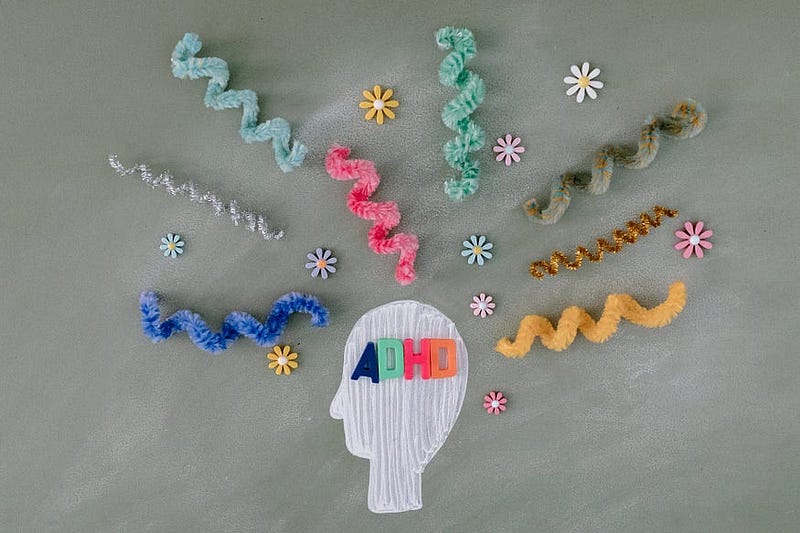
Attention-deficit hyperactivity disorder is a neurodevelopmental condition that includes symptoms such as hyperactivity, inattentiveness and impulsivity.
I was diagnosed with ADHD (combined type) at the age of 25. No one picked up on it when I was younger and no one noticed it throughout my early 20s. That was until I met someone who worked as a special needs teacher. He was very knowledgeable on the more subtle signs of ADHD and he thought I might have it the first time we met. Then I decided to consult a psychiatrist and received my diagnosis.
I have created a list of more unknown symptoms I noticed in myself. Please bear in mind that these might be biased towards the hyperactivity symptoms and there are a lot of people with ADHD who are inattentive only.
1. Hyperfocus
One of the symptoms of ADHD is hyperfocus, which is an intense fixation on an activity that is of interest. Because of this, I didn’t realise I had ADHD for years, as I could concentrate extremely well on subjects that interested me, which gave the appearance of being hardworking despite the fact that it was and still is almost impossible for me to focus on things I don’t find interesting.
A lot of the time, people think ADHD is about having a lack of focus. Personally, I don’t see myself as having an inability to focus as I can hyperfocus for hours at a time depending on my interest level. I still remember when I started learning Japanese — I became so preoccupied with it that I passed the JLPT N2 exam (upper-intermediate) within 8 months of starting my attempt to learn the language as a beginner. I was studying for hours a day — it was literally an obsession.
2. Inability to Tolerate Boredom
Maybe the biggest sign of this is changing jobs or where you live often. Once I work in an office for a year, I cannot tolerate it anymore and I have to quit, as I have a need for constant change and stimulation.
Also, as much as I can hyperfocus, I cannot concentrate on things that bore me. I had known for a long time, even prior to my diagnosis, that I always had to be studying a subject I liked or working at a job I enjoyed because if not, I simply would not be able to concentrate.
For instance, I hated studying for my undergraduate degree in Architecture and I just couldn’t wait to graduate from university. I felt suffocated and trapped the entire time. I somehow managed to graduate (with terrible grades), but the whole experience was just painful. It was also discouraging as I had always had good grades up until then, yet I found myself feeling stupid at the end of the degree.
Following that experience, I decided to do only things that I enjoy, even if it meant quitting a well-paid job to take another, which doesn’t pay as much but I like and therefore can feel motivated to do. I saw this as a personality trait and not a mental health problem, but once getting diagnosed, I realised it is not normal to feel absolutely unable to concentrate on boring things, as every job or course I take on will have at least some parts I won’t find interesting.
It was also very difficult initially to relate my inability to concentrate to not just being lazy or not making the effort on purpose. The fact that I could hyperfocus in some cases gave the appearance of being able to choose when and on what to concentrate, preventing me from realising the underlying problem for years.
3. Excessive Other-Perspective Taking Compared to Most Individuals, to the Detriment of Oneself
I’m hyperactive. I think fast, I talk fast and I’m constantly “on the go”. I get distracted by external stimuli a lot, which means my thoughts jump from one thing to another. What this also meant though, since I was a kid, I could pick up a lot of subtle signs other people tend to miss.
Things that are going on around me can catch my attention even if I’m focused on something else. ADHD brain has an inability to produce as much dopamine, serotonin and adrenaline as normal people’s brains do and this makes it faster. I literally have racing thoughts all the time and I think quite quickly. I can pick up a lot of information from the environment compared to normal people, which, over time, made me attuned to things like people’s body language, tone of voice, choice of words and many other nonverbal cues most simply don’t pay attention to.
4. Co-morbid Personality Disorders, Mood Disorders, Substance Misuse Disorders, Eating Disorders, etc.
In addition to ADHD, I am also diagnosed with a personality disorder. Mental health problems are not as separate as the Diagnostic and Statistical Manual of Mental Disorders (DSM-5) would have us believe. Actually, it’s unusual for people to be diagnosed with only one thing. People often present with multiple co-morbid disorders.¹ ² ³
5. Insomnia
ADHD often presents with sleep disorders.⁴ ⁵ I have never officially been diagnosed with any, but I have struggled with insomnia for as long as I can remember. I can’t fall asleep until very late, sometimes 4 am in the morning, even if I have work the next day. I usually get very little sleep, anywhere between 3–5 hours.
6. Loner Tendencies
I’m extremely introverted and I find interactions with people very exhausting. Even if it’s a close friend, after spending a whole day with them, I find myself struggling to concentrate on what they are saying.
With people who are not close to me, it takes much less for my brain to get tired. As much as I can, I avoid meetings at work and I refuse to be client-facing, simply because interacting with people takes a lot out of me.
I think this is partly because of how much information I’m taking in at once and how much I can notice about other people — Information overload can be exhausting as it makes it difficult to focus on one thing for a prolonged period.
7. Binge Eating
Did you know that people with ADHD are much more likely to be overweight?⁶ ⁷
Binge eating is often a sign of a lack of impulse control. As much as it can be triggered by stress and is something people use to cope with emotions, it can also be triggered by boredom and the need for stimulation, which is a problem for a lot of people with ADHD.
I have never been overweight, but I have struggled to maintain my weight my whole life. I put on 5kg and lose it. Then I put it on again… I mostly eat out of boredom. Bored at work? I start snacking. Despite the fact that I’m not binging huge quantities in one sitting, over time the extra calories start adding up and I notice I’ve put on weight again. Then I go back to dieting and restricting in order to lose it.
It’s been a constant struggle to keep my weight in the healthy BMI range and I feel like I’m on a diet 24/7.
8. Talking Too Fast
I talk super fast and I talk a lot. This has been pointed out to me many times. I can speak 3 languages and I have the same issue whilst talking in all of them. This, I believe, is because of my racing thoughts and energetic personality. It can be quite obvious to people that I’m hyperactive, especially when I’m excited about something. Even complete strangers pick it up from a short conversation at times.
9. High Levels of Impatience
There is a delay aversion hypothesis, which suggests that people with ADHD hate waiting. And that’s me — I HATE waiting. I’m extremely impatient.
There are studies about this that show people with ADHD have the tendency to choose small immediate over the larger later reward. One study shows the small reward is 1 point after 2 seconds and the large reward is 2 points after 30 seconds.⁸
I thought about this a bit and realized that not only do I hate waiting, but I also see no point in it. For instance, in the study mentioned above, instead of getting 1 point in 2 seconds, people went for the option that gives 0.13 points in 2 seconds (2 points in 30 seconds). Personally, I see the first option as the most cost and time-efficient solution. Why wait longer for a reward that’s not significantly larger?
Also, from my perspective, if there is a decision to be made, I like to do it quickly and get it over with. I have observed a lot of people waiting for long periods before taking action in situations that are not good for their mental health (such as staying in a bad relationship) and this baffles me every time.
I think the sooner you face a bad situation, the quicker it will be over and the quicker you’ll recover from it, and I feel like I have always pushed myself to make these quick decisions as I often saw it more rewarding than waiting. In a way, I’ve become more impulsive and impatient over time.
I think people with ADHD may have a different way of thinking about rewards and about future outcomes, hence the impatience. Maybe rewards don’t matter to them as much or what’s rewarding for them is different compared to other people.
References:
[1]: Spencer T. J. (2006). ADHD and comorbidity in childhood. The Journal of clinical psychiatry, 67 Suppl 8, 27–31.
[2]: Kadesjö, B., & Gillberg, C. (2001). The comorbidity of ADHD in the general population of Swedish school-age children. Journal of child psychology and psychiatry, and allied disciplines, 42(4), 487–492.
[3]: Reale, L., Bartoli, B., Cartabia, M., Zanetti, M., Costantino, M. A., Canevini, M. P., Termine, C., Bonati, M., & Lombardy ADHD Group (2017). Comorbidity prevalence and treatment outcome in children and adolescents with ADHD. European child & adolescent psychiatry, 26(12), 1443–1457. https://doi.org/10.1007/s00787-017-1005-z
[4]: Wajszilber, D., Santiseban, J. A., & Gruber, R. (2018). Sleep disorders in patients with ADHD: impact and management challenges. Nature and science of sleep, 10, 453–480. https://doi.org/10.2147/NSS.S163074
[5]: Cassoff, J., Wiebe, S. T., & Gruber, R. (2012). Sleep patterns and the risk for ADHD: a review. Nature and science of sleep, 4, 73–80. https://doi.org/10.2147/NSS.S31269
[6]: Cortese S. (2019). The Association between ADHD and Obesity: Intriguing, Progressively More Investigated, but Still Puzzling. Brain sciences, 9(10), 256. https://doi.org/10.3390/brainsci9100256
[7]: Fliers, E. A., Buitelaar, J. K., Maras, A., Bul, K., Höhle, E., Faraone, S. V., Franke, B., & Rommelse, N. N. (2013). ADHD is a risk factor for overweight and obesity in children. Journal of developmental and behavioral pediatrics : JDBP, 34(8), 566–574. https://doi.org/10.1097/DBP.0b013e3182a50a67
[8]: Marco, R., Miranda, A., Schlotz, W., Melia, A., Mulligan, A., Müller, U., Andreou, P., Butler, L., Christiansen, H., Gabriels, I., Medad, S., Albrecht, B., Uebel, H., Asherson, P., Banaschewski, T., Gill, M., Kuntsi, J., Mulas, F., Oades, R., Roeyers, H., … Sonuga-Barke, E. J. (2009). Delay and reward choice in ADHD: an experimental test of the role of delay aversion. Neuropsychology, 23(3), 367–380. https://doi.org/10.1037/a0014914
If you enjoyed this post and would like to read more, you can subscribe here — https://medium.com/subscribe/@ella_harris to get an email whenever I publish a story. You can also buy me ☕ via — https://ko-fi.com/ella_harris