
9 Lessons I’ve Learned from My Journey to Everest Base Camp
I have set a standard for experiences, which I call Expensive Experiences (EE)… and it’s not just about finances.
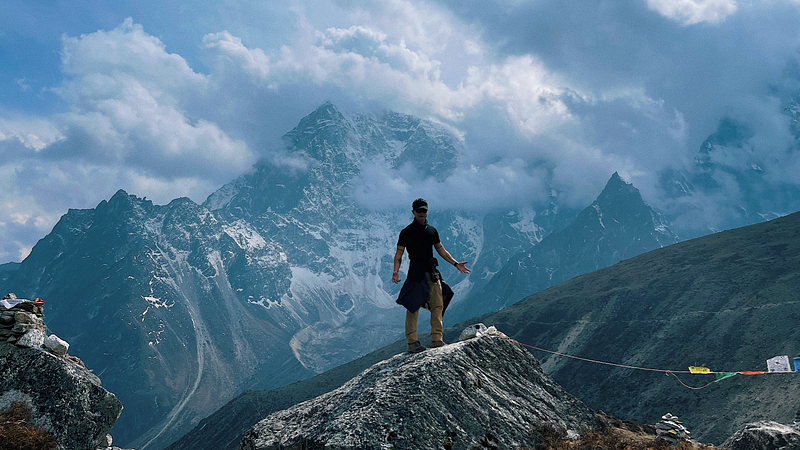
“I don’t want to live better, I want to live more.”
This statement has become my life motto. In this context, "better" refers to materialistic aspects of life, while "more" pertains to gathering different life experiences.
I have set a standard for experiences, which I call Expensive Experiences (EE). They must fulfill three criteria:
- Before EE: thorough preparation regarding finances, time, and physical condition.
- During EE: complete dedication and focus on execution.
- After EE: extracting lessons and exciting stories.
This means that if an experience requires a significant financial investment but doesn't require intense focus during the execution or yield valuable lessons afterward, it would be considered a normal experience for me. My goal is to have at least two expensive experiences each year.
Lastly, to make these experiences more valuable, I would like to share personal insights and lessons from my perspective with readers because life is a great teacher — we all learn, but the lessons and lectures differ.
These are the lessons from my trekking journey to Everest Base Camp in 2022.
1. We Are Never Fully Prepared
The journey took place in May 2022. I had over three months to prepare with the help of a personal trainer. They planned workout routines for the appropriate muscle groups, combined with dietary adjustments, vitamin supplements, and medication to improve blood circulation and prevent altitude sickness while on the mountain.
The costs for the equipment were relatively high, but luckily I could borrow many items from former colleagues who were the same size, saving me a considerable amount of money.
Despite dedicating a lot of time, money, and careful consideration by seeking advice from those who had completed the journey, the fear of "not being fully prepared" weighed heavily on me as the departure day drew nearer.
Looking back, I realize this fear was irrational because I completed the journey without significant mishaps.
Lesson learned: We are never fully prepared for big goals. We either wait forever, or we take action and become ready along the way.
2. The Goal is a Towering Mountain; the Journey is Small Steps
To be honest, while still in Vietnam, I hardly ever opened the itinerary file, except for a few times when checking the necessary equipment checklist. Part of it was due to the fear of not being fully prepared, and part of it was sheer laziness in researching the landmarks…
During months of preparation, I constantly reminded myself of the image of Everest, a place with majestic snow-capped peaks, and the longing to immerse myself in nature after two years of isolation at home. This helped me stay committed to training and mentally prepared before starting.
Then, upon reaching Nepal, looking at the detailed plan, and taking the first steps on this journey, I no longer dwelled on the destination. Instead, I focused on the number of kilometers to cover each day, identifying the following location and observing the new scenery unfolding with each step.
Lesson learned: Setting a significant goal with meaning brings perseverance. By taking action and enjoying each small step, we find additional joy along the way.
3. Look Up When You Start, Look Down While Walking, and Look Back When Resting
I look up at the tallest mountains every morning when starting the journey. Occasionally, I ask the guide their names, whether they are higher than our destination, as a reminder that even if I have yet to reach the summit today, tomorrow, or the day after, the mountains will still be there. Meanwhile, each day, I am getting closer to them.
On the paths where people reside, there is plenty of yak dung. But on the stretches surrounded only by nature, there are rocks and uneven terrain. Every step must be taken with caution to avoid injuries and to ensure that I don't become a burden to others.
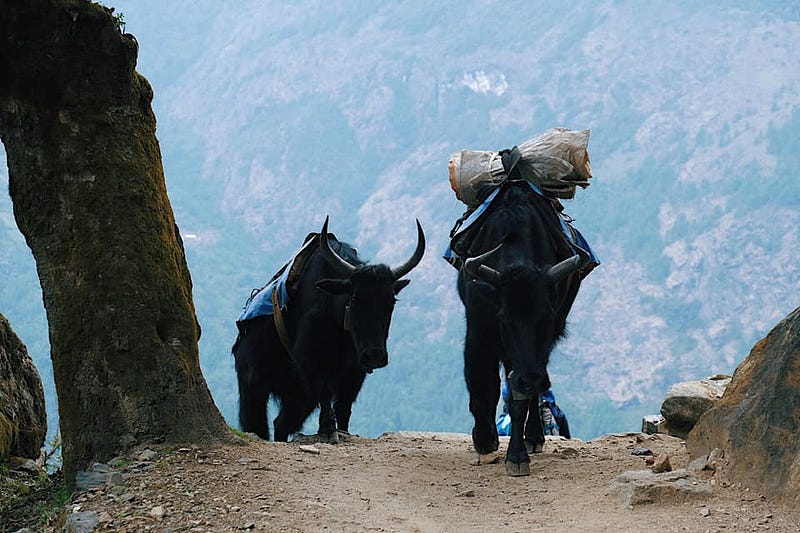
During each resting period, I check how far I have walked on my watch, silently thinking, "Wow, I've covered this much distance, and I don't feel too tired. Still going strong." This action serves both as self-encouragement and a reminder that if I were to give up now, I would return to a scenery devoid of any new experiences.
Lesson learned: On the journey to achieve significant goals, look up when starting to remind yourself of what you’re striving for. Look down while walking to avoid unnecessary obstacles and injuries. Look back when resting to see how much you have accomplished.
4. Walk Fast, Accept the Strain; Walk Slow, Accept the Unease
Our group is usually divided into three teams: fast, moderate, and the trailing team.
On the days I walk with the fast team, despite being in the lead, I always sense various pressures on my body. The pressure to keep up with the fast pace, the pressure to push me harder, and the inability to fully savor the journey.
On the days with the moderate team, I find myself in a state of ambiguity. I still have energy and could walk faster to avoid making the front team wait or hinder the trailing team while stopping to take photos.
On the days with the trailing team, I take countless photos and indulge in candies, yet I have yet to cover much ground. I fear my body will cool down if I rest for too long. The feeling of unease is no less comfortable than the pressure experienced in the fast team.
Regardless of the pace, there will always be some discomfort, but I only came this far because I walked alongside a team within the group.
Lesson learned: Walk fast, accept the strain. Walk slow, accept the unease.
5. Despite Sharing the Same Goal, Trajectories Can Differ
Through conversing with fellow group members, I realized that while our objective is to reach Everest Base Camp, everyone has different concerns.
This made me think about how even though people may be walking together on the same path, their life trajectories can differ. Some are captivated by the mountains, while others are enamored with the rivers. Those who are fascinated by the mountains may pay little attention to the rushing rivers, while those who love the rivers may not care about the size of the mountains.
Having the same goal doesn't mean being alike in every aspect. I am conscious of this fact to respect the differences among group individuals and create an exciting journey.
Lesson learned: Even though we aim for the same destination, each person may have a different life trajectory.
6. Giving Will Soon Be Received
People would share food, water, or medical supplies whenever we stopped at a resting point. Each time this happened, I felt grateful for being surrounded by the kindness of others.
Initially, I thought I had prepared meticulously, so I would have more than enough and not be in need. Helping others also made me feel at ease. However, as we approached the journey's end, I found myself receiving more from others than giving.
Lesson learned: We can never predict when we will need someone’s help, so if we have the opportunity, let’s help others now. Giving will soon be rewarded.
7. and Kindness Is…
Some say, "Kindness is not about not dropping your own rice, but about not looking when others drop theirs."
I started snoring while sleeping when I reached the high mountains, but my roommate just jokingly scolded me. Although I understood, it's not easy to sleep next to someone who snores loudly if you're not used to it. Moreover, if we didn't rest well on this journey, we would quickly become tired and face great danger. I tried to find a solution and even considered staying in a separate room.
However, I want to emphasize the kindness I received and the empathy of my roommate. It reminds me of another lesson about kindness.
Lesson learned: Everyone will eventually do something that annoys us. Kindness is reminding ourselves that it may come from an uncontrollable reason. Try to understand before deciding how to handle this discomfort.
8. Risk-Taking in Calculation
Before the journey, I prepared myself for "death," literally and figuratively. I met with a few people I needed to meet, took care of some tasks, composed a letter containing messages, assets, debts, and passwords, and scheduled a date and time to send it to my mother.
Everything became severe when my blood oxygen saturation level (SPO2) started to drop below 50% at an altitude of over 4400m. Worried about being forced to stop, initially, I hid my condition from most people.
I remember the last two days; there were moments when my SPO2 level was only 37%, and the sound of my heartbeat accompanied my entire journey. (When oxygen levels are low, the heart has to beat faster to circulate more blood and provide sufficient oxygen to the organs. This can lead to heart failure.)
Of course, an experience that could render me incapable of experiencing anything else wouldn't be worth it. So, as soon as I showed signs of instability, I suggested and inquired about faster evacuation methods in case of any emergencies.
As a result, I completed the journey to Everest Base Camp on my own two feet and returned by helicopter to admire the scenery from above.
Lesson learned: Taking risks can be necessary to achieve significant goals. However, taking risks without a list and a plan to handle potential hazards is reckless.
9. Our Goals Can Be the Starting Point for Others
When I saw the rock with the inscription "EVEREST BASE CAMP 5364m" right before me, I felt joy and fulfillment, knowing that my belief in myself had been confirmed. I did it. This courageous heart persevered, keeping its rhythm to reach this point together.
But this sense of pride didn't last long. As I stood on the rock and scanned my surroundings, I realized that ahead of me was a campsite teeming with hundreds of professional mountaineers. They may have arrived there through a similar journey as mine, or perhaps they had flown in by helicopter, but for them, it was merely a starting point for a much higher expedition.
The feeling that just as I successfully achieved something, it was merely the first step for someone else was overwhelming. It's like the whispering voices saying, "I'm never good enough," "This achievement is just ordinary,"…
As I sit here writing these words, I am genuinely proud of what I have experienced, how far I have come with what I have, and the valuable lessons I have learned and can share.
Lesson learned: When we achieve something, we win when we compare it to the goals we set for ourselves, but we will always lose when we compare them to others.
Think this is a good read? Share now with friends. Follow Hoang Nguyen to get updates on my recent stories.


