
9 Deceptive Dating Behaviors That Self-Sabotage Your Love Life
This is why we can’t have nice things.
Online dating will always feel a little like window shopping to me. We search through photographs and try to get a sense of the character behind the profile. Even when we match and have a conversation, we’re still not sure if we’re getting what was advertised or if we’re in for the ultimate bait and switch.
It sounds terrible because we’re talking about real people looking for love and connection, not a VCR on sale at Radio Shack in the early 90s. But we’re looking for love and connection, too. Deceptive dating techniques make this so much harder than it ever has to be.
9 Deceptive, Self-Sabotaging Dating Behaviors
Sometimes, we’ll meet someone and feel hopeful only to find out that we’re not truly compatible. I have no complaints about this. This is a natural part of the process, and no one is to blame when this happens. I take issue with deception alone. Here are 9 deceptive and self-sabotaging dating behaviors.
1. Catfishing
Oftentimes, the public perception of catfishing is using someone else’s photo in a dating profile, but the more common experience of catfishing is when someone uses their out-of-date photo as bait when their appearance has drastically changed. I see this all the time. Sometimes, the photos are grainy in appearance — not taken with a recent digital camera. That one is easy to spot, but others aren’t as obvious.
It can take more in-depth conversation to find out that none of the posted photos were recent ones. I consider recent to be in the last 6 months, not the last 6 or 16 years. The problem with this deceptive behavior is that it showcases truly low self-esteem, presents evidence of a questionable moral compass where honesty is involved, and attempts to trick someone into an attraction they may not feel when presented with reality. Rather than helping us connect, catfishing attempts simply leave one person feeling betrayed and the other feeling rejected.
2. The Search for the Side Piece
One of the most obviously wrong dating behaviors is the search for a side piece. This particularly deceptive dating technique happens when someone is not clear about their marital or relationship status. In some cases, they’ll play the polyamory card — but there’s not an opportunity to verify this with their partner. Sometimes, they’ll just say they are separated when the reality is that their spouse is unaware of it. Cheaters will, of course, try to cheat, but it’s tough to be a single person in the world when so many people are looking for a backup plus one.
For people who are genuinely leaving a marriage, leave it. That’s the biggest rule. Dating isn’t the first step. Leaving is. The truth is that we have to recover from marriages that end, even bad ones. Maybe especially the bad ones. We need healing time and therapy, not dating time and hookups. But what we need most of all is honesty in dating when we do attempt to get back out there. Maybe a divorce isn’t finalized, but it’s important to clarify our actual relationship status rather than misrepresenting it in hopes it won’t matter.
3. Catch and Release
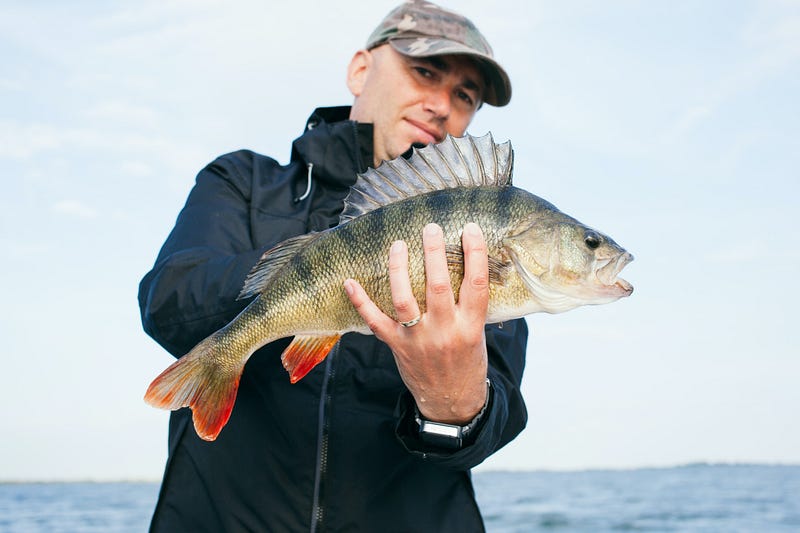
Dating metaphors seem appropriate when 90% of the male population is holding a fish in their online dating profile. Some people are out there looking for a catch-and-release situation while advertising that they’re looking for a long-term relationship. They say they want something serious and exclusive, but their behavior offers clues that what they want is a hookup with the kind of person they won’t get if they advertise their true intentions.
One of the strangest things I’ve come across online is when matches have a variety of intentions listed — short-term, casual, long-term, don’t know, etc. It’s confusing, to say the least. If they don’t know what they want, how will they know when they’ve found it? And how can we know that we’re not just going to be immediately released back into the wild when they decide they want something else?
4. Love Bombing
One of the most painful dating behaviors is love bombing. At first, it seems like we’ve found everything we’ve ever wanted. But what we’ve found is someone who is going to trick us into attachment and then abandon us. They come on strong in the beginning. They’re eager to move the relationship forward. The problem is that they don’t allow it to develop organically, and they tend to pull away once the other person is hooked.
The trouble with this behavior is that the start of the relationship is the trick. It will never be like that again. We’ll think we’ve found the love of our lives only to struggle to decode their behavior months later when they’ve pulled away and left us floundering. It’s one of the more destructive behaviors because we usually feel like we did something wrong. It feels a little less like catch and release and a little more like the people who adopt a puppy and love it until it grows a little older and needs ongoing nurturing and attention. The incredible love in the beginning doesn’t last when put to the test of a real relationship.
5. Chemistry
Chemistry is a deceptive dating issue, but it’s not necessarily one we have control over. We might have sparks with someone and think it means we should be together, but chemistry is just the science of attraction. It doesn’t tell us if we have relationship potential or are compatible as a couple.
Most people are looking for sparks without realizing that they may burn out in time. Or they’re looking for chemistry and ignoring the cues that there’s no true compatibility. I stopped meeting people in person when I began to see that we wouldn’t be compatible for a relationship. Instead of going on a date and running the risk of encountering chemistry, I decided to go with my gut and avoid the broken heart of trying to make the wrong match right because of a few errant sparks.
Sparks can be dangerous. They can burn our lives down when we don’t trust how we feel and what we know to be true. If they don’t want the same thing, we’re being reckless to pursue a relationship with them.
6. Forever the Victim
I used to believe when matches would tell me about their exes. I bought into those stories. I knew I wasn’t getting the whole story, but I also felt like I was a decent judge of character. The only problem is that I was assuming the character of the narrator.
Some people are forever the victim. There’s no accountability in their narration of their lives. Everything is always someone else’s fault. Their relationships don’t work out because other people are terrible — not because they are incompatible. Instead of feeling bad for them, I now see it as the red flag that it is. Someone who is forever the victim will automatically make us the villain if or when things go wrong because they don’t have the maturity or self-awareness to see relationships with more nuance or complexity.
7. Kittenfishing
Kittenfishing is what we now call people who pretend to like certain things to make a connection. In other words, they pretend a shared interest that doesn’t exist. This happened to me once in a truly epic way. The person pretended to share my values and politics only to later reveal an entirely different persona that included many of the -isms that I’m staunchly against. It wasn’t just a betrayal. It was an intentional manipulation.
8. Breadcrumbing
Breadcrumbing isn’t just a generally despised dating behavior. It’s also one that is deceptive. We think we’re making a connection and developing a relationship only to have that person pull away at any sign of commitment or true intimacy. They give us just enough to invest in them without giving us enough to truly satisfy what it is we want in a relationship.
We follow the trail of breadcrumbs thinking it will lead somewhere, but where it leads is to further disappointment. We’re not a priority to them. They’re likely pursuing other people. We’re just being kept as the contingency plan as long as we participate in this type of relationship.
9. The DIY Project
When we match with someone hoping that we’ll change the parts of them we don’t like, we’re not signing up for a real relationship; instead, we’re merely giving ourselves a DIY project without the other person’s knowledge or consent. But people aren’t projects, and that’s not what real love looks like.
We should choose partners who we like, not ones we hope we can fix up to be someone we’d like. It’s deceptive to act like we’re into someone and then expect them to be someone else entirely. This is especially true when people are upfront about who we are, and we receive this enthusiastically only to later admit that we were hoping this would change. I’ve been the DIY project for a man who thought I would magically become a submissive housewife when nothing about me indicated that I would. As he began to reveal his intentions, I began to make sure I would never be that man’s wife, or anything else for that matter.
Dating — and Dodging Disaster
If I’m entirely honest, I’m not a deceptive dater, but I am probably a complicated one. I know that I don’t do everything perfectly. At the very least, however, I know I represent who I am honestly. I put myself out there without filters, artifice, or DIY attempts.
Dating is hard enough without adding extra hoops to jump through as we attempt to dodge disaster. These deceptive dating behaviors are self-sabotaging. They don’t end well, and they do a lot of damage to other people along the way.
And in reality, we can’t make other people stop doing this. We can’t control their behavior. What we can do — what is always in our power — is to make sure that we aren’t being deceptive and contributing to a toxic dating culture for someone else.