
Notion lied to us
You don’t need an all in one workspace
Notion’s landing page tells us it’s finally our all-in-one workspace, and I think the idea and lure of having everything together has disseminated across the Internet and has made people think this is the standard to work towards, myself included.
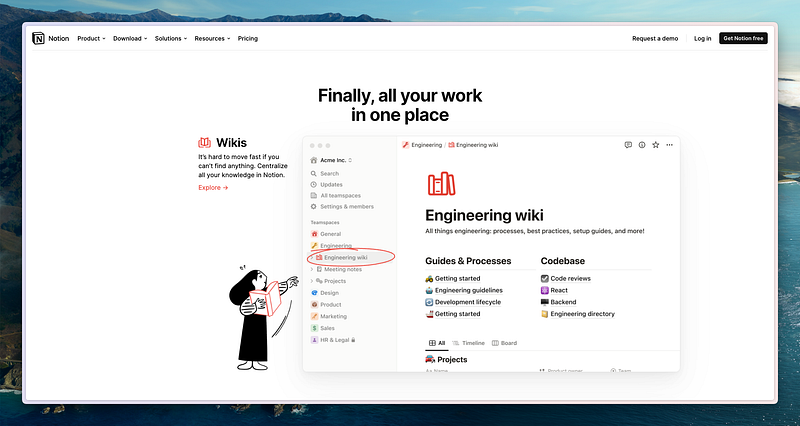
The idea of all-in-one workspaces are objectively appealing: you’d only have to open one app to find what you need, you could presumably search for everything fairly easily, and if we’re using Notion, you know you’d be able to customise it your near-exact specification.
But it’s not perfect, in fact I think others are realising Notion isn’t the answer for everything too. I’ve noticed some big Notion creators and consultants have moved away from Notion for knowledge work, towards mainly Obsidian (from what I’ve seen).
I think this is because there are absolutely some aspects to Notion where the friction involved in setting something up is just too great to continue.
This happened for me when I was trying to use Notion to track my Etsy sales so I could see what I was earning and spending every day, just out of interest. To do this, I tried to build product databases, finance databases, and make integrations with MakeHQ, but I couldn’t get it to work and it was simply not worth the effort. Now, I use Quickbooks and just do a monthly review of what I’m earning and spending. I don’t need to see it every day and the friction of setting that up in Notion made me realise this.
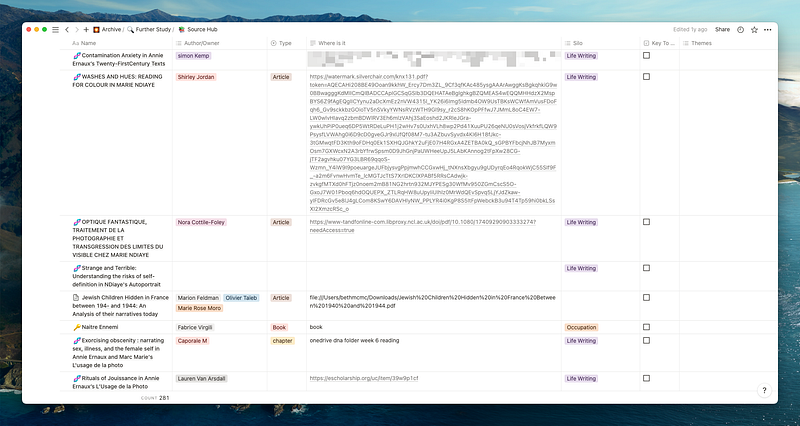
This friction is particularly evident in knowledge work. I spent my final year of my undergrad storing all my literature notes and quotes in databases upon databases in my source hub. Resurfacing anything was slow and difficult, and connecting knowledge even harder, so the net effect was that my hard work was hidden behind all the databases.
I tried to remove the linking and resurfacing friction by going all in with Logseq. That was not a good idea, especially coming from Notion. The outliner structure does not work for me for all aspects of life, but it does work phenomenally well for being a daily journal and for literature notes.
I then found Capacities in mid-2022 and wanted to make it all-in-one as I had Shiny New Tool System, essentially I wanted it to be Notion. But this is not what Capacities is built for, but I didn’t understand this so ditched it. It actually only clicked for me when I assigned it a very specific use case, and now it is my favourite tool ever for the uses I have assigned it. I’ve just finished a deep dive of Capacities features (for a very exciting reason 👀) and this has only solidified my opinion on this matter.
Now, I have a toolkit, where essentially the tool tells me the status of the knowledge. Apple notes for quick notes, Logseq for literature notes, Capacities for permanent notes, as my knowledge toolkit, and Notion as my LifeOS guiding me day to day.
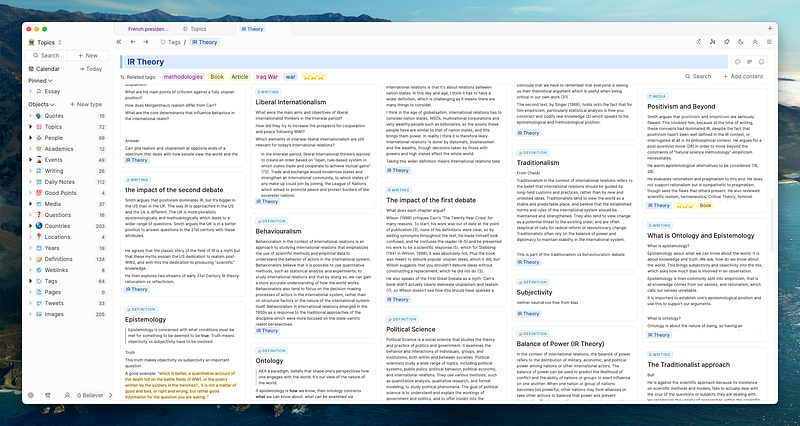
This system and this thinking have evolved organically and I’ve been using it with great success for months now. I still need to work out how best to manage my business, but that will come with time.
Overall, the sum of the apps in my toolkit is greater than its parts for me, and as a PKM tool enthusiast, the journey of discovering this is REALLY good fun, and sharing this journey forces me to be critical of how I’m using apps, which has led to improvements.
We should not rely on 1 tool. We need a toolkit if we truly want to manage our lives, homes, businesses and knowledge digitally. Notion changed the game and continues to be a wonderful tool, but we should not rely on it nor take its promise of an all-in-one workspace to different apps. This is inhibitive in the long term.


