
Microprocessing
The Amazon Effect Is Making Customer Service Reps’ Lives Hell
The pandemic has exposed a major rift in the retail industry
“Julie answer your DAMN phone!” wrote a user on the J.Crew Instagram account. “Your online department is impossible to log into or reset a password… YOUR SYSTEM CRASHES WHEN A PROMO CODE IS ENTERED OR I TRY TO CHECKOUT. Fix this.”
“We’ve sent you a DM to help!” responds the beleaguered J.Crew Instagram account in response.
“NO REPLY TO EMAILS TERRIBLE CUSTOMER SERVICE AN ORDER WAS PLACED OVER 2 weeks ago and no status on shipping i want my money back asap NOONE IS CONTACTING ME BACK FROM CUSTOMER SERVICE,” wrote another.
I began to notice a surge of these types of comments on brands’ Instagram accounts in early April, as warehouses shut down or decreased capacity, companies began to lay off staff, and shipping services became overwhelmed with a flood of orders. But as angry and even rude customers were willing to appear in public social media comments, behind the scenes — via email and chat, primarily — they were even meaner, as recent reports about overwhelmed bookstores working hard to get people’s books to them in a timely manner have made clear. Even one of my favorite dog rescues is struggling under the weight of pissed-off would-be rescuers.
These customers, many of whom are likely wrestling with their own diminished mental health amid a global pandemic, are taking out their problems on the online support staff of the world. This heightened stress and irritability (which in-person customer service folks are grappling with as well), paired with looser behavioral standards around online interactions than real-life ones, are resulting in a very toxic combination that customer service agents shouldn’t have to swallow.
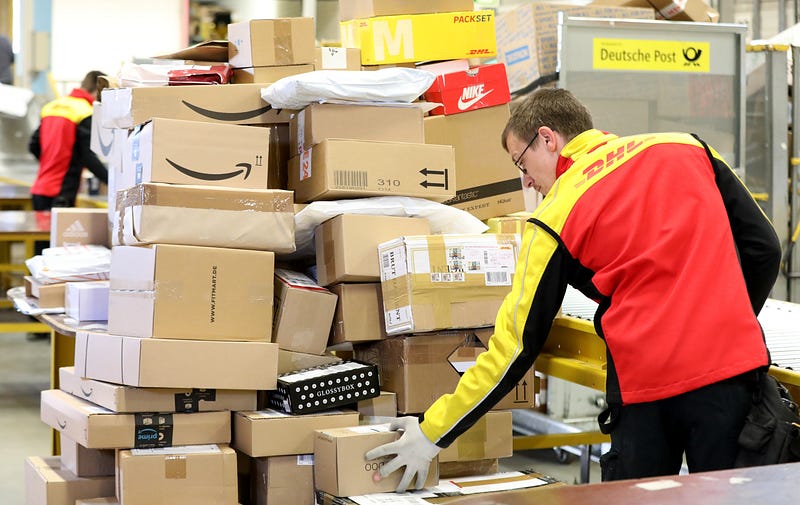
According to Devon Powers, an associate professor of advertising at Temple University whose research focuses on consumer culture, a major issue is that people expect Amazon-speed fulfillment from smaller retailers, which are working with already limited resources in the middle of a pandemic.
“There was a turning point around mid-April, though, where you could tell people had mentally decided the pandemic was over.”
“Consumers are understandably really frustrated because we’ve seen all of these hiccups in the supply chain,” Powers says, and no store can match Amazon. “Part of what they’re frustrated at is they’re starting to see how retail actually works.”
Chloe, who requested anonymity because she’s not authorized to speak on behalf of her employer, has worked customer service for 10 years but started her current job this spring. She says much of the customer indignation she has experienced stems from their likely dependence on Amazon, which can get customers their packages in as quickly as a single day. “I think a lot of people say they want to support businesses that are nonexploitive, but they want a level of speed and convenience that can only be achieved through exploitation,” she says.
Customer behavior, Chloe says, has steadily gotten worse since the pandemic began. “Early on, it was mostly a lot of anxiety and panic from customers and a lot of gratitude when we could solve their problems. Emotions were running high, but there was more compassion, on the whole,” she says. “There was a turning point around mid-April, though, where you could tell people had mentally decided the pandemic was over and that everything should be running at the highest, most efficient capacity again — the patience and understanding just evaporated.”
Miranda, who requested that only her first name be used because her last name is unique and she doesn’t want her quotes to represent the education tech company she works for, says that in the beginning of the pandemic, customers were pretty nice. “There were a lot of good vibes,” she says, noting that her company had begun to offer free subscriptions, which made people happy. It also led to an explosion of sign-ups that, even though the company staffed up its customer support team, it wasn’t equipped to handle. It didn’t help that the website also got a massive overhaul at the same time, Miranda says. “By about week three or four, it felt kind of like it just wasn’t cute anymore, and people were not having that much good vibes.”
As the stress from the pandemic has crescendoed, so, it seems, has people’s rudeness. “To the extent that the pandemic is creating or exacerbating stress for people — for example, financial hardship, general uncertainty — coupled with the fact that organizations are struggling to resume operations effectively while following health and safety guidelines, then there’s reason to think that people might be lashing out at customer service representatives more than usual,” says Shannon Taylor, an associate professor of management at the University of Central Florida whose work focuses on mistreatment in the workplace.
It comes as no surprise that people become more annoyed and angry when they’re stressed out. Irritability is a documented side effect of stress and anxiety, including the now-widespread phenomenon that is pandemic anxiety. Research shows that many customers come armed with a sense of superiority and entitlement. Combined with this heightened pandemic anxiety and customer service teams who can advise people to do little but wait, you have a recipe for discord.
“When you have other people’s eyes on you, you behave according to established norms,” Powers says. This social contract is why — usually, anyway — people don’t take their shirts off when they enter stores, or why they don’t explode at waiters (again, usually) when they take a couple minutes with their shredded cheese.
“A lot of people say they want to support businesses that are non-exploitive, but they want a level of speed and convenience that can only be achieved through exploitation.”
Online, though, there’s what’s known as the disinhibition effect, in which people behave in ways they wouldn’t in real-life situations, for a number of reasons: anonymity or disassociation, in which people’s real-life identities are divorced from their online personas; asynchronicity, in which communication doesn’t happen with the natural flow of a face-to-face conversation; and “invisibility,” or the fact that you can’t see the facial expressions of the person you’re talking to, and they can’t see yours (a topic I addressed in my recent column about workplace communication breakdowns on Slack).
This disinhibition effect means that people often feel emboldened to treat online customer service agents worse than they would someone whose hurt face they’d have to see after they said something rude. “It’s confrontational without being confrontational, in the sense that you don’t see somebody getting angry, you’re not actually having words with the person who’s standing in front of you who’s messed up your order,” Powers says.
The problem extends beyond shipping and delivery. Demarcus, who requested that only his first name be used because he doesn’t want to get in trouble with his supervisors, is a help desk representative for a company that provides software and verification services to banks and mortgage lenders. He says that his job is already hectic, but it has gotten much more difficult since the pandemic began.
“These folks are already pretty entitled in this field, but it has become alarming what they expect now. We’re getting 600 to 800 orders a day, whereas before it was like 300,” Demarcus says. “Customers tend to lash out at us constantly, so it’s pretty draining. There are some days where things are fairly calm and smooth, but it seems like the last few months have been chaos and have more bad days than neutral or good ones.” Demarcus says that though he’s glad he’s working from home, because it’s safer than working in a crowded office without a coronavirus vaccine, this makes it hard to ever fully disconnect from work.
Research published this year shows that customer service personnel who can’t psychologically detach from work feel more emotional exhaustion than those who can — a feeling many people can likely relate to as they work from home during lockdown. This inability to detach, along with a limited ability to do anything for customers when warehouses are overwhelmed, shipping and delivery are swamped, and orders are through the roof, means that online customer service and other front-line workers are emotionally maxed out. “It’s hard to separate the feeling of ‘this person is mad at the company I work for’ from the feeling of ‘this person is mad at me.’ So, compartmentalizing those emotions was like a big part of the work that I had to do to keep going,” Miranda says.
I worked customer service as a barista for years before transferring into online customer service and then social media and community management. It’s all similar work in different mediums: ensuring delivery of a product of one sort of another to a consumer, and fielding questions and concerns when that product doesn’t meet customer expectations. As difficult as barista work was — standing on my feet for eight-plus hours a day, keeping a smile pasted on my face even when I was deeply unhappy (a performance called “surface acting,” which research shows is bad for your health) — it was still, overall, a gratifying job, because I got to witness the joy and pleasure I brought customers and regulars every morning. But with online work, evidence of that joy is hard to come by, and, as I’ve written before, people are more likely to interpret online communication as more negative or neutral than the sender intended, which makes for a more tense conversation between customer service and consumer than is necessary.
As people (hopefully) move away from Amazon and back toward shopping from smaller, independent retailers and in their communities, they’ll recalibrate their expectations and thus won’t be surprised when a product takes nine days to ship instead of two. I’ve seen it, having worked at a coffee shop in which great care is put into each and every drink: People expected to wait, and so most of them did. In the meantime, temper your frustration when a customer service person can’t deliver on your expectations, and over-communicate your gratitude when they do. It’s a small thing, but believe me when I say it’ll make a difference.